Acute Urticaria: Causes, Features, and Treatment
Complete guide to acute urticaria: understanding triggers, symptoms, diagnosis, and effective treatment options.
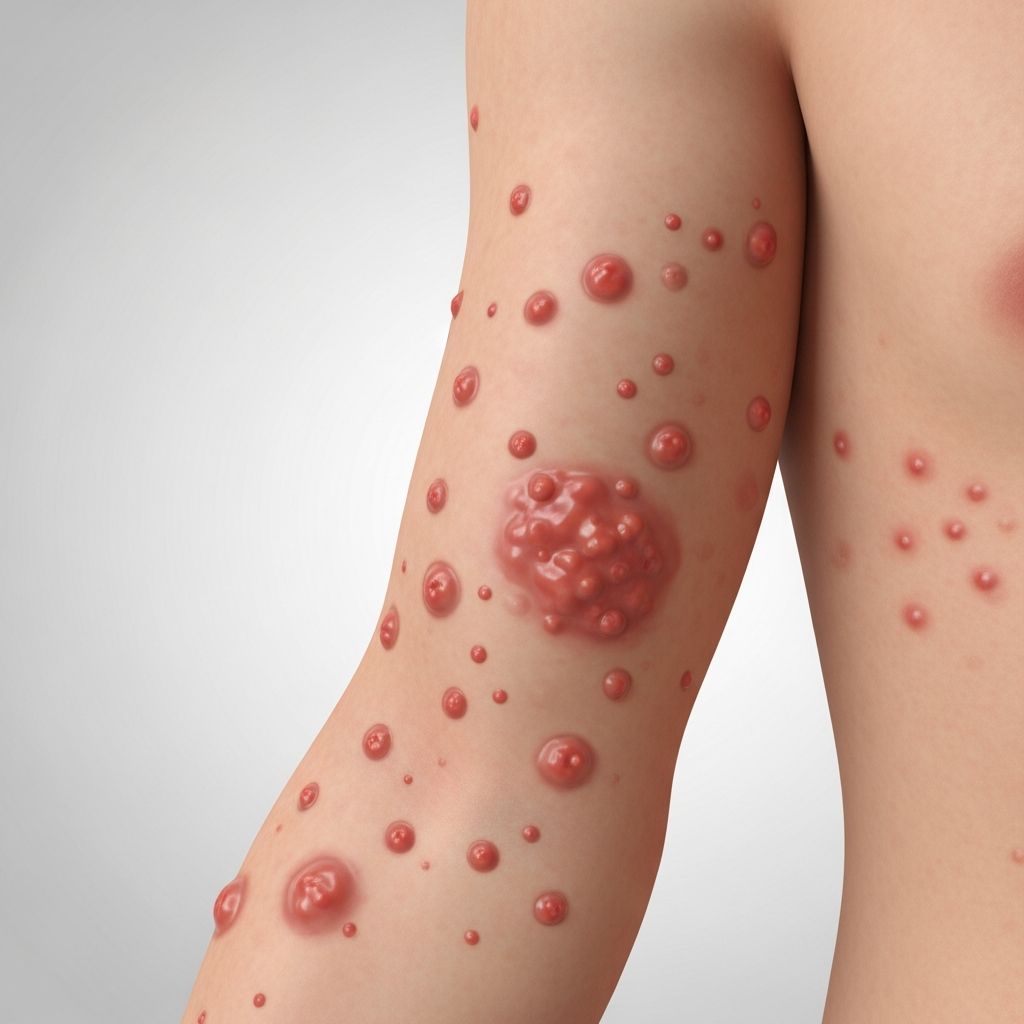
Acute urticaria is a common skin condition characterized by the sudden appearance of weals (hives) that typically resolves within six weeks. The condition may also present with angioedema, which involves swelling of deeper skin layers and mucous membranes. While acute urticaria is usually self-limiting and rarely life-threatening, understanding its causes, clinical presentation, and treatment options is essential for effective management and patient reassurance.
What Is Acute Urticaria?
Acute urticaria is defined as the presence of urticarial lesions (hives) that persist for less than six weeks. The condition is distinguished from chronic urticaria, which continues beyond this timeframe. Weals are raised, itchy skin lesions that typically blanch (turn white) when pressed and usually resolve within 24 hours, though new lesions may continue to appear.
Angioedema frequently accompanies acute urticaria and involves deeper layers of the dermis and subcutaneous tissues, resulting in larger, often painful swelling. Unlike urticarial weals, angioedema does not blanch with pressure and may persist for 24 to 72 hours.
Pathophysiology and Mechanisms
Several biological systems contribute to the development of urticaria. The immune system, arachidonic acid pathway, and coagulation cascade are all involved in the pathogenic mechanism. The primary mechanism involves mast cell degranulation, which releases inflammatory mediators including histamine, tryptase, and other compounds that cause vasodilation, increased vascular permeability, and local inflammation.
In IgE-mediated reactions, allergen exposure triggers cross-linking of IgE antibodies on mast cell surfaces, leading to rapid degranulation and the characteristic urticarial response. However, some medications and substances trigger urticaria through direct mast cell activation rather than IgE-mediated mechanisms, including aspirin, NSAIDs, opiates, and vancomycin.
Common Causes and Triggers
Identifying the trigger is an important aspect of acute urticaria management, though the cause remains unidentified in many cases. Common triggers include:
- Food allergens: Peanuts, tree nuts, shellfish, eggs, and milk are frequent culprits. Symptoms typically develop within minutes to hours of ingestion.
- Medications: Beta-lactam antibiotics commonly cause allergic reactions, while aspirin, NSAIDs, opiates, and vancomycin can trigger urticaria through direct mast cell degranulation.
- Infections: Viral and bacterial infections are significant causes of acute urticaria. Travel history may suggest parasitic infections.
- Physical stimuli: Pressure, vibration, temperature extremes, sunlight, and water exposure can precipitate physical urticaria subtypes.
- Insect stings and bites: Venom proteins trigger rapid IgE-mediated reactions in sensitive individuals.
- Blood products: Serum sickness and serum sickness-like reactions from blood transfusions or certain medications result from immune complex deposition.
- Systemic diseases: Underlying conditions including lymphoma, hypothyroidism, and parasitic infections may manifest with acute urticaria.
Clinical Features and Diagnosis
Clinical presentation: Acute urticaria typically presents with weals that are erythematous, pruritic, and blanching. The weals vary in size and distribution and may appear and fade over hours. Angioedema, when present, causes larger, well-demarcated swelling that may involve the lips, tongue, throat, and other areas.
Diagnostic evaluation: Diagnosis of acute urticaria is primarily clinical, based on a characteristic history and physical examination findings. A thorough history should document:
- Time of onset and duration of symptoms
- Associated symptoms such as angioedema, fever, joint pain, or systemic manifestations
- Recent medication use, food ingestion, or exposure to environmental triggers
- Personal or family history of atopy or allergic conditions
- Recent infections or travel
Related Stories



Physical examination should assess the morphology and distribution of weals, presence of angioedema, and signs of systemic disease. In most cases of acute idiopathic urticaria, extensive laboratory testing is not necessary. However, if urticarial vasculitis is suspected—characterized by weals lasting longer than 24 hours, nonblanching papules, burning sensation, residual hyperpigmentation, fever, and arthralgias—skin biopsy may be warranted.
For suspected anaphylaxis, acute serum tryptase measurement within 1 to 3 hours of symptom onset helps determine if systemic mast cell activation has occurred.
Differential Diagnosis Considerations
Several conditions may mimic acute urticaria and require differentiation:
| Condition | Key Distinguishing Features |
|---|---|
| Urticarial vasculitis | Weals lasting >24 hours, nonblanching papules, burning discomfort, fever, arthralgias, residual hyperpigmentation |
| Anaphylaxis | Abdominal pain, dizziness, hypotension, large erythematous patches, shortness of breath, stridor, tachycardia |
| Hereditary angioedema | Recurrent non-itchy swelling triggered by mechanical trauma, abdominal pain, family history |
| Physical urticaria | Weals triggered by dermatographism, pressure, heat, cold, or sunlight exposure |
| Serum sickness | Urticaria accompanied by fever, swollen lymph glands, joint pain and swelling |
Treatment of Acute Urticaria
First-Line Management
Trigger avoidance: The cornerstone of urticaria management is identification and avoidance of known triggers. When IgE-mediated allergens are identified, complete avoidance typically results in clearing of urticaria within 48 hours. Patients should also be advised to avoid exacerbating factors including:
- Aspirin and NSAIDs
- Alcohol consumption
- Tight-fitting clothing
- Excessive heat and sweating
Antihistamine therapy: The mainstay of pharmacological treatment for acute urticaria is second-generation (non-sedating) H₁ antihistamines. These agents are preferred over first-generation antihistamines due to superior efficacy and reduced sedating side effects. Conventional first-generation antihistamines such as promethazine or chlorpheniramine are no longer recommended for urticaria management.
The most effective second-generation antihistamine is cetirizine at doses up to 40 mg daily, which is significantly more effective than loratadine or fexofenadine. Standard dosing should be increased fourfold if initial doses prove ineffective (e.g., from 10 mg to 40 mg daily for cetirizine). Antihistamines are best taken continuously rather than on an as-needed basis for optimal symptom control.
Second-Line Management
If standard-dose second-generation antihistamines provide insufficient symptom control, treatment escalation includes:
- H₂ antihistamines: Agents such as cimetidine, famotidine, and ranitidine may be added to second-generation H₁ antihistamines for enhanced symptom relief.
- High-potency antihistamines: Hydroxyzine or doxepin (a tricyclic antidepressant with potent antihistaminic properties) may be considered when standard antihistamines are inadequate.
- Systemic corticosteroids: A short course of oral prednisone or prednisolone (0.5 to 1 mg per kg per day) for 3 to 10 days may be warranted in severe acute urticaria, particularly when angioedema is present. However, systemic corticosteroids do not accelerate symptom resolution and carry risks of adverse effects with long-term use.
Treatment Considerations
There is no benefit from combining two antihistamines of the same generation. Topical corticosteroids have limited efficacy for generalized urticaria but may provide localized benefit in delayed-pressure urticaria.
It is important to emphasize that systemic corticosteroids do not speed symptom resolution and are associated with potential morbidity; their use should be reserved for severe cases with significant angioedema. Long-term corticosteroid use is not recommended due to adverse effects.
Management of Associated Angioedema
When angioedema accompanies urticaria, treatment follows the same antihistamine-based approach. However, if angioedema involves the tongue, throat, or results in airway compromise, immediate medical evaluation and epinephrine administration may be necessary.
It is crucial to distinguish between allergic (histamine-mediated) and non-allergic (bradykinin-mediated) angioedema. Idiopathic or bradykinin-mediated angioedema responds poorly or not at all to antihistamines, epinephrine, and systemic corticosteroids, and requires supportive care and time for resolution.
When to Seek Emergency Care
Patients experiencing severe systemic symptoms should seek immediate medical attention:
- Difficulty breathing or shortness of breath
- Swelling of the tongue, throat, or face affecting the airway
- Chest tightness or wheezing
- Severe abdominal pain
- Dizziness or signs of anaphylaxis
These symptoms may indicate anaphylaxis or life-threatening angioedema requiring immediate epinephrine administration and emergency medical evaluation.
Prognosis and Course
Most cases of acute urticaria resolve spontaneously within days to weeks with appropriate management. The condition is rarely life-threatening when appropriately managed. However, untreated or inadequately managed acute urticaria may progress to chronic urticaria, which has significant long-term impacts on quality of life.
Frequently Asked Questions
Q: What is the difference between acute and chronic urticaria?
Acute urticaria is defined as hives lasting less than six weeks, while chronic urticaria persists beyond six weeks. Chronic urticaria typically requires more intensive investigation and may need subspecialist referral for long-term management with immunomodulatory agents.
Q: Are first-generation antihistamines effective for acute urticaria?
First-generation antihistamines such as promethazine and chlorpheniramine are no longer recommended for urticaria management due to sedating side effects and inferior efficacy compared to second-generation agents.
Q: Can acute urticaria be prevented?
Prevention focuses on identifying and avoiding known triggers. Once a specific allergen or trigger is identified, complete avoidance typically prevents recurrence. General measures include avoiding aspirin, NSAIDs, alcohol, tight clothing, and excessive heat.
Q: How quickly do antihistamines work for acute urticaria?
Second-generation antihistamines typically begin providing symptom relief within 30 minutes to 1 hour of administration. Continuous dosing provides better control than as-needed dosing.
Q: Is it safe to use corticosteroids for acute urticaria?
Short-term corticosteroid courses (3 to 10 days) are generally safe for severe acute urticaria, particularly with angioedema. However, long-term use is not recommended due to adverse effects, and systemic corticosteroids do not accelerate symptom resolution.
Q: When should I see a dermatologist or allergist for acute urticaria?
Most cases of acute urticaria can be managed in primary care with antihistamines and trigger avoidance. Referral to a specialist is recommended if symptoms do not respond to standard treatment, if anaphylaxis is suspected, or if urticaria persists beyond six weeks.
References
- Acute and Chronic Urticaria: Evaluation and Treatment — American Academy of Family Physicians. 2017-06-01. https://www.aafp.org/pubs/afp/issues/2017/0601/p717.html
- Practical Management of New-Onset Urticaria and Angioedema — National Center for Biotechnology Information (PubMed Central). 2022. https://pmc.ncbi.nlm.nih.gov/articles/PMC8784078/
- Acute Urticaria: Causes, Features, and Treatment — DermNet New Zealand. https://dermnetnz.org/topics/acute-urticaria
- Hives (Urticaria) & Angioedema Symptoms, Diagnosis & Treatment — American Academy of Allergy, Asthma and Immunology. https://www.aaaai.org/tools-for-the-public/conditions-library/allergies/hives-(urticaria)-and-angioedema-overview
- Hives (Urticaria) — Australasian Society of Clinical Immunology and Allergy. https://www.allergy.org.au/patients/skin-allergy/urticaria-hives
Similar Articles








Read full bio of medha deb