Adams–Oliver Syndrome: Symptoms, Genetics, And Treatment Guide
Rare congenital disorder featuring scalp defects, limb malformations, and multisystem involvement across genetic subtypes.
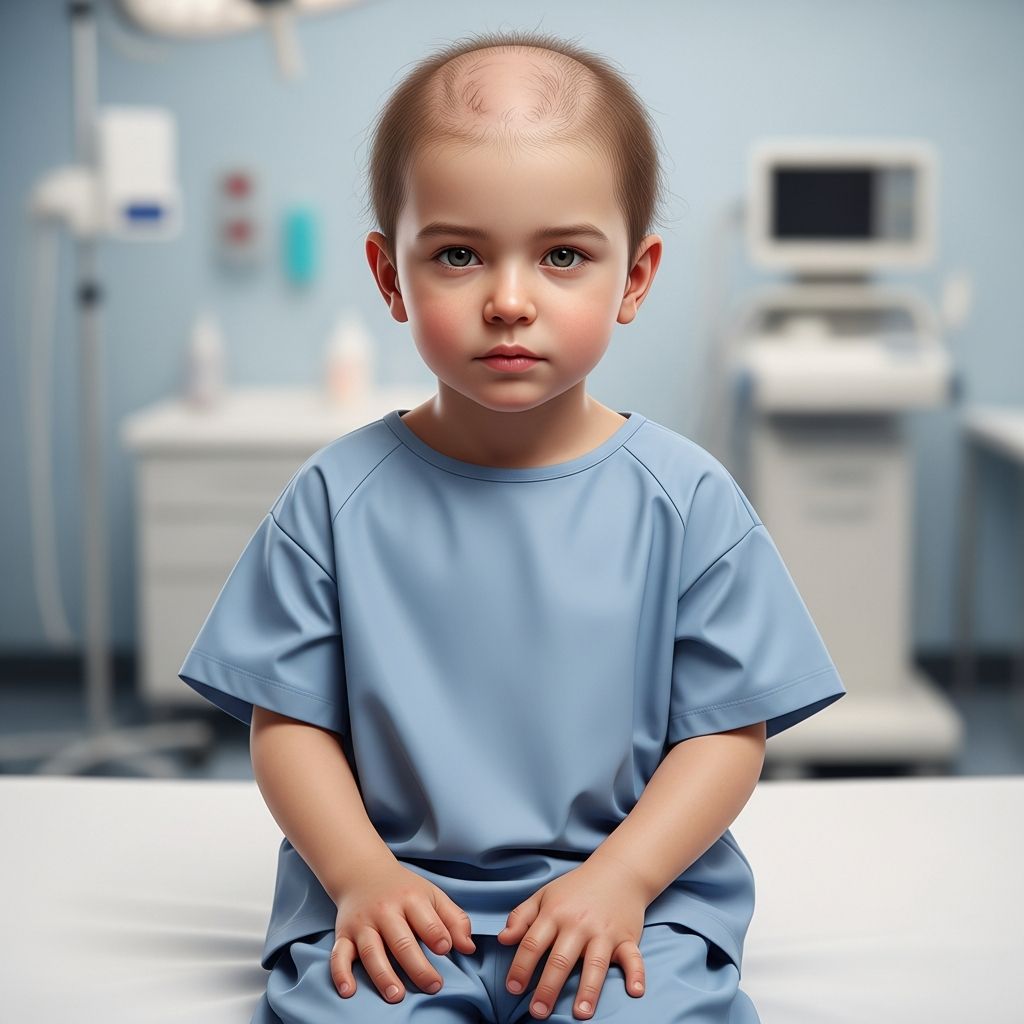
Adams–Oliver syndrome is a rare congenital disorder characterized by aplasia cutis congenita of the scalp and terminal transverse limb defects. It may also involve cardiovascular malformations, vascular anomalies, and less commonly, developmental delay or intellectual disability.
What is Adams–Oliver syndrome?
Adams–Oliver syndrome (AOS) is an extremely rare inherited disorder present at birth, affecting approximately 1 in 225,000 live births. First described in 1945 by American paediatricians Forrest H Adams and C P Oliver, AOS features a combination of scalp skin defects and malformations of the limbs, digits, and/or toes. The condition impacts boys and girls equally and exhibits significant variability in severity, from mild cases with isolated scalp and nail issues to severe multisystem involvement.
The hallmark features include areas of absent skin on the scalp vertex (aplasia cutis congenita, occurring in ~80% of cases) often with underlying skull defects, and limb anomalies such as brachydactyly, syndactyly, oligodactyly, or transverse limb reductions (~85% prevalence). Additional manifestations encompass cutis marmorata telangiectatica congenita (~20%), congenital heart defects (~23%), pulmonary hypertension, and neurological abnormalities.
Who gets Adams–Oliver syndrome?
AOS is exceedingly rare, with fewer than 500 cases documented worldwide. It arises from genetic mutations and can occur sporadically or familially. Inheritance patterns include autosomal dominant (most common, ~70% of cases) or autosomal recessive forms. Parental consanguinity increases risk in recessive subtypes.
- Demographics: Equal male-female ratio; onset at birth.
- Risk factors: Family history of AOS, specific gene variants (e.g., NOTCH1, DLL4).
What causes Adams–Oliver syndrome?
AOS results from heterozygous or homozygous pathogenic variants in six genes: ARHGAP31 (AOS1), DLL4 (AOS2), NBEA? Wait, no—standard genes are DLL4, ARHGAP31, NOTCH1 (autosomal dominant); EOGT, DOCK6, RBPJ (autosomal recessive). These genes disrupt Notch signalling pathway, critical for vascular, skin, and limb development during embryogenesis.
| Subtype | Gene | Inheritance | Key Features |
|---|---|---|---|
| AOS1 | ARHGAP31 | AD | Mildest; mainly skin/limb defects. |
| AOS2 | DLL4 | AD | Severest; multisystem, micro/macrocephaly, profound neurology, extensive limbs. |
| AOS3 | NBEA? Wait—actually DOCK6 often AR | AR | Isolated neurology, microcephaly, no heart defects. |
| AOS4 | NOTCH1 | AD | Craniofacial/eye anomalies (microphthalmia, clefts), vascular skin issues. |
| AOS5 | EOGT | AR | Cardiac/eye heavy; valve defects, strokes, cerebellar malformations. |
| AOS6 | RBPJ | AR | Truncus arteriosus, asymmetric limbs (symbrachydactyly), oligohydramnios. |
What are the clinical features of Adams–Oliver syndrome?
Scalp defects
Aplasia cutis congenita (ACC) presents as well-demarcated, hairless patches on the scalp vertex, often with visible dilated vessels underneath. Lesions range from small (1–2 cm) to extensive, involving underlying skull (calvarial defects in severe cases), risking haemorrhage or infection. Healing leads to atrophic scars and permanent alopecia.
Limb defects
Terminal transverse limb defects affect digits > limbs; lower extremities often worse. Features include:
- Brachydactyly/oligodactyly (short/missing fingers/toes).
- Syndactyly (webbed digits).
- Transverse reductions (absent hands/feet/legs).
- Nail dysplasia (absent, ridged, or hypoplastic nails).
- Rare: clubfoot, symbrachydactyly (esp. AOS6).
Vascular anomalies
Cutis marmorata telangiectatica congenita: persistent reticulated erythema due to dilated capillaries. Other: pulmonary hypertension (life-threatening), portal hypertension, retinal vessels.
Cardiovascular
~23% have congenital heart disease: septal defects, tetralogy of Fallot, valve anomalies (esp. AOS5), truncus arteriosus (AOS6 unique).
Neurological
~35% affected: microcephaly, encephalocele, epilepsy, cortical dysplasia, periventricular calcifications, developmental delay.
Other
- Eyes: microphthalmia, coloboma (AOS4/5).
- Craniofacial: cleft lip/palate, bulbous nose (AOS4/6).
- Renal/hepatic: rare cysts, fibrosis.
Related Stories



How is Adams–Oliver syndrome diagnosed?
Diagnosis combines clinical criteria and genetic testing.
- Major criteria: ACC scalp, terminal transverse limb defects, family history of AOS.
- Minor: Cutis marmorata, heart defects, vascular anomalies.
- Diagnosis: ≥2 major OR 1 major + ≥1 minor.
Genetic confirmation via panel sequencing (yield ~70%). Prenatal: oligohydramnios, limb anomalies on ultrasound (AOS6).
Differential: Other aplasia cutis/limb defect syndromes (e.g., Roberts, brachmann-de lange).
How is Adams–Oliver syndrome managed?
Multidisciplinary: dermatology, genetics, orthopaedics, cardiology, neurology.
Scalp
- Conservative: dressings, infection prevention.
- Surgical: large defects—tissue expansion, grafts; calvarial cranioplasty if needed.
Limbs
- Orthotics/prosthetics for reductions.
- Surgery: syndactyly release, osteotomies.
- Physiotherapy for function.
Systemic
- Cardiology: monitor/repair defects, pulmonary HTN (vasodilators, transplant).
- Neurology: seizure control, developmental support.
- Vascular: antifibrotics for CMTC if ulcerated.
Genetic counselling essential for inheritance risks.
What is the prognosis for Adams–Oliver syndrome?
Variable by subtype/severity. Mild AOS1: good, cosmetic limb issues. Severe (AOS2/5): mortality from pulmonary HTN (~20%), infections, heart failure. Neurological impairment lifelong in affected. Early intervention improves quality of life.
Related topics - Aplasia cutis congenita
- Cutis marmorata telangiectatica congenita
- Terminal transverse limb defects
- Notch pathway disorders
Frequently asked questions
Is Adams-Oliver syndrome inherited?
Yes, primarily autosomal dominant (NOTCH1, DLL4, ARHGAP31) or recessive (EOGT, DOCK6, RBPJ); ~30% sporadic.
Can Adams-Oliver syndrome be detected prenatally?
Yes, via ultrasound (limb/scalp defects, oligohydramnios in AOS6) or amniocentesis for genetic testing.
Is there a cure for Adams-Oliver syndrome?
No cure; management is supportive/symptomatic to optimize function and prevent complications.
What is the life expectancy in Adams-Oliver syndrome?
Normal in mild cases; reduced in severe pulmonary HTN/heart defects (up to 20–30% mortality in infancy).
Does Adams-Oliver syndrome affect intelligence?
Variable; ~35% have neurological issues including delay, but many have normal intellect.
References
- Adams-Oliver Syndrome – Symptoms, Causes, Treatment — NORD (National Organization for Rare Disorders). 2023. https://rarediseases.org/rare-diseases/adams-oliver-syndrome/
- Adams-Oliver syndrome: an unusual congenital disorder — PMC (PubMed Central). 2024-10-15. https://pmc.ncbi.nlm.nih.gov/articles/PMC12476548/
- Adams Oliver Syndrome – Birth Defect Fact Sheet — Birth Defect Research for Children. 2023. https://birthdefects.org/adams-oliver-syndrome/
- Adams Oliver Syndrome — International Journal of Scientific & Technology Research. 2019-10. http://www.ijstr.org/final-print/oct2019/Adams-Oliver-Syndrome.pdf
- Adams-Oliver syndrome — MedlinePlus Genetics (U.S. National Library of Medicine). 2024. https://medlineplus.gov/genetics/condition/adams-oliver-syndrome/
- Adams–Oliver syndrome — DermNet NZ. 2023. https://dermnetnz.org/topics/adams-oliver-syndrome
Similar Articles








Read full bio of medha deb