Adapalene For Acne: What To Expect, Uses & Side Effects
Comprehensive guide to using adapalene for treating acne, including Differin and Epiduo: benefits, application, side effects, and precautions.
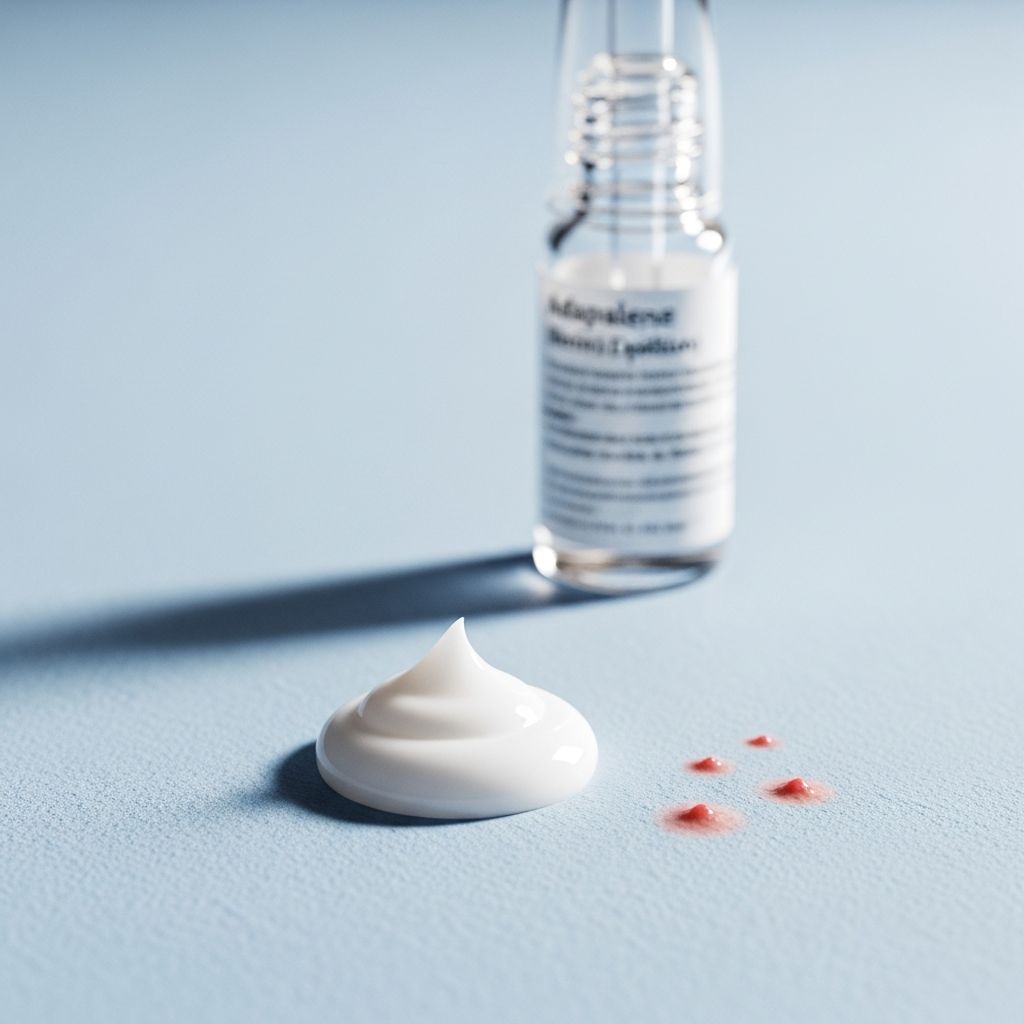
Adapalene is a topical retinoid medication primarily used to treat acne vulgaris by unblocking pores, reducing inflammation, and preventing new breakouts. Available as gels or creams like Differin (adapalene alone) or Epiduo (adapalene with benzoyl peroxide), it is suitable for mild to moderate acne on the face, chest, and back.
About adapalene
Adapalene belongs to the retinoid class, synthetic derivatives of vitamin A, FDA-approved specifically for acne vulgaris in patients 12 years and older. It normalizes follicular epithelial cell differentiation to prevent microcomedone formation—the precursor to blackheads, whiteheads, papules, pustules, and nodules. Its lipophilic nature allows deep penetration into hair follicles, where it promotes cell turnover, reduces redness, and decreases swelling without excessive irritation compared to older retinoids like tretinoin.
Unlike traditional retinoids, adapalene is more stable, less irritating, and photostable, meaning it retains efficacy even with sun exposure. Clinical studies show adapalene 0.1% gel matches tretinoin 0.025% in efficacy but with better tolerability. In comparisons with tazarotene 0.1%, adapalene 0.3% achieved a 61% lesion reduction versus 57%.
Adapalene is available over-the-counter in 0.1% strength (e.g., Differin Gel) and prescription strengths up to 0.3%, often combined in products like Epiduo for enhanced antibacterial action.
Before using adapalene
Who can and cannot use adapalene
Adapalene is suitable for adults, teenagers, and children aged 12 and older with acne. It is not recommended for those under 12 without medical advice, or individuals with hypersensitivity to retinoids, benzoyl peroxide (in combinations), or severe eczema, rosacea, or sunburned skin. Pregnant or breastfeeding individuals should consult a doctor due to limited data; category C in pregnancy.
Dosage
Apply a pea-sized amount as a thin film once daily to clean, dry affected areas (face, chest, back). For gel: adults and teens use at bedtime, at least one hour prior. Children require doctor-determined dosing. Do not exceed once daily to minimize irritation.
Improvements may take 8-12 weeks; acne might worsen initially as subclinical lesions surface. Continue use unless severe irritation occurs.
How and when to use adapalene
Cleanse skin gently with a mild, non-comedogenic cleanser, pat dry, and wait 20-30 minutes. Apply thinly to entire acne-prone area—not spot treatment—to prevent new lesions. Use at night to avoid photosensitivity. Follow with oil-free moisturizer and daytime sunscreen (SPF 30+).
- Dot and spread method: Place small dots on forehead, cheeks, chin, nose; spread evenly with fingertips.
- Avoid eyes, lips, mucous membranes, cuts, or eczema.
- Start every other night if sensitive skin to build tolerance.
For Epiduo (adapalene 0.1%/benzoyl peroxide 2.5%), same application; may bleach fabrics, so use white towels/pillowcases.
Related Stories



Using combined preparations
Epiduo combines adapalene’s comedolytic action with benzoyl peroxide’s antibacterial and keratolytic effects, ideal for inflammatory acne. Studies show superior efficacy in moderate-to-severe acne versus monotherapy: greater lesion reduction and faster healing.
Other combinations include adapalene-clindamycin for bacterial control alongside pore unclogging.
Side-effects of adapalene
Common side effects are mild and transient, peaking in weeks 2-4 due to retinoid dermatitis. They include:
- Dryness, scaling, erythema (redness), burning, stinging, pruritus (itching)—affecting 10-40% initially.
- Photosensitivity; use sunscreen.
Rare (<1%): contact dermatitis, lid edema, sunburn. Discontinue if severe. Unlike benzoyl peroxide, adapalene rarely causes bleaching.
| Side Effect | Frequency | Management |
|---|---|---|
| Dryness/Peeling | Common (up to 40%) | Moisturizer, reduce frequency |
| Redness/Irritation | Common | Buffer with moisturizer, start slow |
| Burning/Stinging | Common early | Apply to dry skin, avoid actives |
| Photosensitivity | Uncommon | Sunscreen, limit sun |
How to cope with side effects of adapalene
- Dryness: Use fragrance-free, non-comedogenic moisturizers (e.g., ceramide-based) 5-10 minutes after adapalene.
- Irritation: “Sandwich” method—moisturizer before/after; or every other night initially.
- Sun protection: Broad-spectrum SPF 30+ daily; wear hat, avoid peak sun.
- Avoid irritants: astringents, abrasives, alcohol-based products, other retinoids/acids initially.
If intolerable, consult prescriber for dose adjustment or alternative.
Pregnancy and breastfeeding with adapalene
Limited human data; animal studies show no teratogenicity at topical doses, but systemic absorption is minimal (<4%). Avoid during pregnancy (category C); use effective contraception if childbearing age. Breastfeeding: apply away from nipples; minimal risk.
Common questions about adapalene
Why does my acne look worse after starting adapalene?
Initial “purging” (2-4 weeks) brings microcomedones to surface. Improvement by 8-12 weeks; 40-60% lesion reduction typical.
Can I use adapalene every day?
Yes, once daily after tolerance builds. Overuse worsens irritation.
Does adapalene help with acne scars or anti-aging?
Off-label: promotes turnover for mild hyperpigmentation/scars, fine lines. Not FDA-approved for these; consult doctor.
Can I combine adapalene with benzoyl peroxide or antibiotics?
Yes, in products like Epiduo or prescribed combos; enhances efficacy but monitor irritation.
How long until adapalene works?
Visible changes in 4-8 weeks; full benefits 12+ weeks. Consistent use key.
Is adapalene safe for sensitive skin?
Yes, better tolerated than tretinoin; start slow with buffering.
Can adapalene be used on body acne?
Yes, chest/back; same application.
Other acne treatments
Adapalene pairs with:
- Benzoyl peroxide: Kills bacteria, prevents resistance.
- Topical antibiotics: Clindamycin for inflammation.
- Oral meds: For severe cases (e.g., isotretinoin).
Not for replacement of professional advice; see dermatologist if no improvement in 12 weeks.
References
- Adapalene for acne – Patient.info — Patient.info. 2023. https://patient.info/medicine/adapalene-for-acne-differin-epiduo
- Adapalene (Differin) – Uses, Side Effects, and More — WebMD. 2024-10-15. https://www.webmd.com/drugs/2/drug-6442/adapalene-topical/details
- Adapalene – StatPearls — NCBI Bookshelf / NIH. 2023-07-17. https://www.ncbi.nlm.nih.gov/books/NBK482509/
- Adapalene (topical route) — Mayo Clinic. 2024. https://www.mayoclinic.org/drugs-supplements/adapalene-topical-route/description/drg-20061544
- Adapalene: MedlinePlus Drug Information — MedlinePlus / NIH. 2024-01-15. https://medlineplus.gov/druginfo/meds/a604001.html
- Differin (adapalene) gel label — FDA. 2012. https://www.accessdata.fda.gov/drugsatfda_docs/label/2012/021753s004lbl.pdf
Similar Articles








Read full bio of Sneha Tete