Adaptogens For Stress Relief: 7 Top Herbs For Resilience
Discover how adaptogens help manage stress, reduce anxiety, and promote balance with science-backed insights on top herbs.
In today’s fast-paced world, chronic stress affects millions, disrupting sleep, mood, and overall health.
Adaptogens
, a class of natural herbs and plants, offer a promising solution by helping the body adapt to stressors and restore balance. These non-toxic substances, rooted in traditional medicine, normalize physiological functions during stress without interfering with normal body processes.Unlike stimulants or sedatives, adaptogens work holistically by modulating the body’s stress response systems, particularly the hypothalamic-pituitary-adrenal (HPA) axis, which regulates cortisol production. By balancing cortisol and other stress hormones, they promote resilience to physical, emotional, and environmental stressors.
What Are Adaptogens?
Adaptogens are plant-derived compounds that help the body resist stressors and maintain homeostasis. The term was coined in 1947 by Soviet scientist Nikolai Lazarev, who identified substances that enhance nonspecific resistance to stress. To qualify as an adaptogen, a herb must be non-toxic, influence multiple organs (especially the HPA axis), and normalize body functions regardless of the stressor.
They interact with the HPA axis to restore hormonal balance, potentially activating genes that protect cells from stress damage. Adaptogens may also boost heat shock proteins (HSPs), which repair damaged proteins, inhibit stress-induced nitric oxide, and regulate signaling pathways like JNK1 and FOXO to prevent cell death and fatigue.
- Key characteristics: Non-specific action on stress, normalizing effects, harmless in normal doses.
- Historical use: From Ayurvedic ashwagandha to Traditional Chinese Medicine ginseng, used for centuries for vitality.
How Do Adaptogens Work?
Adaptogens primarily target the HPA axis, the body’s central stress response system involving the hypothalamus, pituitary gland, and adrenal glands. Under stress, the HPA axis releases cortisol; chronic elevation leads to fatigue, anxiety, and immune suppression. Adaptogens modulate this by lowering excess cortisol while supporting energy when needed.
Mechanisms include:
- Balancing cortisol and catecholamines (e.g., adrenaline).
- Enhancing neurotransmitter activity (serotonin, dopamine) for mood and cognition.
- Boosting antioxidants and polysaccharides for immune and cellular protection.
- Stimulating mild stress responses (stress-mimetics) to build resilience, akin to hormesis.
Clinical evidence supports this: A randomized study of 200+ athletes showed adaptogens reduced fatigue and improved performance over one month. Another trial with 75 anxious participants reported lower anxiety, better concentration, and quality of life after 12 weeks.
Benefits of Adaptogens for Stress Relief
Research highlights adaptogens’ broad benefits, particularly for stress-related issues. They lower cortisol, reduce inflammation, and enhance mental/physical performance.
| Benefit | Evidence | Supporting Adaptogens |
|---|---|---|
| Reduce stress/anxiety | Lower cortisol; improved anxiety scores in trials. | Ashwagandha, Rhodiola |
| Improve mood/sleep | Antidepressive, anxiolytic effects via HPA modulation. | Schisandra, Ginseng |
| Boost energy/fight fatigue | Increased work capacity in stressed athletes. | Eleuthero, Panax Ginseng |
| Enhance cognition | Better attention, memory under stress. | Rhodiola, Astragalus |
| Support immunity | Regulate immune response, reduce oxidative stress. | Astragalus, Ginseng |
Adaptogens also show neuroprotective effects, increasing tolerance to mental exhaustion. A review notes they minimize alarm-phase stress reactions, abolishing excess hormone production.
Related Stories



Top Adaptogens for Stress
Ashwagandha (Withania somnifera)
Known as Indian ginseng, ashwagandha is one of the most studied for stress. It reduces cortisol by up to 30% in trials, alleviating anxiety and improving sleep. Benefits include hormone balance and immunity.
Rhodiola Rosea
This Arctic herb combats fatigue and enhances mental performance. Studies show it reduces burnout symptoms and improves attention.
Panax Ginseng
Boosts energy, cognition, and immunity. Inhibits stress hormone degradation enzymes.
Eleuthero (Eleutherococcus senticosus)
Formerly Siberian ginseng, it increases endurance and inhibits catechol-O-methyl transferase for stress hormone control.
Schisandra Chinensis
Balances the nervous system, improves mood, and aids liver function under stress.
Holy Basil (Tulsi)
Reduces emotional stress and cortisol; used in Ayurveda for calm.
Astragalus
Supports adrenals and immunity; fights fatigue in TCM for 2,000+ years.
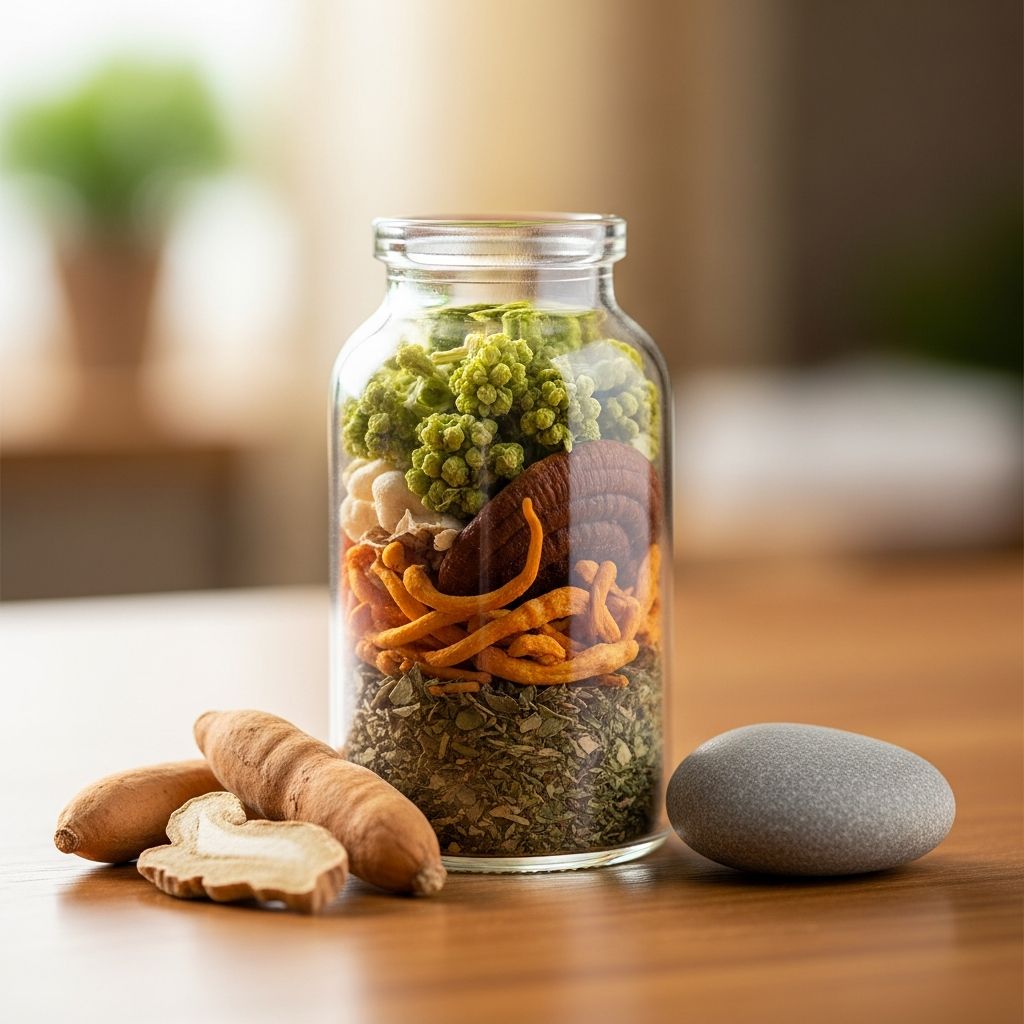
Other notables: Maca, Licorice root, Reishi mushroom.
How to Use Adaptogens
Dosages vary; start low. Common forms: capsules, teas, tinctures.
- Ashwagandha: 300-600mg/day, with food.
- Rhodiola: 200-400mg/day, morning.
- Ginseng: 200-400mg/day, cycled.
Best taken consistently for 4-12 weeks. Combine (e.g., ashwagandha + rhodiola) for synergy, but consult a doctor. Pair with lifestyle: exercise, sleep, meditation.
Side Effects and Precautions
Generally safe, but possible issues: digestive upset, insomnia (if taken late), interactions with meds (e.g., thyroid, blood pressure).
- Pregnant/breastfeeding: Avoid most.
- Autoimmune: Caution with immune-stimulators.
- Quality: Choose third-party tested; contamination risks.
Large studies needed; not FDA-regulated as drugs.
Expert Advice
“Adaptogens may help restore homeostasis after stress, but dose matters,” says Dana Hunnes, RD at UCLA. Kaiser Permanente recommends them alongside diet for cortisol reduction. InBody notes adrenal support benefits.
Frequently Asked Questions (FAQs)
What are the best adaptogens for stress?
Ashwagandha and rhodiola top lists for cortisol reduction and fatigue relief.
Can adaptogens lower cortisol?
Yes, via HPA axis modulation; trials show significant drops.
Are adaptogens safe daily?
Yes in recommended doses; cycle to prevent tolerance.
How long do adaptogens take to work?
1-4 weeks for noticeable stress relief.
Do adaptogens interact with medications?
Possible; consult a healthcare provider, especially for hormones or blood thinners.
References
- What Are Adaptogens? Exploring the Types and Benefits — GoodRx. 2023. https://www.goodrx.com/well-being/supplements-herbs/adaptogens
- Can adaptogens help reduce stress and anxiety? — Fortune Well. 2025-05-28. https://fortune.com/well/2025/05/28/adaptogens-reducing-stress-anxiety-warning-risks/
- Effects of Adaptogens on the Central Nervous System — PMC (NIH). 2014-04-05. https://pmc.ncbi.nlm.nih.gov/articles/PMC3991026/
- Ultimate List of Adaptogens: 26 Stress-Busters — Mind Lab Pro. 2023. https://www.mindlabpro.com/blogs/nootropics/list-of-adaptogens
- A preliminary review of studies on adaptogens — PMC (NIH). 2018. https://pmc.ncbi.nlm.nih.gov/articles/PMC6240259/
- 5 foods and supplements for stress reduction — Kaiser Permanente. 2023. https://healthy.kaiserpermanente.org/health-wellness/healtharticle.foods-supplements-stress-reduction
- Should Adaptogens Be Part of Your Wellness Routine? — InBody USA. 2023. https://inbodyusa.com/blogs/inbodyblog/should-adaptogens-be-part-of-your-wellness-routine/
Similar Articles








Read full bio of Sneha Tete