ADD Vs. ADHD: Key Differences, Symptoms, And Treatments
Understand the key differences between ADD and ADHD, including symptoms, subtypes, diagnosis, and treatment options for better management.
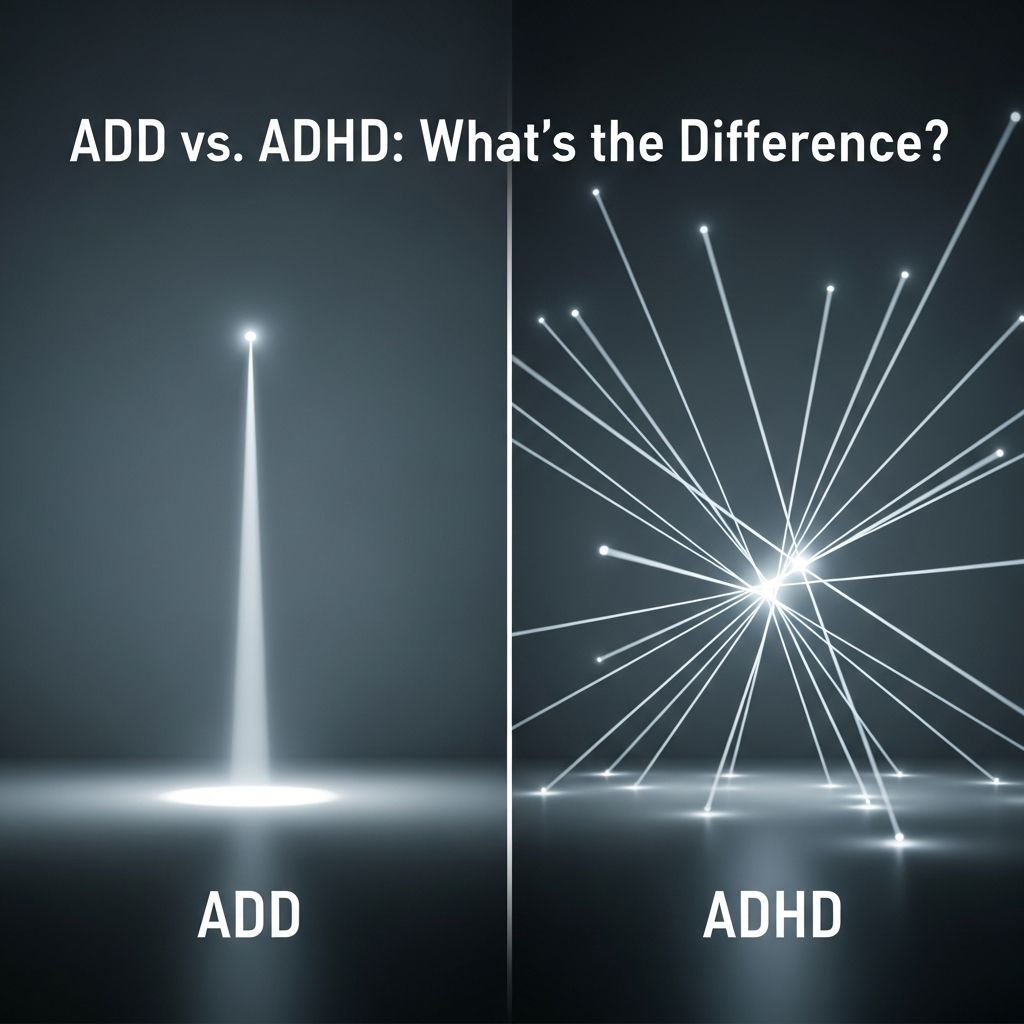
ADD, once a standalone diagnosis for attention issues without hyperactivity, is now classified as the inattentive presentation of ADHD, a neurodevelopmental disorder encompassing inattention, hyperactivity, and impulsivity. ADHD is categorized into three presentations: predominantly inattentive (formerly ADD), predominantly hyperactive-impulsive, and combined, affecting daily functioning across life stages.
What Are the Types of ADHD?
ADHD is defined by the DSM-5 into three presentations based on dominant symptoms, replacing the outdated ADD term used before 1987. These include:
- Predominantly Inattentive Presentation (formerly ADD): Focuses on attention deficits without prominent hyperactivity.
- Predominantly Hyperactive-Impulsive Presentation: Emphasizes excessive movement and rash actions.
- Combined Presentation: Features both inattention and hyperactive-impulsive symptoms.
This classification helps tailor interventions, as symptoms vary by individual and age.
Symptoms of the Predominantly Inattentive Presentation (Formerly ADD)
Individuals with inattentive ADHD struggle with focus, organization, and task completion, often appearing forgetful or distracted rather than disruptive. Key symptoms include:
- Easily distracted by external stimuli or internal thoughts.
- Difficulty sustaining attention on non-preferred tasks like homework.
- Poor short-term memory, such as forgetting instructions.
- Trouble organizing tasks and managing time.
- Frequent forgetfulness in daily activities, like misplacing items or missing deadlines.
- Avoiding tasks requiring prolonged mental effort.
These challenges can lead to underachievement, making individuals seem unmotivated.
Symptoms of the Predominantly Hyperactive-Impulsive Presentation
This type involves overt behaviors like fidgeting and interrupting, more noticeable in younger children. Common signs are:
- Hyperactivity: Constant fidgeting, inability to stay seated, or feeling ‘on the go’.
- Impulsivity: Blurting answers, interrupting others, or acting without forethought.
- Difficulty waiting turns or delaying gratification.
- Excessive talking or restlessness, even in quiet settings.
These symptoms impair social and academic settings but may lessen in adulthood.
Symptoms of the Combined Presentation
The most common type, combining inattention with hyperactivity-impulsivity, affects multiple life areas. Symptoms overlap both subtypes:
- All inattentive signs plus hyperactive-impulsive behaviors.
- Challenges in school, work, and relationships due to poor focus and self-control.
- May lead to higher risks of anxiety, depression, or substance issues if untreated.
Comprehensive evaluation is essential for accurate identification.
How Is ADD/ADHD Diagnosed?
Diagnosis involves no single test but a multi-step process evaluating symptoms across settings for at least six months, starting before age 12. Clinicians use:
- DSM-5 criteria: At least six symptoms in one or more presentations for children, five for adults.
- Interviews with patients, parents, teachers; behavior rating scales.
- Ruling out other conditions like anxiety or learning disorders.
Adults require evidence of childhood onset, focusing on current impairments.
Related Stories



| Presentation | Key Diagnostic Symptoms (Children) | Duration/Onset |
|---|---|---|
| Inattentive | ≥6: careless mistakes, disorganization, avoidance of tasks | ≥6 months, before age 12 |
| Hyperactive-Impulsive | ≥6: fidgeting, interrupting, can’t wait | ≥6 months, before age 12 |
| Combined | ≥6 in both categories | ≥6 months, before age 12 |
Data adapted from DSM-5 standards via NIMH and CDC.
ADD/ADHD in Children vs. Adults
ADHD manifests differently by age; children show more external hyperactivity, while adults internalize as restlessness or poor organization.
ADHD in Children
Often identified in school due to academic and behavioral issues. Boys are diagnosed more frequently due to hyperactive symptoms.
ADHD in Adults
About 4-5% of adults have ADHD, struggling with time management, impulsivity in decisions, and emotional regulation. Symptoms include:
- Chronic lateness and unfinished projects.
- Impulsive spending or job changes.
- Relationship strains from forgetfulness or interruptions.
Diagnosis considers lifelong patterns.
ADD/ADHD Symptoms in Girls vs. Boys
Girls often present with inattentive symptoms, leading to later diagnosis. Boys show more hyperactive-impulsive traits, getting noticed earlier.
- Girls: Internalizing (anxiety, low self-esteem), daydreaming, academic struggles.
- Boys: Externalizing (disruption, physical activity), easier detection.
This gender gap results in undertreatment in females.
Does ADHD Get Worse with Age?
Hyperactivity often decreases, but inattention and impulsivity persist, compounded by adult demands. Factors worsening symptoms:
- Increased responsibilities (work, finances).
- Hormonal changes, poor sleep, co-occurring anxiety/depression.
- Lack of early intervention leading to skill deficits.
Proactive management prevents escalation.
ADD/ADHD Causes and Risk Factors
ADHD stems from genetic (70-80% heritability), environmental (prenatal tobacco, low birth weight), and brain differences in executive function and reward pathways. No single cause; prefrontal cortex dysregulation impairs inhibition and motivation.
Treatments for ADD/ADHD
Multimodal approach combines medication, therapy, and lifestyle changes.
- Medications: Stimulants (e.g., methylphenidate) improve focus in 70-80%; non-stimulants for others.
- Behavior Therapy: CBT, parent training for children.
- Lifestyle: Exercise, sleep hygiene, organization tools.
Treatment reduces risks like accidents or unemployment.
Frequently Asked Questions (FAQs)
Is ADD the same as ADHD?
ADD is outdated; it’s now inattentive ADHD.
Can adults develop ADHD?
No, but undiagnosed childhood ADHD persists into adulthood.
Do girls get ADHD?
Yes, often inattentive type, diagnosed later.
Does ADHD worsen over time?
Symptoms evolve; executive demands can intensify challenges.
How is ADHD treated?
Medication, therapy, and behavioral strategies.
References
- ADD vs. ADHD: What’s the difference? — Drake Institute. 2023. https://drakeinstitute.com/articles/adhd/what-is-the-difference-between-add-vs-adhd
- ADD vs ADHD: What’s the Difference? — Applied Behavior Analysis Edu. 2021-09. https://www.appliedbehavioranalysisedu.org/2021/09/add-vs-adhd/
- ADD vs. ADHD: What’s The Difference? — Brain Balance Centers. 2023. https://www.brainbalancecenters.com/blog/add-vs-adhd-whats-the-difference
- Evaluating attention deficit and hyperactivity disorder (ADHD) — Frontiers in Psychology. 2025. https://www.frontiersin.org/journals/psychology/articles/10.3389/fpsyg.2025.1466088/full
- ADHD: What You Need to Know — National Institute of Mental Health (NIMH). 2024. https://www.nimh.nih.gov/health/publications/adhd-what-you-need-to-know
- ADHD in Adults: An Overview — Centers for Disease Control and Prevention (CDC). 2024. https://www.cdc.gov/adhd/articles/adhd-across-the-lifetime.html
Similar Articles








Read full bio of Sneha Tete