Adenomyosis Vs Endometriosis: Complete Guide To Differences
Understand the key differences between adenomyosis and endometriosis, from symptoms and causes to diagnosis and treatment options.
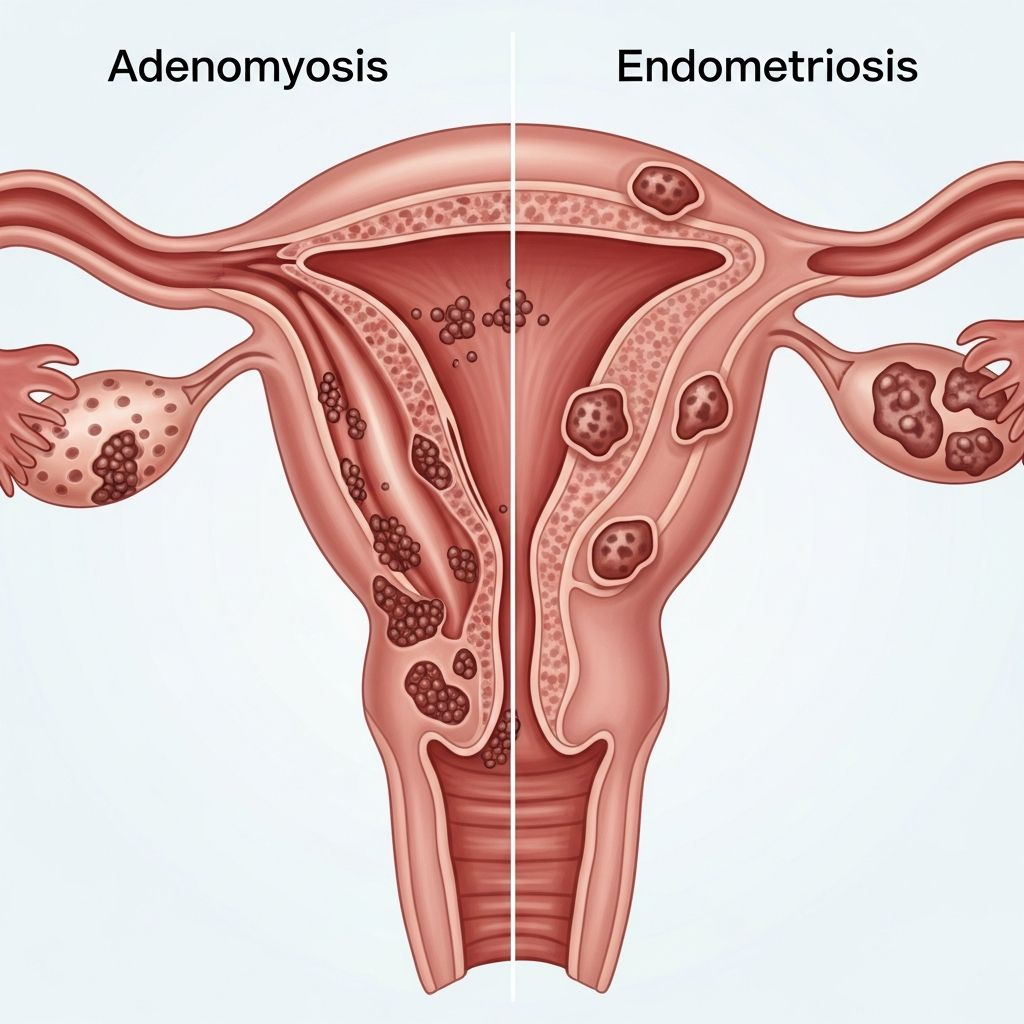
Both adenomyosis and endometriosis are gynecological conditions that cause significant pain and disruption for many women, often leading to confusion in diagnosis due to overlapping symptoms like pelvic pain and heavy menstrual bleeding. Adenomyosis involves endometrial-like tissue growing into the uterine muscle wall, while endometriosis features similar tissue growing outside the uterus on pelvic organs.
What Is Adenomyosis?
Adenomyosis occurs when the endometrial tissue that normally lines the inside of the uterus begins to grow into the muscular wall of the uterus, known as the myometrium. This invasion causes the uterus to enlarge, become tender, and leads to intensified menstrual symptoms as the trapped tissue bleeds and swells with each cycle but cannot exit normally.
The condition typically affects women in their 30s and 40s, often those who have had children, and tends to resolve after menopause when estrogen levels drop.
Symptoms of Adenomyosis
Symptoms of adenomyosis are primarily centered around menstruation and the uterus itself. Common signs include:
- Heavy, prolonged menstrual bleeding: Periods often last longer than seven days with large clots, leading to anemia and fatigue.
- Severe cramping and pelvic pain: Deep, aching pain that worsens over time, peaking during periods and feeling like intense pressure or fullness in the lower abdomen.
- Enlarged or tender uterus: Causing bloating, a swollen abdomen resembling pregnancy, and a constant heaviness.
- Pain during intercourse: Due to the tender, enlarged uterus pressing on surrounding tissues.
- Chronic pelvic pain or pressure: Lingering after periods, with back or leg pain in some cases.
Adenomyosis pain is often described as a throbbing ache within the uterus, most intense during menses, distinguishing it somewhat from other pelvic disorders.
Severity Levels of Adenomyosis
Adenomyosis varies in severity:
- Mild: Shallow tissue invasion causing occasional cramps and moderate bleeding.
- Moderate: Deeper penetration leading to heavier periods and discomfort outside menstruation.
- Severe: Widespread involvement resulting in intense bleeding, chronic pain, and significant uterine enlargement.
What Is Endometriosis?
Endometriosis happens when tissue similar to the uterine lining grows outside the uterus, commonly on ovaries, fallopian tubes, bowel, or bladder. This tissue responds to hormonal cycles, bleeding and inflaming without an exit path, leading to scars, adhesions, and cysts called endometriomas.
It affects about 10% of reproductive-age women, often starting in adolescence, and is linked to infertility in up to 50% of cases.
Symptoms of Endometriosis
Endometriosis symptoms are more widespread due to tissue implantation on various organs:
- Pelvic pain: Chronic or cyclical, sharp/stabbing, worse during periods, sex, bowel movements, or urination.
- Painful periods (dysmenorrhea): Extending days before and after bleeding.
- Pain during or after sex: Deep pelvic discomfort.
- Gastrointestinal issues: Bloating, nausea, constipation, or diarrhea, especially during menses.
- Infertility: Difficulty conceiving due to adhesions and inflammation.
- Other: Fatigue, lower back/leg pain, ovarian endometriomas.
Unlike adenomyosis, endometriosis pain is less predictable, occurring anytime and radiating broadly.
Related Stories



Adenomyosis vs. Endometriosis: Key Differences in Symptoms
While both cause pelvic pain and heavy bleeding, distinctions help differentiate them:
| Aspect | Adenomyosis | Endometriosis |
|---|---|---|
| Pain Timing | Peaks during periods; deep uterine ache | Chronic, anytime; sharp, widespread |
| Bleeding | Heavy, clotted, prolonged; anemia common | Heavy but less uterine-focused |
| Uterus | Enlarged, tender, bloated | Usually normal size |
| Other Pain | Intercourse, pressure | Bowel/urination, back/legs |
| Systemic Effects | Localized to uterus | GI, fatigue, infertility |
Adenomyosis feels like roots thickening uterine soil, while endometriosis spreads like invasive vines.
Which Is Worse: Adenomyosis or Endometriosis?
Endometriosis is often more severe due to its systemic reach, affecting multiple organs, causing chronic pain, and higher infertility rates, significantly impacting daily life. Adenomyosis, though debilitating with heavy bleeding and cramps, is uterus-confined and may improve post-menopause. Pain severity varies individually; endometriosis typically causes more widespread discomfort.
Causes and Risk Factors
Adenomyosis: Linked to childbirth (uterine trauma), high estrogen, inflammation; more common post-30s.
Endometriosis: Possible retrograde menstruation, genetics, immune issues; starts younger.
Both estrogen-dependent; overlapping risks like family history.
Diagnosis
Diagnosis requires imaging and history:
- Ultrasound/MRI: Detects uterine enlargement/junction zone thickening for adenomyosis; cysts/adhesions for endometriosis.
- Laparoscopy: Gold standard for endometriosis confirmation.
- Biopsy: Rarely for adenomyosis post-hysterectomy.
Overlaps delay accurate diagnosis, averaging 7-10 years.
Treatment Options
Conservative: NSAIDs, hormonal therapies (birth control, IUDs, GnRH agonists) to manage pain/bleeding.
Surgical: Endometriosis excision/laparoscopy; hysterectomy for severe adenomyosis.
Emerging: Uterine artery embolization for adenomyosis.
Impact on Fertility
Both impair fertility: adenomyosis via uterine distortion; endometriosis through adhesions/scarring. IVF success lower; early treatment key.
Living with These Conditions
Manage with diet (anti-inflammatory), exercise, support groups. Mental health support vital for chronic pain.
Frequently Asked Questions (FAQs)
Can you have both adenomyosis and endometriosis?
Yes, up to 20-30% of cases overlap, worsening symptoms.
Does adenomyosis go away after menopause?
Typically yes, as it’s estrogen-driven.
Is endometriosis worse than adenomyosis?
Often, due to broader impact.
How are they diagnosed?
Via ultrasound, MRI, laparoscopy.
Can they cause infertility?
Yes, both reduce fertility rates.
References
- Adenomyosis vs Endometriosis: Symptoms — Pelvic Rehabilitation Medicine. 2023. https://pelvicrehabilitation.com/adenomyosis-vs-endometriosis/
- The Difference Between Endometriosis and Adenomyosis — WebMD. 2024-01-15. https://www.webmd.com/women/endometriosis/women-endometriosis-vs-adenomyosis
- Adenomyosis vs. Endometriosis — Texas Endovascular. 2023. https://texaseva.com/fibroids/uterine-fibroid-embolization/adenomyosis-vs-endometriosis/
- Adenomyosis vs Endometriosis — Rylon Clinic. 2024. https://www.rylonclinic.com/post/adenomyosis-vs-endometriosis
- Endometriosis vs. Adenomyosis: Understanding the Difference — Center of Endometriosis. 2023. https://www.centerofendometriosis.com/blog/endometriosis-vs-adenomyosis-understanding-the-difference/
- Adenomyosis vs Endometriosis — Viva Eve. 2024. https://vivaeve.com/conditions/adenomyosis-vs-endometriosis/
- Adenomyosis vs. Endometriosis: Key Differences Explained — Clinton Women’s Healthcare. 2023-11-20. https://clintonwomenshealthcare.com/adenomyosis-vs-endometriosis-symptoms-treatments/
Similar Articles








Read full bio of Sneha Tete