Adipose Tissue (Body Fat): Anatomy & Function
Understand how body fat works: anatomy, types, functions, and metabolic importance.
Understanding Adipose Tissue: Body Fat Anatomy and Function
Adipose tissue, commonly known as body fat, is a specialized connective tissue that plays far more than a cosmetic role in your body. This dynamic tissue is distributed throughout your entire body, serving critical functions that extend well beyond simple energy storage. Understanding the anatomy and function of adipose tissue is essential for comprehending how your body maintains metabolic balance and overall health.
Body fat is not uniformly distributed or composed. Instead, it exists in various forms and locations, each with distinct characteristics and functions. From the subcutaneous fat beneath your skin to the visceral fat surrounding your organs, and even the adipose tissue within bone marrow cavities, each type contributes uniquely to your body’s physiological processes.
What Is Adipose Tissue?
Adipose tissue is a connective tissue composed primarily of adipocytes—specialized fat cells designed to store energy in the form of lipids. However, modern research reveals that adipose tissue is far more sophisticated than previously understood. Beyond adipocytes, adipose tissue contains numerous other cell types collectively known as stromal vascular fraction (SVF) cells, including immune cells, fibroblasts, and endothelial cells.
This complex tissue acts as an endocrine organ, secreting hormones and signaling molecules that communicate with virtually every other organ system in your body. When adipose tissue functions properly, it maintains metabolic homeostasis—the stable internal environment your body requires to survive and thrive.
Primary Locations of Adipose Tissue
Adipose tissue is strategically distributed throughout your body at specific depots that optimize its physiological functions:
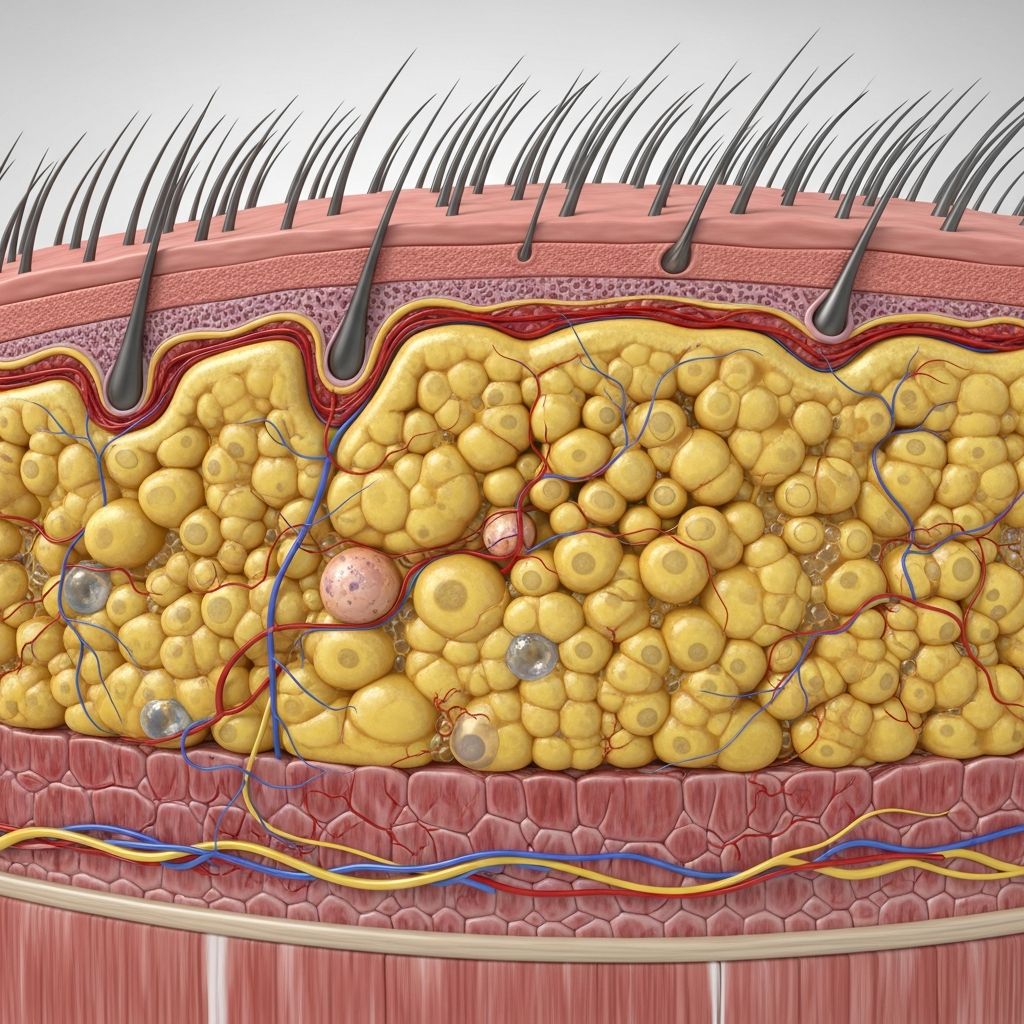
- Subcutaneous adipose tissue: Located directly beneath your skin, this is the fat you can feel and see. It serves as insulation and cushioning.
- Visceral adipose tissue: Found around your internal organs such as the liver, kidneys, intestines, and heart, this deeper fat provides structural support and protection.
- Bone marrow adipose tissue: Residing within the inner cavities of bones, this fat contributes to bone health and metabolic regulation.
- Brown adipose tissue: Located primarily in your upper back, above your clavicles, and around vertebrae, this specialized fat generates heat.
These strategically positioned depots work together to maintain your body’s energy balance and thermoregulation.
Types of Adipose Tissue: White and Brown Fat
Adipose tissue can be classified into two primary types: white adipose tissue (WAT) and brown adipose tissue (BAT), each with distinct structures and functions.
White Adipose Tissue (WAT)
White adipose tissue is the predominant type of fat in your body, comprising the majority of your total body fat. White adipocytes have a relatively simple structure, featuring a single large lipid droplet that occupies most of the cell, with the nucleus and cellular organelles pushed to the periphery.
The primary functions of white adipose tissue include:
Related Stories



- Energy storage: WAT stores excess energy as triglycerides for use during periods of caloric deficit.
- Thermal insulation: The layer of subcutaneous fat provides protection against extreme temperature changes.
- Organ protection: Visceral fat cushions and protects vital organs from physical trauma.
- Hormone production: White adipose tissue secretes adiponectin, leptin, and other hormones that regulate appetite, metabolism, and inflammatory response.
- Insulin sensitivity: Properly functioning white adipose tissue responds appropriately to insulin, facilitating glucose uptake and lipid storage.
White adipose tissue also contains stromal vascular fraction cells that produce hormones regulating energy balance, hunger and satiety signals, metabolism, and immune function.
Brown Adipose Tissue (BAT)
Brown adipose tissue is metabolically distinct from white fat, possessing a more complex cellular architecture. Brown adipocytes contain multiple smaller lipid droplets rather than one large droplet, and they are packed with mitochondria—the energy-producing powerhouses of cells.
The high mitochondrial density, combined with iron-containing proteins called cytochromes, gives brown fat its distinctive color. This cellular composition enables brown adipocytes to perform their primary function: generating heat through a process called non-shivering thermogenesis.
Brown adipose tissue is most abundant during infancy, when thermoregulation is critical for survival. Newborns rely heavily on brown fat to maintain body temperature without shivering. As you age, brown adipose tissue naturally diminishes, though researchers have discovered that adults retain functional brown fat deposits.
Critical Functions of Adipose Tissue
Adipose tissue performs multiple essential functions that maintain overall health and metabolic balance:
Energy Regulation and Storage
Adipose tissue serves as your body’s primary long-term energy storage depot. When you consume more calories than your body expends, excess energy is converted to triglycerides and stored in adipocytes. During periods of caloric deficit, these stored lipids are mobilized and used for energy.
Hormonal Signaling and Communication
Adipose tissue functions as an endocrine organ, secreting hormones that regulate crucial metabolic processes. Adiponectin, produced by adipocytes, improves insulin sensitivity and reduces inflammation throughout your body. Leptin, another adipose-derived hormone, signals to your brain regarding energy stores and regulates appetite. These hormonal signals help maintain metabolic homeostasis by coordinating energy intake and expenditure.
Metabolic Processing
Adipose tissue responds to insulin by taking up glucose from your bloodstream and converting excess blood sugar into lipids for storage. This process prevents dangerous blood sugar spikes and contributes to overall glucose homeostasis. Additionally, adipose tissue plays a crucial role in lipid metabolism, storing triglycerides and releasing them when energy is needed.
Immune Function
Adipose tissue contains active immune cells that respond to various physiological stimuli. These cells clear away dead adipocytes through a process called apoptosis and modulate inflammatory responses. When adipose tissue functions optimally, it maintains a balanced immune environment.
Sex Hormone Distribution
Sex hormones, including estrogen and testosterone, partly determine where fat is deposited throughout your body. This explains why fat distribution patterns differ between sexes and change throughout life stages. Adipose tissue also produces and metabolizes sex hormones, influencing reproductive function and metabolism.
Healthy Adipose Tissue Levels
Maintaining appropriate levels of adipose tissue is crucial for metabolic health. The optimal percentage of body fat varies based on age and sex, but generally ranges between 10% and 35% of total body weight.
The relationship between adipose tissue quantity and health is not linear. Too little body fat can be as problematic as too much. When adipose tissue falls below optimal levels, your body cannot adequately store lipids, leading to lipid overflow into ectopic sites such as the liver, pancreas, heart, and skeletal muscle. This ectopic fat deposition triggers metabolic dysfunction and inflammation.
Conversely, excess adipose tissue expansion can overwhelm the tissue’s storage capacity. This is where the concept of the “personal fat threshold” becomes relevant—each individual has a finite capacity for subcutaneous fat storage, and beyond this threshold, excess lipids are deposited in visceral and ectopic locations, creating a pro-inflammatory state.
Adipose Tissue Dysfunction and Metabolic Disorders
When adipose tissue’s regulatory systems malfunction, serious metabolic disorders can develop. Dysfunctional adipose tissue is implicated in numerous conditions:
- Type 2 diabetes and insulin resistance
- Cardiovascular disease and hypertension
- Non-alcoholic fatty liver disease
- Metabolic syndrome
- Chronic inflammation
- Certain cancers
These disorders result from a combination of genetic factors and nutritional imbalances. Malnutrition—whether undernutrition or overnutrition—is the primary driver of adipose tissue dysfunction.
Obesity and Adipose Tissue
Obesity develops when the body accumulates excess adipose tissue beyond healthy levels. As obesity progresses, existing fat cells enlarge rather than new cells forming. These enlarged adipocytes become dysfunctional, associated with chronic inflammation and metabolic disturbances.
Obesity significantly increases the risk for developing systolic and diastolic heart failure, largely because of its role in promoting metabolic abnormalities, hypertension, and coronary artery disease. This relationship underscores the importance of maintaining healthy adipose tissue levels.
Visceral vs. Subcutaneous Adipose Tissue
Different locations of adipose tissue carry different health implications. Visceral adipose tissue—the fat surrounding your internal organs—poses greater metabolic risks than subcutaneous fat beneath your skin.
Visceral fat interferes with organ function by occupying space in your abdomen and applying pressure to vital organs like your liver, kidneys, and intestines. This displacement prevents these organs from functioning efficiently. Additionally, visceral fat is more metabolically active and pro-inflammatory than subcutaneous fat, contributing more significantly to insulin resistance and metabolic disease.
Subcutaneous adipose tissue, while also important, appears to offer more protective metabolic effects. Research suggests that the “obesity paradox”—the counterintuitive observation that some obese individuals with heart failure have better outcomes than their leaner counterparts—may be driven largely by subcutaneous adipose tissue distribution rather than overall body weight.
Managing Adipose Tissue Health
Maintaining healthy adipose tissue requires a multifaceted approach tailored to individual circumstances:
For Undernutrition
Inadequate adipose tissue resulting from undernutrition is treated through supplemental nutrition and “refeeding” programs that gradually restore healthy fat levels while avoiding metabolic complications.
For Overnutrition and Obesity
Excess adipose tissue is initially addressed through lifestyle modifications including diet optimization and regular exercise. These approaches help normalize adipose tissue function and reduce inflammation.
For advanced obesity (Class III), additional interventions may include pharmacological treatments or bariatric surgery. However, the foundational approach remains dietary modification and increased physical activity.
Treatment of Specific Complications
When adipose tissue dysfunction causes specific metabolic complications, such as insulin resistance, direct treatment targeting these conditions may be necessary alongside general weight management strategies.
Age-Related Changes in Adipose Tissue
Adipose tissue composition and distribution change significantly throughout your lifespan. With advancing age, visceral adipose tissue tends to increase while brown adipose tissue decreases, which reduces resting energy expenditure and contributes to metabolic changes associated with aging.
Understanding these age-related shifts is particularly important for older adults managing their metabolic health and preventing chronic diseases.
The Future of Adipose Tissue Understanding
Body fat is remarkably more complex than its reputation suggests. Adipose tissue interacts with your entire body through chemical signals and adaptive responses to maintain metabolic homeostasis. This interconnected system deserves respect and understanding as much as any other body system.
Just as any biological system can function imperfectly, adipose tissue dysfunction leads to breakdowns in chemical processes that depend on it. By understanding how interdependent all body systems are—including body fat—we develop greater appreciation for the need to care for our entire body, not just visible physical appearance.
Frequently Asked Questions
Q: What is the difference between white fat and brown fat?
A: White adipose tissue stores energy as a single large lipid droplet and is the predominant fat type in adults. Brown adipose tissue contains multiple lipid droplets and abundant mitochondria, enabling it to generate heat through non-shivering thermogenesis rather than store energy.
Q: Why is visceral fat considered more dangerous than subcutaneous fat?
A: Visceral fat surrounds internal organs and interferes with their function. It’s more metabolically active and pro-inflammatory than subcutaneous fat, contributing more significantly to insulin resistance, metabolic syndrome, and cardiovascular disease.
Q: What percentage of body fat is considered healthy?
A: Healthy body fat levels vary by age and sex but generally range between 10% and 35% of total body weight. Both too little and too much adipose tissue can cause metabolic dysfunction.
Q: Can adults increase their brown adipose tissue?
A: While brown adipose tissue naturally decreases with age, recent research suggests adults retain functional brown fat deposits. Chronic cold exposure and certain metabolic interventions may activate existing brown adipose tissue, though the practical applications are still being researched.
Q: How does adipose tissue communicate with the rest of my body?
A: Adipose tissue functions as an endocrine organ, secreting hormones like adiponectin and leptin that regulate appetite, energy expenditure, insulin sensitivity, and inflammatory responses throughout your body.
Q: What causes adipose tissue dysfunction?
A: Adipose tissue dysfunction primarily results from malnutrition—either undernutrition or overnutrition—combined with genetic factors. When the body lacks adequate tissue to store lipids or when existing tissue becomes inflamed and enlarged, metabolic disorders develop.
References
- Significance of Adipose Tissue Quantity and Distribution on Obesity and Heart Failure Outcomes — National Center for Biotechnology Information (NCBI), PMC. 2024. https://pmc.ncbi.nlm.nih.gov/articles/PMC11391210/
- Adipose Tissue (Body Fat): Anatomy & Function — Cleveland Clinic. 2024. https://my.clevelandclinic.org/health/body/24052-adipose-tissue-body-fat
- Visceral Fat vs. Subcutaneous Fat: What Are They? — Cleveland Clinic. 2024. https://health.clevelandclinic.org/visceral-fat-vs-subcutaneous-fat
- Adiponectin: What It Is, Function & Levels — Cleveland Clinic. 2024. https://my.clevelandclinic.org/health/articles/22439-adiponectin
- Managing Obesity in Older Adults — Cleveland Clinic Journal of Medicine, Vol. 92, No. 11. 2025. https://www.ccjm.org/content/92/11/686
- Visceral Fat: What It Is & How It Affects You — Cleveland Clinic. 2024. https://my.clevelandclinic.org/health/diseases/24147-visceral-fat
- Brown Fat, Brown Adipose Tissue: What It Is & What It Means — Cleveland Clinic. 2024. https://my.clevelandclinic.org/health/body/24015-brown-fat
Similar Articles








Read full bio of Sneha Tete