Adrenal Gland: Functions, Hormones & Disorders
Discover the vital roles of the adrenal glands, their hormones, and common disorders affecting them.
What Are the Adrenal Glands?
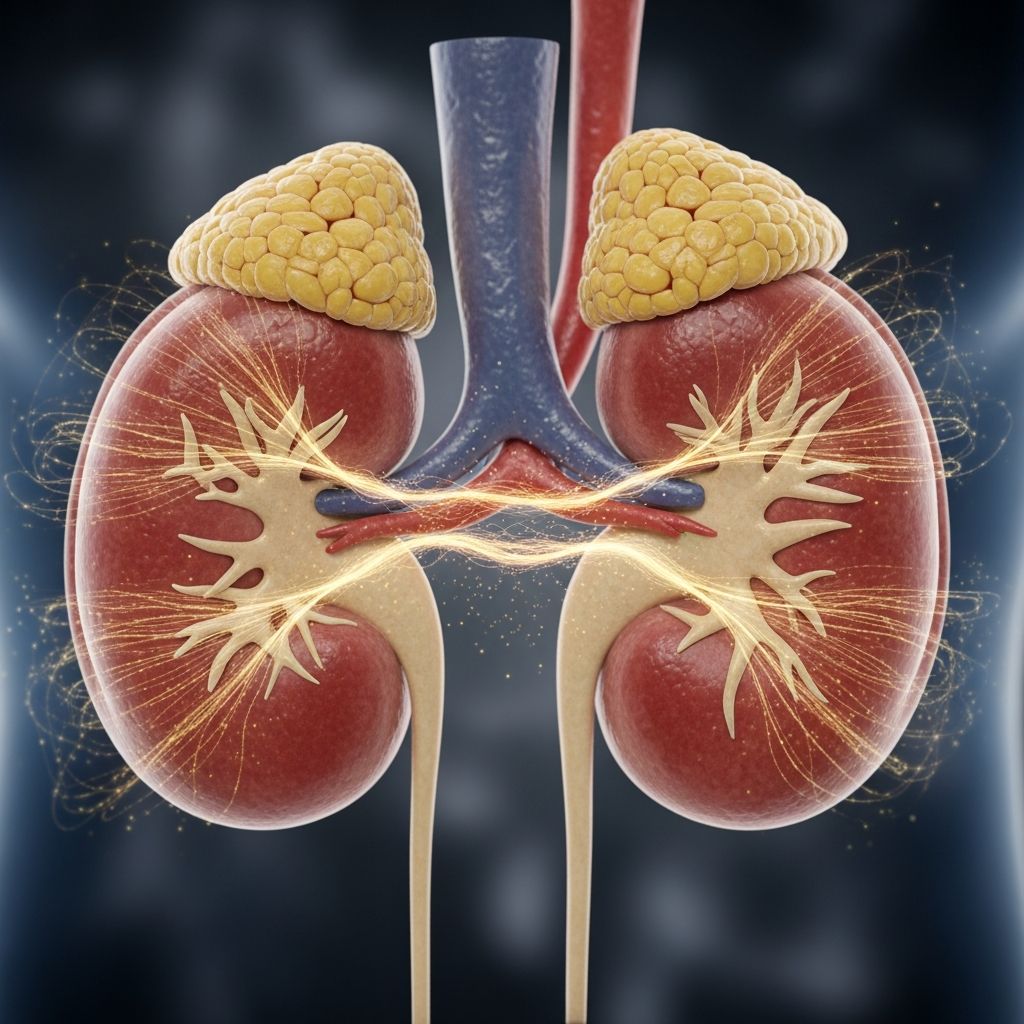
The adrenal glands, also known as suprarenal glands, are small, triangle-shaped endocrine glands located on top of each kidney. These glands play a crucial role in regulating various bodily functions through the production of essential hormones. Each adrenal gland is composed of two distinct parts: the cortex (outer region) and the medulla (inner part), each responsible for producing different hormones vital for health and survival.
Anatomy of the Adrenal Glands
The adrenal glands are situated just above the kidneys, beneath the ribcage on either side of the spine. Each gland is approximately half an inch high and three inches long, shaped like a rounded triangle. The two main components of the adrenal gland are:
- Adrenal Cortex: The outer layer, responsible for producing steroid hormones such as cortisol, aldosterone, and androgens.
- Adrenal Medulla: The inner part, which produces catecholamines like adrenaline (epinephrine) and noradrenaline (norepinephrine).
Functions of the Adrenal Glands
The adrenal glands produce hormones that regulate several critical bodily functions, including:
- Metabolism
- Blood pressure
- Stress response
- Electrolyte balance
- Sex hormone production
Hormones Produced by the Adrenal Glands
The adrenal glands secrete a variety of hormones, each with specific roles in maintaining homeostasis.
Cortisol
Cortisol, often referred to as the “stress hormone,” is produced by the adrenal cortex. It helps regulate metabolism, immune response, and the body’s reaction to stress. Cortisol levels follow a circadian rhythm, peaking in the morning and declining throughout the day.
Aldosterone
Aldosterone is a mineralocorticoid hormone that regulates blood pressure by managing sodium and potassium levels in the blood. It promotes sodium reabsorption and potassium excretion in the kidneys, which helps maintain blood volume and pressure.
Adrenaline and Noradrenaline
Adrenaline (epinephrine) and noradrenaline (norepinephrine) are produced by the adrenal medulla. These catecholamines are released in response to stress, preparing the body for “fight or flight” by increasing heart rate, blood pressure, and energy availability.
Androgens
The adrenal cortex also produces androgens, which are precursors to sex hormones. These hormones play a role in the development of secondary sexual characteristics and are important for both males and females.
Regulation of Adrenal Hormone Production
The production of adrenal hormones is tightly regulated by the hypothalamic-pituitary-adrenal (HPA) axis and other systems.
Hypothalamic-Pituitary-Adrenal (HPA) Axis
The HPA axis is a neuroendocrine system that controls the release of cortisol. The process involves:
- The hypothalamus releases corticotropin-releasing hormone (CRH).
- CRH stimulates the pituitary gland to release adrenocorticotropic hormone (ACTH).
- ACTH triggers the adrenal cortex to produce cortisol.
- Cortisol exerts negative feedback on the hypothalamus and pituitary, regulating its own production.
Renin-Angiotensin-Aldosterone System (RAAS)
The RAAS regulates aldosterone production. When blood pressure drops, the kidneys release renin, which initiates a cascade leading to the production of angiotensin II. Angiotensin II stimulates the adrenal cortex to release aldosterone, which helps restore blood pressure.
Related Stories



Common Adrenal Disorders
Disorders of the adrenal glands can result from overproduction or underproduction of hormones, leading to various health issues.
Cushing’s Syndrome
Cushing’s syndrome is caused by excessive cortisol production. Symptoms include weight gain, high blood pressure, muscle weakness, and mood changes.
Addison’s Disease
Addison’s disease, or primary adrenal insufficiency, occurs when the adrenal glands do not produce enough cortisol and aldosterone. Symptoms include fatigue, weight loss, low blood pressure, and hyperpigmentation.
Pheochromocytoma
Pheochromocytoma is a rare tumor of the adrenal medulla that causes excessive production of adrenaline and noradrenaline. Symptoms include high blood pressure, rapid heartbeat, and sweating.
Conn’s Syndrome
Conn’s syndrome, or primary hyperaldosteronism, is characterized by excessive aldosterone production, leading to high blood pressure and low potassium levels.
Diagnosis and Treatment of Adrenal Disorders
Diagnosing adrenal disorders typically involves blood and urine tests to measure hormone levels, imaging studies, and sometimes genetic testing. Treatment depends on the specific disorder and may include medications, surgery, or hormone replacement therapy.
FAQs About Adrenal Glands
What are the main functions of the adrenal glands?
The adrenal glands regulate metabolism, blood pressure, stress response, electrolyte balance, and sex hormone production.
What hormones do the adrenal glands produce?
The adrenal glands produce cortisol, aldosterone, adrenaline, noradrenaline, and androgens.
What is the HPA axis?
The HPA axis is a neuroendocrine system that controls the release of cortisol in response to stress.
What are common adrenal disorders?
Common adrenal disorders include Cushing’s syndrome, Addison’s disease, pheochromocytoma, and Conn’s syndrome.
How are adrenal disorders diagnosed?
Adrenal disorders are diagnosed through blood and urine tests, imaging studies, and sometimes genetic testing.
Can adrenal glands be removed?
Yes, adrenal glands can be surgically removed (adrenalectomy) to treat certain conditions, but lifelong hormone replacement therapy is required.
References
References
- Adrenal Gland: What It Is, Function, Symptoms & Disorders — Cleveland Clinic. 2023. https://my.clevelandclinic.org/health/body/23005-adrenal-gland
- Physiology, Adrenal Gland — StatPearls, NCBI Bookshelf. 2023. https://www.ncbi.nlm.nih.gov/books/NBK537260/
- Adrenal Medulla: What It Is, Function & Diseases — Cleveland Clinic. 2023. https://my.clevelandclinic.org/health/body/23034-adrenal-medulla
- Aldosterone: What It Is, Function & Levels — Cleveland Clinic. 2023. https://my.clevelandclinic.org/health/articles/24158-aldosterone
- Hypothalamic-Pituitary-Adrenal (HPA) Axis: What It Is — Cleveland Clinic. 2023. https://my.clevelandclinic.org/health/body/hypothalamic-pituitary-adrenal-hpa-axis
- Adrenocorticotropic Hormone (ACTH): What It Is & Function — Cleveland Clinic. 2023. https://my.clevelandclinic.org/health/articles/23151-adrenocorticotropic-hormone-acth
Similar Articles








Read full bio of Sneha Tete