Adrenal Hemorrhage And Hematoma: Causes, Symptoms, Treatment
Understanding adrenal bleeding conditions, symptoms, diagnosis, and treatment options.
Adrenal Hemorrhage and Adrenal Hematoma: A Comprehensive Guide
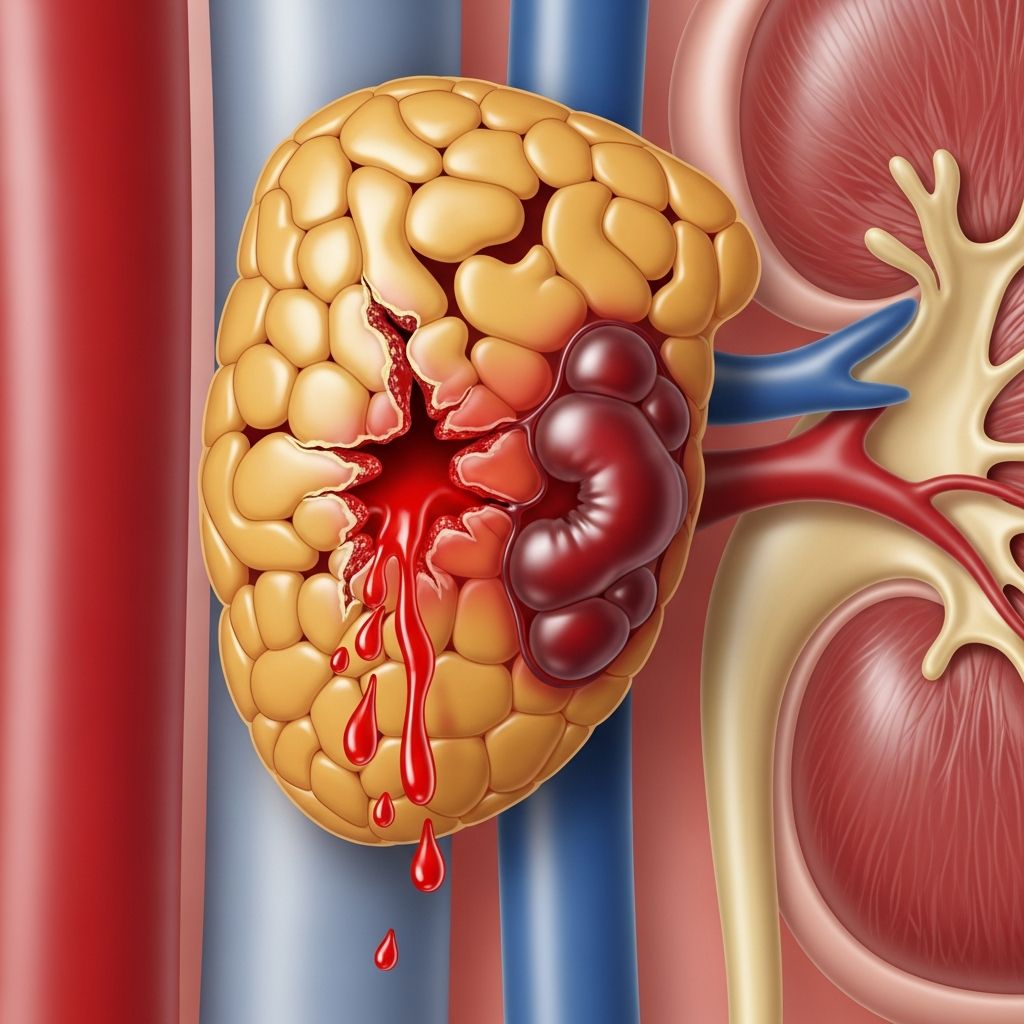
Adrenal hemorrhage and adrenal hematoma are serious medical conditions involving bleeding within or from the adrenal glands, small but vital endocrine organs located above the kidneys. These rare conditions require prompt diagnosis and appropriate management to prevent life-threatening complications, particularly adrenal insufficiency. Understanding the distinction between these conditions, their causes, symptoms, and treatment options is essential for patients and healthcare providers alike.
What is Adrenal Hemorrhage?
Adrenal hemorrhage is a condition characterized by acute blood loss from a ruptured blood vessel within the adrenal gland or glands. This bleeding occurs when blood vessels rupture, causing blood to spill directly into the adrenal tissue. Adrenal hemorrhage can affect one adrenal gland (unilateral) or both glands (bilateral), with bilateral cases being potentially more dangerous as they can lead to acute adrenal insufficiency.
Adrenal hemorrhage is classified as a rare condition, with reported prevalence rates of 0.14 to 1.8% in post-mortem studies. However, despite its rarity, the condition demands immediate attention because of its potential to cause life-threatening complications, including shock and complete organ failure.
What is Adrenal Hematoma?
Adrenal hematoma describes an unruptured pool of blood that accumulates within the adrenal gland, typically forming a blood clot. Unlike adrenal hemorrhage, where blood vessels have ruptured and blood spills freely, a hematoma represents a contained collection of blood. However, this distinction is clinically important because hematomas can mimic adrenal tumors on imaging studies such as computed tomography (CT) scans, leading to diagnostic confusion.
The relationship between hematoma and hemorrhage is significant: bleeding in the adrenal gland may begin as an adrenal hematoma, forming a pocket of blood. If this hematoma ruptures, it transforms into an adrenal hemorrhage, escalating the clinical urgency of the situation.
The Relationship Between Adrenal Hemorrhage and Hematoma
Adrenal hemorrhage and hematoma are closely related conditions, both resulting from inappropriate bleeding within the adrenal gland tissue. Both conditions can lead to adrenal insufficiency, a potentially life-threatening condition in which the adrenal glands fail to produce adequate amounts of critical hormones, particularly cortisol. The progression from hematoma to hemorrhage represents an escalation in severity, requiring different clinical management approaches. When a hematoma ruptures, the contained blood spills into the surrounding tissue, creating the more acute emergency of adrenal hemorrhage.
Causes and Risk Factors
Adrenal hemorrhage can result from various traumatic and non-traumatic causes. Understanding these risk factors helps identify patients at higher risk and enables more vigilant monitoring.
Traumatic Causes
Blunt abdominal trauma represents one of the most common causes of adrenal hemorrhage, particularly resulting in unilateral bleeding on the right side. Motor vehicle accidents, falls, and direct abdominal injuries can rupture adrenal blood vessels. Unilateral adrenal hemorrhage occurs predominantly on the right side, accounting for approximately three-quarters of traumatic cases.
Non-Traumatic Causes
Non-traumatic adrenal hemorrhage can result from multiple etiologic factors including septicemia, coagulopathy, bleeding diathesis, and stress-related conditions. Common non-traumatic causes include:
Related Stories



Infection and Sepsis: Severe infections, particularly septicemia, represent a significant cause of bilateral adrenal hemorrhage. The mortality rate for adrenal hemorrhage associated with sepsis can reach 90%, making this a particularly dangerous scenario.
Anticoagulation Therapy: Long-term use of anticoagulants like heparin increases the risk of adrenal hemorrhage by potentiating bleeding risk in patients with acute illness or by inducing thrombocytopenia, which causes thrombosis of the central adrenal vein.
Bleeding Disorders: Hemorrhagic diatheses and thromboembolic diseases significantly increase the risk of spontaneous adrenal hemorrhage.
Adrenal Tumors: Bleeding from primary adrenal tumors, particularly pheochromocytomas, represents the most common cause of adrenal hemorrhage related to underlying tumors. Massive bleeding from pheochromocytomas can be fatal in up to half of reported cases.
Antiphospholipid Syndrome (APS): Patients with APS are prone to recurring adrenal vein thrombosis, which can cause hemorrhagic infarction of the adrenal gland.
Pregnancy and Childbirth Complications: Severe stress from pregnancy complications can trigger bilateral adrenal hemorrhage.
Surgical Procedures: Surgical stress, invasive procedures, and post-operative complications can trigger adrenal hemorrhage, including complications from liver transplantation, which can cause unilateral adrenal hemorrhage in approximately 2% of recipients.
NSAID Use: Prolonged use of non-steroidal anti-inflammatory drugs is associated with increased risk of adrenal hemorrhage.
Understanding Adrenal Insufficiency
One of the most serious complications of adrenal hemorrhage and hematoma is adrenal insufficiency, a condition in which the adrenal glands do not produce adequate amounts of cortisol and other critical hormones. Cortisol is essential for regulating blood pressure, blood sugar, and stress response. When adrenal hemorrhage damages enough adrenal tissue, the gland’s hormone-producing capacity becomes compromised, leading to a constellation of symptoms and potentially life-threatening metabolic derangements.
Symptoms of Adrenal Hemorrhage and Hematoma
Symptoms of adrenal hemorrhage and hematoma can vary considerably among patients. Importantly, some individuals with adrenal hematomas experience no symptoms at all, discovering the condition incidentally during imaging studies performed for other reasons. When symptoms do occur, they are typically related to adrenal insufficiency.
Common Symptoms Include:
Abdominal Pain: Pain localized to the abdomen or sides is a frequent presenting symptom.
Weakness and Fatigue: Generalized weakness and profound fatigue are characteristic symptoms resulting from hormone deficiency.
Dizziness: Lightheadedness and dizziness, particularly upon standing, reflect disrupted blood pressure regulation.
Muscle Aches: Myalgia and muscle pain frequently accompany adrenal insufficiency.
Nausea and Vomiting: Gastrointestinal symptoms are common presentations.
Low Blood Pressure: Hypotension develops due to inadequate cortisol and aldosterone production.
Low Blood Sugar: Hypoglycemia occurs as cortisol’s role in glucose homeostasis is compromised.
Diagnostic Approaches
Diagnosing adrenal hemorrhage and hematoma requires a combination of clinical suspicion, imaging studies, and laboratory assessment. Adrenal hemorrhage is challenging to diagnose because it is considered rare and therefore easily overlooked in differential diagnostic considerations.
Imaging Studies
Computed Tomography (CT) Scan: CT imaging is the primary diagnostic tool for adrenal hemorrhage. In acute hemorrhage, the gland enlarges to a rounded or ovoid shape with high or mixed attenuation values greater than simple fluid (50-70 HU). Usually, no appreciable contrast enhancement is noted. In its mildest form, adrenal hemorrhage results in a “train track” appearance with central hypoattenuation and preserved peripheral enhancement. Retroperitoneal bleeding and periadrenal infiltration may be visible. In approximately 90% of traumatic adrenal hemorrhage cases, retroperitoneal ill-defined soft tissue stranding develops due to blood infiltration through retroperitoneal fat, and diffuse bilateral adrenal thickening can be observed.
Magnetic Resonance Imaging (MRI): MRI is the most sensitive and specific imaging method for diagnosing adrenal hemorrhage. It provides superior soft tissue contrast and can characterize blood products by their age. In the acute stage (within the first week), adrenal hematomas appear isointense or slightly hypointense on T1-weighted images and notably hypointense on T2-weighted images relative to liver. This appearance results from high concentrations of intracellular deoxyhemoglobin. In the subacute stage (following six weeks), hemoglobin oxidizes and produces methemoglobin, causing hematomas to appear hyperintense on both T1- and T2-weighted images. In the chronic stage, the hematoma periphery becomes hyperintense with a hypointense rim on both T1- and T2-weighted images due to hemosiderin deposition and fibrous capsule development.
Laboratory Testing
When adrenal hemorrhage is diagnosed through imaging, adrenal gland function must be evaluated as soon as possible. Laboratory assessment should include measurement of cortisol levels, particularly morning cortisol concentrations, and assessment of the hypothalamic-pituitary-adrenal axis response through adrenocorticotropic hormone (ACTH) stimulation testing. These tests help determine the degree of adrenal insufficiency and guide hormone replacement therapy decisions.
Treatment and Management
The management of adrenal hemorrhage and hematoma depends on the severity of the condition, the extent of bleeding, and the degree of adrenal insufficiency present.
Hormone Replacement
Most patients with adrenal hemorrhage or hematoma require hormone replacement therapy. When adrenal glands are unable to produce adequate cortisol, glucocorticoid replacement becomes necessary. In the acute setting, intravenous hydrocortisone may be administered, followed by oral glucocorticoid maintenance therapy. The dose is individualized based on the degree of adrenal insufficiency and clinical response. Patients may also require mineralocorticoid replacement (fludrocortisone) if aldosterone production is compromised.
Surgical Intervention
Most adrenal hemorrhages and hematomas do not require surgical intervention. However, certain situations may necessitate emergency procedures. Adrenal hematomas with active hemorrhage represent a rare but critical pattern requiring emergent evaluation. In selected cases of ongoing hemorrhage that cannot be controlled medically, embolization procedures or, rarely, surgical intervention may be necessary to prevent exsanguination.
Monitoring and Follow-Up
Follow-up imaging is recommended to ensure resolution of the hemorrhage and to exclude underlying neoplastic masses. In chronic adrenal hemorrhage, the volume of hemorrhage shrinks over time, and CT attenuation decreases to fluid levels. Complete resolution and absence of enhancement on follow-up imaging exclude the possibility of underlying tumors. The adrenal gland may eventually appear as an atrophied isoattenuating structure or non-enhancing pseudocyst, often calcifying after approximately one year.
Key Takeaways
Adrenal hemorrhage is bleeding from a ruptured vessel into the adrenal gland(s), potentially affecting one or both glands and possibly leading to adrenal insufficiency, a serious condition requiring hormone replacement therapy.
Adrenal hematoma is an unruptured pool of blood forming a blood clot within the adrenal gland that can mimic a tumor on imaging studies.
Early diagnosis through imaging is crucial, with MRI being the most sensitive and specific diagnostic method.
Adrenal function must be evaluated immediately upon diagnosis to assess the need for hormone replacement.
Most cases do not require surgery, with medical management and hormone replacement being the primary treatment approaches.
Follow-up imaging ensures proper resolution and excludes underlying tumors.
Frequently Asked Questions
Q: Is adrenal hemorrhage a common condition?
A: No, adrenal hemorrhage is a rare condition with a reported prevalence of 0.14 to 1.8% in post-mortem studies. Despite its rarity, it can have serious consequences if not properly diagnosed and treated.
Q: Can adrenal hematoma be mistaken for cancer?
A: Yes, adrenal hematomas can mimic adrenal tumors on imaging studies like CT scans. Proper imaging interpretation, follow-up studies, and clinical correlation are essential to distinguish hematomas from actual neoplasms.
Q: What is adrenal insufficiency and why is it dangerous?
A: Adrenal insufficiency occurs when damaged adrenal glands cannot produce adequate cortisol, a hormone essential for regulating blood pressure, blood sugar, and stress response. It can be life-threatening and requires immediate hormone replacement therapy.
Q: Is surgery always necessary for adrenal hemorrhage?
A: No, most adrenal hemorrhages and hematomas do not require surgical intervention. Medical management with hormone replacement therapy is typically sufficient, though emergency procedures may rarely be necessary in cases of ongoing hemorrhage.
Q: How long does it take for adrenal hemorrhage to resolve?
A: Resolution varies by case. In chronic adrenal hemorrhage, the volume decreases over time. The gland may appear as a calcified pseudocyst after approximately one year, though some cases may show complete resolution without calcification.
Q: What should I do if I suspect adrenal hemorrhage?
A: If you experience symptoms like severe abdominal pain, persistent weakness, dizziness, or low blood pressure, particularly following trauma or during illness, seek immediate medical attention. Prompt diagnosis through imaging and laboratory testing is essential for proper treatment.
References
- Adrenal Hemorrhage — National Center for Biotechnology Information (NCBI) Bookshelf. 2024. https://www.ncbi.nlm.nih.gov/books/NBK555911/
- Adrenal Hemorrhage and Hemorrhagic Masses; Diagnostic Workup — National Center for Biotechnology Information (NCBI). 2021. https://pmc.ncbi.nlm.nih.gov/articles/PMC8553189/
- Approach to the Patient With Adrenal Hemorrhage — Journal of Clinical Endocrinology & Metabolism, Oxford Academic. 2024. https://academic.oup.com/jcem/article/108/4/995/6834810
- Adrenal Haemorrhage — Wikipedia. 2024. https://en.wikipedia.org/wiki/Adrenal_haemorrhage
Similar Articles








Read full bio of medha deb