Adrenal Myelolipoma: Symptoms, Diagnosis & Treatment
Understanding adrenal myelolipoma: A comprehensive guide to this benign tumor.
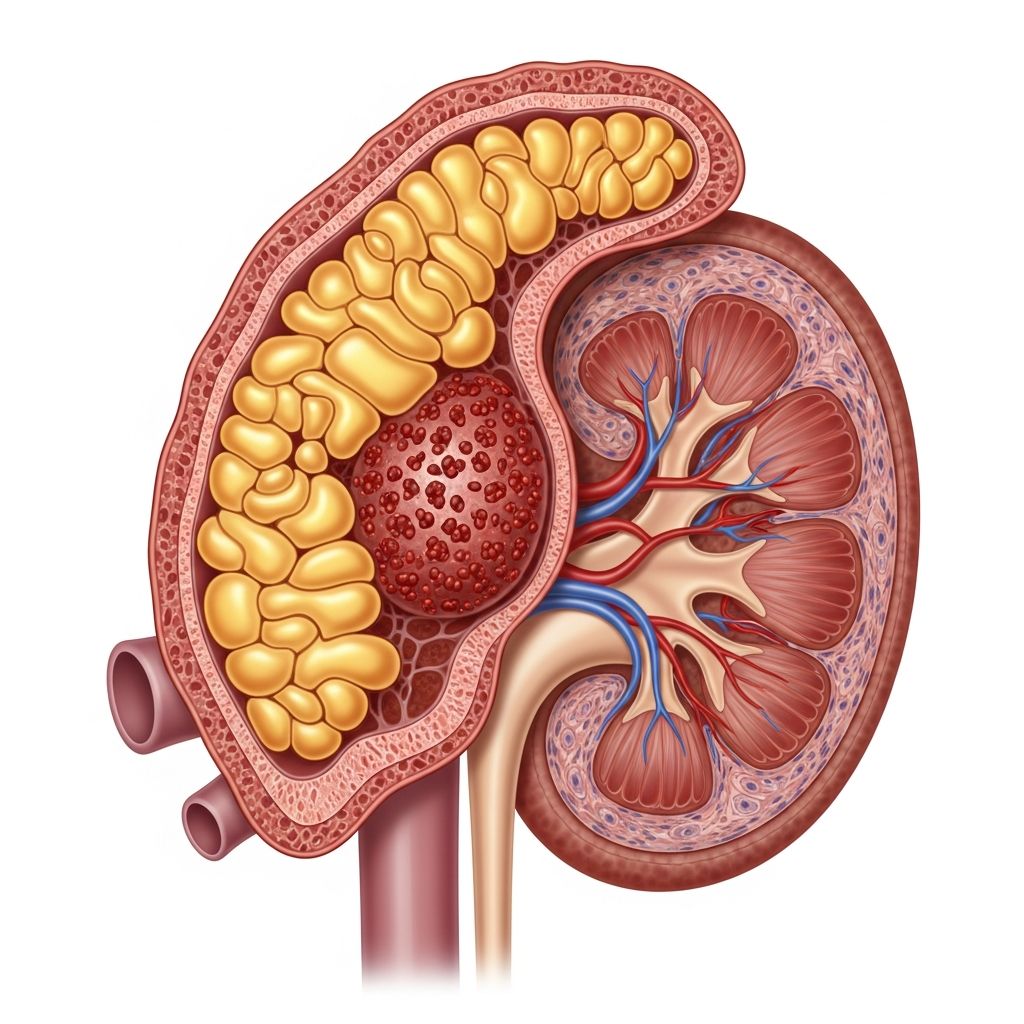
What Is Adrenal Myelolipoma?
An adrenal myelolipoma is a rare, benign (non-cancerous) tumor that develops in the adrenal glands. These tumors are composed of mature adipose tissue (fat cells) and hematopoietic elements (blood-forming cells), which gives them their distinctive appearance on imaging studies. The term “myelolipoma” literally describes the composition of the tumor: “myelo” referring to bone marrow-like tissue and “lipoma” referring to fatty tissue.
Myelolipomas are among the most commonly discovered incidental adrenal masses, meaning they are typically found by chance during imaging studies performed for other reasons rather than because patients are experiencing symptoms. The incidence of adrenal myelolipoma ranges from 0.08 to 0.2%, with most cases occurring in older patients. These tumors are almost always unilateral, affecting only one adrenal gland, though bilateral cases have been documented in rare instances.
Causes and Risk Factors
While the exact cause of adrenal myelolipoma remains unclear, researchers have identified several factors that may contribute to their development. The most widely accepted theory involves metaplastic change in reticuloendothelial cells, which are special cells found throughout the body that can transform under certain conditions.
Several underlying conditions and circumstances have been associated with myelolipoma development:
- Chronic stress
- Chronic infections
- Cushing’s disease
- Hypertension (high blood pressure)
- Diabetes mellitus
- Obesity
Patients with these conditions may have a slightly elevated risk of developing adrenal myelolipomas, though having one of these conditions does not mean a myelolipoma will necessarily develop. The relationship between these factors and tumor formation is not fully understood and requires further research.
Symptoms and Clinical Presentation
One of the most distinctive features of adrenal myelolipoma is that the vast majority of cases are completely asymptomatic. In fact, many patients never experience any symptoms related to their tumor, and it remains undetected throughout their lifetime unless discovered incidentally during imaging performed for other purposes.
However, when symptoms do occur, they are typically associated with tumor size. Small myelolipomas, typically those measuring less than 4 centimeters in diameter, generally remain asymptomatic. As tumors grow larger, they may cause symptoms through two primary mechanisms: mass effect (pressure on nearby organs) or spontaneous hemorrhage (bleeding within the tumor).
Common Symptoms in Symptomatic Cases
- Abdominal pain or discomfort
- Back pain
- Flank pain
- Nausea and vomiting
- Persistent, vague abdominal discomfort
- Hematuria (blood in the urine)
- Hypertension (high blood pressure)
- Palpable abdominal mass (in some cases)
One of the most significant potential complications of adrenal myelolipoma is spontaneous retroperitoneal hemorrhage, which occurs when the tumor bleeds into the space surrounding the kidneys and other abdominal structures. This serious complication can present with acute onset of severe pain, nausea, vomiting, hypotension (low blood pressure), and signs of anemia.
Diagnosis and Imaging
The diagnosis of adrenal myelolipoma relies primarily on imaging studies, as the characteristic appearance of these tumors on radiographic imaging is highly suggestive of the diagnosis. Multiple imaging modalities can effectively identify and characterize these tumors.
Related Stories



Computed Tomography (CT)
CT imaging is one of the most commonly used modalities for diagnosing adrenal myelolipoma. The characteristic CT findings include a well-defined mass in the adrenal gland with prominent macroscopic fat, appearing as a low-density lesion. The presence of significant fat content within the tumor helps distinguish it from other adrenal masses. An adrenal protocol CT typically includes unenhanced images followed by administration of intravenous contrast with repeat imaging at 60 to 75 seconds (venous phase) and at 15 minutes (delayed phase).
Magnetic Resonance Imaging (MRI)
MRI can also effectively visualize adrenal myelolipomas and may be particularly useful in certain clinical scenarios. MRI can confirm the fatty nature of the mass and may show characteristics such as calcifications, cyst formation, necrosis, and areas of hemorrhage within larger tumors. The presence of fat on MRI sequences, particularly on fat-suppressed images, further supports the diagnosis of myelolipoma.
Fine Needle Aspiration (FNA)
In some cases, particularly with larger adrenal tumors or when there is diagnostic uncertainty, fine needle aspiration may be performed. FNA provides approximately 90% accuracy in diagnosing malignant lesions of the adrenal gland. This minimally invasive technique can help establish a definitive diagnosis and guide management decisions, particularly in determining whether surgical intervention is necessary.
Molecular and Pathological Analysis
When tissue is obtained through FNA or surgical resection, pathological examination confirms the diagnosis through microscopic evaluation of the hematopoietic and adipose components. Advanced molecular testing, such as FISH (Fluorescence In Situ Hybridization) analysis for MDM2 gene amplification, can help differentiate myelolipomas from well-differentiated liposarcomas, which are malignant tumors with a similar appearance. Immunostaining with markers such as HMB-45 and MART-1 may also be utilized in the diagnostic process.
Differential Diagnosis
While the imaging appearance of adrenal myelolipoma is usually characteristic, several other adrenal masses must be considered in the differential diagnosis:
- Adrenal lipoma (benign fat-containing tumor)
- Well-differentiated liposarcoma (malignant fatty tumor)
- Adrenal adenoma with high lipid content
- Angiomyelolipoma
- Adrenal incidentaloma of unclear significance
The distinction between myelolipoma and liposarcoma is particularly important, as liposarcomas are malignant tumors requiring aggressive treatment. Advanced imaging, molecular studies, and pathological analysis help ensure accurate differentiation between these entities.
Natural History and Management
Understanding the natural history of adrenal myelolipoma is crucial for determining appropriate management. Long-term follow-up studies have provided valuable insights into how these tumors behave over time.
Conservative Management
The majority of adrenal myelolipomas can be managed conservatively without surgical intervention. Studies following patients over several years have demonstrated that most tumors remain stable or grow very slowly. In one study of 15 patients followed without surgery for an average of 3.2 years, 13 remained completely asymptomatic throughout the follow-up period. While some tumors did increase in size during follow-up, the growth rate was variable, and size did not necessarily correlate with symptom development.
For small, asymptomatic myelolipomas discovered incidentally, conservative management with clinical and radiologic monitoring is the standard approach. Patients should undergo periodic imaging studies to document tumor size and characteristics. The frequency of follow-up imaging may vary based on tumor size, patient age, and associated comorbidities, but typically includes imaging at regular intervals such as 6 months, 1 year, and then annually or as clinically indicated.
Surgical Intervention
Surgical resection of an adrenal myelolipoma is indicated in specific clinical scenarios:
- Large tumors (generally greater than 4 centimeters) that are causing persistent symptoms
- Acute hemorrhage or hemorrhagic complications
- Diagnostic uncertainty despite imaging and laboratory evaluation
- Significant mass effect causing compression of vital organs
- Patient preference or anxiety about the presence of an adrenal mass
When surgery is necessary, adrenalectomy (removal of the affected adrenal gland) is the standard surgical approach. Modern surgical techniques allow most adrenalectomies to be performed laparoscopically, which offers advantages of reduced pain, shorter hospital stays, and faster recovery compared to open surgery.
Monitoring and Follow-up
Patients with diagnosed adrenal myelolipoma should have appropriate clinical follow-up based on tumor characteristics and symptoms. Initial evaluation should establish baseline imaging characteristics and ensure that symptoms, if present, are not attributable to other causes.
For small asymptomatic myelolipomas, follow-up imaging with CT or MRI at 6 months, then annually for 2-3 years is a reasonable approach. If imaging demonstrates stability over time, the interval between follow-up studies can be extended. Patients should be counseled to report any new or worsening symptoms, particularly sudden onset of severe abdominal or back pain, which might suggest hemorrhage.
Patients should maintain appropriate management of associated conditions such as hypertension, diabetes, and obesity, as these may influence long-term outcomes. Regular communication with their healthcare provider ensures optimal monitoring and early detection of any complications.
Extra-Adrenal Myelolipomas
While adrenal glands are the most common site for myelolipoma development, these tumors can occur in extra-adrenal locations including the retroperitoneum, presacral region, and pelvis. Extra-adrenal myelolipomas are significantly rarer than their adrenal counterparts but follow similar pathological principles. These ectopic tumors can achieve very large sizes before detection and may cause mass effect symptoms. They require careful imaging evaluation to differentiate from malignant fatty tumors in these locations. The diagnostic and management principles remain similar to adrenal myelolipomas.
Frequently Asked Questions
Q: Is adrenal myelolipoma cancer?
A: No, adrenal myelolipoma is a benign (non-cancerous) tumor. It does not have the potential to become cancer or to spread to other parts of the body, which distinguishes it from malignant adrenal tumors.
Q: Will my myelolipoma grow larger over time?
A: Myelolipomas exhibit variable growth patterns. Some remain stable throughout a patient’s lifetime, some grow slowly, and some may even decrease in size. Size does not necessarily predict symptom development. Regular monitoring helps track any changes.
Q: Does having a myelolipoma mean I need surgery?
A: Most myelolipomas do not require surgery and can be managed conservatively with monitoring. Surgery is typically reserved for large tumors causing significant symptoms, hemorrhagic complications, or cases with diagnostic uncertainty.
Q: How often do I need follow-up imaging?
A: For asymptomatic myelolipomas, initial follow-up imaging at 6 months, then annually for 2-3 years is typical. If the tumor remains stable, the interval between studies can be extended. Your physician will determine the appropriate schedule based on your specific situation.
Q: What are the complications associated with adrenal myelolipoma?
A: The primary complication of adrenal myelolipoma is spontaneous retroperitoneal hemorrhage, which can cause sudden severe pain, nausea, vomiting, and low blood pressure. Mass effect from large tumors can cause compression of nearby organs and associated symptoms.
Q: Is there any treatment to shrink the myelolipoma?
A: There is no medication or non-surgical treatment that can shrink adrenal myelolipomas. Management focuses on monitoring for growth and symptoms, with surgical removal being the only definitive treatment option when intervention is necessary.
References
- Myelolipoma of the Pelvis: A Case Report and Review of Literature — Frontiers in Oncology. 2018. https://www.frontiersin.org/journals/oncology/articles/10.3389/fonc.2018.00251/full
- The Natural History and Treatment of Adrenal Myelolipoma — National Center for Biotechnology Information (PubMed). 1997. https://pubmed.ncbi.nlm.nih.gov/9120904/
- American Association of Endocrine Surgeons Guidelines for the Management of Adrenal Incidentalomas — JAMA Surgery. 2021. https://jamanetwork.com/journals/jamasurgery/fullarticle/2795363
- Extra-adrenal Myelolipoma in the Pelvis: A Great Mimicker — National Institutes of Health. 2024. https://pmc.ncbi.nlm.nih.gov/articles/PMC12310054/
Similar Articles








Read full bio of medha deb