Adrenal Venous Sampling: Diagnostic Test for Aldosterone
Comprehensive guide to adrenal venous sampling: purpose, procedure, risks, and recovery.
Adrenal Venous Sampling: What You Need to Know
Adrenal venous sampling (AVS) is a minimally invasive diagnostic procedure used by interventional radiologists to obtain blood samples directly from the adrenal veins. This specialized test plays a crucial role in determining whether one or both adrenal glands are producing excessive amounts of aldosterone, a hormone that regulates blood pressure and electrolyte balance. By comparing hormone levels between the two glands, AVS helps physicians make informed treatment decisions and develop personalized care plans for patients with hormonal imbalances.
What Is Adrenal Venous Sampling?
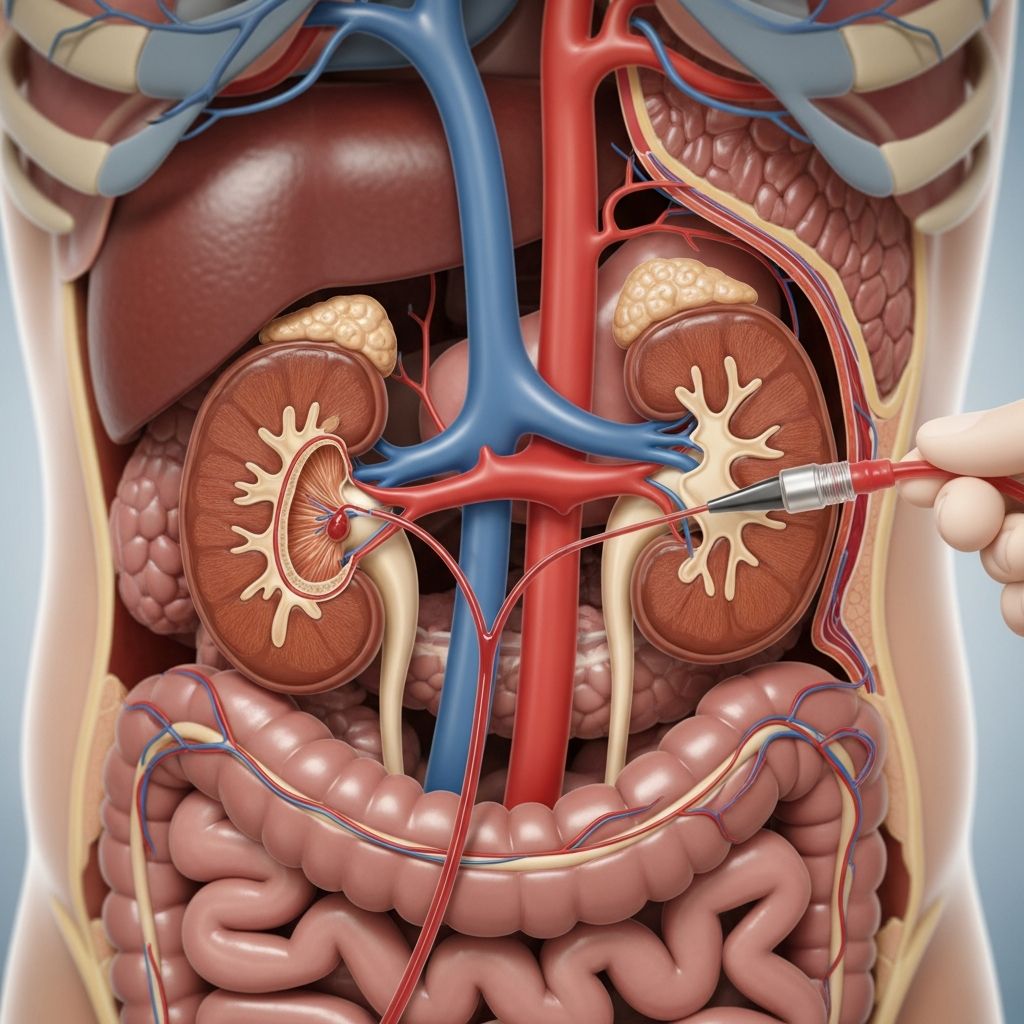
Adrenal venous sampling is a diagnostic imaging procedure that involves the collection of blood samples from the veins draining the adrenal glands. The adrenal glands are small, triangular-shaped organs located on top of the kidneys that produce various hormones essential for regulating body functions, including cortisol, aldosterone, and epinephrine. Unlike external blood tests or imaging studies, AVS provides direct access to hormones as they are being secreted from the glands themselves, making it an exceptionally accurate diagnostic tool.
The procedure is considered the gold standard for distinguishing whether aldosterone overproduction originates from one gland (unilateral) or both glands (bilateral). This distinction is critical because it determines whether surgical intervention or medical management is the most appropriate treatment approach.
Why Your Doctor Might Recommend AVS
Physicians recommend adrenal venous sampling primarily for patients with primary aldosteronism, also known as Conn’s syndrome. This condition occurs when one or both adrenal glands produce excessive aldosterone, leading to high blood pressure, low potassium levels, and other metabolic complications. AVS helps clinicians determine the underlying cause and select the optimal treatment strategy.
Primary Indications for AVS
The main reasons your healthcare provider may recommend AVS include:
– Confirmed diagnosis of primary aldosteronism requiring treatment planning- Need to determine if the condition is unilateral (one gland affected) or bilateral (both glands affected)- Evaluation of resistant hypertension with biochemical evidence of aldosterone excess- Selection between surgical and medical management options- Less commonly, diagnosis of Cushing syndrome or detection of pheochromocytomas, rare tumors on the adrenal gland- Investigation of other hormonal imbalances resulting from adrenal dysfunction
Imaging tests such as computed tomography (CT) or magnetic resonance imaging (MRI) can reveal physical abnormalities like tumors or enlarged glands, but only AVS can definitively determine which gland is overproducing aldosterone.
How the Adrenal Venous Sampling Procedure Works
Pre-Procedure Preparation
Before your AVS procedure, your healthcare team will provide specific preparation instructions. You will typically receive moderate sedation to ensure comfort throughout the procedure. Some patients receive cosyntropin, a synthetic hormone that stimulates aldosterone production from the adrenal glands. This medication increases hormone secretion, making the results more accurate and reducing temporal fluctuations in hormone levels. Cosyntropin also may increase adrenal blood flow, potentially enlarging the adrenal veins and making catheterization easier for the interventional radiologist.
Step-by-Step Procedure
Initial Access: The interventional radiologist begins by making a small puncture in the femoral vein located in your groin, or occasionally in the jugular vein in your neck. This is the primary access point for introducing the catheter.
Related Stories



Vein Mapping: Before advancing the catheter to the adrenal veins, the physician injects iodinated contrast material to visualize and map the venous anatomy. This contrast dye appears on X-ray images, allowing the radiologist to precisely locate the adrenal veins and understand the unique vascular anatomy of each patient.
Catheter Advancement: Under continuous fluoroscopic (real-time X-ray) guidance, the radiologist threads a small, flexible catheter through the femoral vein and advances it toward the adrenal veins. The right adrenal vein cannulation is typically performed first because it is more difficult to access and time-consuming than the left. Successful cannulation may require various catheter configurations or custom-shaped catheters to accommodate individual anatomic variations.
Confirmation of Position: Once the catheter tip reaches the target adrenal vein, a small amount of contrast medium is injected to confirm correct positioning. The radiologist carefully assesses the venographic appearance to ensure the catheter is in the proper location before proceeding with sampling.
Blood Sampling: After confirming proper catheter placement, blood is obtained through gentle aspiration using a syringe. The first 2 milliliters of blood are typically discarded because iodinated contrast has been shown to interfere with laboratory measurements of serum aldosterone levels. Subsequent samples are collected carefully using slow, intermittent, or gravity-assisted aspiration rather than high negative pressure, which could collapse the fragile adrenal vein and prevent adequate sampling.
Bilateral Sampling: In sequential sampling, the left adrenal vein is then catheterized using similar techniques. The left adrenal vein has a more constant anatomic position compared to the right and typically joins the inferior phrenic vein before entering the left renal vein. Blood samples from both adrenal veins are collected and compared to determine which gland is producing excess aldosterone.
Additional Samples: In some cases, additional blood samples may be obtained after administration of medications that stimulate hormone production, providing comparative data for more accurate interpretation.
Procedure Duration
The entire AVS procedure typically takes between 1 to 3 hours to complete, depending on the complexity of the individual’s vascular anatomy, the ease of catheterization, and whether stimulation protocols are used.
Technical Considerations and Expertise
Adrenal venous sampling is technically challenging and requires considerable expertise. The most common reason for unsuccessful procedures is failure to properly cannulate the right adrenal vein due to its variable anatomy and small caliber. Experienced interventional radiologists employ sequential rather than simultaneous catheterization of both adrenal veins, as this approach has become the standard technique.
Meticulous assessment of adrenal vein anatomy using multidetector CT imaging prior to the procedure is crucial for selecting appropriate catheter sizes and configurations. Knowledge of anatomic landmarks, such as the inferior accessory hepatic vein and inferior emissary vein for the right adrenal vein, significantly improves cannulation success rates.
During blood sampling, the radiologist must use extreme caution to avoid rupturing the fragile adrenal veins. Only gentle, slow, and low-volume contrast injections are performed during venography to prevent vein rupture. Similarly, blood aspiration must be performed gently to prevent vein collapse and ensure adequate sampling.
Understanding Your Results
After the procedure, blood samples from both adrenal veins are sent to a laboratory for detailed analysis. Laboratory technicians measure aldosterone levels and compare them between the right and left adrenal veins. The selectivity index (SI) is calculated to ensure sampling adequacy—this compares cortisol levels in the adrenal vein blood to cortisol levels in peripheral blood to confirm that adequate adrenal vein blood was actually collected.
Results are interpreted as follows:
– Unilateral aldosterone production: One adrenal gland is producing significantly more aldosterone than the other, suggesting the possibility of surgical cure through removal of the affected gland- Bilateral aldosterone production: Both adrenal glands are producing excess aldosterone in similar amounts, indicating that medical management rather than surgery is the appropriate treatment approach
Your healthcare provider will discuss these results with you and explain what they mean for your specific situation and recommended treatment plan.
Risks and Complications
Adrenal venous sampling is generally a safe and effective procedure, but like all medical interventions, it carries certain risks. Possible complications include:
– Adrenal vein thrombosis: Formation of blood clots within the adrenal vein, which is why anticoagulation with heparin is often administered during the procedure- Adrenal vein rupture: Perforation of the fragile adrenal vein due to excessive pressure during catheterization or contrast injection- Bleeding: Hematoma or bleeding at the femoral vein puncture site- Infection: Rare risk of infection at the catheterization site- Allergic reaction: Potential reaction to the iodinated contrast material- Kidney injury: Contrast-induced nephropathy in patients with pre-existing renal dysfunction- Vascular injury: Damage to the femoral vein or other blood vessels during catheterization
Most complications are minor and self-limiting. Serious complications are uncommon when the procedure is performed by experienced interventional radiologists at specialized centers.
Recovery and Aftercare
After the procedure is completed and the catheter is removed, you will be taken to a recovery room where your vital signs—including blood pressure, heart rate, and oxygen saturation—will be monitored closely. Most patients recover quickly from AVS because it is minimally invasive.
You may experience mild discomfort or bruising at the puncture site in your groin, which typically resolves within a few days. You should avoid strenuous activity and heavy lifting for several days following the procedure to minimize bleeding at the access site.
Once your vital signs remain stable and the healthcare team is confident in your recovery, you will be discharged and sent home. Most patients can resume normal activities within a few days, though your physician may recommend limiting certain activities for a brief period.
Blood samples are typically hand-delivered to the laboratory and closely monitored for results. Your healthcare provider will discuss the findings with you during a follow-up appointment and explain the implications for your treatment plan.
Advantages of Adrenal Venous Sampling
AVS offers several significant advantages over other diagnostic approaches:
– Accuracy: Provides direct measurement of hormones at the source rather than relying on indirect markers- Treatment planning: Definitively determines whether surgery or medication is the appropriate treatment- Minimally invasive: Uses small catheters and requires only local anesthesia with sedation- Quick recovery: Patients typically return to normal activities within days- Precise anatomic information: Helps radiologists understand individual vascular anatomy for future procedures
When AVS May Not Be Needed
In some clinical scenarios, AVS may not be necessary. For instance, if imaging studies reveal a large adrenal tumor combined with significantly elevated aldosterone levels and biochemical evidence of unilateral disease, surgery may be recommended without AVS. However, AVS remains the gold standard for confirming laterality in most cases of primary aldosteronism.
Frequently Asked Questions
Is adrenal venous sampling painful?
The procedure is performed under moderate sedation, which means you will be relaxed and comfortable throughout. You may feel pressure when the catheter is initially inserted, but you should not experience significant pain. Some mild discomfort at the puncture site is normal after the procedure.
How long does it take to get results?
Laboratory analysis typically requires several days to a week. Your healthcare provider will schedule a follow-up appointment to discuss the results and their implications for your treatment.
Can I drive home after the procedure?
No, because you will receive sedation during the procedure, you should not drive on the day of your AVS. Arrange for someone to pick you up and take you home.
What should I do if I experience complications at home?
Contact your healthcare provider immediately if you develop severe pain, excessive bleeding, signs of infection, or other concerning symptoms after discharge.
Will I need surgery after AVS?
Not necessarily. If AVS results indicate bilateral aldosterone production, medical management with medications is typically recommended. Surgery is usually considered only when unilateral aldosterone production is confirmed.
References
- Primary aldosteronism: The role of adrenal venous sampling — Mayo Clinic. 2023. https://www.mayoclinic.org/medical-professionals/endocrinology/news/primary-aldosteronism-the-role-of-adrenal-venous-sampling/mac-20430855
- Venous Sampling — Radiology Info, American College of Radiology. 2024. https://www.radiologyinfo.org/en/info/venous-sampling
- Adrenal vein sampling: technique and protocol, a systematic review — National Center for Biotechnology Information (NCBI). 2021. https://pmc.ncbi.nlm.nih.gov/articles/PMC8093361/
- Adrenal Venous Sampling (AVS) — Cleveland Clinic. 2024. https://my.clevelandclinic.org/health/procedures/adrenal-venous-sampling-avs
- Adrenal Vein Sampling: Tips and Tricks — RadioGraphics, Radiological Society of North America. 2023. https://pubs.rsna.org/doi/abs/10.1148/rg.230115
- Adrenal Venous Sampling — University of Miami Health System. 2024. https://umiamihealth.org/en/treatments-and-services/interventional-radiology/endocrine-interventions/adrenal-vein-sampling
- Adrenal Venous Sampling — Primary Aldosteronism Foundation. 2024. https://primaryaldosteronism.org/step-4-adrenal-venous-sampling/
Similar Articles








Read full bio of medha deb