Adult Acne: Causes, Types, and Treatment Options
Comprehensive guide to understanding and treating persistent acne in adults.
What Is Adult Acne?
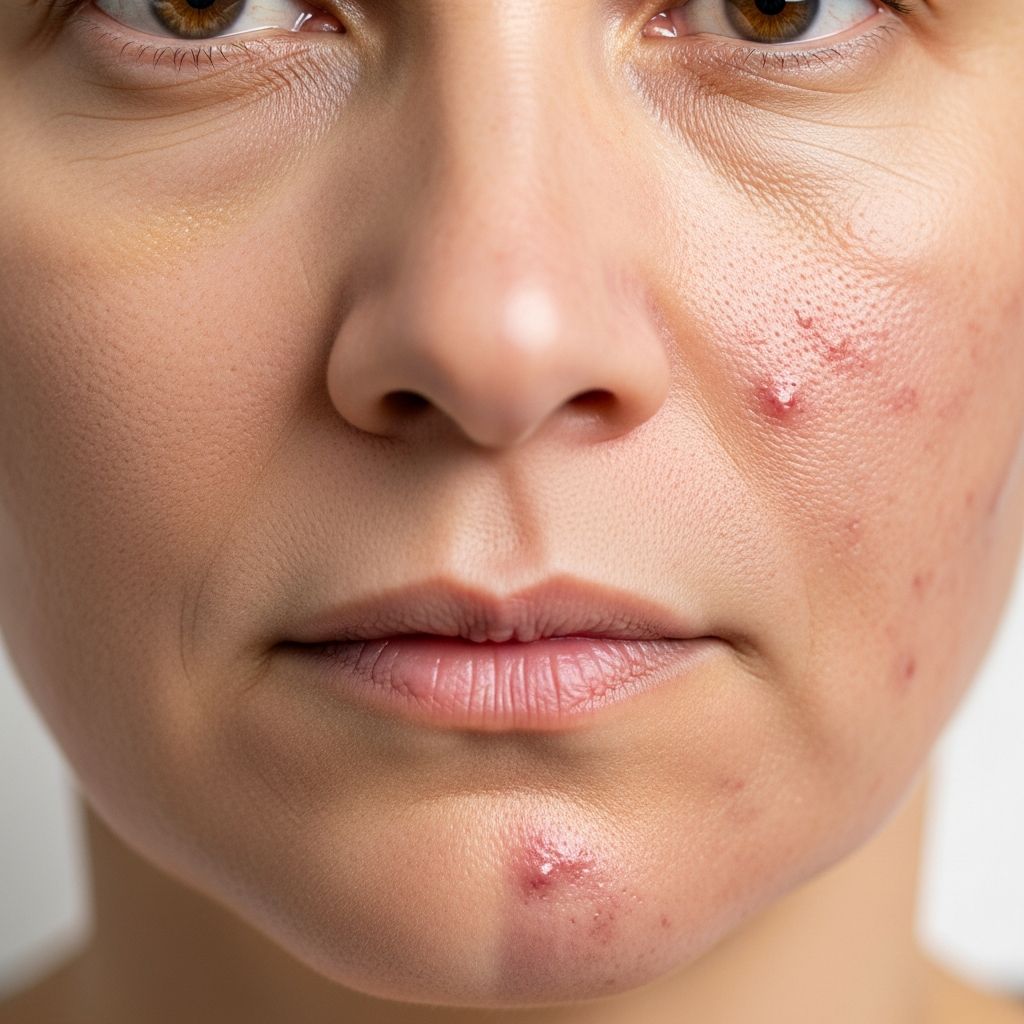
Adult acne encompasses a variety of clogged and irritated pores that can develop on the face, neck, chest, shoulders, or back in individuals beyond their teenage years. Unlike the assumption that acne is exclusively a teenage concern, breakouts can persist into adulthood or emerge for the first time after age 25. Understanding adult acne requires recognizing that it differs significantly from adolescent acne in both its underlying causes and treatment approaches.
Adult acne typically falls into two primary categories: persistent acne, which represents breakouts that never resolved or returned from the teenage years, and late-onset acne, which describes new acne appearing for the first time after age 25. This distinction is clinically important because it helps dermatologists identify the root causes and tailor treatment plans accordingly.
Types of Adult Acne
Several distinct types of acne can affect adults, each with specific characteristics and underlying mechanisms:
Fungal Acne
Fungal acne develops from an overgrowth of yeast within hair follicles and is often triggered by tight, sweaty clothing, a weakened immune system, or certain medications including antibiotics and hormonal birth control. This type requires targeted antifungal treatment rather than standard acne medications.
Hormonal Acne
Hormonal acne results from hormonal fluctuations during the menstrual cycle, pregnancy, perimenopause, and menopause. This type characteristically produces deep, painful cysts beneath the skin, typically appearing on the chin and jawline. Women are particularly susceptible to hormonal acne due to cyclical estrogen and progesterone changes.
Nodular Acne
Nodular acne causes painful, firm, red or skin-colored lumps beneath the skin surface. It develops from the interaction of the Cutibacterium acnes bacteria, excess oil production, hormonal imbalances, and genetic predisposition. In women, nodular acne commonly appears on the jawline, while men typically experience it on the face, chest, or back.
Common Causes of Adult Acne
Understanding the root causes of adult acne is essential for identifying effective treatment strategies. Multiple factors can contribute to breakouts in adults, often working in combination.
Hormonal Changes
Hormonal fluctuations represent one of the most significant contributors to adult acne. For women, hormonal shifts occur when starting or discontinuing hormonal birth control, during menstrual cycles, and throughout pregnancy, perimenopause, and menopause. In men, fluctuating testosterone levels can similarly trigger hormonal acne. These hormonal changes stimulate sebaceous glands to produce excess sebum, leading to clogged pores and bacterial colonization.
Genetics
Family history plays a substantial role in adult acne development. Research from the American Academy of Dermatology Association demonstrates that individuals with blood relatives who experienced acne are significantly more likely to develop it themselves. Genetic factors influence sebum production rates, skin microbiome composition, and immune response to acne-causing bacteria.
Stress
Psychological and work-related stress directly exacerbates acne through hormonal pathways. When the body experiences stress, it increases production of androgens and cortisol, hormones that stimulate oil gland activity. This hormonal surge triggers increased sebum production, leading to follicular obstruction and inflammation. Studies consistently demonstrate correlations between elevated stress levels and acne flare-ups.
Related Stories



Dietary Factors
While research is ongoing, evidence suggests that certain dietary components influence acne development. High-glycemic foods—including white bread, pasta, cereals, and refined sugars—have been linked to inflammatory responses that can trigger or worsen acne. Additionally, some research indicates that cow’s milk consumption may exacerbate breakouts in susceptible individuals, though the exact mechanisms remain under investigation.
Bacterial and Microbiome Factors
Acne develops when sebum and dead skin cells clog hair follicles, creating an anaerobic environment where Cutibacterium acnes bacteria proliferate. These bacteria trigger inflammation and potential infection, worsening acne severity. The microbiome composition within pilosebaceous follicles plays a critical role in acne pathogenesis, and dysbiosis—an imbalance in beneficial and pathogenic bacteria—can perpetuate acne cycles.
Medications and Skincare Habits
Certain medications, including lithium, systemic corticosteroids, and anticonvulsants, can trigger or worsen acne. Additionally, using occlusive clothing (shoulder pads, tight headbands, backpacks), oil-based cosmetics, and aggressive facial massage can obstruct pores and exacerbate breakouts.
Treatment Options for Adult Acne
A spectrum of treatment approaches exists for managing adult acne, ranging from lifestyle modifications and over-the-counter products to prescription medications and professional procedures. The most effective approach often combines multiple strategies tailored to individual acne severity and underlying causes.
Lifestyle Modifications
Simple behavioral changes can substantially improve adult acne:
- Gentle cleansing: Wash your face no more than twice daily using gentle, non-comedogenic (non-pore-clogging) cleansers to avoid excessive irritation
- Non-comedogenic skincare: Choose oil-free and non-comedogenic products specifically formulated to avoid follicular obstruction
- Avoid face-touching: Minimize touching your face throughout the day to reduce bacterial transfer and mechanical irritation
- Dietary adjustments: Limit high-glycemic foods and consider reducing dairy consumption if sensitivity is suspected
- Stress management: Implement stress-reduction techniques including exercise, meditation, and adequate sleep to regulate hormonal responses
Topical Treatments
Topical medications represent the first-line treatment for mild to moderate adult acne and should be initiated before systemic therapies. Effective topical agents include:
- Benzoyl peroxide: Reduces acne-causing bacteria and possesses anti-inflammatory properties; available over-the-counter in various concentrations
- Salicylic acid: Exfoliates dead skin cells and unclogs pores; commonly found in cleansers and spot treatments
- Retinoids: Promote cell turnover, reduce sebum production, and prevent follicular obstruction; prescription retinoids offer stronger efficacy than over-the-counter alternatives
- Topical antibiotics: Kill acne-causing bacteria and reduce inflammation; often combined with benzoyl peroxide to prevent antibiotic resistance
Oral Medications
For moderate to severe adult acne, oral medications provide systemic benefits that topical treatments cannot achieve:
- Oral antibiotics: Tetracyclines (doxycycline, minocycline), erythromycin, and clindamycin reduce bacterial proliferation and provide anti-inflammatory effects. These are typically prescribed for 6–12 weeks as adjunctive therapy
- Hormonal therapies: Oral contraceptives and spironolactone help women manage hormonal acne by regulating androgen levels and reducing sebum production
- Isotretinoin: This oral retinoid is reserved for severe, treatment-resistant acne and nodular acne. Administered at 0.5–1 mg/kg daily, isotretinoin can achieve long-term remission or cure but requires careful monitoring due to potential side effects
Professional Treatments
Dermatologists offer advanced in-office procedures for patients with severe or resistant acne:
- Light-based and laser therapies: Blue light reduces bacteria, red light decreases inflammation, and infrared devices penetrate deeper tissue layers. Photodynamic therapy and photopneumatic therapy combine light energy with other modalities for enhanced efficacy
- Chemical peels: These procedures use chemical solutions to exfoliate dead skin and improve skin texture, reducing comedones and post-inflammatory hyperpigmentation
- Steroid injections: For severe nodules and cysts, intralesional steroid injections reduce inflammation and provide rapid pain relief
- Extraction and drainage: Dermatologists can safely extract blackheads and small cysts using sterile techniques. Incision and drainage procedures address larger or infected cysts under controlled conditions
Combination Therapy Approach
The most effective acne management typically combines multiple treatment modalities. A dermatologist might prescribe a topical retinoid with benzoyl peroxide for daily use, add oral antibiotics or hormonal therapy for systemic benefits, and recommend periodic light-based treatments or chemical peels for enhanced results. This multi-faceted approach addresses acne’s complex pathophysiology and improves treatment outcomes.
When to Consult a Dermatologist
Scheduling a consultation with a board-certified dermatologist is advisable when acne:
- Persists despite consistent use of over-the-counter treatments for 6–8 weeks
- Causes significant scarring or post-inflammatory changes
- Involves nodules or severe cystic acne
- Significantly impacts quality of life or psychological well-being
- Is suspected to result from hormonal or endocrine disorders
Frequently Asked Questions
Q: Can diet really affect adult acne?
A: While genetics, hormones, and bacteria play primary roles, evidence suggests high-glycemic foods and possibly dairy may trigger inflammatory responses and worsen acne in susceptible individuals. Limiting these foods may help, though results vary.
Q: Is adult acne hormonal?
A: Not all adult acne is hormonal, though hormonal changes significantly contribute. Stress, genetics, diet, bacteria, and skincare habits also play important roles. A dermatologist can help identify your specific acne triggers.
Q: How long does acne treatment take to work?
A: Most topical treatments require 4–8 weeks of consistent use before visible improvement. Oral medications may take 2–3 months. Isotretinoin can require 4–6 months for optimal results.
Q: Can stress cause adult acne?
A: Yes. Stress increases androgen and cortisol production, which stimulate sebaceous glands and increase inflammation. Stress-management techniques can help reduce acne flare-ups.
Q: Is isotretinoin safe?
A: Isotretinoin is highly effective for severe acne but requires careful medical supervision due to potential side effects and birth defect risks in pregnancy. Regular blood work and monitoring are mandatory during treatment.
Q: Can adults outgrow acne?
A: Some adults experience spontaneous acne resolution, but others develop persistent or late-onset acne. Proper treatment and skincare can effectively manage acne at any age.
References
- Acne Vulgaris — National Center for Biotechnology Information (NCBI), U.S. National Library of Medicine. 2024. https://www.ncbi.nlm.nih.gov/books/NBK459173/
- Acne: Symptoms and Causes — Mayo Clinic. 2024. https://www.mayoclinic.org/diseases-conditions/acne/symptoms-causes/syc-20368047
- Acne: Types, Causes, Treatment & Prevention — Cleveland Clinic. 2024. https://my.clevelandclinic.org/health/diseases/12233-acne
- Adult Acne: Causes and Treatment Options for Clearer Skin — CareCredit Well-U. 2024. https://www.carecredit.com/well-u/health-wellness/adult-acne/
- What Causes Adult Acne and How to Treat It — Frontier Dermatology. 2024. https://www.frontierdermatology.com/what-causes-adult-acne-and-how-to-treat-it/
Similar Articles








Read full bio of medha deb