Advanced Fixes for Persistent Macular Holes
Discover cutting-edge surgical innovations that boost closure rates for stubborn macular holes resistant to standard treatments.
Persistent or refractory macular holes represent a challenging subset of retinal conditions where initial surgical interventions fail to achieve closure. These defects in the central retina can severely impair vision, necessitating innovative approaches to restore anatomical integrity and visual function. Standard procedures like pars plana vitrectomy (PPV) with internal limiting membrane (ILM) peeling boast closure rates near 90%, yet 4-11% of cases remain open, demanding advanced strategies.
Grasping the Nature of Refractory Macular Holes
Macular holes typically arise from vitreomacular traction, leading to a full-thickness defect in the macula. While most respond well to PPV and gas tamponade, refractory cases often involve larger holes (>400 µm), chronic duration (>1 year), or high myopia. Factors like persistent tangential traction or retinal stiffness contribute to non-closure, prompting surgeons to explore adjunctive maneuvers.
Symptoms include central vision loss, metamorphopsia, and scotomas. Optical coherence tomography (OCT) is pivotal for diagnosis, revealing hole size, configuration, and surrounding retinal changes. Early identification of high-risk features guides the shift to specialized techniques.
Building Blocks of Standard Macular Hole Repair
Conventional surgery begins with PPV to remove the vitreous gel, followed by posterior hyaloid separation if adherent. Stains like triamcinolone acetonide or brilliant blue G highlight the ILM for precise peeling, relieving traction. Endotamponade with sulfur hexafluoride (SF6) or perfluoropropane (C3F8) gas, often paired with face-down positioning, facilitates edge apposition. Recent data suggests broad ILM peeling with 20% SF6 may obviate prone positioning without compromising outcomes.
Despite these advances, failures occur due to inadequate tissue compliance or residual ILM. Success hinges on hole diameter, with smaller defects (<250 µm) sometimes resolving spontaneously or with ocriplasmin.
Next-Level Technique: Inverted Internal Limiting Membrane Flaps
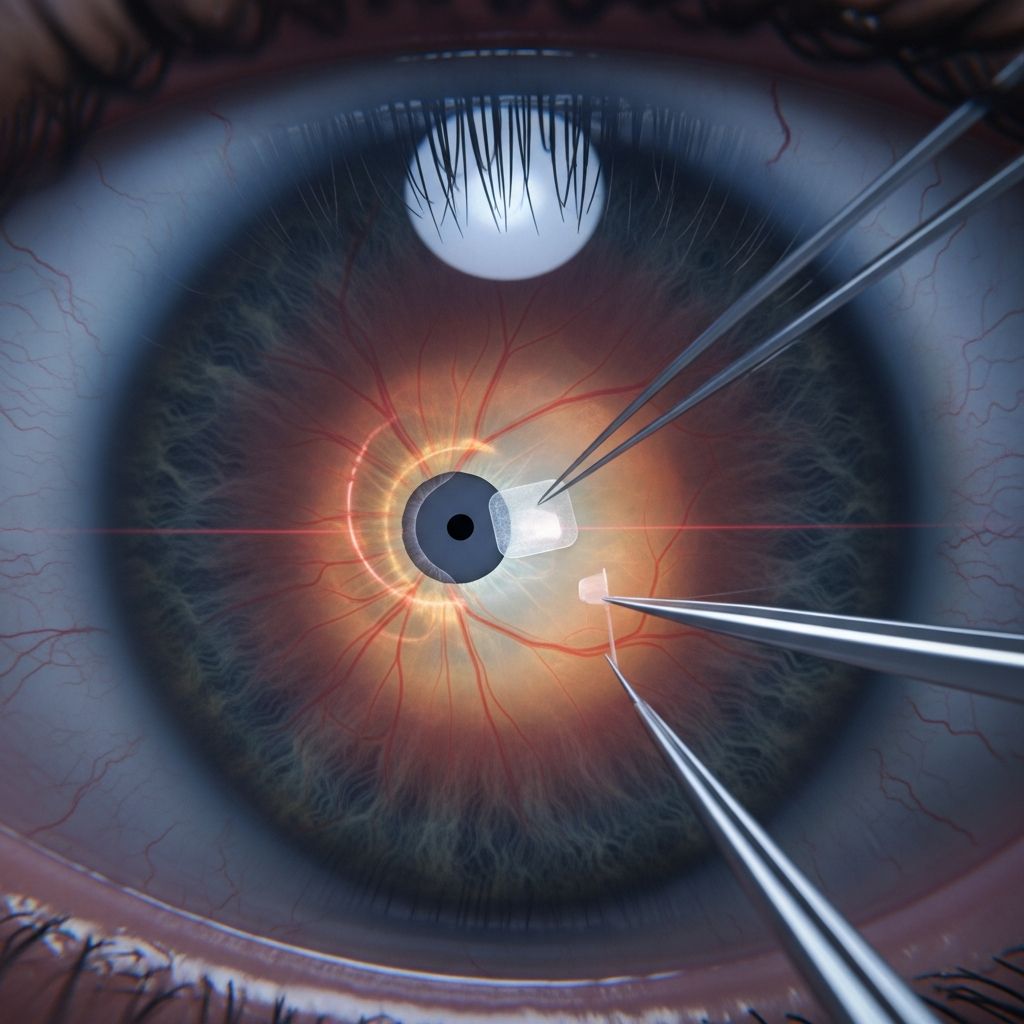
The inverted ILM flap technique marks a breakthrough for larger or persistent holes. Surgeons peel the ILM but leave a flap tethered to the hole edge, inverting it to cover the defect like a patch. Pioneered by Michalewska et al., this method yields closure rates up to 96% for holes >400 µm, surpassing traditional peeling (79%).
Variations include temporal flaps to minimize peel extent and risks like macular edema. For reoperations, if prior flaps persist, repetition is feasible; otherwise, superior wide-base ILM flap transposition (SWIFT) utilizes residual tissue. Visual recovery varies, with some studies noting improved anatomy but modest acuity gains due to underlying photoreceptor damage.
- Advantages: High closure in myopic and large holes; uses autologous tissue.
- Challenges: Technical precision required; potential for flap displacement.
Autologous Retinal Transplantation: Harvesting Hope from Within
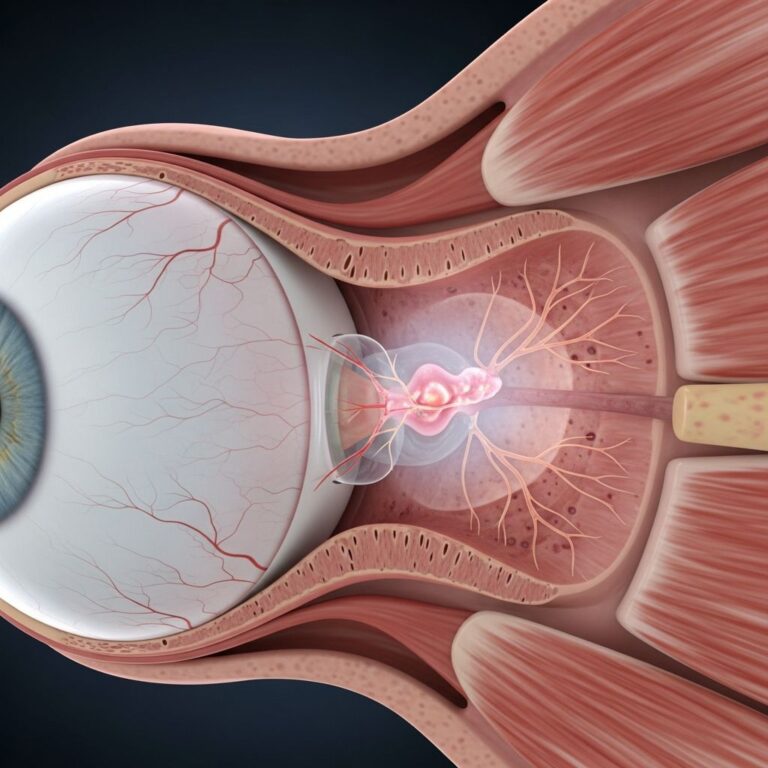
For extreme refractory cases, autologous retinal grafts offer a radical solution. Tissue is harvested from the mid-peripheral retina via retinotomy, trimmed, and transplanted into the macular defect. Grewal and Mahmoud reported successful integration, with OCT showing coverage, vascularization, and perfusion.
Studies confirm high anatomic success (up to 100% coverage), though functional gains depend on graft viability and patient factors. This approach suits myopic or chronic holes post-multiple failures, bypassing donor risks.
| Technique | Closure Rate | Ideal Candidates |
|---|---|---|
| Inverted ILM Flap | 88-96% | Large (>400µm), myopic MH |
| Autologous Retinal Graft | ~100% coverage | Refractory post-ILM peel |
| Standard PPV + ILM Peel | ~90% | Primary small-medium MH |
Related Stories



Retina Expansion and Hydrodissection Innovations
RETMA (Retina Expansion Technique for Macular Hole Apposition) detaches the macula via subretinal balanced salt solution (BSS) through strategic retinotomies (superior, temporal, inferior). This enhances compliance, allowing edges to appose without drainage. Post-fluid-air exchange with SF6 gas and brief prone positioning (6 hours/day for 3 days) promotes closure in chronic/persistent holes.
PolyTip cannulas facilitate precise bleb formation under high-magnification lenses. Case series demonstrate feasibility in phaco-vitrectomy settings, with complete ILM peeling preceding hydrodissection.
Other Promising Adjuncts and Tamponades
Additional strategies include autologous serum/blood application for growth factors, lens capsule grafts, amniotic membrane plugs, and macular buckles. Silicone oil provides prolonged tamponade but risks emulsification. Platelet-rich plasma and perifoveal hydrodissection further diversify options, with no single “best” method established.
Laser photocoagulation around the hole edge is exploratory, showing no major visual field deficits in limited data.
Postoperative Care and Prognostic Factors
Management emphasizes OCT monitoring for closure, typically within weeks. Face-down positioning duration varies; newer protocols minimize it. Visual prognosis correlates with hole duration, size, and photoreceptor integrity. Complications like retinal detachment (rare) or cataract progression require vigilance.
- Monitor with serial OCT.
- Gas fill dictates positioning (e.g., 20% SF6: minimal prone).
- Expect 20/40-20/60 acuity in successful closures.
Patient Selection and Surgical Decision-Making
High-risk holes (large, chronic, myopic) warrant upfront advanced techniques. Refractory cases post-primary surgery benefit from ILM-sparing flaps or grafts if peel was incomplete. Multidisciplinary input, including preoperative OCT biometry, optimizes outcomes.
Future Directions in Macular Hole Management
Ongoing trials refine flap designs, biologic adjuncts, and non-postural tamponades. Stem cell patches and gene therapies loom on the horizon, potentially revolutionizing refractory repairs. Surgeon experience remains paramount, with anatomic success now exceeding 95% in expert hands.
Frequently Asked Questions (FAQs)
What causes a macular hole to persist after surgery?
Large size, chronicity, or residual traction often prevent closure.
Is face-down positioning always necessary?
No; broad ILM peeling with SF6 achieves high closure without it.
How effective are ILM flaps for reoperations?
Very, with 88-96% success in suitable cases.
Can vision fully recover in refractory holes?
Often partial; anatomy closes, but acuity depends on duration.
Are retinal grafts safe?
Yes, with integration and low complications in reports.
References
- Repair strategies for refractory macular holes — Retina Specialist, Homayoun Tabandeh, MD. 2023. https://www.retina-specialist.com/article/repair-strategies-for-refractory-macular-holes
- Surgical technique for approaching chronic or persistent macular holes — PMC (NCBI). 2020-04-07. https://pmc.ncbi.nlm.nih.gov/articles/PMC7160520/
- Macular Hole Surgery — Retinal Physician. 2019-07. https://www.retinalphysician.com/issues/2019/julyaugust/macular-hole-surgery/
- Macular Hole — EyeWiki (AAO). 2024. https://eyewiki.org/Macular_Hole
- Macular hole repair does not require face-down positioning — Mayo Clinic. 2024-10-25. https://www.mayoclinic.org/medical-professionals/ophthalmology/news/macular-hole-repair-does-not-require-face-down-positioning/mac-20430610
Similar Articles








Read full bio of Sneha Tete