Kidney Stone Therapies: 6 Breakthrough Minimally Invasive Options
Discover cutting-edge treatments transforming kidney stone management from invasive surgeries to precise, office-based solutions.
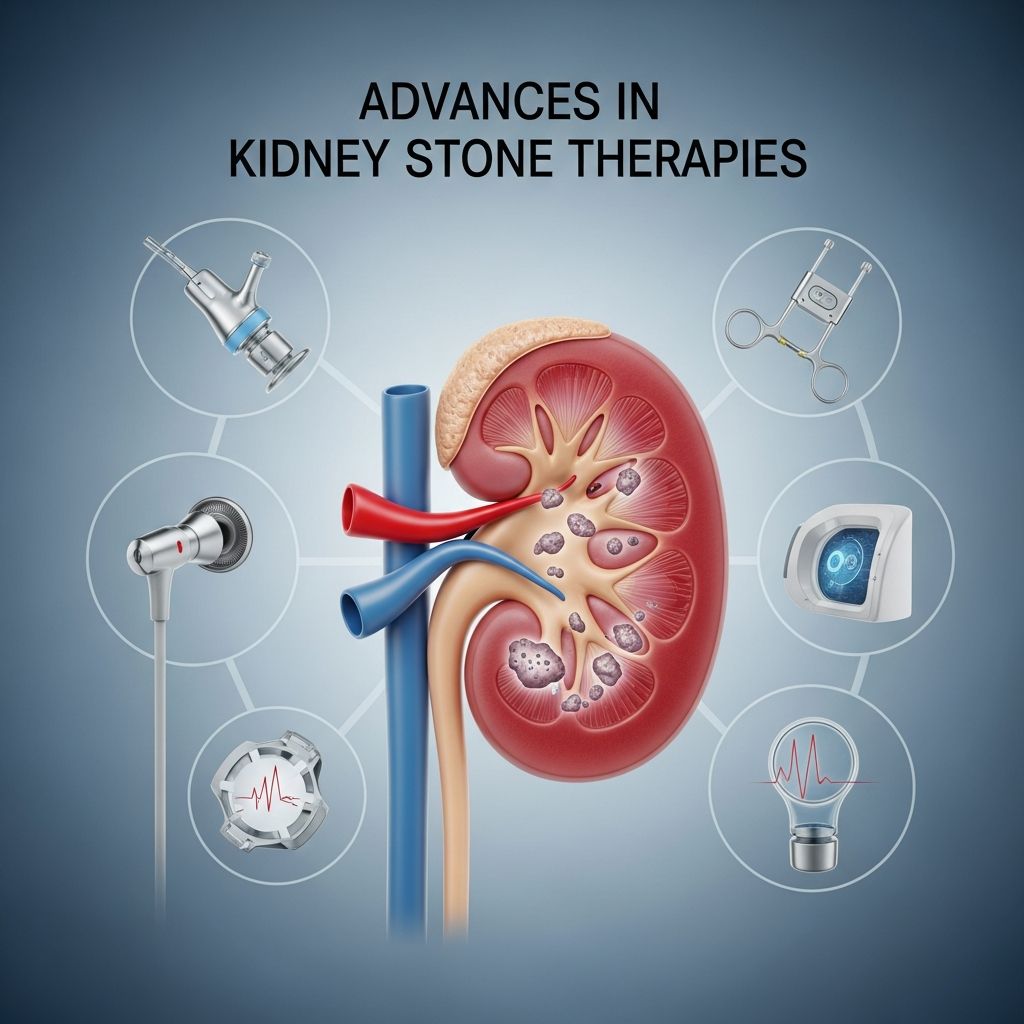
Kidney stones affect millions globally, causing intense pain and frequent medical interventions. Recent technological breakthroughs are revolutionizing treatment, shifting from traditional surgery to minimally invasive and even office-based options. These advancements prioritize precision, patient comfort, and efficiency, enabling faster recovery and lower complication rates.
Understanding Kidney Stones and Traditional Challenges
Kidney stones form when minerals in urine crystallize, leading to hard deposits that can block urinary tracts. Symptoms include severe flank pain, nausea, and blood in urine. Historically, treatments like shock wave lithotripsy (SWL) and ureteroscopy have dominated, but they often require anesthesia, hospital stays, and carry risks of incomplete stone clearance or recurrence.
Smaller stones might pass naturally, but larger ones demand intervention. Procedures such as percutaneous nephrolithotomy (PCNL) involve kidney puncture, which is technically challenging and prone to variability. Innovations address these pain points by enhancing accuracy, reducing invasiveness, and targeting residual fragments proactively.
Non-Invasive Ultrasonic Propulsion: Repositioning Stones Effortlessly
One game-changing technology is ultrasonic propulsion, a handheld device that uses ultrasound waves to nudge stone fragments from difficult kidney locations toward the ureter for natural expulsion. This office-based method eliminates the need for surgery in many cases, allowing treatment during routine visits.
Clinical demonstrations show the device effectively relocating fragments without anesthesia. Patients tolerate it well, reporting minimal discomfort. By clearing hard-to-reach areas, it prevents future blockages and symptomatic episodes, redefining post-procedure management.
- Key Benefits: No incisions, immediate use in clinics, low side effects.
- Applications: Ideal for residual fragments after initial treatments.
- Patient Impact: Reduces emergency visits and repeat surgeries.
Burst Wave Lithotripsy: Precision Fragmentation Without High Energy
Burst wave lithotripsy (BWL) represents a leap in stone-breaking technology. Unlike traditional methods using high-energy single pulses, BWL delivers lower-energy, rapid bursts that pulverize stones into passable particles. Devices like SonoMotion’s Break Wave have gained FDA clearance, enabling anesthesia-free use.
Videos and animations illustrate how BWL targets stones accurately, fragmenting them efficiently. Studies confirm its efficacy for smaller stones and fragments, with procedures completable in outpatient settings. This approach minimizes tissue damage and speeds recovery.
| Technology | Energy Type | Treatment Setting | Fragment Size |
|---|---|---|---|
| Burst Wave Lithotripsy | Low-energy bursts | Office/Clinic | Fine, passable particles |
| Traditional SWL | High-energy shocks | Hospital | Larger fragments |
Robotic Assistance in Percutaneous Procedures
For complex cases requiring PCNL, robotic guidance systems like Focalist are transforming precision. This handheld robot integrates real-time ultrasound for needle placement into the kidney, ensuring consistent access. Surgeons like Dr. Deepak Agarwal have pioneered its use, marking it as a second-world milestone.
Related Stories



The system reduces variability in percutaneous access, a critical and error-prone step. Benefits include safer surgeries, broader access to minimally invasive care, and improved outcomes for large or complex stones. As adoption grows, it promises standardized excellence in endourology.
Advanced Laser and Suction Technologies
New laser therapies and suction access sheaths are optimizing ureteroscopy. Suction sheaths allow simultaneous lasering and fragment aspiration, clearing stones more thoroughly. Smaller endoscopes accommodate narrow ureters, expanding treatment eligibility.
Innovations like the CVAC System combine laser with vacuum extraction, minimizing residual fragments and post-op issues. Hybrid lasers offer versatile wavelengths for efficient dusting and fragmentation. These tools, now integrated at leading centers like University Hospitals, enhance procedural efficiency.
- Suction Sheaths: Aspirate fragments in real-time.
- New Lasers: Superior stone ablation with less retropulsion.
- Endoscope Advances: Fit more anatomies safely.
Focused Ultrasound: A Noninvasive Frontier
Focused ultrasound (FUS) concentrates energy beams on stones without skin penetration. It repositions or fragments calculi, offering a surgery-free alternative. The FDA-cleared Stone Clear device treats post-lithotripsy fragments anesthesia-free, as validated in the Journal of Urology.
Ongoing trials explore FUS for primary stone breakage via SonoMotion’s Break Wave. Advantages include repeatability, no radiation, and low complication risk. Multi-center studies confirm its potential to lower costs and improve quality of life.
Nanomaterials Enhancing Laser Efficiency
Materials science intersects urology with nanomaterials that boost laser performance. University of Chicago researchers developed coatings improving energy utilization, reducing procedure times without altering lasers. This cuts surgery duration, accelerates recovery, and curbs recurrence in the 11% of Americans affected.
Collaborations between engineers and urologists yield transformative results, like safer energy delivery to avoid kidney damage. Such innovations exemplify interdisciplinary progress.
Guidelines and Future Directions
The American Urological Association’s 2026 guidelines endorse suction-based approaches, BWL, robotics, and hybrid lasers. Centers like UH Urology Institute lead with multidisciplinary stone clinics, training residents on these technologies. Conferences like Stone Busters 2026 highlight ongoing evolution.
Future goals emphasize preventing symptomatic events through proactive fragment management. Research focuses on detection, sizing, and non-invasive clearance, potentially eliminating many surgeries.
Frequently Asked Questions (FAQs)
What are the most common kidney stone treatments today?
Modern options include burst wave lithotripsy, ultrasonic propulsion, robotic PCNL, and advanced ureteroscopy with suction.
Can kidney stones be treated without surgery?
Yes, technologies like focused ultrasound and BWL enable non-invasive or office-based fragmentation and relocation.
How effective is robotic guidance in stone surgery?
It provides precise, reproducible access, improving safety and success rates for complex cases.
Are these new treatments covered by insurance?
Coverage varies; FDA-cleared devices like Break Wave are increasingly reimbursable—consult providers.
What prevents kidney stone recurrence?
Proactive fragment clearance and metabolic evaluations reduce risks; innovations aid complete removal.
References
- Innovative Office-based Kidney Stone Treatment — Grand Rounds in Urology, Mathew Sorensen, MD. 2024-09-20. https://grandroundsinurology.com/innovative-office-based-kidney-stone-treatment/
- Dr. Deepak Agarwal Showcases Robotic Innovation for Kidney Stone Surgery — University of Minnesota Medical School. 2026 (accessed). https://med.umn.edu/urology/news/dr-deepak-agarwal-showcases-robotic-innovation-kidney-stone-surgery-kstp
- New Nanomaterial Helps Patients with Kidney Stones — University of Chicago Pritzker School of Molecular Engineering. Recent (2025+). https://pme.uchicago.edu/news/new-nanomaterial-helps-patients-kidney-stones-0
— University Hospitals. 2025-12. https://www.uhhospitals.org/for-clinicians/articles-and-news/articles/2025/12/uh-leads-way-in-endourology-by-advancing-care-for-patients-with-kidney-stones - Kidney Stones – Focused Ultrasound Foundation — Focused Ultrasound Foundation. Ongoing (2026). https://www.fusfoundation.org/diseases-and-conditions/kidney-stones/
- SonoMotion Achieves FDA Clearance for Kidney-Stone-Treating Lithotripsy — MassDevice. Recent FDA clearance (2025). https://www.massdevice.com/sonomotion-achieves-fda-clearance-for-kidney-stone-treating-lithotripsy/
- AUA Releases 2026 Kidney Stone Surgery Guideline — Renal and Urology News. 2026. https://www.renalandurologynews.com/features/kidney-stone-surgery-aua-guidelines-2026/
Similar Articles








Read full bio of Sneha Tete