Afamelanotide: Key Insights On Uses, Dosage & Side Effects
Synthetic α-MSH analogue for photoprotection in erythropoietic protoporphyria and other skin disorders.
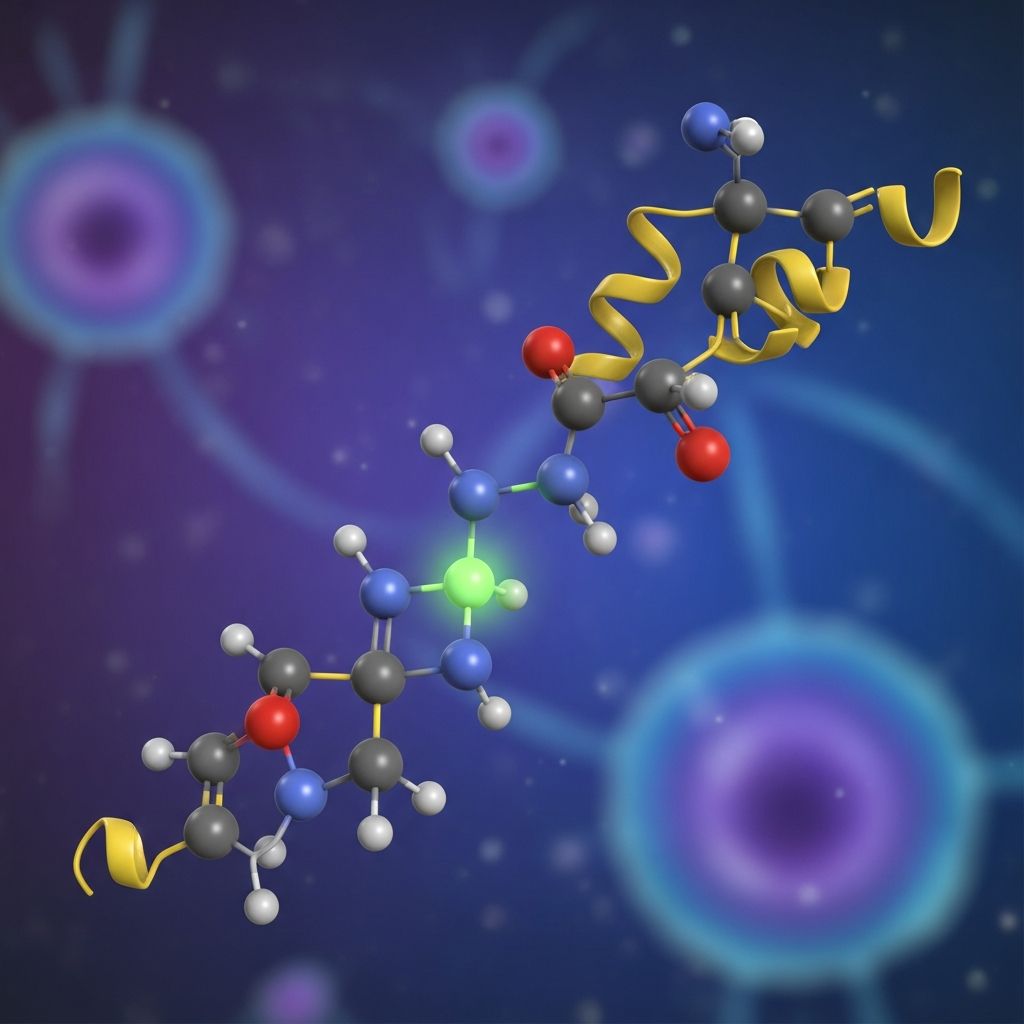
Afamelanotide, marketed as SCENESSE® by Clinuvel Pharmaceuticals, is a synthetic analogue of alpha-melanocyte-stimulating hormone (α-MSH). This injectable peptide stimulates eumelanin production in the skin, providing photoprotection, antioxidant effects, enhanced DNA repair, and anti-inflammatory benefits. Originally known as Melanotan I, it is approved in several countries for treating erythropoietic protoporphyria (EPP), a rare photodermatosis causing severe pain from sunlight exposure.
What is afamelanotide?
Afamelanotide mimics the natural hormone α-MSH, which regulates melanogenesis—the process of melanin production in melanocytes. Unlike natural tanning triggered by ultraviolet (UV) radiation, afamelanotide induces eumelanin synthesis independently of sunlight. Eumelanin, the dark pigment responsible for tanning, absorbs UV light, scatters visible light, and neutralizes free radicals, offering robust skin protection.
The drug is formulated as a controlled-release subcutaneous implant containing 16 mg of afamelanotide in a DL-lactide-co-glycolide matrix. This allows sustained release over approximately 60 days, optimizing efficacy with minimal dosing frequency. Subcutaneous administration achieves full bioavailability, unlike oral or transdermal routes, which show no measurable plasma levels or pigmentation response.
What is afamelanotide used for?
Afamelanotide is primarily registered for erythropoietic protoporphyria (EPP), increasing pain-free light exposure in adults with a history of phototoxic reactions. EPP results from ferrochelatase deficiency, leading to protoporphyrin IX accumulation in skin and erythrocytes, causing excruciating pain, swelling, and scarring upon light exposure—often after just minutes outdoors.
Clinical trials demonstrate significant benefits: in three vehicle-controlled randomized controlled trials (RCTs) involving 125 adults with EPP, afamelanotide extended pain-free time outdoors by enabling return to normal activities and reducing phototoxic episodes. Patients reported improved confidence and quality of life.
Emerging off-label and investigational uses include:
- Polymorphic light eruption (PMLE): RCTs show faster repigmentation and reduced eruption severity when combined with phototherapy.
- Solar urticaria: Reduces weal formation via melanization; effective against UVA/visible light triggers under experimental conditions.
- Vitiligo: Accelerates repigmentation with narrowband UVB; superior outcomes in generalized cases.
- Hailey-Hailey disease: Case reports of remission in two patients with this genodermatosis.
- Acne vulgaris: Smaller studies indicate anti-inflammatory benefits.
Its dual photoprotective and immunomodulatory effects position afamelanotide as promising for other refractory photodermatoses.
How does afamelanotide work?
Afamelanotide binds to the melanocortin-1 receptor (MC1R) on melanocytes, activating cAMP pathways that upregulate tyrosinase and other enzymes for eumelanin synthesis. This ‘sun-free’ tan thickens the epidermis, blocks light penetration, and enhances repair mechanisms.
Key mechanisms include:
- 50% reduction in epidermal sunburn cells post-UV exposure.
- Significant decrease in thymine dimers, markers of DNA damage.
- Antioxidant enzyme upregulation (e.g., catalase, SOD).
- Anti-inflammatory modulation via reduced cytokine release.
Studies confirm efficacy across skin types and MC1R variants, with no attenuation in fair-skinned individuals.
Administration and dosing
Related Stories



Afamelanotide is administered exclusively by healthcare professionals as a subcutaneous implant, typically in the abdomen or upper arm. The standard regimen for EPP is:
| Phase | Dose | Frequency |
|---|---|---|
| Initial | 1 implant (16 mg) | Every 4 weeks for 3 months |
| Maintenance | 1 implant (16 mg) | Every 60 days |
Implants dissolve completely, requiring no removal. Treatment is ongoing, tailored to seasonal light exposure. Regular full-body skin exams are mandatory before initiation and every 6 months to monitor nevi darkening or new lesions.
Side effects of afamelanotide
The safety profile is favorable, with no serious adverse effects reported in trials. Nearly all patients (almost 100%) experience diffuse hyperpigmentation, starting in sun-exposed areas within 1-6 months, which is reversible upon discontinuation.
Other effects:
- Darkening of freckles, nevi, and lentigines (pharmacological, not pathological).
- Nausea (5-10%).
- Fatigue, headache (mild, transient).
- Rare hypersensitivity, including anaphylaxis (postmarketing).
No increased melanoma risk; eumelanin protects against UV-induced carcinogenesis. Long-term data (up to 8 years) show no late effects or immunogenicity.
Contraindications and precautions
Absolute contraindications:
- Hypersensitivity to afamelanotide or DL-lactide-co-glycolide.
Precautions:
- History of melanoma or dysplastic nevi (monitor closely).
- Pregnancy/breastfeeding (limited data; use only if benefits outweigh risks).
- No known drug interactions.
Outlook and future directions
FDA-approved in 2019 for EPP adults, following EMA approval in 2014. Ongoing trials explore pediatric use, optimal dosing for other indications, and combinations like afamelanotide + narrowband UVB for vitiligo. Larger RCTs are needed for PMLE, solar urticaria, and Hailey-Hailey to confirm efficacy.
Patient surveys highlight life-changing benefits: ‘very much’ improved daily activities and confidence. Challenges include access (high cost, orphan status) and NICE non-recommendation in some regions.
Frequently Asked Questions (FAQs)
Is afamelanotide a sunscreen?
No. It enhances natural photoprotection but does not replace sunscreens or UV avoidance.
Does afamelanotide cause skin cancer?
No evidence supports this; it reduces UV damage markers and free radicals.
How long does the implant last?
Approximately 60 days, with sustained eumelanin production.
Can children use afamelanotide?
Not yet approved; pediatric trials ongoing.
Is afamelanotide available worldwide?
Approved in US, EU, Australia; access varies by country.
References
- Afamelanotide in the Treatment of Dermatologic Disease — PubMed/NCBI. 2018-12-04. https://pubmed.ncbi.nlm.nih.gov/30517779/
- Afamelanotide Therapeutic Cheat Sheet — Next Steps in Dermatology. 2023. https://nextstepsinderm.com/derm-topics/afamelanotide-therapeutic-cheat-sheet/
- Afamelanotide (Scenesse) – Medical Clinical Policy Bulletins — Aetna. 2024. https://www.aetna.com/cpb/medical/data/900_999/0962.html
- FDA Approves New Treatment for Erythropoietic Protoporphyria — Pharmacy Times. 2019-10-07. https://www.pharmacytimes.com/view/fda-approves-new-treatment-for-erythropoietic-protoporphyria
- Afamelanotide – DermNet — DermNet NZ. 2024. https://dermnetnz.org/topics/afamelanotide
- Afamelanotide (subcutaneous route) — Mayo Clinic. 2024. https://www.mayoclinic.org/drugs-supplements/afamelanotide-subcutaneous-route/description/drg-20475109
- Molina Clinical Policy Scenesse (afamelanotide) Implant — Molina Healthcare. 2023. https://www.molinahealthcare.com/-/media/Molina/PublicWebsite/PDF/Providers/oh/medicaid/policies/MCP-367-Scenesse-afamelanotide-Implant.pdf
Similar Articles








Read full bio of medha deb