Atrial Fibrillation (AFib): Symptoms, Causes, Diagnosis, Treatment, and More
Comprehensive guide to atrial fibrillation: Understand symptoms, risks, stages, treatments, and prevention strategies for better heart health.
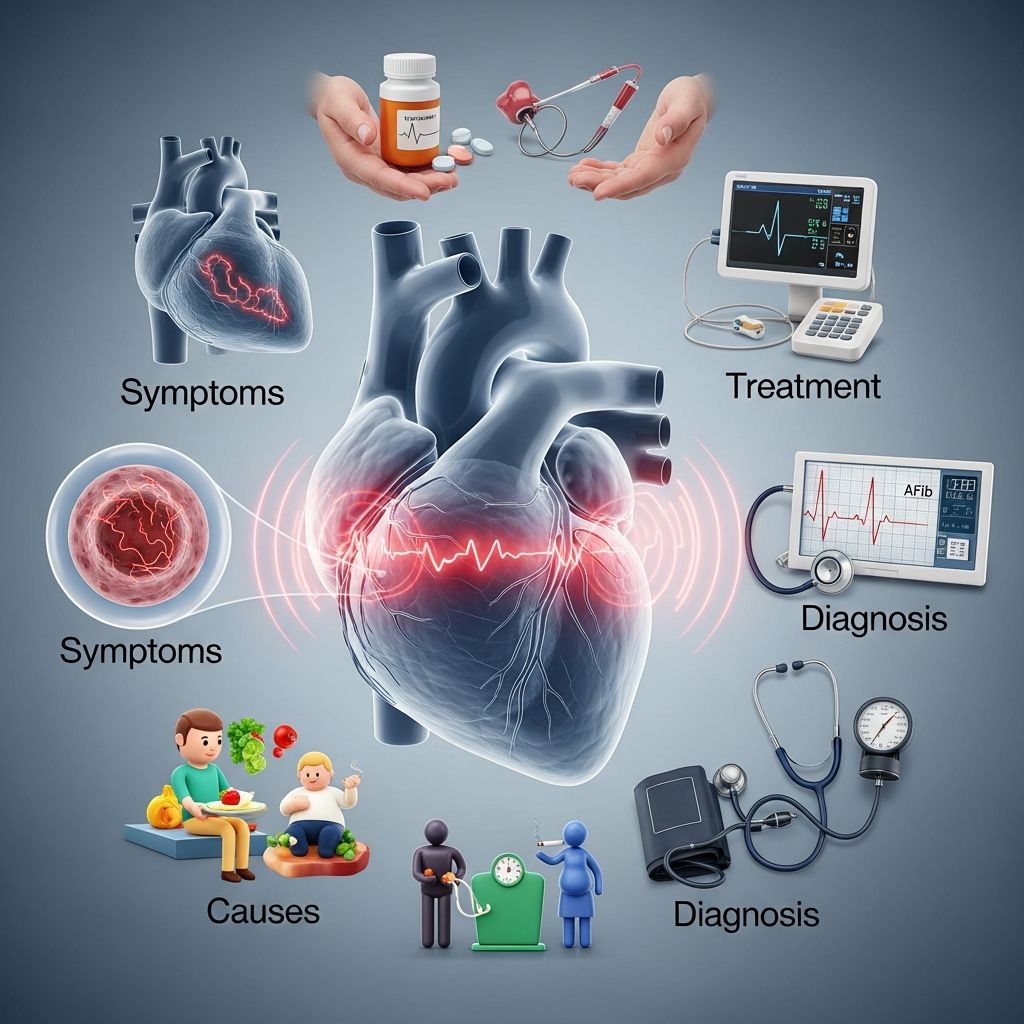
Atrial fibrillation, commonly known as
AFib
or AF, is the most prevalent type of heart arrhythmia, characterized by an irregular and often rapid heartbeat that can lead to serious complications like blood clots, stroke, and heart failure.What Is Atrial Fibrillation (AFib)?
Atrial fibrillation occurs when the upper chambers of the heart, called the atria, beat chaotically and irregularly, out of sync with the lower chambers (ventricles). This disrupts normal blood flow, causing blood to pool in the atria, which increases the risk of clot formation. If a clot dislodges, it can travel to the brain, causing a stroke—AFib is linked to about 1 in 7 strokes and raises stroke risk fivefold.
AFib affects an estimated 12.1 million people in the U.S. by recent projections, with prevalence rising due to aging populations. It contributes to over 454,000 hospitalizations and 158,000 deaths annually in the U.S., with death rates increasing over the past two decades. People of European descent have higher rates than Black individuals, and women experience it more due to longer lifespans.
Symptoms of Atrial Fibrillation
Many individuals with AFib experience no symptoms, discovering it during routine check-ups. When symptoms occur, they may include:
- Heart palpitations or a fluttering, pounding sensation in the chest
- Shortness of breath
- Weakness, fatigue, or light-headedness
- Chest pain or discomfort
- Dizziness or fainting
- Confusion or reduced exercise tolerance
Patient descriptions highlight varied experiences: ‘My heart flip-flops, skips beats, and feels like it’s banging against my chest wall,’ or ‘I was nauseated, light-headed and weak with a fast heartbeat.’ Heart rates in AFib can range from 100 to 175 beats per minute.
Causes and Risk Factors of AFib
AFib results from chaotic electrical signals in the atria, overriding the heart’s natural pacemaker (sinus node). Blood pools due to inefficient pumping, fostering clots.
Key risk factors include:
- Age: Risk rises sharply after 65.
- High blood pressure: The most common modifiable factor.
- Heart conditions: Coronary artery disease, heart failure, valve issues, or prior heart attacks.
- Other factors: Diabetes, sleep apnea, obesity, thyroid problems, chronic kidney disease, excessive alcohol, smoking, and family history.
AFib is progressive; early intervention on risk factors like hypertension and obesity can prevent or delay onset.
Stages of Atrial Fibrillation
AFib progresses through four stages, aiding in tailored management:
- At risk for AFib: No diagnosis, but risk factors present. Focus on prevention through lifestyle and risk factor control.
- Pre-AFib: Structural or electrical heart changes without full AFib. Close monitoring and early treatment to halt progression.
- AFib: Diagnosed irregular rhythm. Treatments include rate/rhythm control meds, procedures, and stroke prevention.
- Permanent AFib: Irreversible; manage symptoms and comorbidities.
Alternative classifications include paroxysmal (episodic), persistent (continuous >7 days), long-standing persistent (>12 months), and permanent.
Atrial Fibrillation vs. Atrial Flutter
Both are supraventricular arrhythmias, but atrial flutter features rapid, organized atrial contractions (250-350/min) in a ‘sawtooth’ pattern, versus AFib’s chaotic quiver. Symptoms overlap, but flutter may respond better to treatments like cardioversion. AFib is far more common.
Related Stories



| Feature | AFib | Atrial Flutter |
|---|---|---|
| Atrial Activity | Chaotic, irregular | Regular, rapid circuit |
| Prevalence | Most common arrhythmia | Less common |
| ECG Pattern | Irregularly irregular | Sawtooth flutter waves |
Diagnosis of AFib
Diagnosis starts with detecting irregular pulse or symptoms, confirmed by electrocardiogram (ECG). Tools include:
- Holter monitors or event recorders for intermittent AFib
- Wearable devices for screening
- Echocardiograms to assess structure/function
- Blood tests for thyroid/electrolytes
Stroke risk calculators (e.g., CHA2DS2-VASc) guide anticoagulation.
Treatment Options for AFib
Treatment aims to control rate/rhythm, prevent clots, and address causes.
- Rate control: Beta-blockers, calcium channel blockers, or digoxin to slow ventricular rate.
- Rhythm control: Antiarrhythmics (e.g., flecainide), cardioversion, or catheter ablation to restore sinus rhythm.
- Anticoagulation: Blood thinners (warfarin, DOACs like apixaban) based on risk score.
- Procedures: Pulmonary vein isolation ablation, AV node ablation with pacemaker, or left atrial appendage closure.
- Lifestyle: Weight loss, exercise, alcohol reduction.
For permanent AFib, focus shifts to symptom relief and comorbidity management.
Complications and Prognosis
Untreated AFib doubles mortality risk and heightens heart failure odds. Strokes from AFib are often severe. Hospitalizations exceed 454,000 yearly; proactive management improves outcomes.
Prevention and Management Strategies
Prevent progression by managing risks:
- Maintain healthy weight and BP
- Treat sleep apnea and diabetes
- Limit alcohol/caffeine, quit smoking
- Regular exercise and monitoring
Seek emergency care for chest pain, severe dyspnea, syncope, or weakness.
Frequently Asked Questions (FAQs)
What is the main cause of AFib?
Chaotic electrical signals in the atria cause irregular beating; risk factors like hypertension and age contribute.
Can AFib be cured?
Not always, but rhythm control and ablation can restore normal rhythm in many; permanent cases focus on management.
Does AFib always cause symptoms?
No, many are asymptomatic; routine screening is key.
How does AFib increase stroke risk?
Blood pools in atria, forming clots that can embolize to the brain; risk is fivefold higher.
Is AFib hereditary?
Family history is a risk factor, but lifestyle plays a larger role.
References
- What is Atrial Fibrillation? (AFib or AF) — American Heart Association. 2023. https://www.heart.org/en/health-topics/atrial-fibrillation/what-is-atrial-fibrillation-afib-or-af
- About Atrial Fibrillation — Centers for Disease Control and Prevention (CDC). 2024-09-30. https://www.cdc.gov/heart-disease/about/atrial-fibrillation.html
- Atrial Fibrillation – Symptoms and Causes — Mayo Clinic. 2023-11-30. https://www.mayoclinic.org/diseases-conditions/atrial-fibrillation/symptoms-causes/syc-20350624
- Conditions & Habits: Risk Factors for Atrial Fibrillation (AFib) — Baylor Scott & White Health. 2024. https://www.bswhealth.com/blog/risk-factors-for-afib-strategies-for-thriving
Similar Articles








Read full bio of Sneha Tete