African Sleeping Sickness: Causes, Symptoms, and Treatment
Comprehensive guide to African sleeping sickness: understanding transmission, diagnosis, and treatment options.
Understanding African Sleeping Sickness
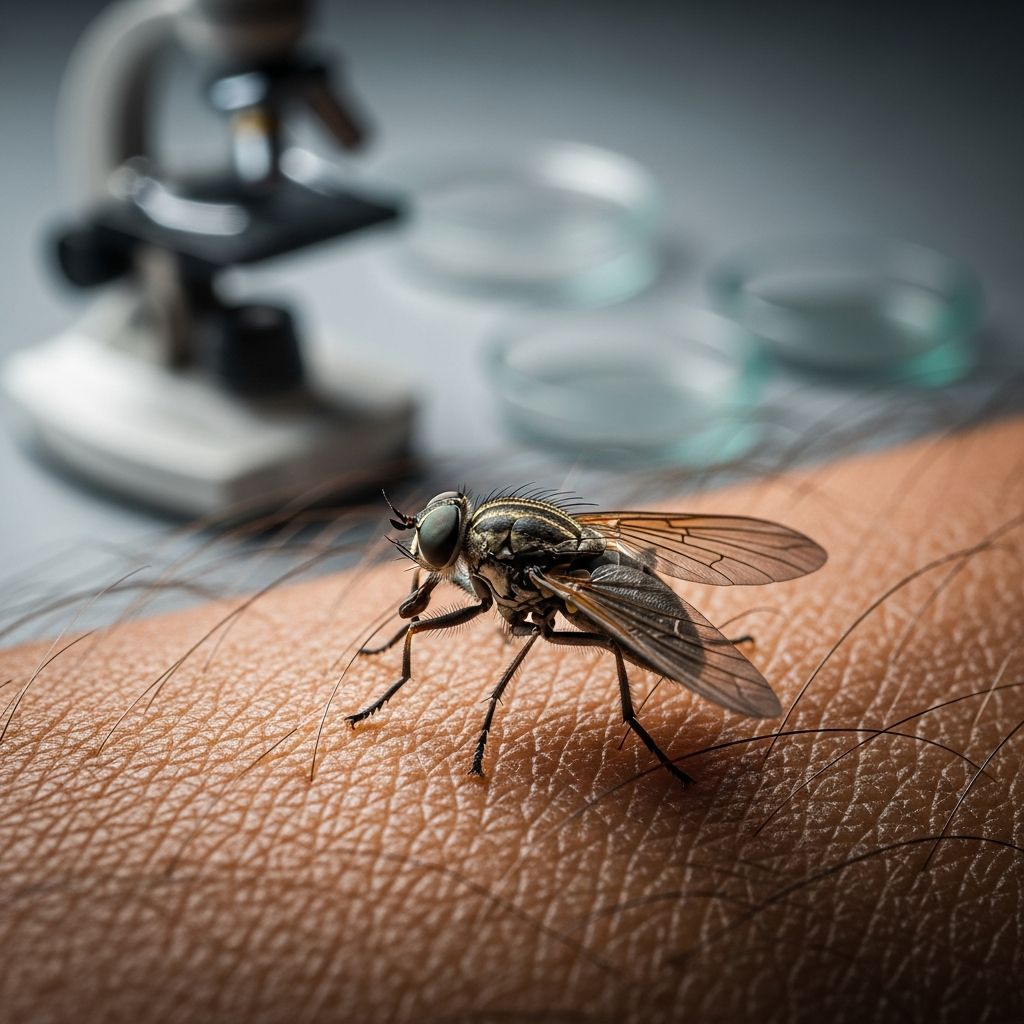
African sleeping sickness, medically known as Human African Trypanosomiasis (HAT), is a serious parasitic disease transmitted through the bite of infected tsetse flies. This debilitating condition affects populations primarily in sub-Saharan Africa and poses significant health challenges in rural areas where transmission is most common. The disease is caused by two subspecies of the parasite Trypanosoma brucei: Trypanosoma brucei gambiense, which causes West African sleeping sickness and accounts for over 92% of reported cases, and Trypanosoma brucei rhodesiense, which causes the East African form of the disease. Understanding this condition is crucial for early detection and successful treatment outcomes.
How African Sleeping Sickness is Transmitted
African sleeping sickness spreads through multiple transmission routes, with the primary mode being the bite of an infected tsetse fly. These flies, which are typically found only in rural areas of sub-Saharan Africa, transmit the parasite when they feed on human blood. The parasite enters the bloodstream through the bite wound and begins its destructive cycle within the body.
Beyond insect bites, there are additional transmission pathways that individuals should be aware of:
– Mother-to-child transmission during pregnancy or childbirth- Sexual contact with an infected individual- In rare cases, blood transfusion from infected donors
These alternative transmission routes highlight the importance of comprehensive screening and prevention measures, particularly in high-risk regions.
Symptoms and Disease Progression
African sleeping sickness manifests in two distinct stages, each with characteristic symptoms that progressively worsen without treatment. Understanding these stages is essential for recognizing the disease early and seeking prompt medical intervention.
First Stage Symptoms (Hemolymphatic Stage)
The first stage of African sleeping sickness typically begins one to three weeks after infection and presents with relatively mild, flu-like symptoms. During this phase, the parasite circulates in the blood and lymphatic system but has not yet crossed into the central nervous system. Common first-stage symptoms include:
– Fever that comes and goes intermittently- Headache and general malaise- Weakness and fatigue- Muscle and joint pain (myalgia and arthralgia)- Itchy and irritated skin- Loss of appetite leading to weight loss- Swollen lymph nodes, particularly in the armpits, groin, and upper arm region- A raised, red sore (chancre) at the bite site, more commonly observed in East African sleeping sickness
One significant challenge with the first stage is that individuals may remain asymptomatic for months or even years, creating a window where transmission can occur unknowingly.
Second Stage Symptoms (Meningoencephalitic Stage)
When the parasite crosses the blood-brain barrier and penetrates the central nervous system, the disease progresses to its second stage, which manifests weeks to months after initial infection. This stage is marked by severe neurological and psychiatric symptoms, including:
– Confusion and disorientation- Behavioral changes and personality alterations- Sensory disturbances- Poor coordination and difficulty walking- Mental impairment and cognitive decline- Seizures- Sleep-wake cycle disturbances, which give the disease its characteristic name- Daytime somnolence with nighttime insomnia- Episodes of sudden, uncontrollable sleepiness
Related Stories



The sleep disturbances occur because Trypanosoma brucei alters the expression of circadian rhythm clock genes in the brain’s suprachiasmatic nuclei, disrupting the body’s internal timekeeping mechanisms. This disruption, combined with the inflammatory response triggered by pro-inflammatory cytokines such as TNF-alpha and IL-1, creates the characteristic sleep inversions and fragmented sleep patterns.
If left untreated, African sleeping sickness typically progresses to death within months to several years, depending on the parasite subspecies and individual factors.
Diagnosis of African Sleeping Sickness
Accurate and timely diagnosis is fundamental to effective treatment and improved patient outcomes. The diagnostic process differs slightly between West and East African variants due to differences in parasite concentration in body fluids.
Diagnostic Methods
The diagnostic approach begins with blood and lymphatic fluid tests to confirm the presence of the parasitic agent. The primary diagnostic techniques include:
– Blood smear microscopy to directly visualize the parasite- Lymph node fluid examination from swollen posterior neck lymph nodes, particularly important for West African sleeping sickness where parasite concentration is lower- Cerebrospinal fluid (CSF) analysis via lumbar puncture to determine disease stage and identify neurological involvement
Since treatment protocols differ significantly depending on whether the central nervous system is affected, all patients diagnosed with African sleeping sickness must undergo cerebrospinal fluid testing. This test is crucial for distinguishing between first-stage disease (where parasites remain in the blood and lymphatic system) and second-stage disease (where parasites have invaded the central nervous system), thereby guiding appropriate therapeutic intervention.
Treatment Approaches
Treatment selection depends critically on three factors: the disease form (West or East African), the disease stage (first or second stage), and whether central nervous system involvement is present. Early treatment significantly improves cure prospects and reduces the severity of complications.
West African Sleeping Sickness Treatment
First Stage Treatment
For first-stage West African sleeping sickness, pentamidine is the primary medication of choice, administered intravenously or via intramuscular injection. Pentamidine is generally well-tolerated by patients and effectively eliminates parasites from the blood and lymphatic system. Fexinidazole, an oral medication, is an alternative first-stage treatment option.
Second Stage Treatment
When central nervous system involvement is confirmed through cerebrospinal fluid analysis, second-stage West African sleeping sickness requires different therapeutic approaches. The primary treatment is eflornithine, administered intravenously four times daily for two weeks. Although highly effective, frequent eflornithine administration poses practical challenges in rural African clinics and hospitals, leading clinicians to combine eflornithine with nifurtimox in Nifurtimox-Eflornithine Combination Therapy (NECT).
Fexinidazole represents a significant advancement in sleeping sickness treatment, as it is the only oral medication effective for both first and second-stage West African sleeping sickness. Since its introduction in 2020, fexinidazole has offered a more practical and patient-friendly alternative, particularly in resource-limited settings.
East African Sleeping Sickness Treatment
First Stage Treatment
Suramin is the standard treatment for first-stage East African sleeping sickness, administered intravenously. Although suramin frequently causes adverse reactions, these are typically mild and reversible upon treatment discontinuation. Fexinidazole may also be considered as an alternative first-stage option.
Second Stage Treatment
Melarsoprol, an arsenic-derived compound, is currently the only available medication for second-stage East African sleeping sickness when central nervous system involvement is confirmed. However, melarsoprol carries significant risks, with 5–10% of treated patients experiencing encephalopathic reactions that can be life-threatening, resulting in approximately 50% fatality rates among those affected. Despite these serious adverse effects, melarsoprol remains the sole option for this advanced form of the disease, making careful patient monitoring essential during treatment.
Treatment Considerations and Outcomes
Treatment efficacy improves dramatically when the disease is detected early, before neurological symptoms develop. Hospitalization is typically necessary during treatment, and patients require follow-up medical examinations for approximately two years post-treatment, including periodic spinal taps to monitor for relapse.
Given the rarity of African sleeping sickness in most developed countries and the complexity of treatment selection, patients benefit from consultation with infectious disease specialists or tropical medicine experts who understand the nuances of parasitic disease management.
Prevention and Risk Reduction
Prevention strategies focus on screening at-risk populations with blood tests to identify Trypanosoma brucei gambiense infection before symptoms develop. Early detection through screening allows for first-stage treatment before neurological complications emerge, dramatically improving outcomes.
For individuals in endemic areas, practical prevention measures include:
– Wearing protective clothing that covers skin- Using insect repellent containing DEET- Avoiding travel in areas with high tsetse fly populations during peak activity hours- Seeking immediate medical attention for unexplained fever or suspicious bite reactions
Frequently Asked Questions About African Sleeping Sickness
Q: What is the difference between West and East African sleeping sickness?
A: West African sleeping sickness, caused by Trypanosoma brucei gambiense, progresses slowly and accounts for 92% of cases. East African sleeping sickness, caused by Trypanosoma brucei rhodesiense, progresses more rapidly. Treatment protocols also differ, with West African disease responding to eflornithine or fexinidazole in the second stage, while East African disease requires melarsoprol.
Q: How long can someone have African sleeping sickness without symptoms?
A: Individuals can remain infected for months or even years without showing major signs or symptoms, particularly in West African sleeping sickness. This asymptomatic period makes screening and early detection critically important in endemic regions.
Q: Is African sleeping sickness curable?
A: Yes, African sleeping sickness is curable when treated promptly and appropriately. Early-stage disease treatment has excellent outcomes, while second-stage disease requires more aggressive therapy with higher risks of complications but still offers reasonable cure prospects.
Q: Can African sleeping sickness be transmitted person-to-person?
A: While the primary transmission route is through tsetse fly bites, person-to-person transmission can occur through sexual contact, mother-to-child transmission, and rarely through blood transfusion. Tsetse fly bite remains the most common transmission mechanism.
Q: What happens without treatment?
A: Without treatment, African sleeping sickness typically results in death, usually within months to several years depending on the parasite subspecies. Early treatment dramatically improves survival rates and prevents permanent neurological damage.
Q: How is treatment monitored during the two-year follow-up period?
A: Follow-up monitoring includes periodic medical examinations and spinal taps (lumbar punctures) to assess cerebrospinal fluid and ensure parasites have not returned. This vigilant monitoring helps detect any relapse early when additional intervention may be possible.
References
- African sleeping sickness (Human African trypanosomiasis) — Eisai Sustainability. https://www.eisai.com/sustainability/atm/ntds/diseases/africa.html
- Trypanosomiasis, human African (sleeping sickness) — World Health Organization. 2024. https://www.who.int/news-room/fact-sheets/detail/trypanosomiasis-human-african-(sleeping-sickness)
- Sleeping sickness: symptoms, treatment, prevention — Institut Pasteur Medical Center. 2024. https://www.pasteur.fr/en/medical-center/disease-sheets/sleeping-sickness
- Treatment of Sleeping Sickness — Centers for Disease Control and Prevention (CDC). 2024. https://www.cdc.gov/sleeping-sickness/treatment/index.html
- Symptoms of Sleeping Sickness — Centers for Disease Control and Prevention (CDC). 2024. https://www.cdc.gov/sleeping-sickness/symptoms/index.html
- African Sleeping Sickness — Massachusetts General Hospital. 2024. https://www.massgeneral.org/condition/african-trypanosomiasis-sleeping-sickness
Similar Articles








Read full bio of Sneha Tete