Age-Related Macular Degeneration: Understanding AMD
Comprehensive guide to AMD: symptoms, types, risk factors, and treatment options.
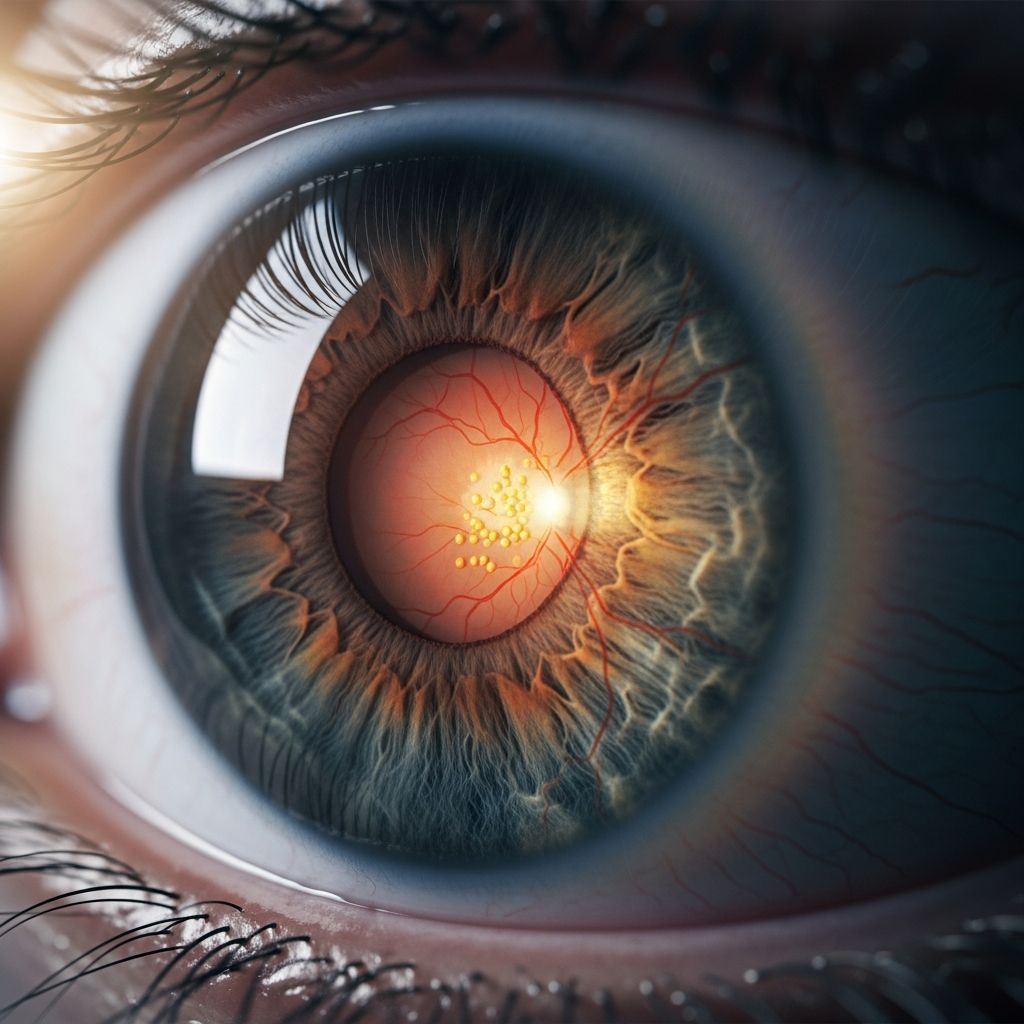
Age-related macular degeneration (AMD) is a progressive eye disease that affects millions of people worldwide, particularly those over the age of 55. AMD is the leading cause of vision loss in older adults in developed countries, with more than 10 million people affected in the United States alone. Unlike complete blindness, AMD specifically impacts central vision, making it difficult to perform everyday activities such as reading, driving, recognizing faces, and doing close-up work. Understanding this condition, its symptoms, risk factors, and treatment options is essential for maintaining eye health and quality of life as we age.
What is the Macula and How Does AMD Affect It?
The macula is a small, specialized region located in the center of the retina at the back of the eye. This area is densely packed with cone photoreceptors, which are specialized cells responsible for detecting fine details, colors, and objects in daylight or well-lit conditions. The macula enables sharp, straight-ahead vision and is crucial for activities requiring visual acuity, such as reading and facial recognition. When AMD develops, the cone photoreceptors in the macula gradually degenerate, leading to progressive loss of central vision. This degeneration occurs as aging causes damage to the blood vessels that nourish the macula, though the exact mechanisms are not fully understood.
Types of Age-Related Macular Degeneration
AMD presents in two distinct forms: dry AMD and wet AMD. Understanding the differences between these types is important for diagnosis and treatment planning.
Dry AMD (Atrophic Macular Degeneration)
Dry AMD, also known as atrophic macular degeneration, is the most common form, affecting approximately 85-90 percent of people diagnosed with AMD. In dry AMD, the macula gradually thins with age, and the hallmark characteristic is the accumulation of tiny protein and fat deposits called drusen underneath the retina. Many people naturally develop drusen without any impact on their vision. However, certain types and accumulations of drusen can interfere with the health of the macula, causing progressive degeneration of photoreceptor cells and resulting vision loss. Dry AMD typically progresses slowly over several years, and in its advanced stages, it is sometimes referred to as geographic atrophy, where large areas of the macula deteriorate.
Wet AMD (Neovascular Macular Degeneration)
Wet AMD, also called neovascular AMD, is less common but more serious, affecting approximately 10-15 percent of people with dry AMD who experience disease progression. In wet AMD, abnormal blood vessels grow beneath the macula. These fragile vessels leak blood and fluid into the macula, causing rapid and potentially severe damage to photoreceptor cells. Wet AMD often progresses rapidly and can cause substantial loss of central vision if left untreated. It is possible to have both dry and wet AMD in the same eye, with either condition potentially appearing first. The development of wet AMD from dry AMD represents disease progression and requires immediate medical attention.
Stages of Age-Related Macular Degeneration
AMD progresses through three distinct stages, each characterized by specific changes in the eye and varying levels of symptoms.
Early-Stage AMD
Early-stage AMD involves the presence of medium-sized drusen, approximately the width of a human hair. At this stage, most people do not experience any noticeable symptoms or vision loss. Early AMD is often discovered during routine eye examinations before patients are aware they have the condition. This stage emphasizes the importance of regular eye exams, especially for individuals over 55 or those with family histories of AMD.
Intermediate-Stage AMD
During the intermediate stage, individuals typically have large drusen, pigment changes in the retina, or both. While some people may notice mild symptoms such as mild blurriness in their central vision or reduced ability to see in low lighting conditions, most people at this stage do not experience significant symptoms. However, some vision loss may be present, and patients should remain vigilant for any changes in their visual experience.
Related Stories



Late-Stage AMD
Late-stage AMD involves drusen and significant vision loss from damage to the macula. People with late AMD may notice that straight lines appear wavy or crooked—a warning sign that requires immediate attention from an eye care professional. A blurry area may develop near the center of vision, and over time, this area may expand or develop blank spots. Colors may appear less bright than before, and difficulty seeing in low lighting conditions often worsens. Late AMD can severely impact quality of life and daily functioning.
Symptoms of Age-Related Macular Degeneration
AMD symptoms vary depending on the stage of disease progression and the type of AMD present. Early detection is crucial because early-stage AMD often produces no symptoms, making regular eye exams vital for those at risk.
Common Symptoms Include:
Individuals experiencing the following symptoms should see an eye specialist as soon as possible:
- Blurring of central vision, especially during tasks such as reading or sewing
- Fuzzy or blurry vision
- Distorted vision, where straight lines appear wavy, crooked, or warped
- Dark or empty areas in the center of vision
- Difficulty reading or performing close-up activities
- Difficulty recognizing faces at a distance
- Sensitivity to bright light
- Decreased need for bright illumination or reduced color vision
- Seeing flickering or flashing lights
- Visual hallucinations (seeing things that are not there)
It is important to note that AMD is not painful and does not affect the appearance of the eyes. Additionally, as AMD progresses, blind spots may form within the central field of vision. In most cases, if one eye develops AMD, the other eye either has the condition or is at significant risk of developing it.
Risk Factors for Age-Related Macular Degeneration
Several factors increase the likelihood of developing AMD. Understanding these risk factors can help individuals take preventive measures and seek appropriate screening.
Primary Risk Factors:
| Risk Factor | Impact |
|---|---|
| Age | People age 55 and older are significantly more likely to develop AMD. Risk increases substantially with advancing age. |
| Smoking | Smoking is one of the greatest modifiable risk factors. Smokers have a substantially higher risk of developing AMD compared to non-smokers. |
| Family History | Having a family history of AMD substantially increases risk. Genetics play a significant role in disease development. |
| Race/Ethnicity | Caucasian ancestry is associated with higher AMD risk compared to other ethnic groups. |
| Poor Nutrition | An unhealthy diet lacking essential nutrients increases AMD risk. Specific antioxidants and minerals are protective. |
| Unprotected Sunlight Exposure | Prolonged exposure to ultraviolet (UV) light without protection can increase AMD risk. |
Genetic Factors and Inheritance
Genetics plays a substantial role in AMD risk. A major breakthrough occurred in 2005 when three research groups discovered that a gene called Complement Factor H (CFH) is linked to at least 50 percent of all cases of AMD. Since this discovery, researchers have identified several other genes associated with AMD. Interestingly, many AMD-related genes are involved in the innate immune system, which fights off infection. Scientists believe that overactivity of the innate immune system increases the risk of developing AMD. This understanding has opened new avenues for research into potential treatments and prevention strategies.
Diagnosis of Age-Related Macular Degeneration
Early detection of AMD through regular eye examinations is critical because early-stage disease often produces no symptoms. Eye care professionals use several diagnostic tools to identify and monitor AMD progression. These include visual acuity tests, dilated eye examinations, optical coherence tomography (OCT) imaging, fluorescein angiography, and the Amsler grid test. The Amsler grid is particularly useful for patients with known AMD to monitor for disease progression. Sudden changes in the appearance of the grid may indicate disease advancement, particularly the development of wet AMD from dry AMD.
Treatment and Management Options
Treatment approaches differ significantly between dry and wet AMD. While there is currently no treatment for advanced dry AMD, several strategies can help preserve remaining vision and improve quality of life. For wet AMD, various treatment options are available to slow disease progression and preserve central vision.
Dry AMD Management:
- Nutritional supplements containing specific antioxidants and minerals may slow disease progression
- Lifestyle modifications to reduce risk factors
- Low-vision aids and magnifying devices to maximize remaining vision
- Protective eyewear to shield eyes from UV radiation
- Regular monitoring through eye exams and Amsler grid testing
Wet AMD Treatment:
- Anti-vascular endothelial growth factor (anti-VEGF) medications injected into the eye
- Photodynamic therapy to seal leaking blood vessels
- Thermal laser therapy in select cases
- Low-vision rehabilitation and supportive services
Lifestyle Modifications and Prevention
While age and genetics cannot be modified, several lifestyle factors can help reduce AMD risk or slow disease progression. Quitting smoking is one of the most important steps individuals can take, as smoking substantially increases AMD risk. Maintaining a healthy diet rich in antioxidants, lutein, zeaxanthin, zinc, and vitamins C and E may protect eye health. Wearing UV-protective sunglasses during outdoor activities helps shield eyes from harmful radiation. Regular physical exercise and maintaining a healthy weight also contribute to overall eye health. For individuals at risk or those with diagnosed AMD, regular eye examinations are essential for early detection and monitoring.
Impact on Daily Life and Vision Rehabilitation
AMD primarily affects central vision while preserving peripheral vision, meaning that while central tasks become difficult, total blindness does not occur. However, the loss of central vision significantly impacts quality of life, making reading, driving, watching television, recognizing faces, and performing detailed work challenging. Vision rehabilitation services and low-vision aids, including magnifying devices, special eyeglasses, and electronic viewing systems, can help individuals adapt to vision changes and maintain independence in daily activities. Supportive services and counseling can also help individuals cope with the emotional and practical challenges of vision loss.
Frequently Asked Questions (FAQs)
Q: Does AMD cause complete blindness?
A: No, AMD does not cause complete blindness. It affects central vision, but peripheral vision remains intact. People with AMD retain their ability to navigate and detect movement in their surroundings.
Q: Can AMD be prevented?
A: While age and genetics cannot be changed, you can reduce your risk by not smoking, maintaining a healthy diet rich in antioxidants, wearing UV-protective sunglasses, exercising regularly, and getting regular eye examinations.
Q: How quickly does AMD progress?
A: AMD progression varies significantly between individuals. Dry AMD typically progresses slowly over several years, while wet AMD can progress rapidly. Early detection and monitoring help manage the condition effectively.
Q: Is there a cure for AMD?
A: Currently, there is no cure for AMD. However, treatments for wet AMD can slow disease progression and preserve vision, and various management strategies can help people with dry AMD maintain quality of life.
Q: How often should I have my eyes examined if I’m at risk for AMD?
A: People over 55 or those with family histories of AMD should discuss appropriate screening intervals with their eye care provider. Regular examinations can detect early-stage disease before symptoms appear.
Q: What should I do if I notice wavy lines or blank spots in my vision?
A: Seeing wavy lines or developing blank spots can indicate AMD progression, particularly the development of wet AMD. Contact your eye doctor immediately for evaluation, as prompt treatment can help preserve vision.
References
- Age-Related Macular Degeneration — National Eye Institute (NEI), U.S. Department of Health & Human Services. 2024. https://www.nei.nih.gov/learn-about-eye-health/eye-conditions-and-diseases/age-related-macular-degeneration
- What is Age-Related Macular Degeneration? — Fighting Blindness. 2024. https://www.fightingblindness.org/diseases/age-related-macular-degeneration
- Age-Related Macular Degeneration (AMD) — Symptoms — NHS England. 2024. https://www.nhs.uk/conditions/age-related-macular-degeneration-amd/symptoms/
- Macular Degeneration: Symptoms, Diagnosis & Treatment — Cleveland Clinic. 2024. https://my.clevelandclinic.org/health/diseases/15246-macular-degeneration
- What is Age Related Macular Degeneration? — UT Southwestern Medical Center. 2024. https://utswmed.org/conditions-treatments/macular-degeneration/
Similar Articles








Read full bio of Sneha Tete