Age-Related Macular Degeneration: Vision Loss & Care
Understanding AMD: causes, symptoms, stages, and treatment options for vision preservation
Vision loss becomes increasingly common as individuals enter their later years, with age-related macular degeneration (AMD) emerging as the primary culprit behind severe sight impairment in older populations across North America. This progressive eye condition affects millions of individuals over 50, fundamentally altering their ability to perform everyday activities that most of us take for granted. Understanding this condition—from its underlying mechanisms to available interventions—empowers patients and their families to make informed decisions about eye health and quality of life.
What Happens to the Eye in Macular Degeneration
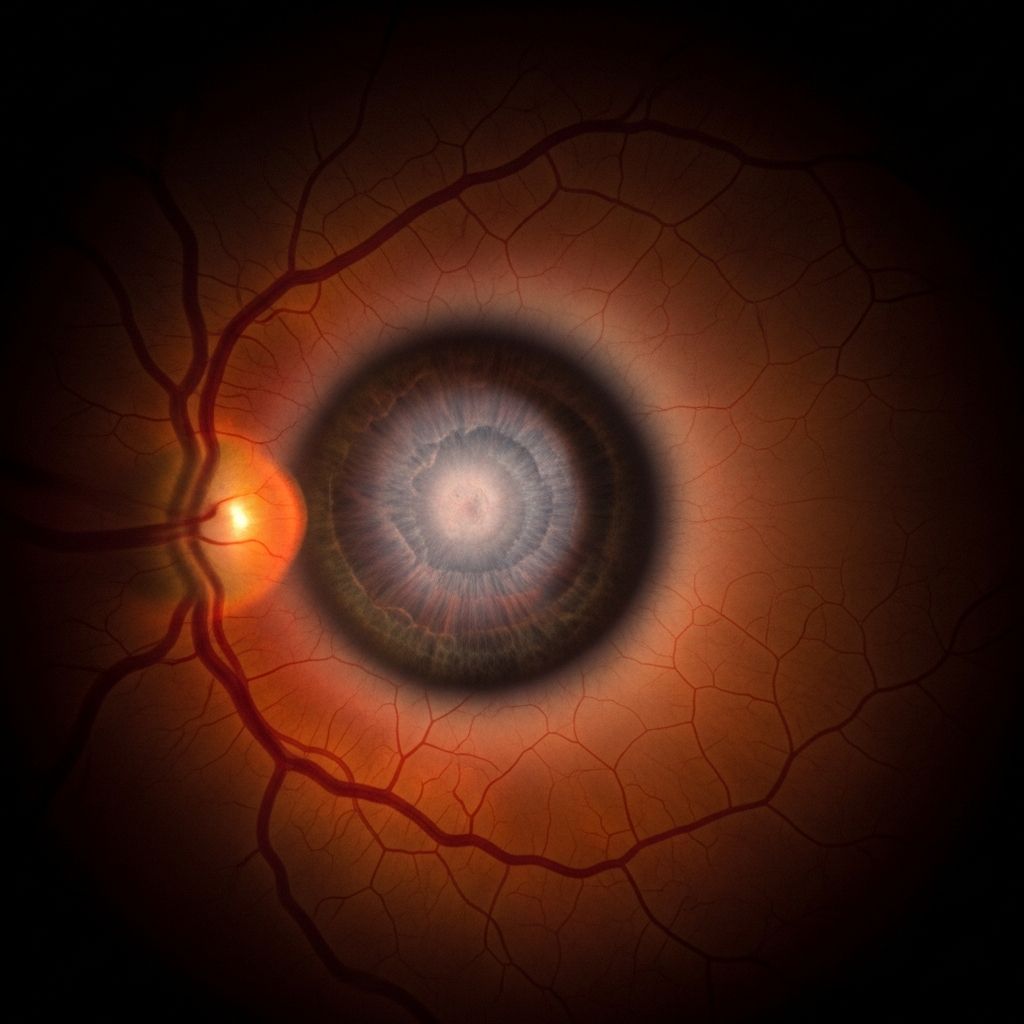
The macula represents a specialized region within the retina, occupying just a small central area at the back of the eye. Despite its diminutive size, this structure orchestrates our most critical visual functions. When you read a book, recognize a friend’s face, or navigate traffic on a busy street, your macula is working behind the scenes to provide the sharp, detailed central vision necessary for these tasks. The retina itself functions as a light-sensitive tissue that captures visual information and transmits it to the brain through the optic nerve.
In macular degeneration, the specialized cells within this crucial region gradually deteriorate. This deterioration process doesn’t typically result in complete blindness—peripheral vision generally remains intact. Instead, the central visual field becomes compromised, creating a distinctive pattern of vision loss that makes reading, facial recognition, and fine detail work increasingly difficult. The condition develops at different rates in different individuals; some experience gradual changes over many years, while others progress more rapidly.
The Two Primary Forms of AMD
Dry Macular Degeneration: The Gradual Path
Approximately 90% of AMD cases fall into the dry category, making it by far the more prevalent form of the disease. Dry macular degeneration develops when small yellowish protein deposits, called drusen, accumulate beneath the macula. These deposits represent cellular waste products that the eye cannot efficiently clear away. Over time, as drusen build up and the macular tissue thins, the light-sensitive cells in this region begin to dysfunction or die.
The progression of dry AMD often moves slowly, sometimes taking years for noticeable vision changes to manifest. In early stages, individuals frequently experience no symptoms whatsoever, with the condition detectable only through professional eye examinations. As the disease advances, patients may notice mild blurriness in their central vision, particularly when reading or performing detail-oriented work. Some report difficulty adapting to dim lighting environments or notice that colors appear less vibrant than before.
Currently, no definitive cure exists for dry macular degeneration. However, research has demonstrated that certain nutritional supplements containing specific vitamins and minerals may slow disease progression in intermediate and advanced stages. These formulations, often called “AREDS” supplements (based on the Age-Related Eye Disease Study), typically include antioxidants and zinc. Regular eye monitoring remains essential for tracking changes and adjusting management strategies as needed.
Wet Macular Degeneration: The Rapid Threat
Although wet macular degeneration accounts for only 10% of AMD cases, it presents a far more aggressive disease trajectory. Wet AMD develops when abnormal blood vessels grow beneath the macula—a process called neovascularization. These fragile new vessels lack the structural integrity of normal blood vessels and frequently leak fluid and blood into the surrounding retinal tissue. This leakage causes scarring and rapid destruction of the light-sensitive cells in the macula.
Related Stories



The vision loss associated with wet AMD progresses substantially faster than dry AMD, sometimes occurring over weeks or months rather than years. Patients may suddenly notice that straight lines appear wavy or distorted, or they may develop a blind spot in their central vision. Some describe seeing flickering lights or experiencing partial vision loss that expands over time. Without prompt treatment, wet AMD can result in legal blindness, making early detection and intervention critical.
Fortunately, several treatment options exist for wet macular degeneration that can stabilize vision or even improve sight in some cases. Anti-angiogenic medications work by stopping the growth of abnormal blood vessels and reducing fluid leakage. Laser therapy and photodynamic therapy represent alternative interventions that aim to destroy or seal leaking vessels. The specific treatment approach depends on the location and extent of abnormal vessel growth and requires specialist evaluation.
Understanding Risk Factors and Susceptibility
AMD development results from a complex interplay between genetic predisposition and environmental influences. While advancing age remains the most significant non-modifiable risk factor, numerous other elements either increase or potentially decrease an individual’s likelihood of developing this condition.
Non-Modifiable Risk Elements
- Age: Risk substantially increases after age 50, with incidence rising dramatically in individuals over 65.
- Ethnicity: Caucasian populations experience AMD at higher rates than other ethnic groups.
- Genetic factors: Family history of AMD significantly elevates personal risk, suggesting inherited susceptibility patterns.
- Biological sex: Women appear to develop AMD more frequently than men, though reasons remain incompletely understood.
Modifiable Lifestyle and Health Factors
Several controllable factors substantially influence AMD risk, offering opportunities for disease prevention or delay:
- Smoking: Cigarette use and secondhand smoke exposure represent among the most significant modifiable risk factors, potentially doubling AMD risk.
- Dietary patterns: Diets high in saturated fats and processed foods correlate with increased AMD risk, while diets rich in leafy greens and omega-3 fatty acids appear protective.
- Body weight: Obesity may accelerate disease progression in individuals with early or intermediate AMD.
- Cardiovascular health: Hypertension and other heart or blood vessel diseases increase AMD susceptibility.
- Light exposure: Some evidence suggests that cumulative UV light exposure may contribute to macular damage.
Recognizing Symptoms and Stages
Early-Stage Disease: The Silent Progression
Early AMD typically produces no noticeable symptoms, which explains why many individuals unknowingly carry the disease. During this stage, an eye care professional may detect medium-sized drusen deposits during a dilated eye examination, but the patient perceives no vision changes. This asymptomatic phase can persist for years, underscoring the critical importance of regular comprehensive eye exams for individuals over 50.
Intermediate-Stage Manifestations
As AMD progresses to the intermediate stage, some individuals begin experiencing subtle visual changes while others remain asymptomatic. Those who do notice symptoms may report mild central vision blurriness, particularly when engaging in reading or fine detail work. Difficulty adapting to lighting changes, especially when moving between bright and dim environments, may also occur. Some patients describe colors appearing faded or less saturated than previously remembered.
Advanced-Stage Vision Challenges
Late-stage AMD produces noticeable and sometimes profound vision changes. Straight lines may appear bent or wavy—a phenomenon called metamorphopsia that often represents one of the earliest warning signs of advancing disease. Central vision gradually becomes more blurred, sometimes described as looking through a frosted window. Some patients develop a dark spot or blank area in the center of their visual field that may expand over time. Colors lose vibrancy, and navigating in low-light conditions becomes increasingly difficult.
The Diagnostic Journey
Professional eye care providers—whether optometrists or ophthalmologists—employ several diagnostic tools to identify and classify AMD. During a dilated eye examination, the practitioner can directly visualize drusen deposits and assess macular tissue thickness. Optical coherence tomography (OCT) imaging provides detailed cross-sectional views of retinal layers, revealing tissue thinning and fluid accumulation in wet AMD. Fluorescein angiography helps identify abnormal blood vessel growth and leakage patterns in wet disease.
Because early-stage disease often remains invisible to patients, regular comprehensive eye exams become a cornerstone of AMD detection. Individuals over 50, those with family histories of AMD, and those with multiple risk factors should discuss appropriate screening intervals with their eye care provider.
Management Strategies and Treatment Approaches
Nutritional Intervention for Dry AMD
The Age-Related Eye Disease Study established that specific nutrient combinations may slow intermediate and advanced dry AMD progression. Standard AREDS formulations typically include vitamins C and E, beta-carotene, zinc, and copper. Subsequent research led to modified formulations that replace beta-carotene with lutein and zeaxanthin for certain patients. These nutritional supports work best when initiated in intermediate stages before extensive macular damage occurs.
Medical Treatments for Wet AMD
Several pharmaceutical approaches can stabilize or improve vision in wet macular degeneration. Anti-vascular endothelial growth factor (anti-VEGF) medications inhibit proteins that stimulate abnormal blood vessel growth. Administered through regular injections into the eye, these medications have dramatically improved outcomes for wet AMD patients. Photodynamic therapy involves injecting a light-activated medication and using a laser to seal leaking blood vessels. These treatments require ongoing monitoring and repeated applications to maintain effectiveness.
Vision Rehabilitation and Assistive Devices
Beyond medical intervention, various strategies help AMD patients maintain functional vision and independence. Prescription glasses with specialized magnifying lenses enhance central vision for reading and detailed work. Electronic magnification devices project enlarged images on screens, facilitating reading and computer work. High-contrast writing implements and improved home lighting reduce strain during daily activities. Many patients benefit from working with low-vision specialists who customize rehabilitation programs to individual needs and goals.
Frequently Asked Questions About AMD
Does AMD cause complete blindness?
No. AMD affects central vision while typically preserving peripheral (side) vision. Although the disease can significantly impair activities requiring detail vision, total blindness is rare. However, wet AMD can progress to legal blindness if untreated.
Can vision lost to AMD be restored?
Currently, no treatment restores vision already lost to AMD. However, early intervention with anti-VEGF treatments for wet AMD can sometimes improve vision slightly and often stabilizes sight. Nutritional supplements may slow progression in dry AMD.
How often should AMD patients receive eye exams?
Individuals with AMD require more frequent monitoring than the general population. Those with early or intermediate AMD should typically receive exams every 1-2 years, while advanced AMD patients often need more frequent evaluations.
Are there preventive measures for people at risk?
Yes. Smoking cessation, maintaining a healthy weight, eating a diet rich in leafy greens and fish, managing cardiovascular disease, and regular eye exams represent proven preventive strategies.
Looking Forward: Living Well With AMD
Age-related macular degeneration represents one of the most common vision challenges in aging populations, yet advances in detection and treatment continue improving outcomes. The key to preserving vision lies in early identification through regular eye exams, understanding personal risk factors, and implementing both preventive measures and appropriate medical interventions when necessary. By partnering with eye care specialists and remaining proactive about vision health, individuals can maintain functional sight and quality of life well into their later years.
References
- Age-Related Macular Degeneration (AMD) — National Eye Institute, National Institutes of Health. 2024. https://www.nei.nih.gov/eye-health-information/eye-conditions-and-diseases/age-related-macular-degeneration
- Dry Macular Degeneration: Symptoms and Causes — Mayo Clinic. 2024. https://www.mayoclinic.org/diseases-conditions/dry-macular-degeneration/symptoms-causes/syc-20350375
- Age-related Macular Degeneration (AMD): Symptoms — National Health Service (NHS). 2024. https://www.nhs.uk/conditions/age-related-macular-degeneration-amd/symptoms/
- Macular Degeneration: Symptoms, Diagnosis & Treatment — Cleveland Clinic. 2024. https://my.clevelandclinic.org/health/diseases/15246-macular-degeneration
- About Age-Related Macular Degeneration — Centers for Disease Control and Prevention (CDC). 2024. https://www.cdc.gov/vision-health/about-eye-disorders/age-related-macular-degeneration.html
Similar Articles








Read full bio of medha deb