Albinism: Essential Guide To Causes, Symptoms, And Care
Inherited disorder causing reduced melanin, leading to pale skin, hair, eyes, vision issues, and high skin cancer risk.
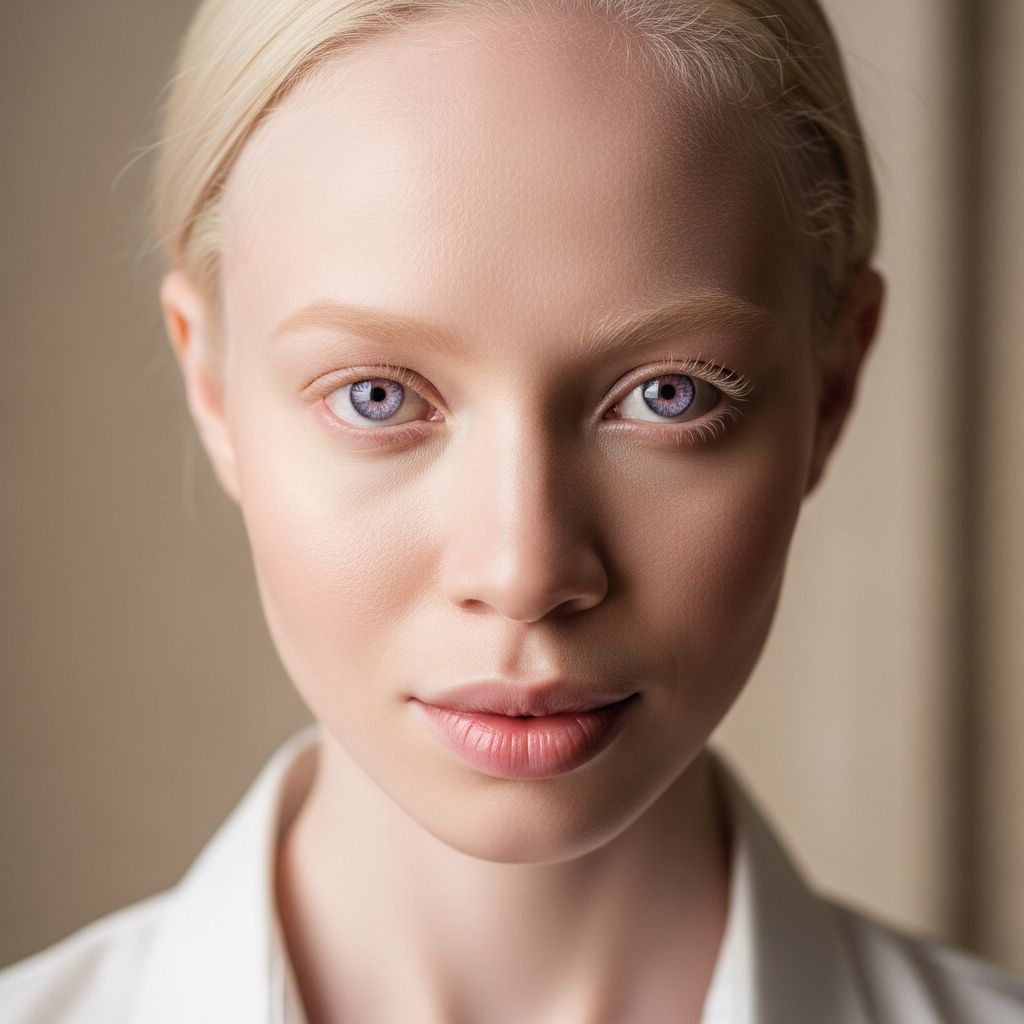
Albinism encompasses a group of inherited disorders characterized by little or no production of melanin, the pigment responsible for colouring skin, hair, and eyes. This leads to pale features, severe vision problems, and heightened susceptibility to sun damage and skin cancer. Affecting people of all racial and ethnic groups worldwide, albinism requires lifelong management focused on photoprotection, visual aids, and regular medical surveillance.
What is albinism?
Albinism results from genetic mutations that impair melanin synthesis in melanocytes, the cells producing this protective pigment. Melanin not only determines coloration but also shields skin from ultraviolet (UV) radiation and supports normal eye development. Without sufficient melanin, individuals experience hypopigmentation, ocular abnormalities, and increased risks of sunburn, premature skin ageing, and malignancies like squamous cell carcinoma, which can be up to 1000 times more common.
The condition manifests at birth and persists lifelong, with no cure available. While general health, intelligence, and lifespan remain unaffected in non-syndromic forms, syndromic variants introduce additional complications such as bleeding disorders or immune deficiencies. Prevalence varies: oculocutaneous albinism (OCA) affects about 1 in 20,000 people globally, while ocular albinism (OA) impacts roughly 1 in 60,000 males.
Who gets albinism?
Albinism occurs universally across all races and ethnicities, with no predisposition to specific groups, though higher rates appear in consanguineous populations or isolated communities. It follows autosomal recessive inheritance for most OCA types, meaning both parents must carry a mutated gene. OA is typically X-linked, predominantly affecting males.
Anyone with a family history of albinism or carrier status faces elevated risk. Genetic counselling is recommended for families, as carrier testing and prenatal diagnosis are feasible for known mutations.
What causes albinism?
Albinism arises from mutations in genes governing the melanin production pathway, primarily within the melanocortin 1 receptor (MC1R) pathway or lysosomal trafficking. Key genes include:
- TYR (OCA1): Encodes tyrosinase, essential for melanin synthesis; mutations cause complete (OCA1A) or partial (OCA1B) pigment absence.
- OCA2 (OCA2): Involved in melanosome function; common in sub-Saharan Africa.
- TYRP1 (OCA3): Affects melanin stability; milder phenotype often called ‘rufous albinism’.
- SLC45A2 (OCA4) and others up to OCA8: Less common variants with varying pigment levels.
For OA, mutations in OA1 (GPR143) on the X chromosome disrupt retinal melanin. Syndromic forms link to additional genes, e.g., AP3B1 in Hermansky-Pudlak syndrome (HPS), causing platelet dysfunction and pulmonary fibrosis.
What are the clinical features of albinism?
Skin and hair
Skin appears very pale or pinkish-white, often with fine white lanugo hair at birth that may darken slightly over time depending on subtype. Adults may develop freckles, nevi, or lentigines from sun exposure, but lack protective tanning ability. Hair ranges from white to yellow-reddish (in OCA1B or OCA3).
Eyes and vision
Ocular hallmarks include:
- Nystagmus: Involuntary horizontal eye oscillations, often improving with age.
- Photophobia: Extreme light sensitivity due to iris transillumination and foveal hypoplasia.
- Refractive errors: Myopia, hyperopia, or astigmatism.
- Strabismus and poor depth perception from optic nerve misrouting.
- Reduced visual acuity: Typically 20/60 to 20/400, sometimes legal blindness (<20/200).
Related Stories



Eye colour varies: pale blue, grey, hazel, or pinkish in light.
How is albinism diagnosed?
Diagnosis combines clinical examination, family history, and specialized tests:
- Wood lamp: Reveals hypopigmented hair fluorescing under UV.
- Ophthalmologic evaluation: Confirms foveal hypoplasia, fundus hypopigmentation via slit-lamp and electroretinography.
- Genetic testing: Identifies specific mutations, crucial for syndromic cases or counselling.
Differential diagnoses include piebaldism, partial oculocutaneous albinism, or Chediak-Higashi syndrome. Prenatal diagnosis via amniocentesis is possible for at-risk pregnancies.
What is the treatment for albinism?
Skin protection
Rigorous sun avoidance is paramount:
- Use broad-spectrum SPF 50+ sunscreen reapplied every 2 hours.
- Wear protective clothing, wide-brimmed hats, UV-blocking sunglasses.
- Avoid midday sun (10 AM-4 PM).
Regular dermatologic screening detects actinic damage or squamous cell carcinomas early, as risk is markedly elevated.
Vision management
No cure for structural defects, but interventions include:
- Glasses or contact lenses for refractive errors.
- Low-vision aids: Magnifiers, specialized lighting.
- Strabismus surgery if needed.
- Dark-tinted lenses for photophobia.
Early ophthalmology referral optimizes outcomes and supports educational accommodations.
Syndromic albinism
Tailored to complications: platelet transfusions for bleeding in HPS, antibiotics for infections in Chediak-Higashi.
What is the prognosis for albinism?
With diligent photoprotection and monitoring, life expectancy matches the general population in non-syndromic cases. Skin cancers are preventable through vigilance, though vision impairment persists, impacting quality of life. Syndromic forms carry poorer prognoses due to organ involvement, e.g., pulmonary fibrosis in HPS by age 30s. Social support addresses stigma, especially in regions where albinism attracts discrimination.
Table: Types of Albinism
| Type | Gene | Affected Areas | Pigment Level | Associated Issues |
|---|---|---|---|---|
| OCA1 | TYR | Skin, hair, eyes | None to minimal | Severe vision loss |
| OCA2 | OCA2 | Skin, hair, eyes | Mild-moderate | Common in Africa |
| OA | GPR143 | Eyes only | Normal skin/hair | X-linked, males |
| HPS | Various (e.g., AP3B1) | Skin, hair, eyes + systemic | Variable | Bleeding, lung disease |
Frequently Asked Questions
What is albinism?
Albinism is a genetic disorder reducing or eliminating melanin production, causing pale skin, hair, eyes, and vision problems.
Is albinism curable?
No, albinism cannot be cured, but symptoms are managed with sun protection and visual aids.
Does albinism affect intelligence?
No, albinism does not impact cognitive function or lifespan in non-syndromic forms.
Can people with albinism tan?
Typically not; they burn easily and require strict UV protection.
How common is albinism?
OCA affects 1 in 20,000; OA 1 in 60,000 males worldwide.
References
- Albinism – Symptoms and causes — Mayo Clinic. 2023-10-15. https://www.mayoclinic.org/diseases-conditions/albinism/symptoms-causes/syc-20369184
- Albinism – symptoms, diagnosis and support — Healthdirect (Australian Government). 2024-05-20. https://www.healthdirect.gov.au/albinism
- Oculocutaneous Albinism — NORD (National Organization for Rare Disorders). 2023-08-12. https://rarediseases.org/rare-diseases/oculocutaneous-albinism/
- Albinism — StatPearls, NCBI Bookshelf (NIH). 2024-02-28. https://www.ncbi.nlm.nih.gov/books/NBK519018/
- Albinism: Types, Symptoms & Causes — Cleveland Clinic. 2023-11-05. https://my.clevelandclinic.org/health/diseases/21747-albinism
- Albinism — Merck Manuals Professional Edition. 2024-01-10. https://www.merckmanuals.com/professional/dermatologic-disorders/pigmentation-disorders/albinism
Similar Articles








Read full bio of medha deb