Alcohol And The Skin: Infographic Guide To Damage & Care
Discover how excessive alcohol consumption impacts skin health, from dehydration and inflammation to aggravated conditions like rosacea and psoriasis.
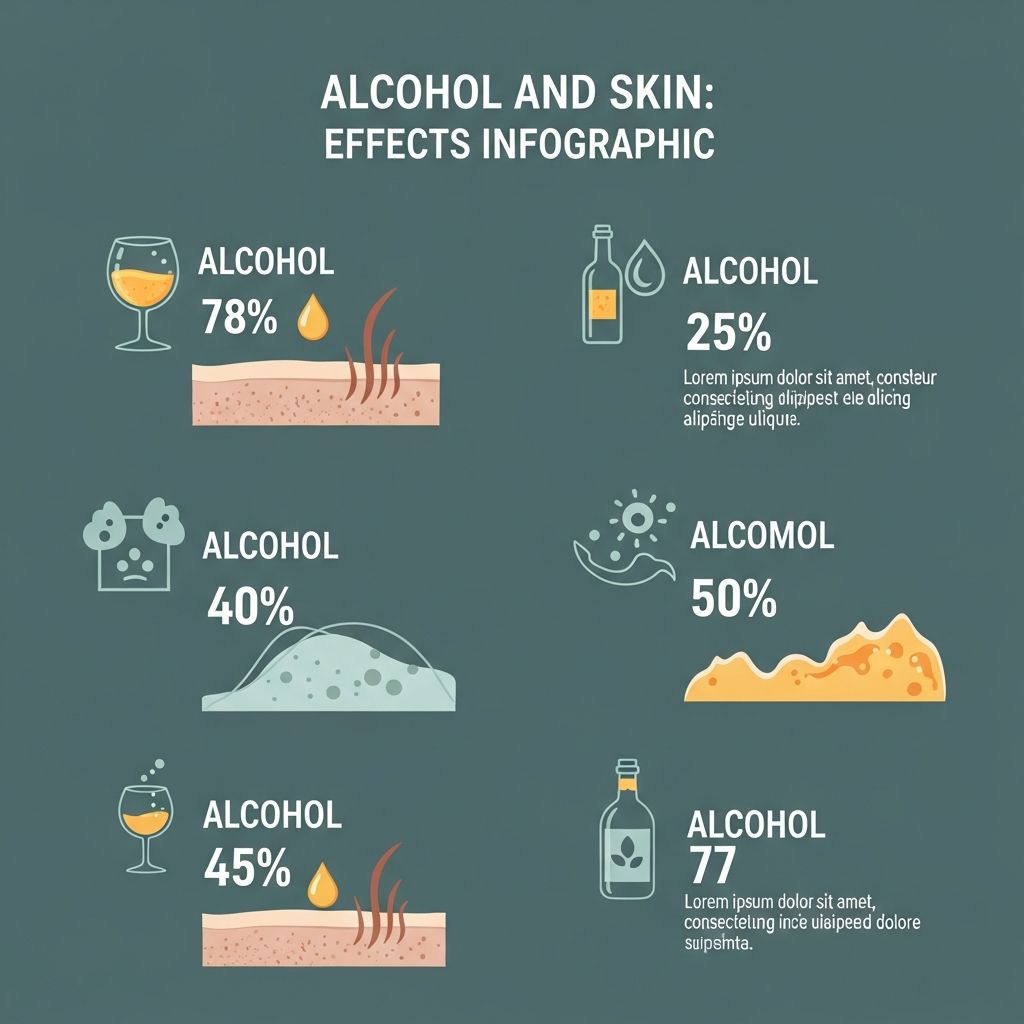
Alcohol and the Skin: Infographic Summary
Excessive alcohol consumption has profound and multifaceted effects on skin health, acting as both a direct cause and aggravating factor for numerous dermatological conditions. This infographic-style overview synthesizes key insights into how ethanol disrupts skin barrier function, induces inflammation, impairs immunity, and accelerates aging.
Direct Skin Effects of Alcohol
Alcohol is a potent diuretic that dehydrates the body and skin, leading to dryness, flakiness, and dullness. As a vasodilator, it causes acute flushing and persistent redness by dilating blood vessels. Chronic use produces toxic metabolites like acetaldehyde, which inflame tissues and impair cellular repair.
- Dehydration: Alcohol inhibits antidiuretic hormone, causing fluid loss and dry, rough skin texture.
- Flushing: Histamine release from acetaldehyde dilates capillaries, resulting in facial redness, especially after beer or wine.
- Urticaria (Hives): Allergic-like reactions with itchy welts triggered by alcohol metabolites.
Skin Conditions Aggravated by Alcohol
Heavy drinking exacerbates chronic inflammatory diseases by suppressing immunity, promoting cytokine release, and disrupting the skin-gut axis.
| Condition | Alcohol’s Impact | Mechanism |
|---|---|---|
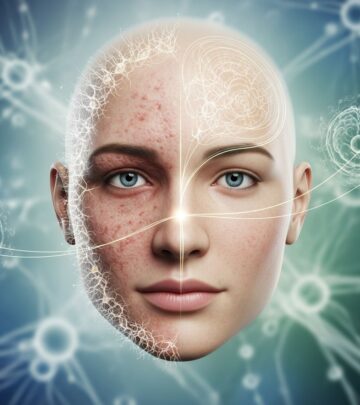
| Rosacea | Increased flares, severity, and onset risk | Vascular permeability ↑, inflammation |
| Psoriasis | Higher incidence, treatment resistance | Immune suppression, proinflammatory cytokines |
| Seborrheic Dermatitis | Frequent flares on scalp/face | Triggers in oily areas |
| Porphyria Cutanea Tarda (PCT) | Blistering on sun-exposed skin | Liver enzyme defects from alcohol |
Infections and Immune Compromise
Alcohol impairs neutrophil function and nutrient absorption (vitamins A, C, B), increasing susceptibility to bacterial, fungal, and viral skin infections that may progress to sepsis.
- Bacterial: Cellulitis, impetigo → septicaemia
- Fungal: Candidiasis, tinea
- Viral: Herpes simplex/zoster, warts
- Infestations: Scabies, pediculosis thrive in compromised hosts
Cancer and Premature Aging Risks
Acetaldehyde, a carcinogen, combined with UV damage (alcohol hinders DNA repair), elevates non-melanoma skin cancer risk. Chronic inflammation accelerates wrinkles, hyperpigmentation, and telangiectasia.
Liver Disease-Related Skin Changes
Alcohol-induced liver dysfunction manifests cutaneously:
- Jaundice: Yellowing from bilirubin buildup
- Spider Angiomas: Estrogen excess causes vascular lesions
- Palmar Erythema: Mottled red palms
- Nail Changes: Muehrcke’s lines, Terry’s nails, clubbing
- Pruritus: Intense itching from cholestasis
Nutritional Deficiencies and Skin
Alcohol malabsorption leads to pellagra (niacin deficiency: dermatitis, diarrhea), scurvy (vitamin C: perifollicular hemorrhages), and zinc deficiency (acrodermatitis).
Prevention and Management Strategies
Limit intake (<14 units/week), hydrate aggressively, use broad-spectrum SPF, and consult dermatologists for personalized regimens. Sobriety reverses many effects within weeks.
Frequently Asked Questions (FAQs)
Q: Does moderate drinking affect skin?
A: Yes, even moderate alcohol causes dehydration and flushing; risks accumulate over time.
Q: Can alcohol cause rosacea in non-drinkers?
A: No, but it triggers flares in susceptible individuals; genetics play a role.
Q: How quickly does skin improve after quitting?
A: Hydration and glow return in days; inflammation subsides in weeks.
Q: Is red wine worse for rosacea?
A: Yes, histamine and sulfites exacerbate flushing more than clear spirits.
Q: Does alcohol increase skin cancer risk?
A: Absolutely—acetaldehyde is carcinogenic, impairs UV repair.
References
- Alcohol and Skin Health: The Undeniable Connection — U.S. Dermatology Partners. 2023-06-15. https://www.usdermatologypartners.com/blog/alcohol-effects-on-skin/
- Advances in Relationship Between Alcohol Consumption and Skin Diseases — PMC (Peer-reviewed). 2023-12-01. https://pmc.ncbi.nlm.nih.gov/articles/PMC10759914/
- Alcohol and the Skin — DermNet NZ (Authoritative dermatology resource). 2024-01-10. https://dermnetnz.org/topics/cutaneous-adverse-effects-of-alcohol
- How Alcohol Affects The Skin — Art of Dermatology. 2023-08-20. https://artofdermatology.com/how-alcohol-affects-the-skin/
- This Is What Happens To Your Skin When You Drink — Dr. Golberg NYC. 2023-11-05. https://www.drgolberg.nyc/blog/this-is-what-happens-to-your-skin-when-you-drink-and-when-you-give-up-alcohol/
- The Effects of Alcohol on Your Skin — Pure Dermoc. 2024-02-14. https://www.puredermoc.com/blog/the-effects-of-alcohol-on-your-skin/?bp=40488
- Does drinking cause rosacea? — American Academy of Dermatology (AAD). 2023-05-12. https://www.aad.org/public/diseases/rosacea/insider/drinking
Similar Articles



Read full bio of Sneha Tete