Aldosterone: Functions, Disorders & Treatment
Understanding aldosterone: how this hormone regulates blood pressure and electrolyte balance.
Understanding Aldosterone: A Comprehensive Guide
Aldosterone is a mineralocorticoid hormone produced by your adrenal glands that plays a vital role in maintaining your body’s fluid and electrolyte balance. This hormone is essential for regulating blood pressure, sodium levels, potassium levels, and overall cardiovascular health. Understanding aldosterone and its functions can help you recognize potential health issues and work with your healthcare provider to maintain optimal health.
What Is Aldosterone?
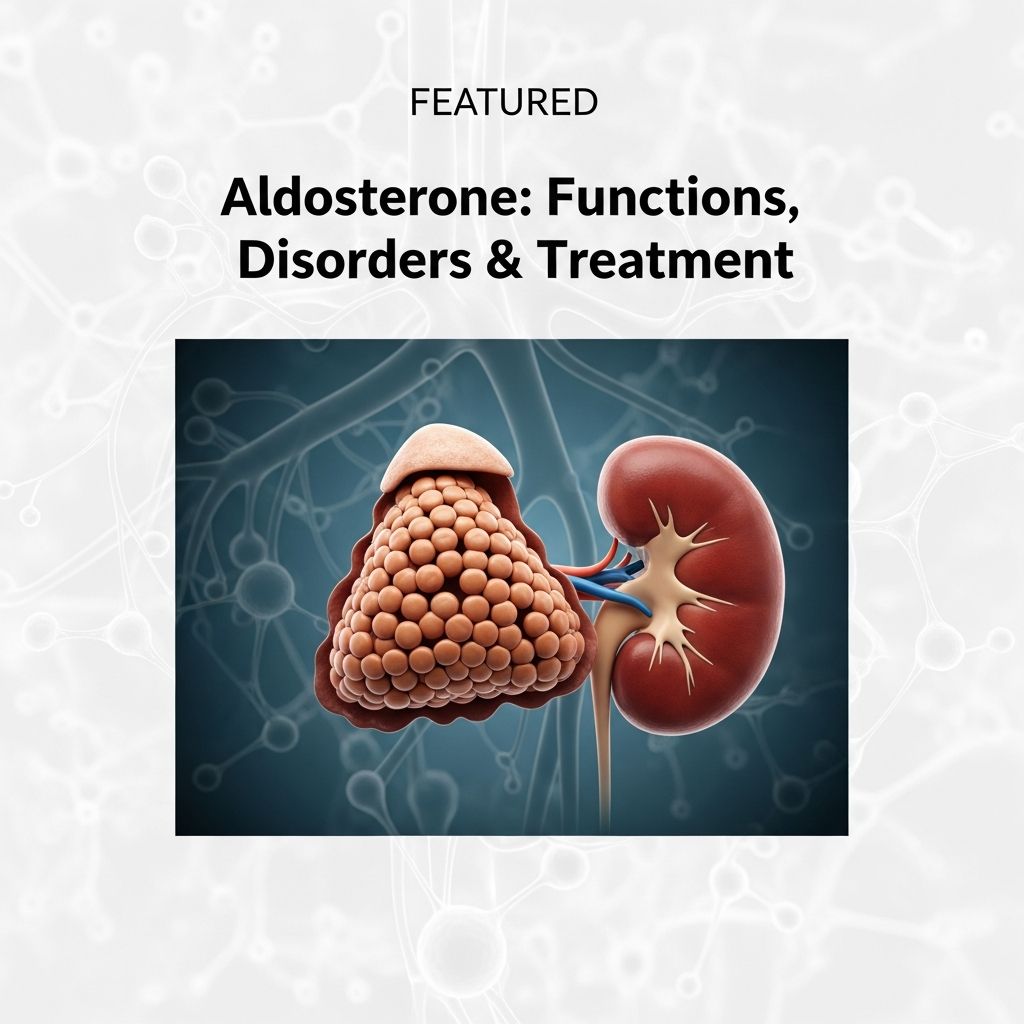
Aldosterone is a steroid hormone synthesized in the zona glomerulosa of the adrenal cortex, the outermost layer of your adrenal glands. These small glands sit atop your kidneys and produce various hormones that regulate essential bodily functions. As a mineralocorticoid, aldosterone’s primary role is to control mineral and water balance in your body, which directly impacts your blood pressure and cardiovascular system.
The body produces aldosterone in response to several stimuli, including changes in blood pressure, potassium levels, and activation of the renin-angiotensin-aldosterone system (RAAS). This sophisticated regulatory system ensures that your body maintains proper fluid volume and electrolyte concentrations necessary for optimal organ function.
How Aldosterone Works in Your Body
The Renin-Angiotensin-Aldosterone System (RAAS)
The renin-angiotensin-aldosterone system is a complex hormonal cascade that regulates blood pressure and fluid balance. When blood pressure drops or sodium levels decrease, your kidneys detect these changes and release renin, an enzyme that initiates a chain reaction. Renin converts angiotensinogen to angiotensin I, which is then converted to angiotensin II by the angiotensin-converting enzyme (ACE). Angiotensin II stimulates the adrenal glands to produce and release aldosterone into the bloodstream.
Mechanisms of Action
Once released, aldosterone travels through the bloodstream to the kidneys, where it acts on the distal tubules and collecting ducts. The hormone binds to mineralocorticoid receptors and increases the reabsorption of sodium and water while promoting the excretion of potassium. This mechanism accomplishes several important functions:
– Increases sodium reabsorption in the kidneys, leading to water retention- Raises blood volume and blood pressure- Maintains proper potassium and sodium balance- Supports cardiovascular stability
This finely tuned system ensures that your body maintains adequate blood pressure to perfuse all organs while keeping electrolyte concentrations within safe ranges for nerve and muscle function.
The Role of Aldosterone in Blood Pressure Regulation
Aldosterone’s primary function is to regulate blood pressure through sodium and water retention. When aldosterone levels are normal, your body maintains appropriate blood volume and pressure. However, when aldosterone production becomes dysregulated, blood pressure can increase significantly. Even modest elevations in aldosterone production can contribute to hypertension, making this hormone a crucial target for blood pressure management.
The hormone’s effects on blood vessel tone and endothelial function also contribute to blood pressure regulation. Aldosterone influences the renin-angiotensin system’s activity, creating a feedback loop that helps stabilize blood pressure over time.
Aldosterone and Electrolyte Balance
Related Stories



Maintaining proper electrolyte balance is essential for nerve conduction, muscle contraction, and heart rhythm. Aldosterone achieves this balance by promoting sodium reabsorption and potassium excretion. Sodium concentration affects water movement in and out of cells, while potassium is critical for maintaining proper cardiac electrical activity and muscle function.
When aldosterone levels are excessive, sodium retention increases, which can lead to hypokalemia (low potassium levels) if the kidneys excrete too much potassium. Conversely, when aldosterone production is insufficient, sodium loss increases and potassium retention can develop, leading to hyperkalemia (elevated potassium levels), which can cause dangerous cardiac arrhythmias.
Primary Hyperaldosteronism: When Aldosterone Production Goes Wrong
What Is Primary Hyperaldosteronism?
Primary hyperaldosteronism, also known as Conn’s syndrome when caused by an aldosterone-producing adenoma, is a condition in which one or both adrenal glands produce excessive amounts of aldosterone independently of normal regulatory signals. This condition represents the most common endocrine cause of hypertension and is frequently associated with treatment-resistant high blood pressure.
In primary hyperaldosteronism, the normal feedback inhibition that typically suppresses aldosterone production fails to work properly. The adrenal glands continue producing aldosterone even when blood pressure is elevated and sodium levels are high—conditions that should normally suppress aldosterone release.
Types of Primary Hyperaldosteronism
Primary hyperaldosteronism presents in two main forms:
– Unilateral hyperaldosteronism: One adrenal gland produces excess aldosterone, often due to an aldosterone-producing adenoma (APA) or primary adrenal hyperplasia. This form is potentially curable with surgery.- Bilateral hyperaldosteronism: Both adrenal glands produce excessive aldosterone. This form is typically managed with medications rather than surgery.
Causes of Primary Hyperaldosteronism
The two most common causes of primary hyperaldosteronism are aldosterone-producing adenomas (APAs) and bilateral idiopathic adrenal hyperplasia (IHA). APAs are benign tumors that produce excessive aldosterone, accounting for approximately 35-40% of primary hyperaldosteronism cases. Bilateral idiopathic adrenal hyperplasia causes bilateral overproduction of aldosterone and represents the remaining majority of cases.
Less common causes include familial hyperaldosteronism (a genetic disorder), aldosterone-producing carcinoma (rare), and secondary forms of hyperaldosteronism related to liver disease, heart failure, or kidney disease.
Symptoms of Hyperaldosteronism
Many patients with primary hyperaldosteronism may not experience obvious symptoms beyond elevated blood pressure. However, the condition can cause several manifestations:
– Resistant or difficult-to-control high blood pressure- Muscle weakness or cramps due to low potassium- Excessive thirst (polydipsia)- Frequent urination (polyuria)- Headaches- Palpitations or irregular heartbeat- Fatigue- Numbness or tingling in extremities
Screening and Diagnosis
Initial Screening: The Aldosterone-to-Renin Ratio
Current Endocrine Society guidelines recommend screening patients at high risk for primary hyperaldosteronism using the aldosterone-to-renin ratio. This test measures the plasma aldosterone concentration along with plasma renin activity or direct renin concentration. An elevated ratio suggests autonomous aldosterone production not suppressed by normal feedback mechanisms.
Patients who should be screened include those with:
– Hypertension diagnosed before age 40- Resistant hypertension (blood pressure not controlled with three or more medications)- Hypertension and hypokalemia- Hypertension with an adrenal incidentaloma (tumor found unexpectedly)- Hypertension and sleep apnea
Confirmatory Testing
After a positive screening result, patients undergo confirmatory testing to definitively diagnose primary hyperaldosteronism. The Endocrine Society guidelines describe four confirmatory procedures:
– Oral sodium suppression test: Patients consume high sodium intake for three days, then fasting aldosterone and renin are measured. Aldosterone should suppress in healthy individuals but remains elevated in primary hyperaldosteronism.- Saline infusion suppression test: Rapid normal saline infusion suppresses aldosterone in healthy persons but not in primary hyperaldosteronism.- Fludrocortisone suppression test: Mineralocorticoid administration suppresses plasma renin and aldosterone in normal individuals but fails to suppress aldosterone in primary hyperaldosteronism.- Captopril challenge test: This ACE inhibitor should suppress aldosterone normally but fails to do so in primary hyperaldosteronism.
Subtype Classification: Adrenal Vein Sampling
Once primary hyperaldosteronism is confirmed, adrenal vein sampling (AVS) helps determine whether the condition is unilateral or bilateral. This procedure involves inserting a catheter through the femoral vein to collect blood samples for cortisol and aldosterone from the inferior vena cava and both adrenal veins. Samples are collected both with and without cosyntropin stimulation to calculate the aldosterone-to-cortisol lateralization (ACL) ratio.
An ACL ratio of 4:1 or greater suggests unilateral hypersecretion suitable for surgical treatment, while a ratio under 3:1 indicates bilateral disease requiring medical management. For patients with indeterminate ACL ratios between 3 and 4, clinical decisions become more complex, requiring careful evaluation of imaging findings and other clinical factors.
Treatment Options for Hyperaldosteronism
Surgical Management
Patients with confirmed unilateral primary hyperaldosteronism may be candidates for adrenalectomy (surgical removal of the affected adrenal gland). This approach offers the potential for cure, particularly in younger patients with aldosterone-producing adenomas. Studies show that surgical patients experience significant reductions in blood pressure and aldosterone levels, with many requiring fewer antihypertensive medications post-operatively.
Adrenalectomy is most beneficial in patients with clear imaging evidence of a unilateral adrenal abnormality and appropriate AVS findings. Even in patients with indeterminate AVS results, surgery may benefit carefully selected individuals, particularly younger patients with imaging abnormalities.
Medical Management
Medical therapy is the primary approach for bilateral primary hyperaldosteronism and for patients who are not surgical candidates. The cornerstone of medical treatment involves mineralocorticoid receptor antagonists:
– Spironolactone: A potassium-sparing diuretic that blocks aldosterone receptors, preventing sodium reabsorption and potassium excretion. Typical dosing ranges from 12.5 to 50 mg daily.- Eplerenone: A selective mineralocorticoid receptor antagonist with fewer hormonal side effects than spironolactone, though typically at higher cost.
Aldosterone Antagonists in Heart Failure
Aldosterone antagonists provide significant benefits beyond primary hyperaldosteronism treatment. These medications help patients with acute heart failure by removing excess water and salt without causing potassium loss. Studies demonstrate that aldosterone antagonists reduce the risk of sudden cardiac death by approximately 20% in patients with heart failure and left ventricular dysfunction. This represents a major advance in heart failure management, particularly for patients with acute decompensation.
Additional Treatment Considerations
Along with aldosterone antagonists, patients typically require:
– Dietary sodium restriction (less than 2,300 mg daily)- Potassium supplementation or dietary increases in some cases- Additional antihypertensive medications if needed- Regular monitoring of blood pressure, potassium, and renal function
Some patients experience side effects with long-term spironolactone use, including erectile dysfunction and gynecomastia (enlarged breast tissue in men), making eplerenone or alternative agents preferable in these cases.
The Aldosterone as a Spectrum: Evolving Understanding
Recent research demonstrates that dysregulated aldosterone production extends beyond the traditional diagnostic criteria for primary hyperaldosteronism. Even modest elevations in aldosterone not meeting diagnostic thresholds are associated with adverse cardiovascular, metabolic, and kidney outcomes. This spectrum of aldosterone-mediated disease suggests that screening practices and diagnostic thresholds may need revision to capture milder phenotypes that could benefit from targeted therapy.
Prognosis and Outlook
The prognosis for hyperaldosteronism varies depending on the underlying cause and treatment approach. Patients with unilateral aldosterone-producing adenomas who undergo successful adrenalectomy often experience significant improvements in blood pressure control and may achieve remission of hypertension. Those with bilateral disease managed medically typically achieve good blood pressure control with mineralocorticoid receptor antagonists, though lifelong medication is usually necessary.
Early diagnosis and appropriate treatment are crucial, as uncontrolled hyperaldosteronism increases the risk of cardiovascular complications including myocardial infarction, stroke, and atrial fibrillation.
Frequently Asked Questions
Q: How is aldosterone different from other blood pressure-regulating hormones?
A: While multiple hormones regulate blood pressure, aldosterone uniquely acts on the kidneys to increase sodium and water reabsorption, directly raising blood volume. Unlike some hormones that cause blood vessel constriction, aldosterone works primarily through fluid retention mechanisms.
Q: Can primary hyperaldosteronism be cured?
A: Yes, unilateral primary hyperaldosteronism caused by an aldosterone-producing adenoma can often be cured through surgical removal of the affected adrenal gland. Bilateral disease typically requires lifelong medical management with mineralocorticoid receptor antagonists.
Q: What are the risks of untreated primary hyperaldosteronism?
A: Untreated primary hyperaldosteronism significantly increases the risk of heart attack, stroke, atrial fibrillation, kidney disease, and sudden cardiac death. Early diagnosis and treatment are essential to prevent these serious complications.
Q: How often should aldosterone levels be monitored after treatment?
A: Patients typically require regular monitoring of blood pressure, aldosterone levels, potassium, and kidney function. The frequency depends on treatment type and individual response, typically ranging from every 3-6 months initially to annually once stable on therapy.
Q: Are there dietary changes that help manage hyperaldosteronism?
A: Yes, restricting sodium intake to less than 2,300 mg daily is a crucial component of management. This reduces water retention and helps medications work more effectively. Adequate but not excessive potassium intake is also important, though individual needs vary based on medications and kidney function.
References
- A 10-year experience of the Cleveland Clinic: Primary hyperaldosteronism and adrenal vein sampling outcomes — National Center for Biotechnology Information (PMC). 2024. https://pmc.ncbi.nlm.nih.gov/articles/PMC11088423/
- Our evolving understanding of primary aldosteronism — Cleveland Clinic Journal of Medicine. 2024. https://www.ccjm.org/content/88/4/221
- How Do Aldosterone Antagonists Work? — Cleveland Clinic Health. 2024. https://my.clevelandclinic.org/health/treatments/22917-aldosterone-antagonists
- Hyperaldosteronism: What It Is, Causes, Symptoms & Treatment — Cleveland Clinic Health. 2024. https://my.clevelandclinic.org/health/diseases/16448-hyperaldosteronism
- Renin-Angiotensin-Aldosterone System (RAAS) — Cleveland Clinic Health. 2024. https://my.clevelandclinic.org/health/articles/24175-renin-angiotensin-aldosterone-system-raas
- Aldosterone Test — MedlinePlus. U.S. National Library of Medicine. 2024. https://medlineplus.gov/lab-tests/aldosterone-test/
- Adrenal Gland: What It Is, Function, Symptoms & Disorders — Cleveland Clinic Health. 2024. https://my.clevelandclinic.org/health/body/23005-adrenal-gland
Similar Articles








Read full bio of Sneha Tete