Allergic Contact Cheilitis: Causes, Symptoms & Treatment Guide
Understanding allergic contact cheilitis: causes, symptoms, diagnosis, and effective management strategies for lip inflammation.
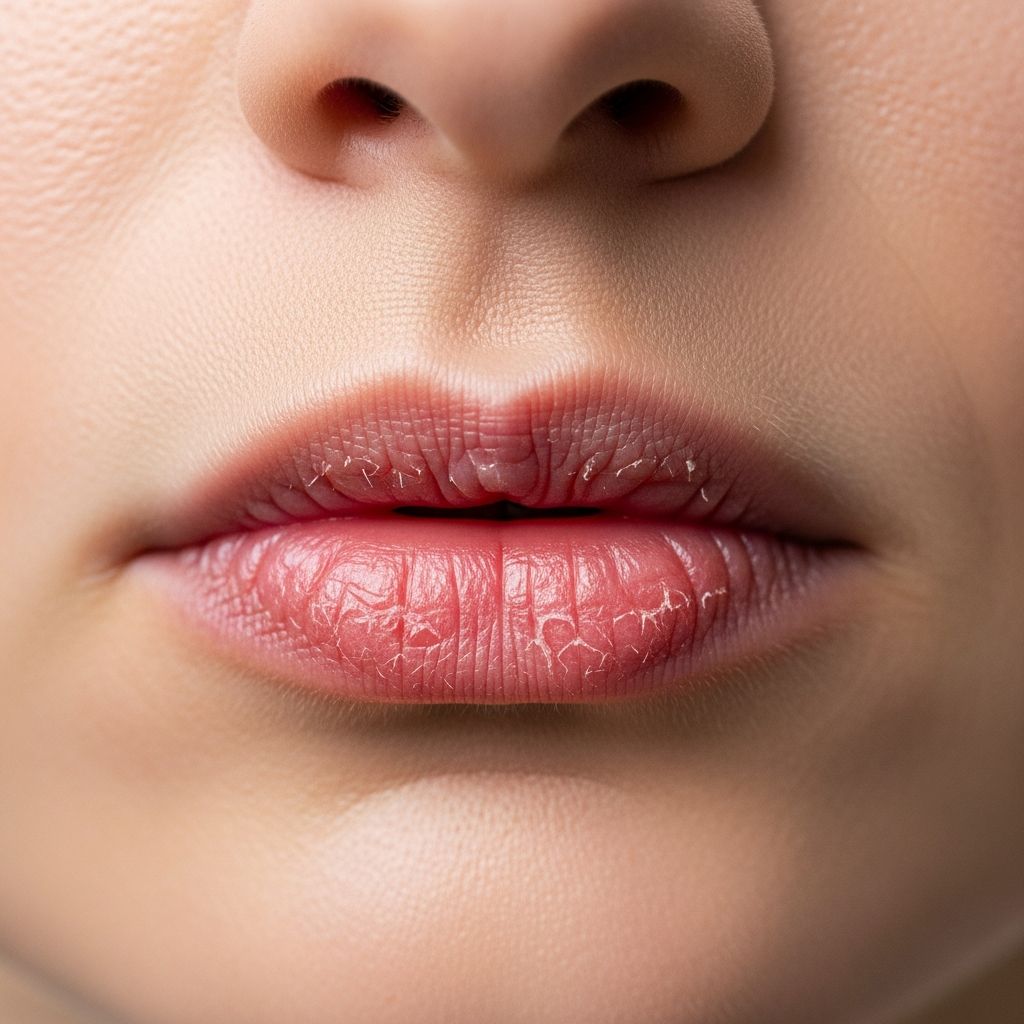
Allergic contact cheilitis is a form of allergic contact dermatitis specifically affecting the lips, resulting from a type IV hypersensitivity reaction to allergens in contact with the vermilion border or surrounding skin. It manifests as eczema-like changes, often with redness, dryness, scaling, and cracking, and accounts for about one quarter of chronic eczematous cheilitis cases.
What is allergic contact cheilitis?
Allergic contact cheilitis arises from delayed-type (type IV) hypersensitivity to substances applied to or contacting the lips. Unlike irritant contact cheilitis, which stems from direct tissue damage, this condition involves an immune-mediated response where T-cells react to specific allergens after prior sensitization. It is more prevalent in women and adults than men or children, reflecting differences in product usage patterns. Common in atopics, it can overlap with endogenous factors like atopic dermatitis.
Who gets allergic contact cheilitis?
This condition affects individuals across ages but is more common in adults, particularly women due to higher use of lip cosmetics. Children may react to foods or toys, while musicians face risks from instruments. Atopic individuals with eczema history are predisposed, as are those with oral allergies. Approximately 25% of persistent lip eczemas are allergic.
Causes of allergic contact cheilitis
Allergens reach the lips via direct application or transfer. Major sources include:
- Cosmetics: Lipsticks, lip glosses, balms (fragrances, preservatives like MCI/MI, lanolin, ricinoleic acid from castor oil).
- Toothpastes: Flavors (mint, cinnamal), sodium lauryl sulfate.
- Foods: Fruits (citrus, mango), nuts, spices in children; metals like nickel in adults.
- Metals: Nickel, gold, mercury from dental work or utensils.
- Others: Musical instruments (wood, nickel), medications (streptomycin), plants, latex.
Common allergens:
| Allergen Group | Examples |
|---|---|
| Flavourings | Mint, cinnamal, vanillin |
| Preservatives | MCI/MI, parabens, Euxyl K400 |
| Lip care ingredients | Lanolin, ricinoleic acid, coconut oil |
| Metals | Nickel, gold, Hg |
| Propylene glycol | In many products |
Patient products often yield unique reactions.
Clinical features of allergic contact cheilitis
Presents as eczema on vermilion margin or perioral skin: red, dry, scaly, cracked lips; may involve angles (angular cheilitis). Localized to contact site, e.g., instrument edge. Symptoms: itch, burn, pain. Rarely affects inner mucosa. Pigmented variant shows persistent brown discoloration post-resolution. Associated findings: oral changes, generalized dermatitis.
Differential diagnosis
Key differentials:
- Irritant contact cheilitis: From licking, weather, SLS; no allergy.
- Atopic cheilitis: In atopics, endogenous.
- Angular cheilitis: Saliva, Candida/Staph infection.
- Contact urticaria: Immediate hives from foods/spices.
- Oral allergy syndrome: Pollen-food rapid reaction.
- Infective: HSV (blisters), impetigo.
- Actinic: Sun damage, rough/scaly.
- Others: Cheilitis granulomatosa, drug reactions.
Diagnosis of allergic contact cheilitis
History: product use, onset, exposures. Exam: lips, mouth, skin. Patch testing essential: baseline, cosmetic/toothpaste series, patient products (undiluted cosmetics; 10% petrolatum for wood). Relevance assessed clinically. Multiple positives common; co-diagnoses frequent. Biopsy rarely needed.
Management of allergic contact cheilitis
Primary: strict allergen avoidance from all sources. Lips heal rapidly post-avoidance. Supportive: emollients (petrolatum), mild topical steroids (hydrocortisone), calcineurin inhibitors if needed. Educate on reading labels, hypoallergenic alternatives. For pigmented type, monitor resolution.
Related Stories



Frequently Asked Questions
What causes allergic contact cheilitis?
It is caused by type IV hypersensitivity to lip-contact allergens like cosmetics, toothpastes, foods, and metals.
How is allergic contact cheilitis diagnosed?
Diagnosis relies on clinical history and patch testing with relevant allergens and patient products.
How long does allergic contact cheilitis last?
Symptoms resolve quickly (days to weeks) after allergen avoidance.
Can allergic contact cheilitis be cured?
Yes, by permanent avoidance of the identified allergen(s).
Is patch testing painful?
Mild discomfort possible; reactions read at 48-96 hours.
What if patch tests are negative?
Consider irritant, atopic, or infective cheilitis.
Prevention
Use hypoallergenic products, avoid known allergens, moisturize lips, protect from irritants. Test new products on arm first.
References
- Allergic contact cheilitis — DermNet NZ. 2023-05-15. https://dermnetnz.org/topics/allergic-contact-cheilitis
- Cheilitis — StatPearls, NCBI Bookshelf, NIH. 2023-10-01. https://www.ncbi.nlm.nih.gov/books/NBK470592/
- Contact dermatitis — NHS UK. 2024-01-10. https://www.nhs.uk/conditions/contact-dermatitis/
Similar Articles








Read full bio of medha deb