Allergic Contact Dermatitis to Essential Oils
Understanding the risks, symptoms, diagnosis, and prevention of allergic reactions to essential oils in aromatherapy and skincare.
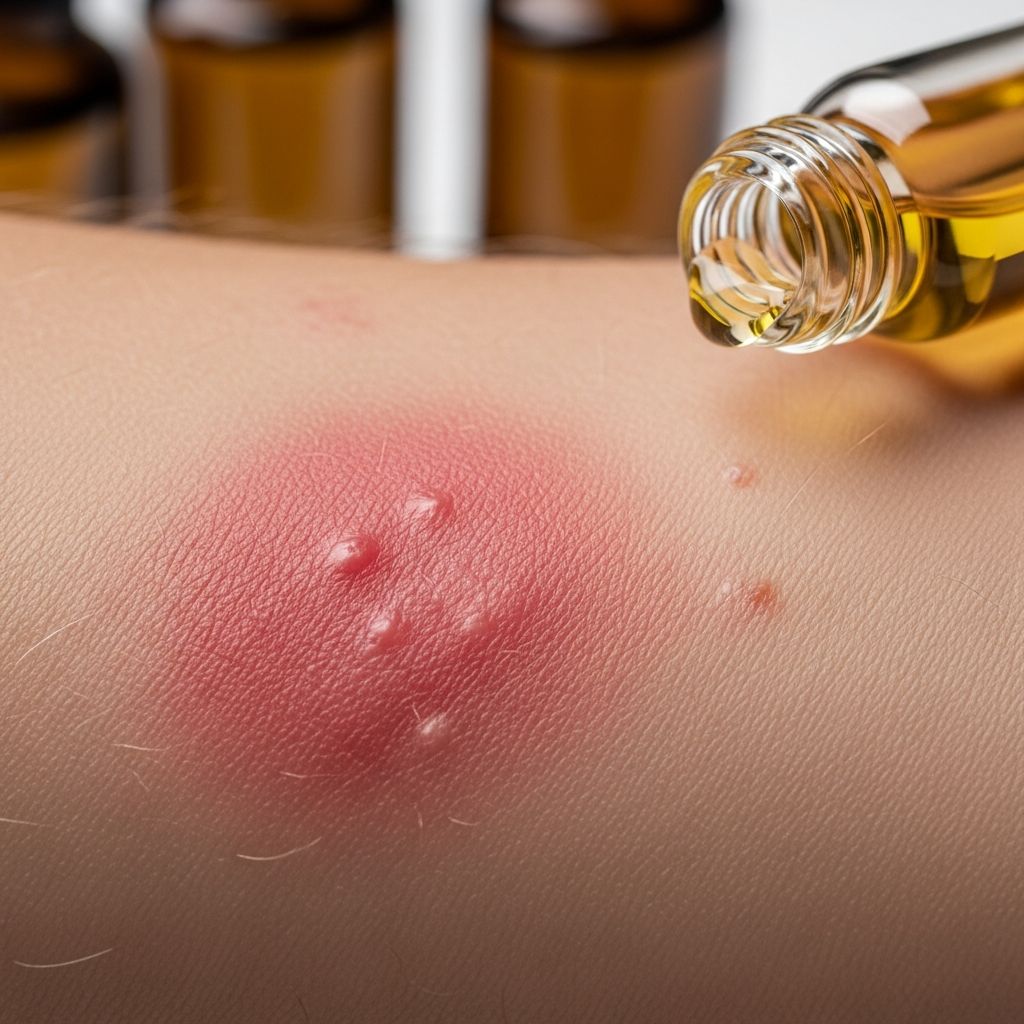
Allergic contact dermatitis to essential oils is a form of eczema resulting from a delayed type IV hypersensitivity reaction when these concentrated plant extracts contact the skin.
What is allergic contact dermatitis to essential oils?
Essential oils are volatile aromatic compounds extracted from plants via distillation or mechanical methods, used widely in aromatherapy, cosmetics, perfumery, and household products. While valued for therapeutic benefits like relaxation and anti-inflammatory effects, they contain numerous chemical constituents—often over 100 per oil—that can sensitize the skin. Allergic contact dermatitis develops when pre-sensitized T-lymphocytes recognize these allergens upon re-exposure, releasing cytokines that provoke inflammation 24–72 hours later. This contrasts with irritant contact dermatitis, which causes immediate damage without immune memory.
Who is at risk of allergic contact dermatitis to essential oils?
Certain groups face higher risks due to frequent exposure. Occupational exposure is prominent among:
- Aromatherapists and masseurs, handling oils daily for massages.
- Physiotherapists using oils in treatments.
- Hairdressers and beauticians incorporating oils in styling or facials.
- Cosmetic and soap manufacturers processing large volumes.
Other at-risk populations include:
- Individuals with atopic dermatitis, whose barrier function is compromised.
- Older adults, with declining skin resilience.
- Women, possibly due to higher cosmetic use.
- Home users employing diffusers, leading to airborne contact dermatitis.
- Infants in cultures like Iran, India, China, and Thailand, where oils treat colic topically on the abdomen.
Increasing home popularity of diffusers has spiked airborne cases, affecting enclosed spaces.
What essential oils cause allergic contact dermatitis?
Numerous essential oils are allergenic due to shared constituents like sesquiterpene lactones or oxidized compounds. Commonly implicated include:
- Tea tree oil (Melaleuca alternifolia) – frequent in acne treatments.
- Ylang-ylang (Cananga odorata) – used in perfumes.
- Lemongrass (Cymbopogon citratus) – high citral content.
- Sandalwood (Santalum album).
- Clove (Syzygium aromaticum).
- Jasmine (Jasminum spp.).
- Eucalyptus (Eucalyptus spp.).
- Others: Fragrance mix components, lavender, peppermint, and citrus oils like limonene-rich peels.
Patients often react to multiple oils from cross-reactivity. Oxidation from air exposure heightens allergenicity, especially in tea tree oil.
Pathophysiology
This type IV hypersensitivity involves haptenation: small allergenic molecules bind skin proteins, forming immunogenic complexes. Memory T-cells trigger cytokine release (e.g., IL-1, TNF-α), recruiting inflammatory cells and causing eczema. Reactions peak at 48-72 hours. Airborne spread occurs via volatile vapors from diffusers.
Clinical features
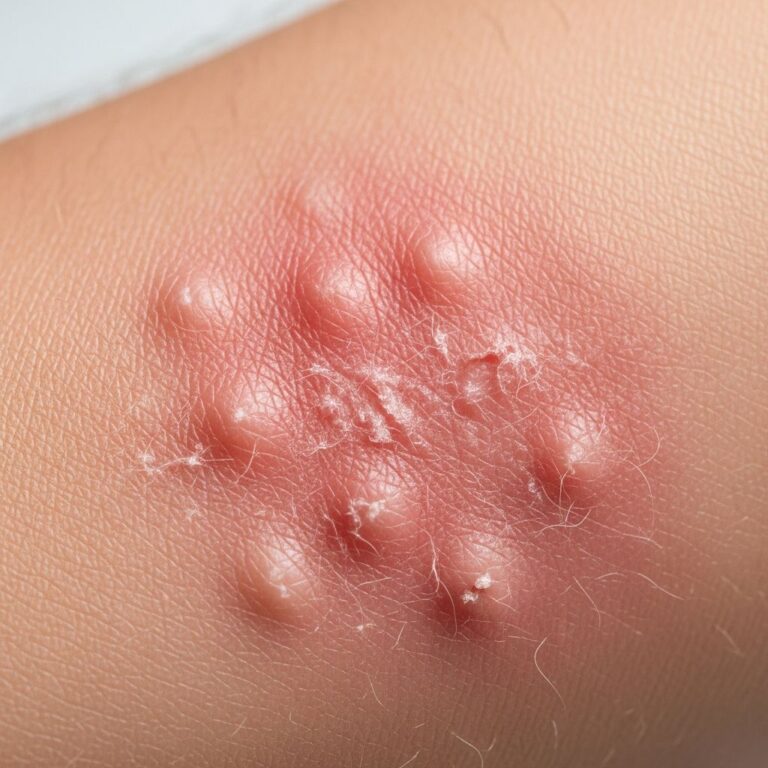
Symptoms—itching, redness (erythema), scaling, vesicles, and eczema—appear at contact sites but may spread. Common sites:
- Hands and forearms in professionals.
- Face, neck, legs from splashes or airborne exposure.
- Abdomen in infants.
- Widespread in diffuser users.
Symptoms improve during exposure breaks like weekends or vacations. Chronic cases show lichenification from rubbing.
Diagnosis
Diagnosis combines history (exposure, improvement away from oils), exam (distribution matching use), and patch testing—the gold standard. Patches with diluted oils (e.g., 1-5% in pet.) are applied to the back for 48 hours, read at D2 and D4-5 for + reactions (eczema). True positive requires relevance to history. Advanced: GC-MS identifies specific haptens; biopsy shows spongiosis.
Related Stories



Differential diagnosis:
| Condition | Key Features | Differentiator |
|---|---|---|
| Irritant contact dermatitis | Painful burn, sharp borders, immediate onset. | No sensitization; patch test negative. |
| Contact urticaria | Hives within minutes, resolves hours. | Immediate IgE-mediated; not delayed. |
| Photocontact dermatitis | Streaky hyperpigmentation post-sun. | UV activation (e.g., bergamot). |
| Atopic dermatitis flare | Flexural, history of atopy. | No specific allergen link. |
Management
Avoidance is paramount: identify culprits via patch testing, eliminate them. Strategies:
- Dilute oils (1-2% max in carrier like jojoba).
- Avoid neat application to prevent sensitization.
- Gloves for occupational use (though limits massage).
- Check product labels for hidden oils in ‘fragrance’.
- Emollients (e.g., ceramide creams) restore barrier.
Severe cases: Topical corticosteroids (potent like clobetasol 0.05% BD x1-2w), calcineurin inhibitors (tacrolimus). Oral steroids or immunosuppressants for erythroderma. Symptoms resolve in weeks with strict avoidance; chronic if cross-exposure.
Prevention
Prevent via education:
- Patch test new oils on inner arm 24-48h before full use.
- Store oils cool/dark to prevent oxidation.
- Use fractioned oils or absolutes less sensitizing.
- Professionals: Rotate oils, ventilate workspaces.
- Home: Moderate diffuser use, avoid bedrooms.
Suppliers should provide safety data.
Frequently Asked Questions
What are the first signs of allergic contact dermatitis from essential oils?
Itching, redness, and scaling 24-72 hours after exposure, often on hands or face.
Can diffuser use cause skin reactions?
Yes, airborne contact dermatitis with widespread eczema from volatile allergens.
Is tea tree oil safe for everyone?
No, it’s a top allergen; dilute heavily and patch test.
How is patch testing performed?
Allergens taped to back for 48h, read at 48h and 96h for reactions.
Does the reaction go away on its own?
With avoidance, yes, in 1-4 weeks; persistent exposure causes chronicity.
Can I still use essential oils if allergic to one?
Yes, if patch-tested safe alternatives; avoid cross-reactive families.
References
- Allergic contact dermatitis to essential oils — DermNet NZ. 2023. https://dermnetnz.org/topics/allergic-contact-dermatitis-to-essential-oils
- Allergic contact dermatitis to essential oils – Dr. Breslavets — Canadian Medical Skin Dermatology. 2023-10-12. https://cmsderm.ca/allergic-contact-dermatitis-to-essential-oils-2/
- Contact dermatitis — Mayo Clinic. 2024-05-12. https://www.mayoclinic.org/diseases-conditions/contact-dermatitis/symptoms-causes/syc-20352742
- Irritation and allergic reactions — Tisserand Institute. 2023. https://tisserandinstitute.org/safety/irritation-allergic-reactions/
- Contact Dermatitis: Symptoms, Causes, Types & Treatments — Cleveland Clinic. 2024-01-24. https://my.clevelandclinic.org/health/diseases/6173-contact-dermatitis
Similar Articles








Read full bio of medha deb