Allergies vs. Sinus Infection: Key Differences
Learn how to distinguish between allergies and sinus infections with clear symptom comparisons and expert guidance.
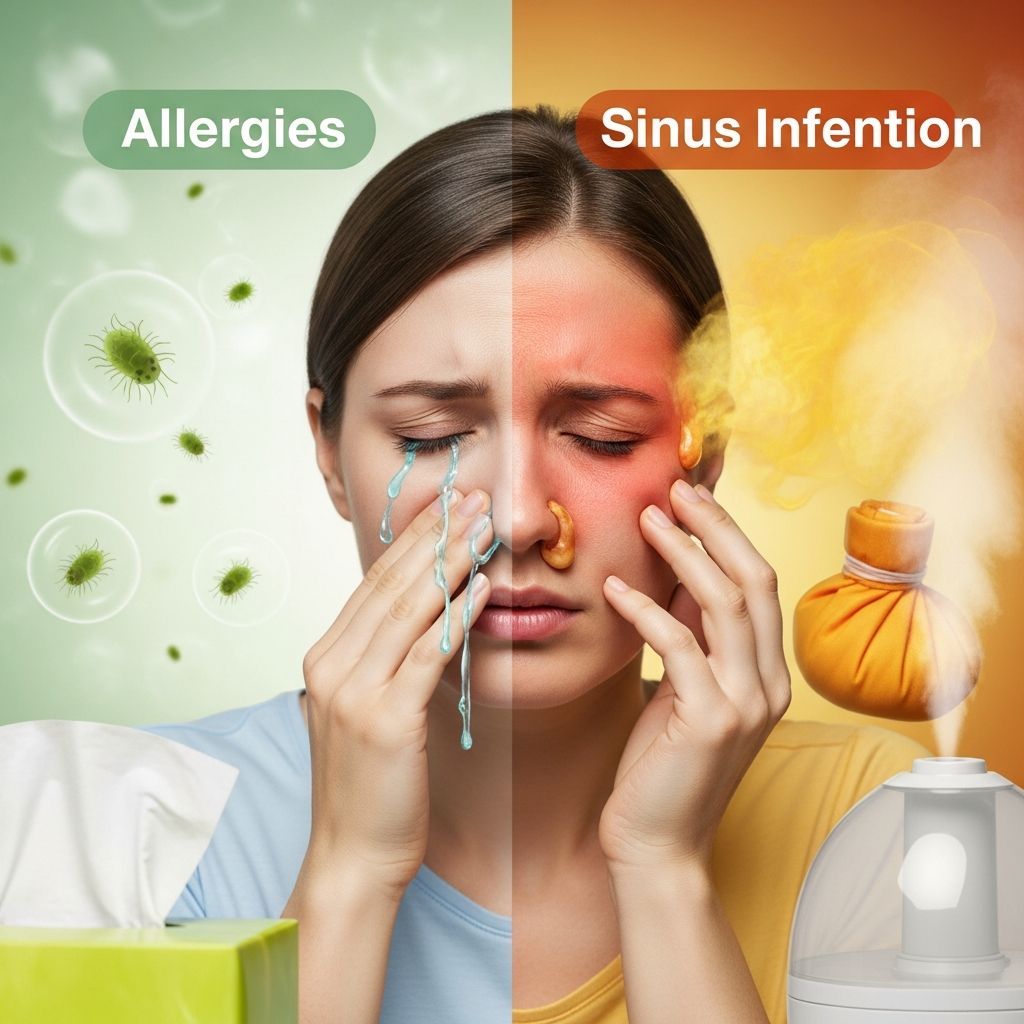
Allergies vs. Sinus Infection: Understanding the Key Differences
Many people struggle to differentiate between allergies and sinus infections because their symptoms often overlap significantly. Both conditions can cause nasal congestion, headaches, and drainage issues that affect your daily life. However, these are two distinct conditions with different underlying causes, symptom profiles, and treatment approaches. Understanding these differences is crucial for receiving appropriate care and finding relief faster.
Allergies occur when your immune system overreacts to harmless environmental substances, known as allergens, such as pollen, dust mites, or pet dander. Sinus infections, also called sinusitis, develop when your nasal passages become infected and inflamed, typically from a viral infection or sometimes bacterial infection. While both conditions can make you feel miserable, knowing which one you have helps determine the right treatment strategy.
What Are Allergies?
Allergies represent an immune system response to specific triggers in your environment. When you encounter an allergen, your immune system releases substances like histamine into your bloodstream, triggering allergic reactions. This response is your body’s way of fighting what it perceives as a threat, even though these substances are typically harmless to most people.
Allergies can be seasonal, occurring during specific times of the year, or perennial, lasting year-round depending on your exposure to triggers. Common allergens include:
- Pollen from trees, grasses, and weeds
- Dust mites and household dust
- Pet dander from cats and dogs
- Mold spores
- Food allergens
The seasonal nature of allergies can help you identify them. If you know you experience symptoms during spring when trees pollinate, summer when grass pollen is present, or fall during ragweed season, allergies are likely your culprit.
What Is a Sinus Infection?
A sinus infection, or sinusitis, occurs when the sinuses—cavities around your nasal passages—become inflamed and swollen. This inflammation typically stems from a viral infection, often following a cold, or sometimes from bacterial infection. When your sinuses swell, they cannot drain properly, causing mucus to accumulate in these spaces.
The buildup of mucus creates congestion and can lead to bacterial growth, which may worsen the infection. Unlike allergies, which result from immune system overreaction, sinus infections involve actual infection and inflammation of the sinus cavities. This distinction is important because it affects how your condition should be treated.
Key Symptom Differences
While allergies and sinus infections share some overlapping symptoms, several distinguishing characteristics can help you identify which condition you have:
| Symptom | Allergies | Sinus Infection |
|---|---|---|
| Itchy, watery eyes | ✓ | |
| Sneezing | ✓ | |
| Nasal congestion | ✓ | ✓ |
| Headache | ✓ | ✓ |
| Thick, discolored nasal discharge | ✓ | |
| Facial pain or pressure | ✓ | |
| Fever | ✓ | |
| Bad breath | ✓ | |
| Tooth pain | ✓ |
Related Stories



Common Allergy Symptoms
When you have allergies, you’ll typically experience symptoms that relate to your immune system’s histamine release. Common allergy symptoms include:
- Itchy, watery, or swollen eyes
- Sneezing, often in multiple episodes
- Itchy or stuffy nose
- Runny nose with clear discharge
- Itchiness affecting the eyes, nose, or roof of the mouth
- Facial swelling affecting lips and tongue
- Itchy skin, rashes, or hives
- Coughing or wheezing
- Shortness of breath in severe cases
A distinctive feature of allergies is the itchy, watery eyes symptom, which is rarely present in sinus infections. If you’re experiencing significant eye itchiness alongside nasal symptoms, allergies are likely the cause.
Common Sinus Infection Symptoms
Sinus infection symptoms stem from inflammation and mucus buildup in your sinuses. These symptoms typically include:
- Facial inflammation, tenderness, or pain around the forehead, eyes, cheeks, and nose
- Nasal congestion that feels like pressure or fullness
- Thick nasal discharge that is green or yellow in color
- Difficulty smelling or reduced sense of smell
- Postnasal drip
- Bad breath
- Tooth pain in the upper teeth
- Sore throat
- Cough
- Fever (indicating bacterial infection)
- Fatigue and general malaise
The thick, discolored nasal discharge is a hallmark symptom of sinus infections. If you’re producing green or yellow mucus from your nose, a sinus infection is likely present, whereas allergies typically produce clear discharge.
Timeline and Duration
The timeline of your symptoms can also help distinguish between these conditions:
- Allergies: Symptoms begin shortly after exposure to an allergen and persist as long as exposure continues. They can be seasonal or chronic.
- Sinus infections: Acute sinusitis symptoms develop over time and typically last longer than one to two weeks. If symptoms persist beyond four weeks, it’s considered chronic sinusitis.
If your symptoms appear suddenly after encountering a known allergen—such as petting a cat or during high pollen season—allergies are likely responsible. If your symptoms follow a cold and persist for more than 10 days, a sinus infection is more probable.
Understanding the Connection Between Allergies and Sinus Infections
Interestingly, allergies and sinus infections are often connected. When you have allergies, your body produces excess mucus in response to allergen exposure. Additionally, the inflammation triggered by allergies can affect your sinus tissues, making them swollen and susceptible to bacterial growth.
People with allergies or asthma are more likely to develop sinusitis because their nasal and sinus tissue can become swollen when they breathe in triggers like dust, pollen, or smoke. If you have untreated allergies, the chronic inflammation and mucus production can create an environment where sinus infections develop more easily.
When to See a Healthcare Professional
While many cases of allergies and mild sinus infections can be managed with over-the-counter medications, certain situations warrant professional medical evaluation:
- Symptoms that don’t improve with OTC medications after one to two weeks
- Symptoms that worsen despite treatment
- Severe facial pain or pressure
- High fever accompanying nasal symptoms
- Signs of complications, such as vision changes or confusion
- Symptoms lasting longer than recommended timeframes
- Recurring infections throughout the year
A healthcare professional or ENT specialist can perform proper testing and imaging to confirm your diagnosis and recommend appropriate treatment.
Treatment Approaches
Treatment differs significantly between allergies and sinus infections because of their different causes.
Treating Allergies
Allergy management focuses on avoiding triggers and controlling immune system response:
- Antihistamines: Help block histamine release and reduce symptoms
- Decongestants: Temporarily relieve nasal congestion
- Nasal corticosteroid sprays: Reduce inflammation in nasal passages
- Allergen avoidance: Minimize exposure to known triggers
- Air filters: Remove allergens from your home environment
- Immunotherapy: Long-term treatment reducing sensitivity to specific allergens
Treating Sinus Infections
Sinus infection treatment depends on whether the infection is viral or bacterial:
- Saline nasal irrigation: Helps clear mucus and reduce congestion
- Decongestants: Temporarily relieve sinus pressure
- Antibiotics: Prescribed for bacterial infections lasting beyond 10 days
- Nasal corticosteroid sprays: Reduce inflammation
- Pain relievers: Manage facial pain and pressure
- Humidifiers: Moisten air to ease congestion
Frequently Asked Questions
Can allergies lead to sinus infections?
Yes, allergies can increase your risk of developing sinus infections. The inflammation and excess mucus production from allergies create an environment where bacteria can grow more easily, potentially leading to a secondary sinus infection.
How long do sinus infections last?
Acute sinus infections typically last less than four weeks. However, if symptoms persist beyond this timeframe with appropriate treatment, your condition may be chronic sinusitis requiring specialist evaluation.
Can I have both allergies and a sinus infection simultaneously?
Yes, it’s possible to have both conditions at the same time. Your allergies may trigger sinus inflammation, which then becomes infected with bacteria, creating a combined situation that requires treatment for both conditions.
What is the most reliable way to distinguish between these conditions?
The most reliable distinguishing feature is the presence of itchy, watery eyes, which indicates allergies but is rare in sinus infections. Additionally, thick green or yellow nasal discharge strongly suggests a sinus infection, while clear discharge is typical of allergies.
Should I take antibiotics for allergies?
No. Antibiotics are ineffective for allergies because they are not caused by bacteria. Allergies require antihistamines and other immune-modulating treatments instead.
How can I prevent sinus infections if I have allergies?
Managing your allergies effectively through avoidance, medication, and sometimes immunotherapy can reduce your risk of sinus infections. Keeping your sinuses clear and well-drained also helps prevent bacterial growth.
Key Takeaways
Understanding the differences between allergies and sinus infections helps you seek appropriate treatment and find relief faster. Allergies result from immune system overreaction to harmless substances and typically cause itchy, watery eyes and clear nasal discharge. Sinus infections involve inflammation and infection of the sinus cavities and typically cause facial pain, pressure, thick discolored discharge, and sometimes fever.
While these conditions can coexist and share some symptoms, their distinct characteristics allow for differentiation. If your symptoms don’t improve within one to two weeks with over-the-counter treatments, or if they worsen, consulting a healthcare professional is essential for proper diagnosis and targeted treatment.
References
- Is It Allergies or Sinusitis? Understanding the Difference — Ucan & Wellness. Accessed January 13, 2026. https://ucandwellness.com/allergies-or-sinusitis
- Allergies or Sinus Infection: How to Tell the Difference — Healthline. Accessed January 13, 2026. https://www.healthline.com/health/allergies-or-sinus-infection
- Colds, Allergies and Sinusitis — How to Tell the Difference — American Academy of Allergy, Asthma & Immunology (AAAAI). Accessed January 13, 2026. https://www.aaaai.org/tools-for-the-public/conditions-library/allergies/colds-allergies-sinusitis
- How to Tell the Difference Between Allergies and a Sinus Infection — Moen ENT Center. Accessed January 13, 2026. https://www.moentcenter.com/blog/1395810-how-to-tell-the-difference-between-allergies-and-a-sinus-infection/
- Mayo Clinic Q and A: Is it allergies or a sinus infection? — Mayo Clinic. Accessed January 13, 2026. https://newsnetwork.mayoclinic.org/discussion/mayo-clinic-q-and-a-is-it-allergies-or-a-sinus-infection/
- How To Know if You Have a Sinus Infection or Just Allergies — Houston Advanced Sinus. Accessed January 13, 2026. https://houstonadvancedsinus.com/sinus-infections-or-just-allergies/
Similar Articles








Read full bio of medha deb