Why Are Allergies Worse At Night? Expert Tips To Sleep Soundly
Discover why allergy symptoms intensify at night and expert strategies to achieve better sleep and relief from nighttime discomfort.
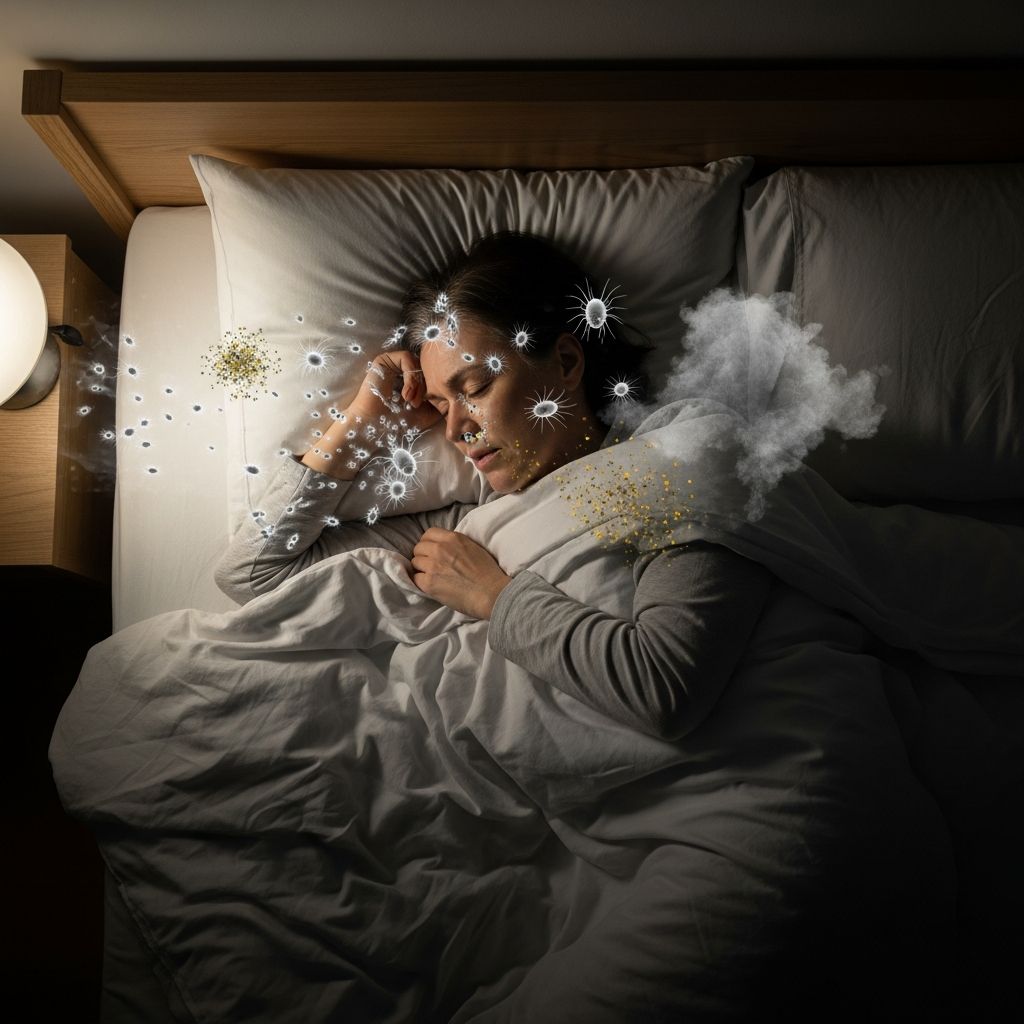
Allergies frequently intensify at night, disrupting sleep with symptoms like congestion, sneezing, and coughing. This occurs due to heightened exposure to indoor allergens, body positioning during sleep, and natural circadian rhythms that increase histamine production.
What Are Nighttime Allergies?
Nighttime allergies refer to allergic reactions that worsen in the evening or while sleeping, primarily triggered by indoor allergens such as
dust mites
,pet dander
, andmold
. Unlike daytime allergies often linked to outdoor pollen, nighttime symptoms stem from accumulated irritants in bedding and bedrooms.These allergies differ from common colds because they persist nightly without viral symptoms like fever. Allergic rhinitis, or hay fever, is the most common form affecting sleep, leading to inflammation in nasal passages.
Symptoms of Allergies at Night
Common
nighttime allergy symptoms
include:- Sneezing and itchy or runny nose
- Postnasal drip causing throat irritation
- Nasal congestion that worsens when lying down
- Itchy, watery, or puffy eyes
- Coughing from mucus drainage
- Fatigue and dark circles under eyes from poor sleep
These can escalate into
postnasal drip
, where mucus pools in the throat during horizontal positioning, triggering coughs and sore throats. Symptoms peak at night due to prolonged allergen exposure in enclosed spaces.Why Do Allergies Get Worse at Night?
Several factors explain why
allergies worsen at night
:- Bedroom allergens: Dust mites thrive in warm, humid bedding; pet dander and mold accumulate in carpets and bathrooms.
- Pollen transfer: Daytime pollen clings to hair, skin, and clothes, transferring to pillows and sheets.
- Body position: Lying down causes blood to pool in nasal sinuses, increasing swelling and mucus buildup.
- Circadian rhythms: Histamine levels rise naturally at night, amplifying immune responses.
- Allergen concentration: Poor ventilation allows irritants to build up indoors.
**Dust mites** are primary culprits, feeding on dead skin cells in mattresses and pillows, with populations exploding in humid environments above 50% humidity.
How to Prevent Allergies at Night
Effective
prevention strategies
focus on reducing allergen exposure:Optimize Your Bedroom Environment
- Use
HEPA air purifiers
to filter airborne particles like dust and pollen. - Maintain
30-50% humidity
with dehumidifiers to deter dust mites and mold. - Keep room temperature below
70°F
and ensure good ventilation. - Remove carpets; opt for hard floors and minimize clutter.
- Close windows at night to block outdoor pollen.
Bedding and Laundry Tips
- Encasing mattresses, pillows, and box springs in
allergen-proof covers
. - Wash sheets, pillowcases, and duvet covers weekly in
hot water (130°F+)
. - Replace pillows every
6 months
; choose hypoallergenic materials. - Wash stuffed animals frequently if children are affected.
Personal Hygiene Habits
- Shower before bed to rinse pollen from skin and hair; use a night bonnet if needed.
- Wash hair nightly or rinse thoroughly to prevent pollen transfer to bedding.
- Change clothes after outdoor activities; keep pets out of the bedroom.
- Elevate head with a
wedge pillow
or bed risers to reduce congestion. - Perform
saline nasal rinses
(Neti pot) to clear sinuses.
Monitor pollen counts via apps and stay indoors during high-pollen evenings.
Treatments for Nighttime Allergies
When prevention falls short,
treatments
provide relief:Over-the-Counter Medications
- Nasal corticosteroids** like FLONASE for 24-hour congestion and itch relief.
- Antihistamines** (e.g., ZYRTEC, Benadryl) block histamine; non-drowsy options for bedtime.
- Cromolyn sodium nasal spray** prevents symptom-causing agents.
Related Stories



Immunotherapy Options
For long-term relief:
- Allergy drops (sublingual immunotherapy): Customized daily drops build tolerance to dust mites, molds, pets, and pollen.
- Allergy shots: Weekly injections desensitize the immune system over time.
- ExACT Immunoplasty: Targeted injections for allergic rhinitis.
Consult a board-certified allergist for testing and personalized plans.
When to See a Doctor for Nighttime Allergies
Seek medical help if symptoms persist despite home measures, cause chronic fatigue, or include wheezing, shortness of breath, or sinus infections. Allergists can identify triggers via skin or blood tests and prescribe advanced therapies.
Frequently Asked Questions (FAQs)
Q: Why do my allergies flare up at night?
A: Allergies worsen at night from dust mites in bedding, lying down which pools mucus, higher histamine at night, and pollen brought indoors.
Q: How can I stop allergies at night quickly?
A: Take an antihistamine, run a HEPA purifier, elevate your head, shower before bed, and use saline rinses.
Q: Are dust mites the main cause of nighttime allergies?
A: Yes, dust mites in pillows and mattresses are primary triggers, thriving in warm, humid bedding.
Q: Should I keep pets out of my bedroom?
A: Yes, pet dander accumulates on fur and transfers to surfaces, worsening symptoms.
Q: Do allergy medications work for nighttime relief?
A: Antihistamines and nasal sprays like FLONASE provide all-night relief when taken before bed.
Q: How often should I wash bedding?
A: Weekly in hot water to kill dust mites and remove allergens.
References
- Sleep Tight: Your Complete Guide to Managing Nighttime Allergies — Aspire Allergy. 2023. https://www.aspireallergy.com/blog/guide-to-managing-nighttime-allergies
- How your nighttime routine can help with allergy symptoms — MercyOne. 2023. https://www.mercyone.org/blog-articles/how-your-nighttime-routine-can-help-allergy-symptoms
- Allergies Worsen Night & Morning: Causes & Treatment — Carolina Asthma & Allergy Center. 2023. https://www.carolinaasthma.com/blog/why-are-my-allergies-worse-at-night/
- 9 Tips for Nighttime Allergy Relief — Flonase. 2023. https://www.flonase.com/allergies/tips-for-nighttime-allergy-relief/
- Why Your Allergies Are Worse at Night — Cleveland Clinic. 2023. https://health.clevelandclinic.org/get-some-zzzs-nighttime-allergy-relief-tips
- Allergy Symptoms Keeping You Up at Night? Try These Tips — Houston Methodist. 2024-06-01. https://www.houstonmethodist.org/blog/articles/2024/jun/allergy-symptoms-keeping-you-up-at-night-try-these-tips/
Similar Articles








Read full bio of Sneha Tete