Allergy To Benzocaine: Symptoms, Diagnosis, Treatment Guide
Understanding benzocaine allergy: causes, symptoms, diagnosis, and safe management strategies for contact dermatitis.
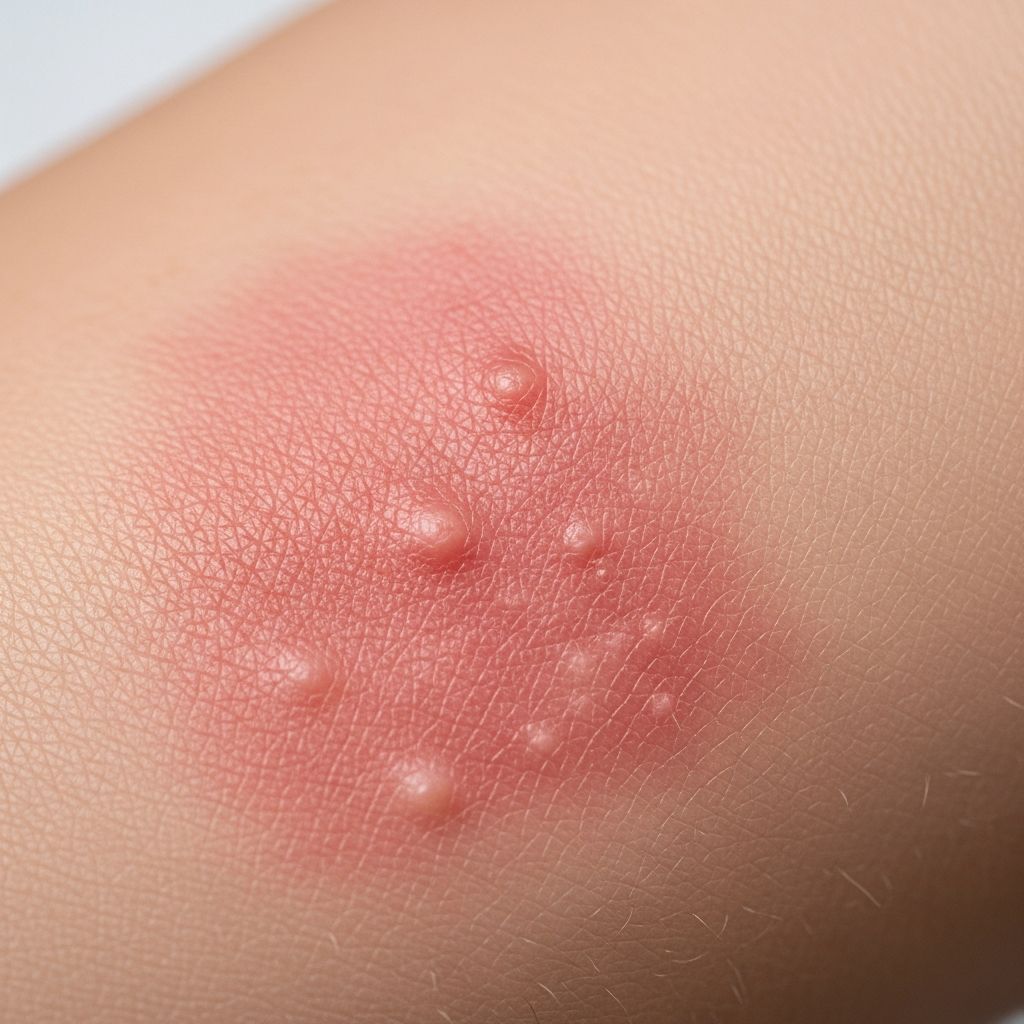
Benzocaine is a local anaesthetic ester commonly found in over-the-counter (OTC) products for pain relief in the mouth, throat, and skin. Hypersensitivity to benzocaine manifests primarily as allergic contact dermatitis, a delayed-type (Type IV) hypersensitivity reaction occurring 12–24 hours after exposure.
What is benzocaine?
Benzocaine, chemically known as ethyl 4-aminobenzoate, is a PABA (para-aminobenzoic acid) ester-type local anaesthetic. It works by blocking nerve conduction in the applied area to provide temporary numbness. Unlike injectable anaesthetics, benzocaine is used topically in gels, liquids, sprays, lozenges, and ointments. It is prevalent in OTC medications for cough suppression, mouth ulcers, sore throats, haemorrhoids, teething pain in children, and minor skin irritations such as sunburns, insect bites, or haemorrhoids.
Pharmaceutical preparations containing benzocaine include oral gels (e.g., Orajel for teething or ulcers), throat sprays/lozenges, haemorrhoidal creams, and aerosol sprays for mucosal surfaces. Doctors and dentists apply it to numb sites before injections, but it is never injected systemically. Rarely, it appears in cosmetics. The widespread availability of benzocaine in OTC products increases exposure risk, heightening sensitisation potential.
Who gets benzocaine contact allergy?
Benzocaine contact allergy affects individuals frequently exposed to topical anaesthetics, particularly those using OTC products for oral or skin pain relief. Dentists, healthcare workers, and patients with recurrent mouth ulcers or teething children are at higher risk. Sensitisation requires prior exposure, making it more common in adults than infants, though children under 2 years face additional risks from teething gels.
Prevalence is notable due to benzocaine’s ubiquity; studies show it in baseline patch test series because of cross-reactivity with other PABA esters. Those with a history of atopy or prior anaesthetic reactions may be predisposed, but anyone can develop it upon repeated use.
Cross-reactivity with other local anaesthetics
Benzocaine belongs to the ester class of local anaesthetics derived from PABA, which share structural similarities leading to frequent cross-reactivity. Allergies to one ester (e.g., benzocaine, tetracaine, procaine) often extend to others in the group. Amide anaesthetics (e.g., lidocaine, bupivacaine, prilocaine) lack PABA and typically do not cross-react, making them safe alternatives.
| Anaesthetic Type | Examples | Cross-Reactivity with Benzocaine |
|---|---|---|
| Ester (PABA-derived) | Benzocaine, Tetracaine, Procaine, Dibucaine | High – Common cross-reactivity |
| Amide | Lidocaine, Bupivacaine, Prilocaine, Articaine | Low to None – Safe alternative |
Patch testing often includes multiple agents to identify safe options. In Europe, Caine mix III (benzocaine, dibucaine, tetracaine) detects ester allergies more sensitively than benzocaine alone.
Clinical features of benzocaine allergy
Benzocaine sensitivity causes classic allergic contact dermatitis at the application site, appearing 12–72 hours post-exposure. Initial symptoms include acute
erythema
(redness), progressing to oedema, vesicles, blisters, or bullae in severe cases. Itching, burning, and tenderness are common. Application to existing rashes can exacerbate or spread inflammation.On mucosal surfaces like the mouth, reactions may mimic urticaria with mucosal swelling, but the delayed onset distinguishes it from IgE-mediated (Type I) reactions. Rarely, immediate symptoms occur from overdose or swallowing, causing numbness or throat discomfort resolving upon removal.
- Skin reactions: Redness, itching, flaking, blistering, crusting.
- Mucosal reactions: Swelling, soreness, numbness extension.
- Severe cases: Widespread dermatitis, secondary infection.
Related Stories



Beyond allergy, benzocaine risks
methemoglobinemia
, a potentially fatal blood disorder where haemoglobin oxidises, impairing oxygen delivery. Symptoms include cyanosis (blue/grey skin, lips, nails), shortness of breath, fatigue, headache, tachycardia, and confusion, onset minutes to hours post-application. It affects all ages but is reported mainly in children <2 years using teething gels (even 7.5% strength) and adults during endoscopy.Diagnosis of benzocaine allergy
Suspected benzocaine allergy is confirmed via
patch testing
. History of dermatitis post-OTC anaesthetic use, combined with exam findings, prompts testing. Benzocaine 5% in petrolatum is standard in North American, American Core, and Australian baseline series. Europe’s series uses Caine mix III for broader detection.Testing involves applying allergens under occlusion for 48 hours, reading at 48–96 hours. Positive reactions show erythema, papules, or vesicles. Additional esters/amides test for cross-reactivity. Rule out irritancy vs. true allergy via repeat testing if needed. Methemoglobinemia diagnosis uses co-oximetry; allergy is clinical/histological (spongiosis, lymphocytic infiltrate).
Treatment of benzocaine allergy
Treatment targets acute dermatitis and allergen avoidance. For mild cases: emollients and cool compresses suffice. Moderate-severe:
topical corticosteroids
(e.g., hydrocortisone 1% mild, clobetasol severe), oral antihistamines for itch. Treat secondary bacterial infection with antibiotics (e.g., mupirocin, flucloxacillin).Avoid all benzocaine/PABA ester products indefinitely. Inform dentists/doctors; amide anaesthetics are safe. For methemoglobinemia: methylene blue IV, oxygen, supportive care. Educate on reading labels.
Prevention of benzocaine allergy
- Minimise OTC benzocaine use; opt for alternatives like lidocaine gels.
- For children <2: Avoid teething gels per FDA warnings.
- Patch test history-positive patients before procedures.
- Use lowest effective dose/strength; avoid sprays on large areas.
- High-risk (G6PD deficiency, infants, smokers): Extra caution.
Frequently Asked Questions
Can benzocaine cause immediate reactions?
Primarily delayed Type IV, but rare Type I or overdose effects (numbness, breathing issues) reported, resolving quickly upon removal. Not typically IgE-mediated.
Is benzocaine safe for children?
No for <2 years due to methemoglobinemia risk; FDA warns against teething use.
What if I’m allergic to benzocaine—can I use lidocaine?
Yes, amides like lidocaine lack cross-reactivity with ester benzocaine.
How common is benzocaine allergy?
Enough to include in patch test baselines; sensitisation rises with OTC exposure.
What are methemoglobinemia symptoms?
Cyanosis, dyspnoea, fatigue, confusion; seek emergency care.
References
- Benzocaine contact allergy — DermNet NZ. 2023. https://dermnetnz.org/topics/allergy-to-benzocaine
- Immediate symptoms with oral topical benzocaine — American Academy of Allergy, Asthma & Immunology (AAAAI). 2025. https://www.aaaai.org/allergist-resources/ask-the-expert/answers/2025/benzocaine
- FDA Drug Safety Communication: Reports of rare, serious, and potentially fatal adverse effect with the use of over-the-counter benzocaine gels — U.S. Food and Drug Administration (FDA). 2011 (ongoing relevance per updates). https://www.fda.gov/drugs/drug-safety-and-availability/fda-drug-safety-communication-reports-rare-serious-and-potentially-fatal-adverse-effect-use-over
- Benzocaine: Side Effects, FDA Warnings & Lawsuit Information — Drugwatch (citing FDA data). 2025. https://www.drugwatch.com/benzocaine/
- Benzocaine (topical application route) — Mayo Clinic. 2025. https://www.mayoclinic.org/drugs-supplements/benzocaine-topical-application-route/description/drg-20072913
Similar Articles








Read full bio of Sneha Tete