Epoxy Resin Allergy: Causes, Symptoms, Diagnosis
Understanding epoxy resin allergies: causes, symptoms, diagnosis, prevention, and management strategies for this common occupational hazard.
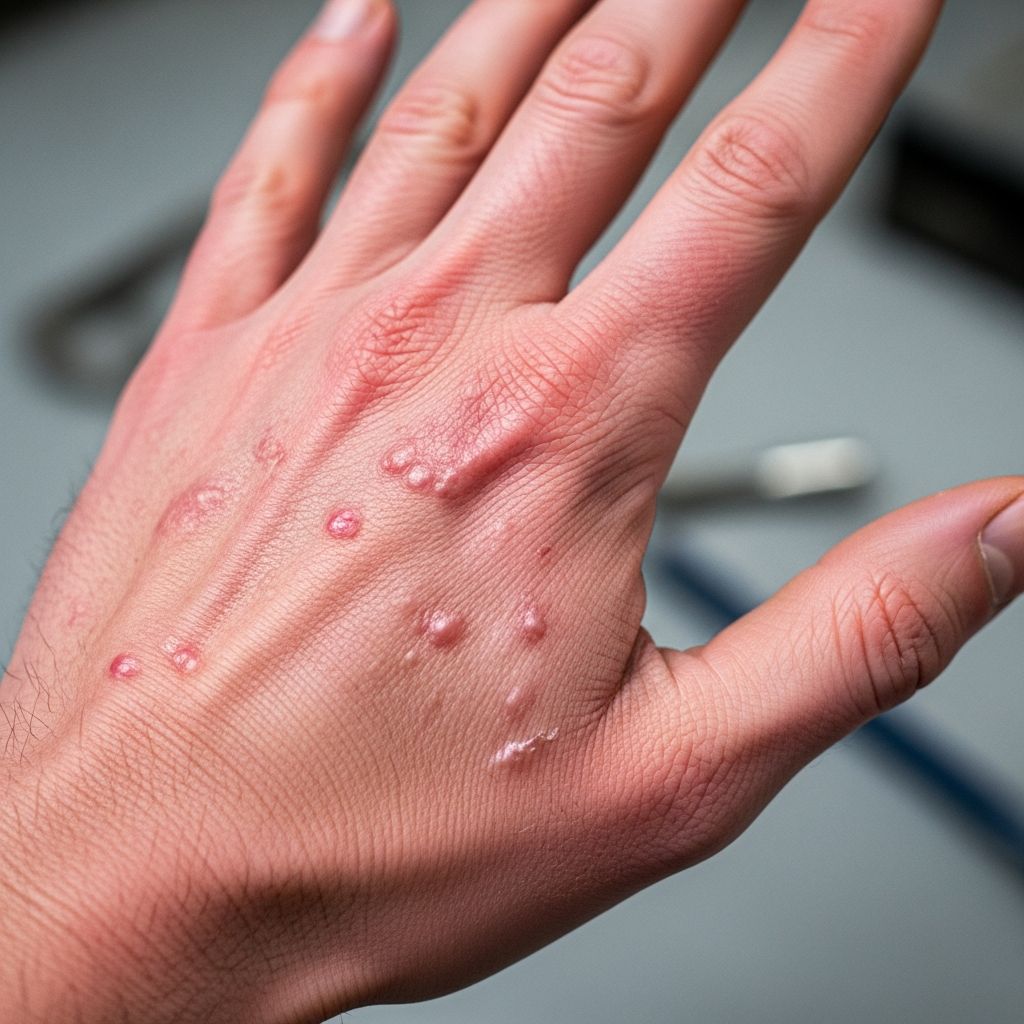
Epoxy resin systems are widely utilized in industries such as construction, electronics, manufacturing, and crafts due to their strong adhesive properties, durability, and chemical resistance. However, these versatile materials pose significant health risks, particularly allergic contact dermatitis, which ranks as one of the most common occupational skin allergies. Uncured epoxy resins, hardeners, and diluents act as potent irritants and sensitizers, triggering immune responses upon skin contact or inhalation. Reactions typically manifest as redness, swelling, itching, and blisters on exposed areas like hands, face, and eyelids. Sensitization develops gradually with repeated exposure, making even minimal contact problematic once allergy is established. This article details the composition, clinical presentations, diagnostic approaches, prevention strategies, and management of epoxy resin allergies.
What is epoxy resin?
Epoxy resins are synthetic polymers formed by mixing a resin component, typically diglycidyl ether of bisphenol A (DGEBA), with a hardener or curing agent such as amines or anhydrides. DGEBA is the predominant sensitizer, responsible for over 80% of occupational epoxy allergies. The mixture polymerizes into a hard, inert substance ideal for coatings, adhesives, laminates, and composites. Uncured forms are highly reactive; hardeners and diluents (e.g., glycidyl ethers) are volatile and more prone to airborne exposure. Once fully cured, epoxy becomes non-allergenic and safe for contact. Common applications include flooring, aerospace parts, electrical insulators, fiber-reinforced plastics, paints, and hobbyist resins for art and jewelry.
Who gets epoxy resin allergy (epidemiology)?
Epoxy resin allergy predominantly affects occupationally exposed individuals, ranking third among causes of occupational allergic contact dermatitis. High-risk groups include construction workers (floor layers, painters), factory assemblers in electronics and automotive sectors, fiberglass laminators, dental technicians, and hobbyists crafting with resin. Studies show sensitization rates up to 82% to DGEBA in affected patients. Airborne exposure leads to facial and eyelid involvement. Women in crafts and men in heavy industry both report cases, with symptoms often emerging after months or years of handling uncured products. Cross-reactivity occurs with related glycidyl ethers and phenolic resins.
Clinical features of epoxy resin contact allergy
Allergic contact dermatitis from epoxy presents with acute or chronic inflammation at contact sites. Initial exposure may cause irritant dermatitis mimicking allergy, progressing to true sensitization.
- Skin symptoms: Erythema, edema, intense pruritus, vesicles, bullae, and scaling. Hands (dorsal and palmar), wrists, forearms, and web spaces are primary sites from direct handling. Airborne contact affects face, eyelids (marked swelling), neck, and scalp.
- Severe reactions: Hardeners can induce chemical burns with deep ulceration and necrosis. Diluents cause airborne dermatitis.
- Systemic effects: Inhalation of fumes irritates respiratory tract, causing rhinitis, conjunctivitis, coughing, wheezing, or asthma-like symptoms. Rare anaphylaxis reported with massive exposure.
Symptoms peak 24-48 hours post-exposure and persist until allergen removal. Chronic exposure leads to lichenified, hyperkeratotic skin.
Diagnosis of epoxy resin allergy
Diagnosis relies on detailed history of exposure and patch testing. Patients report onset coinciding with epoxy use, often occupational.
- Patch testing: Standard series includes epoxy resin 1% in petrolatum. True-positive reactions show ++ or +++ at day 2/4. Test additional hardeners (e.g., cyclohexylamine, isophoronediamine), reactive diluents (e.g., phenyl glycidyl ether), and DGEBF. Baseline series detects 80-90% cases.
- Differential diagnosis:
- Irritant contact dermatitis (immediate onset, no sensitization).
- Other resins (formaldehyde, acrylate).
- Eczema, psoriasis.
Photopatch testing rarely needed. Biopsy shows spongiosis, confirming allergic etiology.
Prevention of epoxy resin allergy
Related Stories



Prevention hinges on barrier protection, engineering controls, and substitution.
| Strategy | Details |
|---|---|
| Personal Protective Equipment (PPE) | Impermeable gloves (nitrile, PVA, butyl rubber; 4H film for prolonged use). Avoid latex, PVC, neoprene (permeable to epoxy). Change gloves frequently. Protective clothing, goggles, respirators (organic vapor cartridges). |
| Work Practices | Work in well-ventilated areas or fume hoods. Cure resins fully before handling. Use pre-impregnated materials. Wash skin immediately with soap/water if contact occurs. No hand-to-mouth/face contact. |
| Skin Care | Pre-work barrier creams (not substitutes for gloves). Post-work moisturizers to maintain barrier. Avoid solvents for cleaning (use soap/water or wipes). |
| Substitution | Low-allergen alternatives where feasible, though limited. |
Training on risks essential. Once sensitized, strict avoidance mandatory; even trace exposure triggers flares.
Treatment of epoxy resin contact allergy
Treatment focuses on allergen avoidance and symptomatic relief.
- Acute management: Remove allergen. Wash affected skin. Potent topical corticosteroids (clobetasol 0.05%) for 1-2 weeks. Oral prednisone for severe widespread cases (0.5-1 mg/kg taper).
- Chronic: Topical steroids, calcineurin inhibitors, wet wraps. Phototherapy rarely.
- Supportive: Emollients, antihistamines for itch. Treat secondary infection with antibiotics.
- Occupational: Job modification or change. Legal notification if work-related.
Prognosis good with avoidance; persistence common without.
Related allergens / differential diagnoses
- Cross-reactants: Other bisphenol glycidyl ethers (DGEBF), formaldehyde resins, acrylates.
- Co-reactants: Amines, thioureas in hardeners.
- Differentials: Thiuram mix (glove allergy), chromate (construction), acrylates (nail/UV-cure).
Patch test series for epoxy resin allergy
| Allergen | Concentration | Vehicle |
|---|---|---|
| Epoxy resin (DGEBA) | 1% | pet. |
| Cyclohexylamine | 0.5% | pet. |
| Isophoronediamine | 0.5% | pet. |
| Phenyl glycidyl ether | 0.25% | pet. |
| Diglycidyl ether bisphenol F | 0.25% | pet. |
Frequently Asked Questions
What are the early signs of epoxy allergy?
Initial redness, itching, or dryness on hands after handling, progressing to vesicles and swelling.
Can epoxy fumes cause allergy?
Yes, volatile hardeners/diluents cause airborne dermatitis on face/eyelids and respiratory irritation.
How to remove uncured epoxy from skin?
Wash immediately with soap and lukewarm water; avoid solvents. Do not peel.
Is cured epoxy safe?
Yes, fully cured epoxy is inert and non-sensitizing.
What gloves protect against epoxy?
Nitrile, PVA, or 4H gloves; double-gloving recommended.
Does epoxy allergy resolve?
No, sensitization is permanent; lifelong avoidance required.
References
- Epoxy Resin Allergy: Prevention and Treatment Guide 2026 — Wyndly. 2026. https://www.wyndly.com/blogs/learn/epoxy-allergy
- Can You Be Allergic To Epoxy Resin? — ArtResin. Accessed 2026. https://www.artresin.com/blogs/artresin/can-you-be-allergic-to-epoxy-resin
- Epoxy resin contact allergy — DermNet NZ. Accessed 2026. https://dermnetnz.org/topics/allergy-to-epoxy-resin
- Epoxy Resin Allergy: Symptoms & Treatment — Curex. 2025-05-03. https://getcurex.com/allergens-and-symptoms/allergy-symptoms-immunotherapy-epoxy-resins
- Allergic Contact Dermatitis: Epoxy Resins — HMP Global Learning Network. Accessed 2026. https://www.hmpgloballearningnetwork.com/site/thederm/allergen-focus/allergic-contact-dermatitis-epoxy-resins
- Epoxy Resin Systems — California Department of Public Health (CDPH). Accessed 2026. https://www.cdph.ca.gov/Programs/CCDPHP/DEODC/OHB/HESIS/CDPH%20Document%20Library/epoxy.pdf
Similar Articles








Read full bio of medha deb