Neomycin Contact Allergy: 8 Key Insights For Safe Topical Care
Understanding neomycin allergy: causes, symptoms, diagnosis, treatment, and prevention of this common contact dermatitis trigger.
Neomycin is an aminoglycoside antibiotic commonly used in topical preparations to prevent or treat bacterial infections in skin wounds, burns, and chronic conditions like eczema. However, it is a potent sensitizer and one of the most frequent causes of allergic contact dermatitis (ACD), recognized as the Contact Allergen of the Year in 2010 by the American Contact Dermatitis Society.
What is neomycin?
Neomycin is a broad-spectrum aminoglycoside antibiotic derived from the bacterium Streptomyces fradiae. It works by inhibiting bacterial protein synthesis, making it effective against gram-negative and some gram-positive bacteria. Primarily applied topically due to its high potential for ototoxicity and nephrotoxicity when used systemically, neomycin is found in over-the-counter ointments, creams, eye/ear drops, and combination products with corticosteroids or other antibiotics like bacitracin and polymyxin B (e.g., Neosporin).
In topical formulations, neomycin concentrations typically range from 0.25% to 3.5%. While effective for infection control, its small molecular size allows it to act as a hapten, binding to skin proteins and triggering a type IV delayed hypersensitivity reaction mediated by T-cells. Sensitization occurs after repeated exposure, especially on compromised skin such as wounds or eczematous areas. Prevalence of neomycin allergy varies regionally: systematic reviews report 3.2% in adults and 4.3% in children, with higher rates in North America (up to 10-11% historically) and South Asia. Recent trends show declining adult prevalence due to reduced use, but rising cases in children possibly from vaccines and pediatric products.
Where is it found?
Neomycin is ubiquitous in topical medications and personal care products. Common sources include:
- Antibiotic ointments: Triple antibiotic creams (neomycin, bacitracin, polymyxin B) for cuts, scrapes, burns, and post-surgical wounds.
- Combination therapies: With topical corticosteroids (e.g., hydrocortisone-neomycin) for eczema, dermatitis, or otitis externa.
- Ophthalmic/otic preparations: Eye drops and ear drops for infections.
- Cosmetics and toiletries: Some shampoos, soaps, and deodorants as preservatives or antibacterials.
- Veterinary products: Pet medications that may transfer to human skin via contact.
Patients must scrutinize ingredient lists, as neomycin may appear under trade names or in ‘first aid’ kits. Cross-reactivity occurs with related aminoglycosides like gentamicin, tobramycin, and framycetin, so allergy to one presumes sensitivity to others.
Clinical features
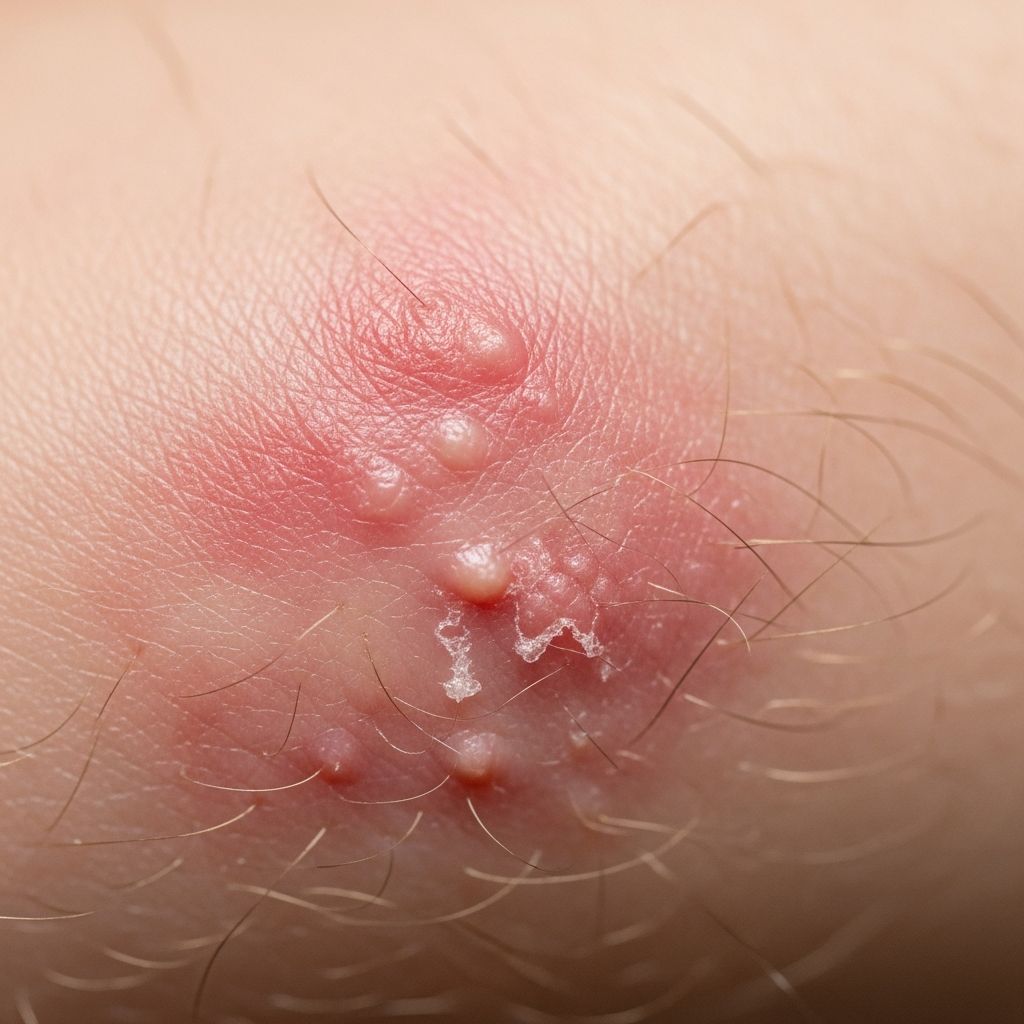
Allergic contact dermatitis from neomycin typically manifests 24-72 hours after exposure as a delayed hypersensitivity reaction. Initial symptoms include intense pruritus (itching), followed by erythematous (red) macules or papules that progress to vesicles, bullae, crusting, and scaling. The rash often has sharp borders conforming to the site of application, such as linear streaks from ointment spread or follicular patterns in hair-bearing areas.
Common sites include legs (chronic ulcers), arms/hands (wounds, eczema), face/eyes (drops), and ears. On atopic skin, it may superimpose, worsening the underlying condition with weepy, inflamed eczema. Prolonged use exacerbates severity, potentially leading to systemic contact dermatitis with oral neomycin ingestion in sensitized individuals—fever, generalized rash, or lymphadenopathy. In burns or post-surgical sites, it mimics infection, delaying recognition. Atopic dermatitis patients are at higher risk due to barrier dysfunction.
Related Stories



| Feature | Description | Common Locations |
|---|---|---|
| Acute Phase | Pruritus, erythema, vesicles/bullae on erythematous base | Wounds, burns, eczematous skin |
| Subacute/Chronic | Scaling, lichenification, crusting | Leg ulcers, hands, ears |
| Atypical | Follicular pustules, modified by steroids | Beard area, axillae |
Diagnosis
Diagnosis relies on clinical history (recent topical antibiotic use on failing lesions) and patch testing, the gold standard. The standard is 20% neomycin sulfate in petrolatum applied occlusively for 48 hours, with readings at D2 (48h), D4 (96h), and up to D7 for delayed reactions. Positive: indurated papule ≥5-10mm.
Sensitivity exceeds 90% with proper technique, but false negatives occur (up to 10%), necessitating repeat or intradermal testing (1:1000 dilution, reading at 24-48h). Scratch-patch tests are unreliable due to irritancy. In atopic overlay, steroid cessation may be needed pre-testing. Related allergen testing (e.g., North American Contact Dermatitis Group series) screens for cross-reactors. Biopsy shows spongiosis, but is nonspecific.
Treatment
Treatment mirrors acute ACD/eczema: immediate allergen discontinuation is paramount. Supportive care includes:
- Cleansing: Mild soap, cool water to remove residue.
- Emollients: Barrier repair with petrolatum or ceramide creams.
- Topicals: Mid-to-high potency corticosteroids (e.g., triamcinolone 0.1%) for 1-2 weeks; calcineurin inhibitors (tacrolimus) for sensitive areas.
- Wet wraps: For severe weeping in atopics.
- Severe cases: Oral prednisone taper (0.5-1mg/kg x 5-7 days).
Avoid neomycin-related antibiotics; opt for mupirocin or oral alternatives for true infections. Patient education on avoidance prevents recurrence.
Prevention
Prevention centers on avoidance:
- Read labels; avoid OTC antibiotic ointments—petrolatum alone suffices for most minor wounds.
- Use alternatives: white petrolatum, polysporin (bacitracin/polymyxin, noting bacitracin allergy risk), or silver sulfadiazine for burns.
- For prescriptions, inform providers of history; request neomycin-free options.
- Patch test history-positive patients before chronic use.
- Educate on cross-reactivity with aminoglycosides.
Clinicians should minimize routine topical antibiotic prophylaxis, per stewardship guidelines, reducing sensitization risk.
Alternative names
Neomycin may appear as:
- Framycetin sulfate (Soframycin)
- Neomycin B
- In combinations: Neosporin, Polyfax, Cortisporin
Always check INCI names.
Frequently Asked Questions
What does neomycin allergy look like?
Itchy red rash with vesicles/crusts at application sites, often worsening existing skin issues.
Is Neosporin safe if I have neomycin allergy?
No—Neosporin contains neomycin; choose plain petrolatum or bacitracin-only if tolerated.
How accurate is patch testing for neomycin?
Over 90% sensitive with 20% petrolatum; read late (D5-7).
Can neomycin allergy affect internal use?
Rare systemic ACD from oral neomycin in sensitized patients.
What to use instead of neomycin ointment?
Petrolatum, mupirocin, or consult for infection.
Further information
For personalized advice, consult a dermatologist or allergist. Apps like SkinSafe or Contact Allergen apps aid ingredient scanning. Research continues on prevalence trends and safer alternatives amid antibiotic resistance.
References
- Neomycin contact allergy – DermNet — DermNet NZ. 2023. https://dermnetnz.org/topics/allergy-to-neomycin
- Neomycin Contact Dermatitis — Consultant360. 2010. https://www.consultant360.com/content/neomycin-contact-dermatitis
- Advice from a Naples Dermatologist: Avoid Neosporin for Wound Care — Skin Wellness Florida. 2023. https://www.skinwellnessflorida.com/blog/deflating-neosporin-dermatologist-dr-anne-marie-tremaine-explains-why-you-should-choose-something-else/
- Understanding Neomycin-Induced Contact Allergy — Dermatology Times. 2024. https://www.dermatologytimes.com/view/understanding-neomycin-induced-contact-allergy
- Detection of Neomycin Sensitivity: A Comparison of Testing — JAMA Dermatology. 1972-10-01. https://jamanetwork.com/journals/jamadermatology/fullarticle/528976
- A Review of Neomycin — HMP Global Learning Network. 2023. https://www.hmpgloballearningnetwork.com/site/thederm/site/cathlab/event/review-neomycin
Similar Articles








Read full bio of medha deb