Allergy To Parabens: Symptoms & How To Avoid Reactions
Understanding paraben contact allergy: symptoms, diagnosis, treatment, and avoidance strategies for sensitive skin.

What are parabens?
Parabens are a group of synthetic chemicals widely used as preservatives in cosmetics, pharmaceuticals, and food products to prevent microbial growth. Common types include methylparaben, ethylparaben, propylparaben, butylparaben, and benzylparaben. These esters of p-hydroxybenzoic acid are effective at low concentrations (0.01–0.8%) and are valued for their stability across a range of pH levels. Despite their efficacy, parabens have come under scrutiny due to potential skin sensitization, particularly in individuals with compromised skin barriers.
Parabens mimic natural antimicrobial agents and are lipophilic, allowing penetration through the skin. While generally considered safe by regulatory bodies like the FDA and EU Cosmetics Regulation up to specified limits, a small subset of the population develops allergic reactions. Prevalence of sensitization is low, estimated at 1–4% in patch-tested patients, but higher in those with chronic dermatitis.
Who gets allergy to parabens?
Paraben allergy primarily affects individuals with pre-existing skin conditions such as eczema, leg ulcers, or chronic dermatitis, where the skin barrier is impaired. Occupational exposure is common in healthcare workers, cooks, food handlers, and cosmetics manufacturers who handle paraben-containing products frequently. Patients with a history of multiple contact allergies are at higher risk, as cross-reactivity can occur among paraben esters.
Women are more frequently affected due to higher cosmetic use, though men in professions involving topical medications (e.g., nurses applying creams to ulcers) also report cases. Children and the elderly with atopic dermatitis may be susceptible, but true allergy is rare in intact skin. The “paraben paradox” describes how sensitized individuals tolerate parabens on normal skin but react on inflamed areas.
Clinical features of allergy to parabens
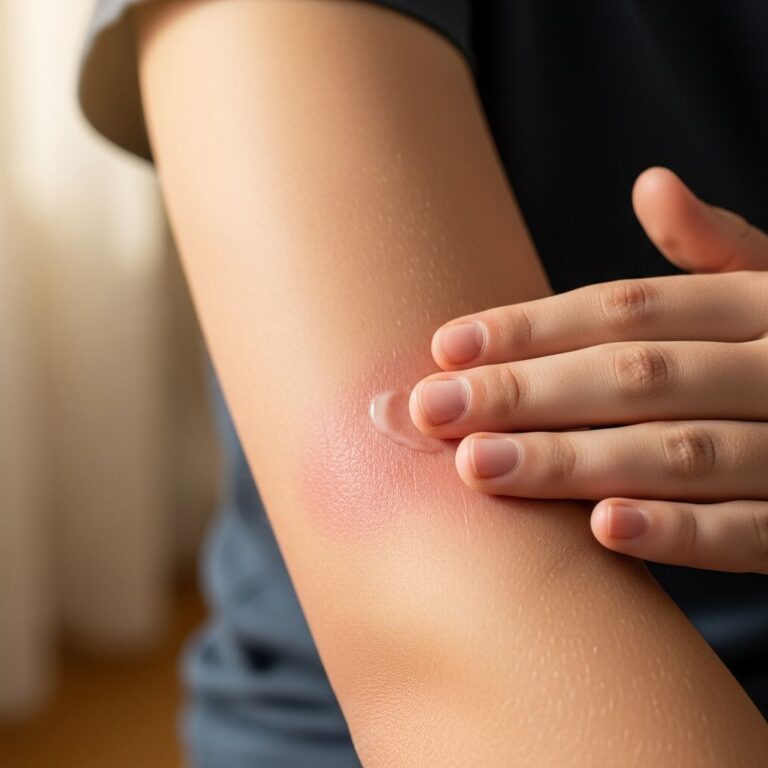
Allergy to parabens manifests as allergic contact dermatitis (ACD), a type IV delayed hypersensitivity reaction occurring 48–72 hours post-exposure. Initial symptoms include localised erythema (redness), pruritus (itching), oedema (swelling), and vesicles (small blisters) at the site of contact. In darker skin types, erythema may be subtle, with postinflammatory hyperpigmentation more prominent.
- Common sites: Face, hands, eyelids, and areas under bandages or on leg ulcers.
- Morphology: Erythematous patches progressing to papules, vesicles, or bullae; may spread beyond contact area.
- Chronic exposure: Lichenification, scaling, and fissuring in occupational settings like food handling.
Severe reactions are uncommon but can include widespread dermatitis or id reactions (flare-ups at distant sites). Rarely, systemic contact dermatitis follows ingestion of paraben-preserved foods or medications. Respiratory symptoms like wheezing or anaphylaxis are exceptional and not typical of type IV reactions.
Complications of contact allergy to parabens
Persistent exposure leads to chronic ACD, with thickened, hyperpigmented skin and secondary bacterial infection from excoriations. In leg ulcer patients, paraben allergy delays healing and worsens ulceration. Occupational cases may result in job loss or retraining. Emotional distress from visible rashes and frustration with ubiquitous preservatives is common. Secondary allergies to other preservatives (e.g., formaldehyde releasers) can develop in polysensitized patients.
Diagnosis of contact allergy to parabens
Diagnosis relies on clinical history, examination, and patch testing. History should detail product use, timing of rash onset, and improvement upon avoidance. Examination reveals characteristic ACD morphology.
Related Stories



Patch testing: Standard series include a paraben mix (12–16% in petrolatum) containing methyl-, ethyl-, propyl-, and butylparaben; benzylparaben is tested separately. Tests are read at day 2 and day 4–5. Positive reactions show erythema, induration, or vesicles (e.g., ++ or +++). False negatives occur on recently inflamed skin; false positives are rare. Repeat open application tests (ROAT) confirm relevance for cosmetics.
| Reaction Grade | Description |
|---|---|
| ?+ | Macular erythema |
| + | Erythema, palpable infiltration |
| ++ | Vesicles, oedema |
| +++ | Coalescing vesicles, bullae |
Treatment of contact allergy to parabens
Acute ACD treatment mirrors eczema management: remove the allergen, apply potent topical corticosteroids (e.g., clobetasol 0.05%) twice daily for 1–2 weeks, and use emollients. Oral prednisone (0.5–1 mg/kg) for severe cases, tapered over 10–14 days. Wet compresses soothe weeping lesions. Antihistamines provide symptomatic itch relief, though less effective in ACD.
For chronic cases, calcineurin inhibitors (tacrolimus) or phototherapy may be needed. Infected lesions require antibiotics. Patient education on avoidance is crucial for long-term control. Symptoms resolve within weeks of allergen elimination.
What products contain parabens?
Parabens are ubiquitous; always check ingredient lists (listed as alkyl paraben).
Cosmetics and personal care
- Creams, lotions, moisturisers (especially for dry skin).
- Shampoos, conditioners, hair dyes.
- Make-up, sunscreens, antiperspirants.
- Toothpastes, mouthwashes.
Pharmaceuticals
- Topical creams/ointments (e.g., antibiotic, steroid preparations).
- Bandages, dressings for ulcers.
- Oral syrups, suspensions (less common).
Food and others
- Processed foods (cakes, salads, jams).
- Medicines, vaccines.
- Industrial products (glues, polishes).
Methylparaben: Widely in cosmetics, pharmaceuticals.
Ethylparaben: Foods, beverages.
Propylparaben: Cosmetics, syrups.
Butylparaben: Creams, lotions.
Benzylparaben: Less common, experimental.
Prevention of contact allergy to parabens
Avoidance is key: select “paraben-free” or “preservative-free” products, verified by third-party seals. Use single-ingredient products to isolate triggers. For medications, request paraben-free alternatives (e.g., preservative-free eye drops). Gloves protect occupational handlers. Maintain skin barrier with emollients. Apps and databases aid ingredient scanning.
Outlook
Prognosis is excellent with strict avoidance; rashes resolve completely. However, cross-reactivity (up to 30% among parabens) and new exposures challenge management. Polysensitization increases complexity. Regular dermatologist follow-up recommended. Emerging preservatives like phenoxyethanol offer alternatives, but vigilance remains essential.
Frequently Asked Questions
Is paraben allergy common?
No, it affects 1–4% of patch-tested patients, higher in those with leg ulcers or eczema.
Can parabens cause hives or anaphylaxis?
Hives are rare (type I); anaphylaxis is not typical for type IV ACD. Respiratory issues occur exceptionally.
What is the paraben paradox?
Sensitized skin reacts to parabens, but normal skin tolerates them well.
How do I find paraben-free products?
Read labels; look for ‘paraben-free’ claims. Avoid INCI names ending in -paraben.
Are parabens safe in food?
Regulatory limits ensure safety for most, but allergic individuals should avoid preserved foods.
References
- Parabens Allergy: Signs, Diagnosis & Treatment — Curex. 2025-05-03. https://getcurex.com/allergens-and-symptoms/allergy-symptoms-immunotherapy-parabens
- What to Know About Methylparaben — WebMD. n.d. https://www.webmd.com/beauty/what-to-know-about-methylparaben
- Parabens Contact Allergy — DermNet NZ. n.d. https://dermnetnz.org/topics/allergy-to-parabens
- Paraben Allergy — Allergy Life. n.d. https://allergylife.com.au/blogs/skin-allergies/parabens-allergy
- Allergic Contact Dermatitis Caused by Parabens — Dr. Jetske Ultee. n.d. https://www.dr-jetskeultee.nl/jetskeultee/download/common/artikel-parabenen-contact-dermatitis.pdf
- Paraben Mix – Patient Information — SkinIdent. n.d. https://www.skinident.world/fileadmin/img/spanish-pictures/pdf/True_Test_Paraben_Mix.pdf
- Do I Have an Allergy to Parabens? — Allergic Living. n.d. https://www.allergicliving.com/experts/avoiding-parabens-in-cosmetics/
Similar Articles








Read full bio of Sneha Tete