Allergy To Quaternium-15: Insights For Prevention & Diagnosis
Comprehensive guide to quaternium-15 contact allergy: symptoms, diagnosis, avoidance strategies, and safe alternatives for sensitive skin.
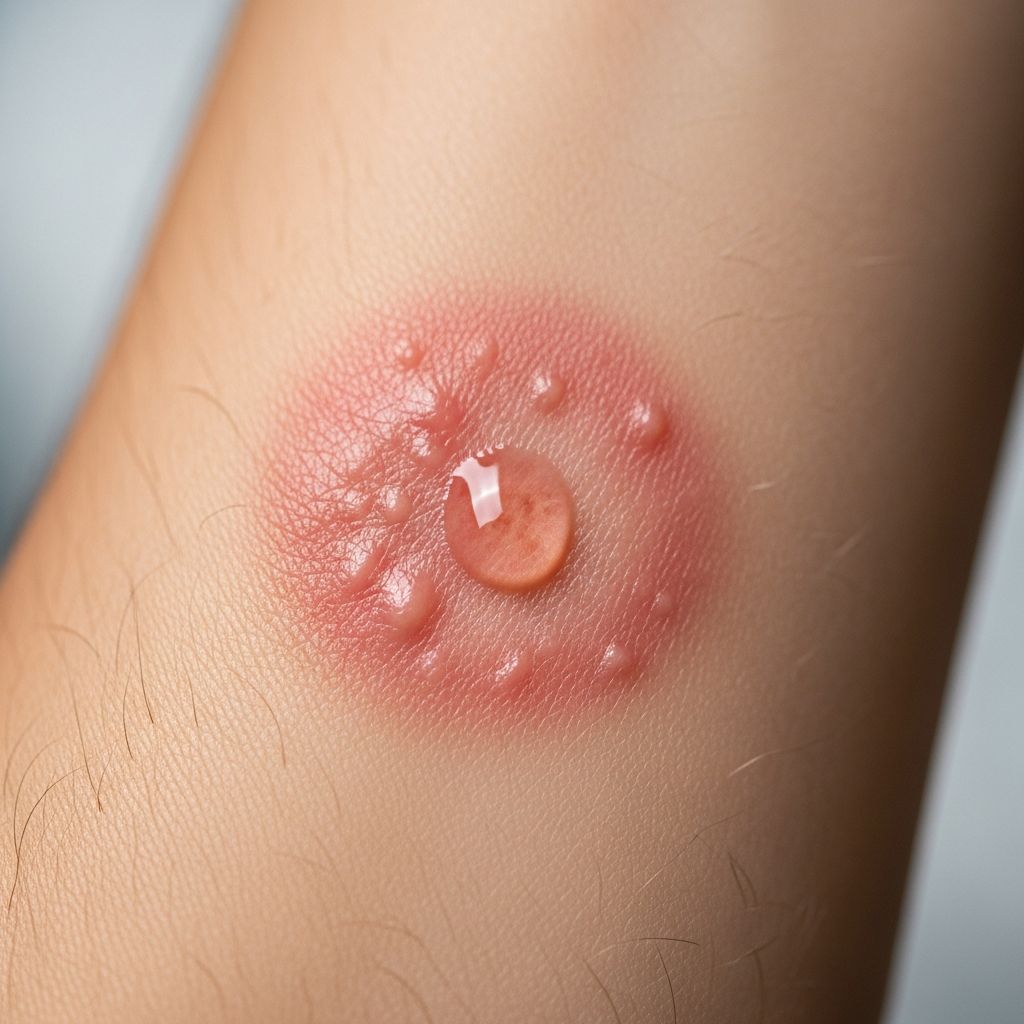
Quaternium-15 is a widely used preservative in cosmetics, personal care products, and industrial applications, belonging to the formaldehyde-releasing agents group. Contact allergy to quaternium-15 manifests as allergic contact dermatitis, characterized by delayed hypersensitivity reactions upon skin exposure.
What is quaternium-15?
Quaternium-15, also known as chloroallyl methenamine chloride or Dowicil 200 in industrial contexts, acts as an antimicrobial preservative. Its chemical formula is C9H16Cl2N4, with CAS number 51229-78-8. It slowly releases small amounts of formaldehyde, providing broad-spectrum protection against bacteria, fungi, and yeasts in water-based products.
This preservative is valued for its effectiveness at low concentrations (typically 0.01-0.1%) and stability across a wide pH range, making it common in formulations prone to microbial growth.
Who gets quaternium-15 allergy? (Epidemiology)
Allergic contact dermatitis (ACD) to quaternium-15 is more prevalent in adults and approximately twice as common in females than males. Prevalence increases with age, likely due to cumulative exposure over time. It ranks among the top 10 allergens in patch test series, affecting 2-4% of tested patients with suspected contact dermatitis.
Occupational exposure heightens risk for healthcare workers, beauticians, and metalworkers. Consumers frequently encounter it in daily personal care routines, leading to sensitization through repeated use.
What causes quaternium-15 allergy?
Sensitization occurs when quaternium-15 or its released formaldehyde penetrates the skin barrier, triggering an immune response from T-lymphocytes. Once sensitized, re-exposure causes a type IV delayed hypersensitivity reaction, typically appearing 24-72 hours later.
Individuals may react specifically to quaternium-15 or cross-react with formaldehyde and other releasers. The hapten-protein complex formed by the allergen activates memory T-cells, perpetuating the allergy lifelong.
What are the reactions to quaternium-15 allergy?
Typical symptoms include
erythema
(redness),edema
(swelling),intense pruritus
(itching), andvesicles
(fluid-filled blisters) at exposure sites. Reactions may spread beyond direct contact areas and persist if exposure continues.In chronic cases,
lichenification
(skin thickening),fissures
, orsecondary bacterial infections
(e.g., Staphylococcus aureus) can develop. Facial, periorbital, or hand dermatitis is common due to frequent cosmetic application.How is quaternium-15 allergy diagnosed?
Diagnosis combines clinical history with
patch testing
using 1-2% quaternium-15 in petrolatum, applied under occlusion for 48 hours and read at days 2, 4, and 7. Positive reactions (≥ +) confirm allergy. Co-reactions to formaldehyde occur in 50-80% of cases.Self-testing products: Apply small amounts twice daily for 1 week to antecubital fossa, then preauricular area if negative. Avoid rinse-off products like shampoos, which may irritate. Consult a dermatologist first.
What should patients do if diagnosed with quaternium-15 allergy?
Avoidance is paramount. Expect 2-4 weeks for improvement after eliminating exposure. Treat acute dermatitis with
potent topical corticosteroids
(e.g., clobetasol),emollients
, and antibiotics if infected.- Read ingredient labels, MSDS, and package inserts meticulously.
- Inform healthcare providers and pharmacists of the allergy.
- Request workplace accommodations and safety data sheets.
- Consider skin-to-skin transfer from others’ products.
How can quaternium-15 exposure be avoided?
Eliminate direct skin contact with quaternium-15-containing products. Use protective gloves for unavoidable exposures. Opt for fragrance-free, preservative-minimal formulations.
Sources of exposure
| Cosmetics | Self-hygiene/Pharmaceutical | Commercial/Industrial |
|---|---|---|
| Shampoos, conditioners Moisturizers, lotions Mascara, makeup | Medicated shampoos (e.g., ketoconazole) Topical creams, emollients Wet wipes | Cleaning products, polishes Metalworking fluids Paints, inks, glues |
| Soaps, cleansers Hair styling products | Ointments, barrier creams | Electrode gels, embalming fluids Pressed wood products |
Related Stories



Names to avoid on labels
- Quaternium-15
- Chloroallyl methenamine chloride
- 3,5,7-Triaza-1-azoniaadamantane, 1-(3-chloroallyl)-, chloride
- N-(3-chloroallyl) hexaminium chloride
- Hexamethylenetetramine chloroallyl chloride
Also avoid if formaldehyde-allergic: bronopol, diazolidinyl urea, DMDM hydantoin, imidazolidinyl urea, quarternium-15, 2-bromo-2-nitropropane-1,3-diol, 5-bromo-5-nitro-1,3-dioxane.
Safe alternatives and cross-reactions
Cross-reactions: Formaldehyde (patch test concentration 1%), other formaldehyde-releasers. Quaternium compounds without formaldehyde release (e.g., quaternium-73) are generally safe.
Possible suitable alternative preservatives
| Preservative | Examples |
|---|---|
| Parabens | Methylparaben, propylparaben |
| Phenoxyethanol | |
| Sorbic acid/potassium sorbate | |
| Benzoic acid/sodium benzoate | |
| Isothiazolinones (low conc.) | Methylisothiazolinone (avoid if allergic) |
These may cause allergies independently; patch test if concerned.
Frequently Asked Questions (FAQs)
Q: Can I use products with other quaternium preservatives?
A: Yes, other quaterniums (e.g., quaternium-73) are safe unless they release formaldehyde. Confirm via patch testing.
Q: Is quaternium-15 in all cosmetics?
A: No, but common in water-based ones. EU labeling mandates listing it; check non-EU imports carefully.
Q: How long after stopping exposure do symptoms resolve?
A: 2-3 weeks typically, longer if chronic or secondarily infected.
Q: Can I get quaternium-15 allergy from workplace exposure?
A: Yes, frequent in cleaning agents, coolants, and paints. Request MSDS.
Q: Is airborne exposure possible?
A: Rare, but possible from smoke or sprays. Formaldehyde gas from related sources.
Author information and additional notes
This article synthesizes evidence-based information for patient education. Consult a dermatologist for personalized advice, especially with occupational exposure or multiple allergies. Patch testing remains gold standard.
References
- True Test Quaternium-15 – Patient Information — SkinIdent. Accessed 2026. https://www.skinident.world/fileadmin/img/spanish-pictures/pdf/True_Test_Quaternium15.pdf
- Quaternium-15 Patient Information — SmartPractice Canada. Accessed 2026. https://www.smartpracticecanada.com/spcanada/pdfs/allergens/Quaternium-15.pdf
- Allergy to Quaternium-15 — DermNet NZ. Accessed 2026. https://dermnetnz.org/topics/allergy-to-quaternium-15
- Quaternium-15 Allergen Avoidance — Orlando Skin Doc. Accessed 2026. https://orlandoskindoc.com/quaternium-15/
- Allergy to Quaternium-15 — British Society for Cutaneous Allergy (BSCA). 2024. https://cutaneousallergy.org/wp-content/uploads/2024/01/Allergy-to-Quaternium-15-_-Allergy-Advice-BSCA.pdf
- Quaternium-15 — Campaign for Safe Cosmetics. Accessed 2026. https://www.safecosmetics.org/chemicals/quaternium-15/
- Quaternium-15 — Wiley Online Library (Contact Urticaria Syndrome and Semiconductor Health). 2019. https://onlinelibrary.wiley.com/doi/pdf/10.1002/9781119405702.ch16
Similar Articles








Read full bio of Sneha Tete