Almonds Vs Walnuts: Nutrition, Benefits, And Best Uses
Discover which nut—almonds or walnuts—offers superior health benefits for heart, brain, weight management, and more in this detailed comparison.
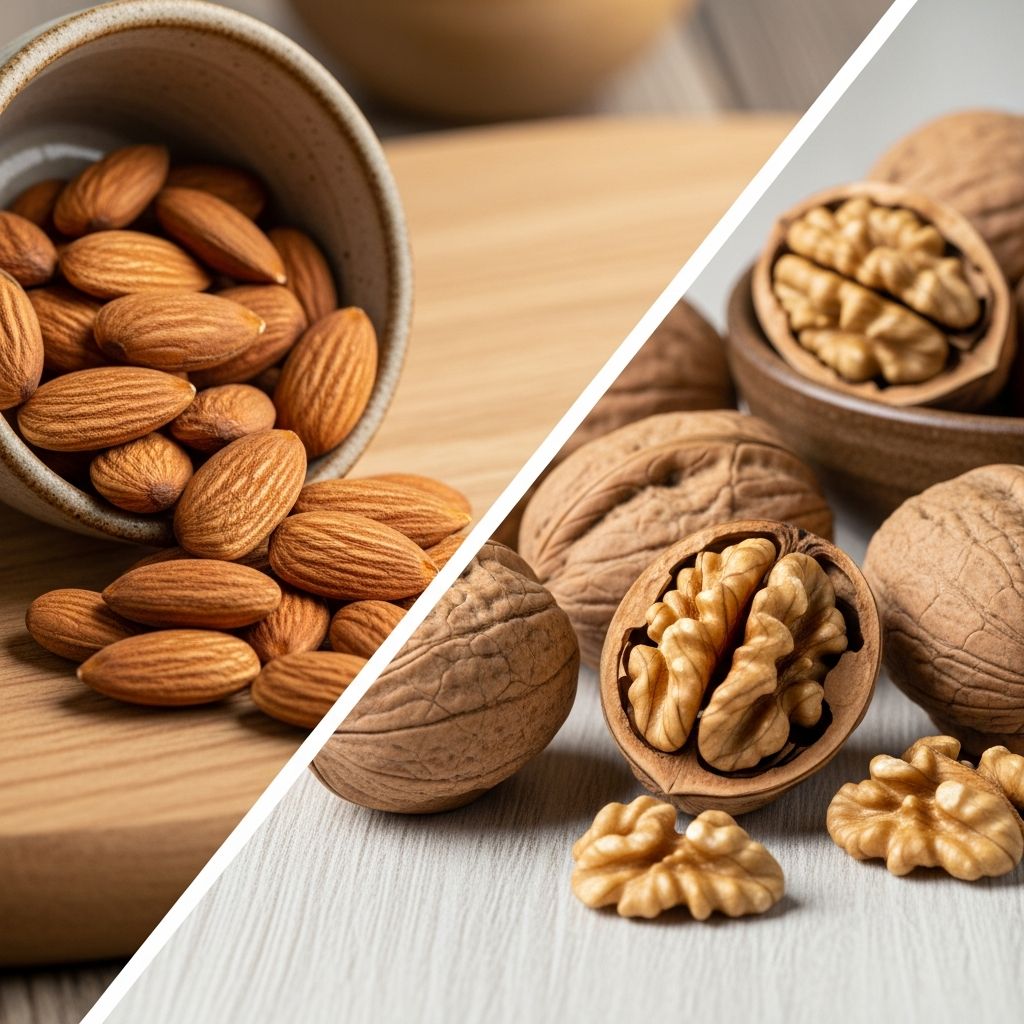
Almonds and walnuts are two of the most popular tree nuts, celebrated for their nutrient density and versatility in diets worldwide. Both offer heart-healthy fats, protein, fiber, and antioxidants, but they differ significantly in their nutritional profiles and specific health benefits. This comprehensive comparison draws from scientific studies and nutritional data to help you decide which nut—or combination—best suits your needs, whether for weight management, cardiovascular health, brain function, or overall wellness.
Nutrition Comparison: Almonds vs. Walnuts
Per 1-ounce (28g) serving, almonds and walnuts provide distinct macronutrient and micronutrient profiles. Almonds edge out in protein, fiber, and several minerals, while walnuts dominate in healthy fats, particularly omega-3s, and certain vitamins.
| Nutrient (per 1 oz/28g) | Almonds | Walnuts | Daily Value % (Almonds) | Daily Value % (Walnuts) |
|---|---|---|---|---|
| Calories | 161 | 185 | – | – |
| Total Fat | 14g | 18g | 18% | 23% |
| Monounsaturated Fat | 9g | 2.5g | – | – |
| Polyunsaturated Fat (incl. Omega-3 ALA) | 3.5g (0.01g ALA) | 13g (2.5g ALA) | – | 157% ALA |
| Protein | 6g | 4g | 12% | 8% |
| Carbohydrates | 6g | 4g | 2% | 1% |
| Dietary Fiber | 3.5g | 2g | 13% | 7% |
| Vitamin E | 7.3mg | 0.7mg | 49% | 5% |
| Magnesium | 76mg | 45mg | 18% | 11% |
| Calcium | 76mg | 28mg | 8% | 3% |
| Potassium | 208mg | 125mg | 4% | 3% |
Walnuts are richer in calories, total fats, and polyunsaturated fats, including alpha-linolenic acid (ALA), the highest among nuts at 2.5g per ounce—over 150% of the daily value for this essential omega-3. Almonds, conversely, lead in protein (+38.9% more), carbs (+57.2%), fiber, vitamin E (49% DV vs. 5%), and minerals like calcium (nearly 3x more), magnesium, phosphorus, and potassium.
Health Benefits of Almonds
Almonds shine in supporting satiety, bone health, and antioxidant protection. Their high protein (6g/oz) and fiber (3.5g/oz) content promote fullness, aiding weight management by reducing hunger and visceral fat through unsaturated fats with high oxidation rates. A study in people with type 2 diabetes found 2oz daily almonds reduced total cholesterol by 6% and LDL by 12%.
Rich in vitamin E (49% DV), flavonoids, and monounsaturated fats, almonds lower triglycerides, total cholesterol, and LDL while raising HDL. Magnesium (18% DV) supports blood pressure regulation, and calcium (8% DV) bolsters bone density. Non-sodium minerals like calcium and potassium blunt high sodium’s effects on hypertension.
Health Benefits of Walnuts
Walnuts excel in brain and heart protection due to their exceptional omega-3 ALA content (2.5g/oz), linked to reduced inflammation, better cardiovascular and cognitive health. Polyphenols and ellagic acid provide potent antioxidants, neutralizing free radicals to combat oxidative stress, chronic diseases, and neurodegeneration.
Vitamin profile favors walnuts: higher B1 (thiamine), B6, B9 (folate), plus vitamins A, C, and K absent in almonds. Copper, manganese, and selenium support iron metabolism, connective tissues, and antioxidant defense. Studies show walnuts lower LDL, blood pressure, inflammation markers, and cardiovascular risk.
Almonds vs. Walnuts for Heart Health
Both nuts benefit cardiovascular health, but via different mechanisms. Almonds’ monounsaturated fats, fiber, and magnesium reduce LDL and support blood pressure; daily intake under two servings may prevent heart disease short- and long-term. Walnuts’ ALA lowers triglycerides, inflammation, and clot risk, with antioxidants protecting against oxidative damage. Mayo Clinic notes walnuts’ high omega-3s make them particularly heart-healthy, alongside almonds.
Almonds vs. Walnuts for Brain Health
Walnuts are dubbed “brain food” for their ALA and polyphenols, which cross the blood-brain barrier to reduce inflammation and support neuron health, potentially lowering risks of cognitive decline and disorders like Alzheimer’s. Almonds offer vitamin E for neuroprotection but lack walnuts’ omega-3 potency.
Related Stories



Almonds vs. Walnuts for Weight Loss
Almonds are superior for weight loss due to higher protein and fiber promoting satiety and lower calorie density per gram. Despite walnuts’ healthy fats, their higher calories (185 vs. 161/oz) require moderation, though both curb overeating when whole.
Which Is Healthier: Almonds or Walnuts?
Neither is outright “healthier”—it depends on goals. Choose almonds for muscle repair, bone health, antioxidants, and weight control. Opt for walnuts for omega-3s, brain support, and anti-inflammatory effects. Ideally, incorporate both for complementary benefits: almonds’ minerals pair with walnuts’ fats and vitamins.
- Best for heart: Both, but walnuts for omega-3s.
- Best for skin/bones: Almonds (vitamin E, calcium).
- Best for brain: Walnuts (ALA, polyphenols).
- Best for weight loss: Almonds (protein/fiber).
How to Add Almonds and Walnuts to Your Diet
Incorporate 1-1.5oz daily (handful) for benefits without excess calories. Raw or dry-roasted, unsalted varieties preserve nutrients.
- Snacks: Trail mix with both nuts, dried fruit.
- Breakfast: Top oatmeal, yogurt, or smoothies.
- Salads: Chopped walnuts/almonds for crunch.
- Baking: Swap flour in muffins; walnut butter on toast.
- Mains: Almond-crusted chicken, walnut pesto.
Store in airtight containers in cool, dark places; refrigerate for longevity.
Frequently Asked Questions (FAQs)
Are almonds or walnuts better for you?
Both are nutrient powerhouses. Almonds win for protein, fiber, vitamin E, and minerals; walnuts for omega-3s and brain antioxidants. Eat a mix.
Which has more protein: almonds or walnuts?
Almonds (6g/oz vs. 4g).
Do walnuts or almonds have more healthy fats?
Walnuts have more total polyunsaturated fats and ALA omega-3s; almonds more monounsaturated.
Can almonds or walnuts help with cholesterol?
Yes—almonds reduce LDL/total cholesterol; walnuts lower triglycerides and inflammation.
Are walnuts better than almonds for weight loss?
No, almonds’ higher protein/fiber better promotes fullness.
How many almonds or walnuts should I eat daily?
1oz (23 almonds or 14 walnut halves) provides benefits without over-calories.
(Word count: 1678)
References
- Walnuts vs. Almonds: Which Is Healthier? — Healthline. 2023. https://www.healthline.com/nutrition/walnuts-vs-almonds
- Almonds vs Walnuts: Which One Is More Nutritious? — Krishival. 2024. https://krishival.com/blogs/health-nutrition/almonds-vs-walnuts-which-one-is-more-nutritious
- Walnut vs. Almonds — Health Impact and Nutrition Comparison — Foodstruct. 2024. https://foodstruct.com/nutrition-comparison-text/walnut-vs-almond
- Almonds vs Walnuts — Blue Diamond. 2023. https://www.bluediamond.com/snacks-comparison/almonds-vs-walnuts/
- Nuts and your heart: Eating nuts for heart health — Mayo Clinic. 2023-10-14. https://www.mayoclinic.org/diseases-conditions/heart-disease/in-depth/nuts/art-20046635
Similar Articles








Read full bio of medha deb