Alopecia Areata In Children: Causes, Treatment, And Prognosis
Comprehensive guide to alopecia areata in children: causes, symptoms, diagnosis, treatment, and support strategies for families.
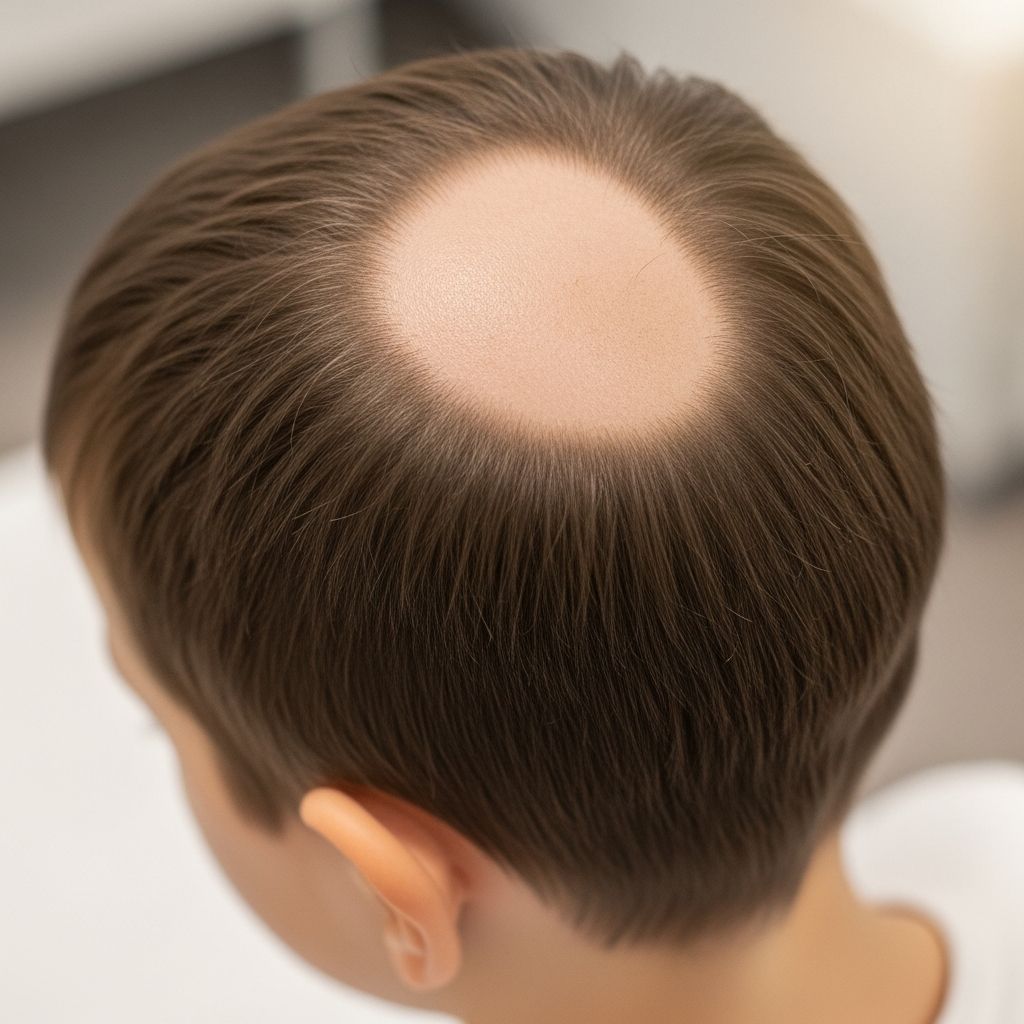
Alopecia areata is a common autoimmune condition causing sudden, non-scarring hair loss in children, often presenting as smooth bald patches on the scalp or other hair-bearing areas.
What is alopecia areata?
Alopecia areata is an organ-specific autoimmune disease targeting hair follicles, leading to patchy hair loss without scarring. In children, it frequently develops in the first decade of life and is strongly linked to atopic dermatitis in about one-third of cases under age 10, while psoriasis and rheumatoid arthritis associations increase in teenagers. Unlike adults, thyroid disease incidence is not elevated in pediatric cases. The condition arises on a genetic background, with up to 25% of affected children having a family member with alopecia areata, and higher prevalence in Down syndrome and Turner syndrome.
Who gets alopecia areata?
Alopecia areata affects approximately 1 in 1,000 children, with onset possible at any age but peaking before age 10. Genetic predisposition plays a key role, as evidenced by familial clustering and twin studies. Autoimmune conditions are common in associated syndromes like Turner syndrome. Environmental triggers such as stress or illness may precipitate episodes in genetically susceptible individuals.
What causes alopecia areata?
The precise pathogenesis remains unclear, but alopecia areata involves the immune system attacking hair follicles, mistaking them for foreign invaders. This autoimmune response occurs on a polygenic genetic background, with hypotheses including T-cell mediated inflammation around follicles. Triggers like stress, illness, or viral infections may initiate attacks in predisposed children, though no single cause is definitive.
What are the clinical features of alopecia areata?
Children typically experience sudden onset of one or more smooth, round bald patches on the scalp, often 1-2 cm in diameter, with preserved follicular openings and no scaling or inflammation. ‘Exclamation mark’ hairs—tapered, broken hairs at the patch edge—are characteristic. Hair loss can affect eyebrows, eyelashes, or body hair, and nails may show pitting, ridges, or brittleness. Rarely, patches exhibit mild redness, burning, or itching. Progression may lead to alopecia totalis (scalp) or universalis (total body hair loss).
Diagnosis
Diagnosis is primarily clinical, based on the characteristic sudden, smooth, non-scarring patches with exclamation mark hairs. Dermoscopy reveals yellow dots, broken hairs, and black dots, aiding confirmation. Differential diagnoses in children include tinea capitis (fungal infection, confirmed by culture or Wood’s lamp), trichotillomania (uneven breaks, ‘hairpulling’ history), and traction alopecia (from hairstyles, perifollicular erythema). Biopsy is rarely needed but shows peribulbar lymphocytic infiltrate if performed. Associated autoimmune screening (e.g., thyroid function) is not routinely elevated in children.
- Tinea capitis: Patchy scaling alopecia, positive KOH microscopy or culture.
- Trichotillomania: Irregular patches, varied hair lengths, psychosocial history.
- Traction alopecia: Marginal scalp loss from tight hairstyles.
Treatment of alopecia areata
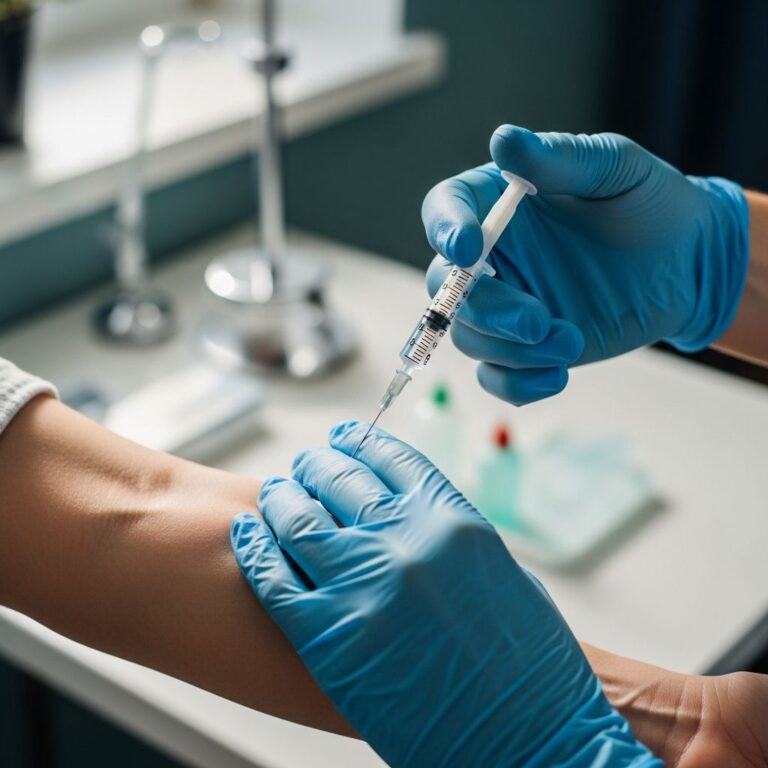
No treatment alters the natural course; up to 50% of children with limited disease regrow hair within one year without intervention. ‘Watchful waiting’ suits young children with small patches. For active disease, potent topical corticosteroids (e.g., clobetasol propionate 0.05% lotion) are first-line, applied daily with tapering to milder agents like mometasone to prevent atrophy. Intralesional triamcinolone acetonide (10 mg/mL for scalp, lower for face) is effective for older children (>10 years), injecting 0.05-0.1 mL per cm² monthly.
Second-line options include topical minoxidil 5% lotion adjunctively, topical immunotherapy (e.g., diphencyprone/DPCP, inducing contact dermatitis, 30-60% response in extensive disease), and anthralin (short-contact therapy). For extensive or rapidly progressive alopecia, oral prednisolone (0.5-0.8 mg/kg/day tapered over 2 months) or pulsed systemic steroids may be used, though side effects limit routine application. Emerging therapies like excimer laser, PRP, or JAK inhibitors (e.g., baricitinib, FDA-approved for severe adult AA) show promise but lack pediatric approval under age 12.
Related Stories



Treatment Algorithm for Pediatric Alopecia Areata
| Extent of Disease | First-Line | Second-Line | Third-Line |
|---|---|---|---|
| Limited Patchy (<10 years) | Topical steroids ± Minoxidil | Topical immunotherapy (DPCP) | Dithranol |
| Limited Patchy (>10 years) | Intralesional steroids ± Minoxidil | Topical immunotherapy | Topical PUVA/Excimer |
| Rapidly Progressive Extensive | Oral prednisolone taper ± topicals | Pulsed steroids | Chronic extensive regimen |
| Chronic Extensive | Topical steroids + Minoxidil | Topical immunotherapy | Pulsed steroids/Azathioprine |
How does alopecia areata affect children?
Hair loss can cause significant psychosocial distress, including anxiety, low self-esteem, and bullying, particularly in school-aged children. Visible patches on scalp or face amplify emotional impact, though many adapt well with support. Families should address coping via counseling, camouflage (wigs, hats, scalp micropigmentation), and peer support groups.
What is the prognosis for alopecia areata?
Prognosis varies: limited patchy disease often regrows spontaneously (80% within 1 year), but extensive forms (ophiasis, totalis/universalis) have poorer regrowth (10-25%) and higher recurrence. Early-onset, atopic association, nail changes, or family history predict chronicity. Many experience relapsing-remitting course; regrowth may be slower in children.
Psychosocial management
Support emotional well-being through age-appropriate explanations, avoiding stigma. Cosmetic aids like wigs (funded in some regions), hats, scarves, or semi-permanent makeup help camouflage. School advocacy prevents bullying; counseling or support groups (e.g., NAAF) aid adjustment. Emphasize alopecia areata’s non-contagious, non-life-threatening nature.
Which children are at risk of progression?
- Early onset (<10 years)
- Extensive scalp involvement (>50%)
- Ophiasis pattern (band-like posterior scalp)
- Alopecia totalis/universalis
- Nail dystrophy
- Family history of severe disease
- Atopic dermatitis association
Frequently Asked Questions
Will my child’s hair grow back?
Up to 50-80% with limited patches regrow within 1 year spontaneously; extensive disease has lower rates (10-50%), with possible recurrences.
Is treatment always necessary?
No, watchful waiting is appropriate for small patches in young children, as many resolve naturally.
Are injections painful for kids?
Intralesional steroids cause discomfort; suitable for cooperative older children (>10 years), with topical numbing.
Can stress cause alopecia areata?
Stress may trigger episodes in genetically susceptible children, but is not the sole cause.
Is alopecia areata hereditary?
Genetic predisposition exists; 25% have family history, but not directly inherited.
References
- Alopecia in Children: Symptoms, Causes & Treatment Options — Pacific Dermatology Specialists. 2025-09-01. https://pacificdermatologyspecialists.com/sept-2025-blog/
- What is Alopecia Areata — Texas Children’s Hospital. Accessed 2026. https://www.texaschildrens.org/content/what-alopecia-areata
- Current Treatment Strategies in Pediatric Alopecia Areata — PMC (Peer-reviewed). 2012-11-24. https://pmc.ncbi.nlm.nih.gov/articles/PMC3519253/
- Alopecia Areata — Nationwide Children’s Hospital. Accessed 2026. https://www.nationwidechildrens.org/conditions/alopecia-areata
- Alopecia areata in children — DermNet NZ (Authoritative dermatology resource). Accessed 2026. https://dermnetnz.org/topics/alopecia-areata-in-children
- Alopecia Areata: Symptoms, Causes, Treatment & Regrowth — Cleveland Clinic. Accessed 2026. https://my.clevelandclinic.org/health/diseases/12423-alopecia-areata
Similar Articles








Read full bio of Sneha Tete