Alopecia Areata: Symptoms, Causes, Treatment & Regrowth
Understanding alopecia areata: causes, symptoms, and evidence-based treatment options for hair regrowth.
Understanding Alopecia Areata
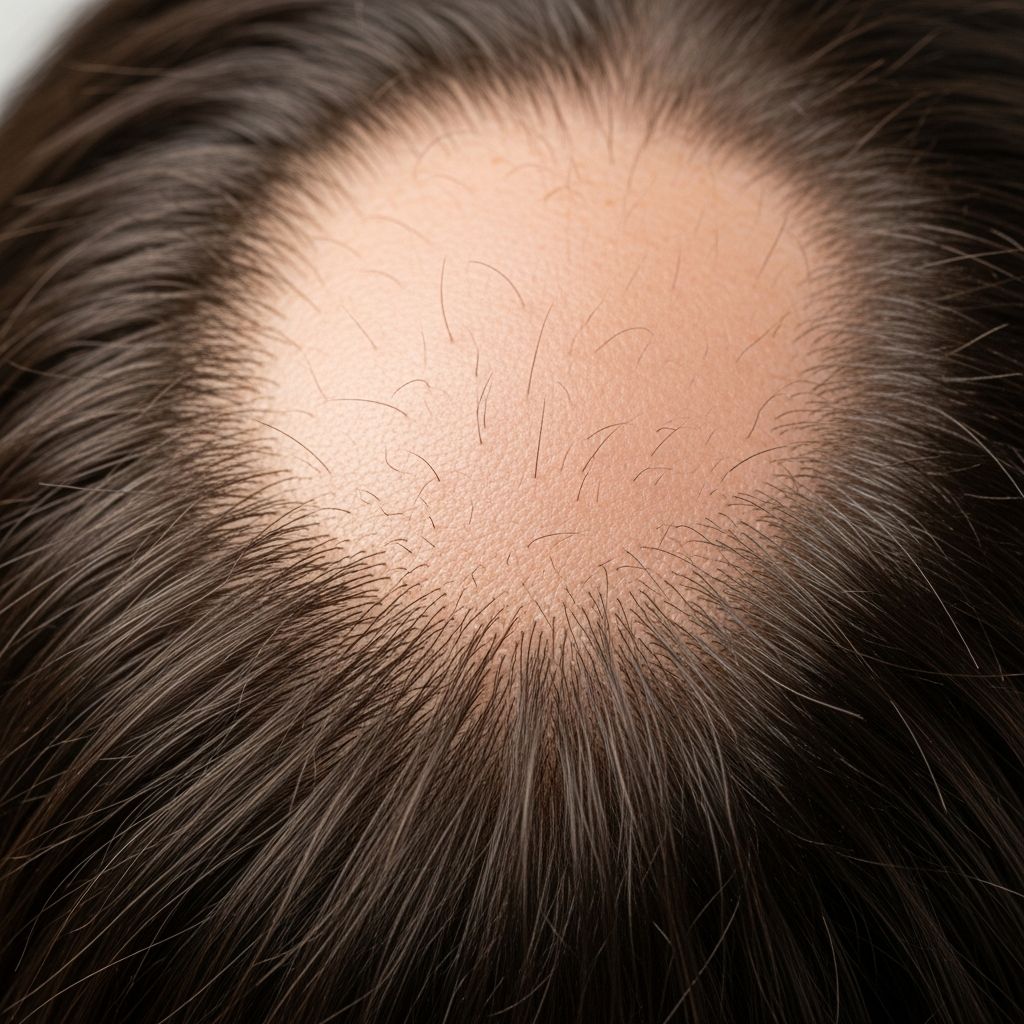
Alopecia areata is an autoimmune disease that specifically targets your body’s hair follicles, resulting in patchy hair loss that can range from small, coin-sized bald spots to more extensive baldness. Unlike other forms of hair loss that develop gradually, alopecia areata typically causes sudden and unpredictable hair shedding. This condition affects millions of people worldwide and can develop at any age, though it most commonly appears in people under the age of 40. The disease is characterized by the immune system mistakenly attacking hair follicles, leading to inflammation and disruption of the hair growth cycle.
What Causes Alopecia Areata?
Alopecia areata is fundamentally an autoimmune condition, meaning your immune system incorrectly identifies hair follicles as foreign threats and attacks them. This T-cell-mediated immune response causes inflammation around hair follicles, disrupting the normal hair growth process. While the exact trigger for this autoimmune attack remains unclear, researchers have identified several contributing factors that may increase your risk of developing the condition.
Genetic predisposition plays a significant role in alopecia areata development. If you have a family history of the condition or other autoimmune diseases, your risk increases substantially. Environmental factors such as stress, infections, or trauma may also trigger or exacerbate the condition. Additionally, individuals with other autoimmune disorders—including thyroid disease, vitiligo, celiac disease, or lupus—are at higher risk of developing alopecia areata. Seasonal allergies and conditions like hay fever can also trigger flare-ups of hair loss.
Recognizing the Symptoms
The primary symptom of alopecia areata is sudden hair loss in round or oval patches, most commonly appearing on the scalp. However, the condition can affect hair anywhere on the body, including eyebrows, eyelashes, beards, and body hair. Hair loss is typically painless, though some people report tenderness or itching in affected areas before hair begins to fall out.
In mild cases, you may experience small patches of hair loss that come and go, with periods of remission where symptoms temporarily disappear. More severe forms of the condition include alopecia areata totalis, which results in complete loss of scalp hair, and alopecia areata universalis, which involves loss of all body hair. Additional symptoms may include nail problems such as pitting, longitudinal fissuring, and lunula reddening, which occur in 10 to 20 percent of patients with the condition.
The unpredictability of alopecia areata is one of its defining characteristics. One day you may have a full head of hair, and the next you may notice new bald patches. There’s often no apparent rhyme or reason for when flare-ups occur, making the condition psychologically challenging for many patients.
Diagnosis and Assessment
Dermatologists typically diagnose alopecia areata through clinical examination and patient history. The hair-pull test is a common diagnostic tool—when hair is gently pulled from affected areas, it comes out painlessly if the condition is active. Dermoscopic examination, which uses magnification to examine the scalp closely, can reveal characteristic signs of alopecia areata.
To assess the severity and track treatment progress, healthcare providers use standardized measurement tools such as the Severity of Alopecia Tool (SALT) score or the Alopecia Areata Patch and Plaque Severity Index (ALODEX). These tools calculate the percentage of hair loss by examining different quadrants of the scalp based on hair pull tests and dermoscopic findings. Establishing these standards for assessment helps create meaningful data on disease progression and treatment response.
Treatment Options
Until June 2022, there was no FDA-approved treatment specifically for alopecia areata, though various therapies existed to manage symptoms. The treatment landscape has significantly improved with the introduction of new FDA-approved medications that offer better outcomes for many patients. Treatment selection depends on the extent of hair loss, disease progression, and individual patient factors.
Topical Treatments
For mild cases with small areas of hair loss, topical corticosteroids are often the first line of treatment. These creams and solutions are applied directly to affected areas and help reduce inflammation around hair follicles. Topical treatments typically require three to four months to show visible results, and they work best for localized patches rather than extensive hair loss.
Intralesional Injections
For more extensive patchy hair loss, intralesional corticosteroid injections are frequently recommended. A corticosteroid solution is injected directly into the scalp at multiple sites approximately 1 centimeter apart. This targeted approach delivers medication directly to affected hair follicles. Hair regrowth is usually visible within four to six weeks in responsive patients, and treatment can be repeated every four to six weeks. However, drawbacks include injection site pain and the risk of permanent skin atrophy at injection sites, particularly concerning in children under age 10.
Systemic Medications
Minoxidil (Rogaine) is an over-the-counter topical treatment that can stimulate hair regrowth in some patients. Systemic medications taken by mouth can provide more consistent overall hair growth in four to six weeks compared to topical applications.
Immunotherapy Approaches
For patients with more extensive hair loss (greater than 50 percent of scalp hair), contact sensitizers such as diphenylcyclopropenone (DPCP) and squaric acid dibutyl ester (SADBE) may be used. These substances are applied to the scalp to deliberately provoke a mild allergic reaction that redirects the immune system away from hair follicles. These treatments must be administered in a medical setting by a dermatologist and require informed patient consent.
FDA-Approved JAK Inhibitors
Recent breakthroughs in alopecia areata treatment include JAK (Janus kinase) inhibitors, which have received FDA approval for treating the condition. These medications work by modulating the immune response and show promising results, particularly for aggressive forms of alopecia areata or patients with newly diagnosed disease who require more potent therapeutic options.
Timeline for Hair Regrowth
The timeline for visible hair regrowth varies significantly depending on the type of treatment used and individual response factors. Topical corticosteroids typically require three to four months before noticeable regrowth appears. Intralesional steroid injections usually show results within four to six weeks, though hair growth may not be uniform across treated areas. Systemic medications can provide more consistent overall growth within four to six weeks.
It’s important to understand that at least 12 weeks of consistent treatment is necessary to adequately assess whether a particular therapy is effective. Discontinuing treatment prematurely may prevent you from experiencing the full benefits. New hair growth between four and 12 weeks after starting treatment is a reasonable expectation for many patients, though timelines vary considerably.
Realistic Expectations for Treatment Success
While treatment can significantly help many patients with alopecia areata, it’s crucial to maintain realistic expectations. Achieving 100 percent hair regrowth isn’t always feasible because targeted therapies may not be precise enough to address every affected follicle. Instead, dermatologists typically consider a 50 percent improvement in SALT or ALODEX scores as a reasonable treatment target. In mild cases, some patients may experience spontaneous remission without any treatment.
Alopecia areata is highly unpredictable. Some people’s hair grows back but falls out again later, while others experience permanent regrowth. Each case is unique—even patients who lose all their hair have a chance of experiencing regrowth. In severe cases such as alopecia areata totalis or universalis, the body is less likely to respond to available treatment options, and recovery may take considerably longer.
Self-Care and Lifestyle Management
Since there is no known cure for alopecia areata, managing the condition through self-care practices is essential. A gentle hair care routine can significantly reduce flare-ups and maintain existing hair health. Avoid harsh brushing, excessive heat styling, and tight hairstyles that put stress on hair follicles. Use mild shampoos and conditioners, and handle your hair gently when it’s wet and most vulnerable.
Stress reduction is particularly important, as emotional stress can trigger or worsen alopecia areata flare-ups. Finding activities that help you destress—whether through meditation, exercise, yoga, therapy, or hobbies—can positively impact disease progression. Sun protection is another key consideration; use sunscreen and wear hats to protect your scalp from UV damage, which can further stress hair follicles.
Managing related conditions also helps control alopecia areata. Seasonal allergies like hay fever can trigger disease flare-ups, so managing allergies with appropriate antihistamines is important. Maintaining a balanced diet rich in nutrients that support hair health, including iron, zinc, biotin, and vitamins, may provide additional support. Some patients find that specific dietary changes or targeted supplements help reduce symptoms, though evidence varies.
Prevention Strategies
Unfortunately, there is no known way to prevent alopecia areata entirely, particularly if you have genetic predisposition or other autoimmune conditions. However, you can take steps to reduce the frequency and severity of flare-ups. Maintaining overall immune system health through adequate sleep, regular exercise, balanced nutrition, and stress management supports your body’s ability to regulate the autoimmune response. While these measures cannot stop the condition entirely, they may help minimize symptoms and their intensity.
Long-Term Outlook
Alopecia areata is a chronic condition that may come and go throughout your life. Unlike conditions that worsen progressively over time, alopecia areata follows an unpredictable pattern with periods of active hair loss alternating with remission phases. The condition does not cause physical pain or serious illness, though the psychological impact of visible hair loss can be significant.
Approved treatments available since June 2022 have improved management options considerably. If you have recently been diagnosed with alopecia areata or are experiencing new or worsening symptoms, discussing new treatment options with your dermatologist is worthwhile. Treatment plans should be personalized to your specific situation, taking into account the extent of hair loss, disease progression, and your individual response to therapy.
Frequently Asked Questions
Q: Is alopecia areata permanent?
A: Alopecia areata is not necessarily permanent. While some people experience permanent hair loss, others see hair regrow naturally or with treatment. Many people experience cycles of hair loss and regrowth throughout their lives. Each case is unique and unpredictable.
Q: Can stress cause alopecia areata?
A: While stress doesn’t directly cause alopecia areata, it can trigger or exacerbate flare-ups in people who already have the condition. Genetic factors and immune system dysfunction are the primary causes, but managing stress may help reduce symptom severity.
Q: Is alopecia areata contagious?
A: No, alopecia areata is not contagious. It is an autoimmune condition that cannot be transmitted to other people through contact or any other means.
Q: How long does treatment typically take to show results?
A: Timeline varies by treatment type. Topical treatments require three to four months, intralesional injections show results in four to six weeks, and systemic medications also work within four to six weeks. It’s important to continue treatment for at least 12 weeks to properly assess effectiveness.
Q: Can children get alopecia areata?
A: Yes, children can develop alopecia areata, though it most commonly appears in people under age 40. Children under 10 years old typically cannot receive intralesional steroid injections due to the pain and risk of complications, so alternative treatments may be recommended.
Q: Are there any natural remedies that work for alopecia areata?
A: While various natural approaches such as dietary changes, supplements, and stress-reduction techniques may support overall hair health, no natural remedy has been proven to cure or reliably treat alopecia areata. FDA-approved medications remain the most effective treatment options.
References
- Alopecia Areata: Symptoms, Causes, Treatment & Regrowth — Cleveland Clinic. Updated 2022. https://my.clevelandclinic.org/health/diseases/12423-alopecia-areata
- Living With Alopecia Areata — Cleveland Clinic. https://my.clevelandclinic.org/watch/living-with-alopecia-areata
- Alopecia Areata: What to Expect from Current Treatments — Cleveland Clinic Journal of Medicine, Vol. 72, No. 9. https://www.ccjm.org/content/ccjom/72/9/758.full.pdf
- Self-Care Tips to Manage Alopecia Areata — Health Cleveland Clinic. https://health.clevelandclinic.org/alopecia-areata-self-care
- Treatment Options for Alopecia Areata — Cleveland Clinic Expert Interview. https://www.youtube.com/watch?v=Ip3RtffCYQQ
- Introducing New Standards in Assessing and Tracking Alopecia Areata — Consult QD, Cleveland Clinic. https://consultqd.clevelandclinic.org/introducing-new-standards-in-assessing-and-tracking-alopecia-areata
Similar Articles






Read full bio of Sneha Tete