How Alopecia Is Diagnosed: A Complete Guide For Patients
From visual exams to biopsies, learn the step-by-step process doctors use to diagnose alopecia and identify its type accurately.
Diagnosing alopecia requires a systematic approach combining patient history, physical examination, and targeted tests to identify the underlying cause of hair loss.
Alopecia, the medical term for hair loss, affects millions worldwide and manifests in various forms—from temporary shedding to permanent baldness. While noticing thinning hair or bald patches can be distressing, accurate diagnosis is the first step toward effective treatment. Dermatologists employ a multi-step process to differentiate between alopecia areata, androgenetic alopecia, telogen effluvium, and scarring alopecias, each requiring distinct management strategies.
The diagnostic journey typically begins with a detailed discussion of symptoms and medical history, followed by visual scalp inspection and pull tests. When necessary, advanced tools like dermoscopy, blood work, and scalp biopsies provide definitive insights. Early diagnosis improves outcomes, particularly for progressive conditions like central centrifugal cicatricial alopecia (CCCA), which disproportionately affects women of African descent. This comprehensive guide outlines the standard protocols used by healthcare professionals.
What Is Alopecia?
Alopecia encompasses all types of hair loss, ranging from diffuse thinning to patchy bald spots. The most common form, alopecia areata, is an autoimmune condition where the immune system attacks hair follicles, leading to sudden, round bald patches on the scalp or body. It affects approximately 2% of the population, with higher incidence in those with family history or other autoimmune diseases like thyroiditis.
Androgenetic alopecia, also known as male or female pattern baldness, results from genetic sensitivity to dihydrotestosterone (DHT), causing gradual follicle miniaturization. Women often experience widening parts, while men develop receding hairlines. Telogen effluvium involves excessive shedding triggered by stress, illness, or medications, typically resolving spontaneously.
Scarring alopecias, such as lichen planopilaris or CCCA, destroy follicles through inflammation, leading to irreversible hair loss if untreated. According to the National Alopecia Areata Foundation, distinguishing non-scarring from scarring types is critical, as the latter demands aggressive intervention to halt progression.
- Non-scarring alopecia: Follicles remain intact and may regrow hair.
- Scarring alopecia: Permanent damage replaces follicles with fibrous tissue.
Who Diagnoses Alopecia?
Board-certified dermatologists are the primary specialists for alopecia diagnosis due to their expertise in hair and scalp disorders. Trichologists, who focus specifically on hair and scalp health, may provide supplementary evaluations but typically refer complex cases to dermatologists. In pediatric cases or when systemic involvement is suspected, endocrinologists or rheumatologists collaborate.
Primary care physicians often serve as the initial point of contact, ruling out obvious triggers like medication side effects or nutritional deficiencies before referral. The American Academy of Dermatology recommends seeking specialist care if hair loss persists beyond three months, is patchy, or accompanies symptoms like itching or scaling.
Medical History Review
The diagnostic process starts with a thorough medical history, which reveals up to 70% of potential causes. Dermatologists inquire about:
- Onset, pattern, and duration of hair loss
- Family history of baldness or autoimmune conditions
- Recent stressors, surgeries, pregnancies, or crash diets
- Medications (e.g., chemotherapy, blood thinners, antidepressants)
- Symptoms like scalp pain, itching, or nail changes
- Associated health issues (thyroid disease, iron deficiency, lupus)
Related Stories



This step identifies reversible triggers like telogen effluvium from acute illness or traction alopecia from tight hairstyles. For instance, postpartum hair loss typically peaks 3-4 months after delivery and resolves within a year.
Physical Examination
A hands-on scalp examination follows, assessing hair density, follicle health, and skin changes. Dermatologists part the hair systematically to evaluate affected areas, noting:
- Bald patch size, shape, and distribution
- Scalp color, scaling, inflammation, or scarring
- Hair shaft thickness and breakage patterns
- Presence of exclamation mark hairs (short, tapered hairs characteristic of alopecia areata)
The hair pull test involves gently tugging 40-60 hairs; extracting more than 10% suggests active shedding. In trichotillomania (compulsive hair pulling), hairs show blunt ends from repetitive trauma.
Dermoscopy (Trichoscopy)
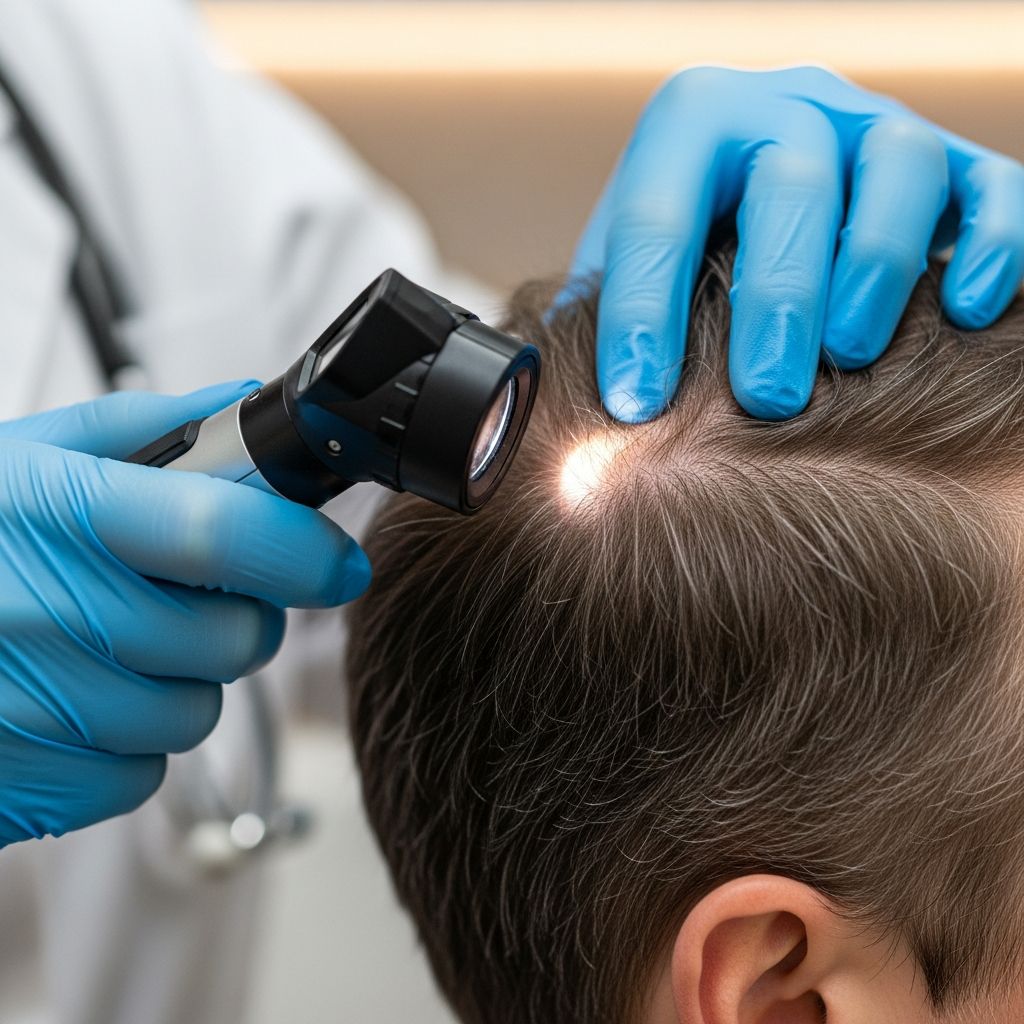
Trichoscopy, or dermoscopy of the scalp, uses a handheld device with magnification and polarized light to visualize follicles non-invasively. This technique reveals hallmarks invisible to the naked eye:
| Condition | Trichoscopic Findings |
|---|---|
| Alopecia Areata | Yellow dots, black dots, tapered hairs |
| Androgenetic Alopecia | Vellus hairs, perifollicular pigmentation |
| Scarring Alopecia | Loss of follicular ostia, fibrosis |
Studies in the Journal of the American Academy of Dermatology show trichoscopy achieves 90% diagnostic accuracy, often eliminating the need for biopsy.
Blood Tests
Laboratory tests screen for systemic contributors. Common panels include:
- Complete blood count (CBC) for anemia
- Ferritin and iron studies (low ferritin <40 ng/mL linked to telogen effluvium)
- Thyroid function (TSH, free T4)
- Vitamin D, zinc, and biotin levels
- Antinuclear antibody (ANA) for autoimmune screening
- Hormone levels (testosterone, DHEAS) in women with androgenetic features
The National Institutes of Health notes iron deficiency affects 20-30% of premenopausal women, frequently exacerbating hair loss.
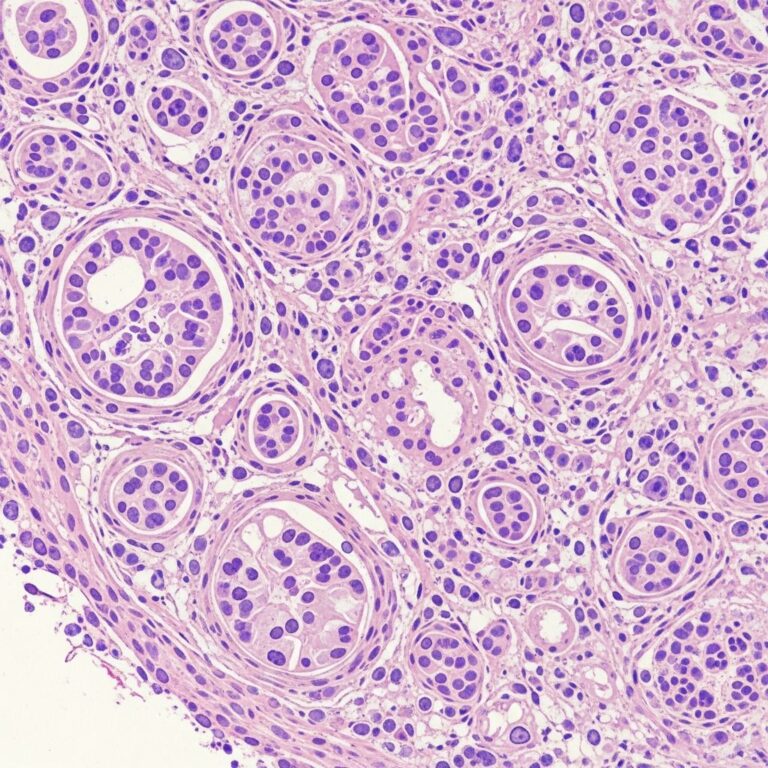
Scalp Biopsy
When diagnosis remains unclear, a 4mm punch biopsy samples scalp tissue for microscopic analysis. Performed under local anesthesia, it examines:
- Follicle density and anagen/telogen ratio
- Inflammatory cell infiltration
- Fibrosis or scarring
Transverse sectioning provides superior detail for scarring alopecias. Risks include minor bleeding and infection, but complication rates are under 1%.
Other Tests
Rarely, additional diagnostics include:
- Scalp immunofluorescence: Detects autoimmune deposits
- Direct hair microscopy: Analyzes shaft structure for monilethrix or trichorrhexis
- Culture: Rules out fungal infections like tinea capitis
Non-Scarring vs. Scarring Alopecia
Non-scarring types preserve follicles, offering regrowth potential. Alopecia areata responds to corticosteroids or JAK inhibitors like baricitinib, FDA-approved in 2022.
Scarring alopecias demand early steroids, antimalarials, or immunosuppressants to prevent follicle destruction. CCCA prevalence reaches 3-5% in African American women, per NIH data.
Treatment After Diagnosis
Tailored therapies include:
- Topical minoxidil (5%) for androgenetic alopecia
- Intralesional steroids for alopecia areata
- Quinacrine or doxycycline for scarring types
- Low-level laser therapy as adjunct
Platelet-rich plasma (PRP) shows promise in clinical trials.
Frequently Asked Questions (FAQs)
Can alopecia be diagnosed without a biopsy?
Yes, most cases use history, exam, trichoscopy, and bloodwork. Biopsy reserves for ambiguous or scarring presentations.
How long does diagnosis take?
Initial evaluation occurs same-day; results from tests/biopsy take 1-4 weeks.
Does insurance cover alopecia diagnosis?
Typically yes for medically necessary tests; cosmetic cases may require out-of-pocket payment.
Can hair grow back after scarring alopecia diagnosis?
Limited regrowth possible if treated early before complete fibrosis.
Is alopecia contagious?
No, except rare fungal mimics like tinea capitis.
This 1678-word article equips patients with knowledge to navigate diagnosis confidently, emphasizing specialist consultation for personalized care.
References
- Guidelines on the management of alopecia areata — Journal of the American Academy of Dermatology. 2023-10-01. https://www.jaad.org/article/S0190-9622(23)02845-6/fulltext
- Alopecia Areata — National Institute of Arthritis and Musculoskeletal and Skin Diseases (NIAMS). 2024-02-15. https://www.niams.nih.gov/health-topics/alopecia-areata
- Trichoscopy for common hair loss diseases — Dermatologic Clinics. 2022-04-01. https://www.derm.theclinics.com/article/S0733-8635(22)00013-4/fulltext
- Central centrifugal cicatricial alopecia — New England Journal of Medicine. 2023-07-20. https://www.nejm.org/doi/full/10.1056/NEJMra2200232
- Diagnosis and management of iron deficiency in chronic inflammatory conditions — American Society of Hematology. 2024-01-12. https://ashpublications.org/bloodadvances/article/8/2/432/514693
Similar Articles








Read full bio of Sneha Tete