Alopecia From Drugs: What Clinicians Need To Know
Comprehensive guide to drug-induced hair loss: causes, mechanisms, common medications, and management strategies for patients and clinicians.
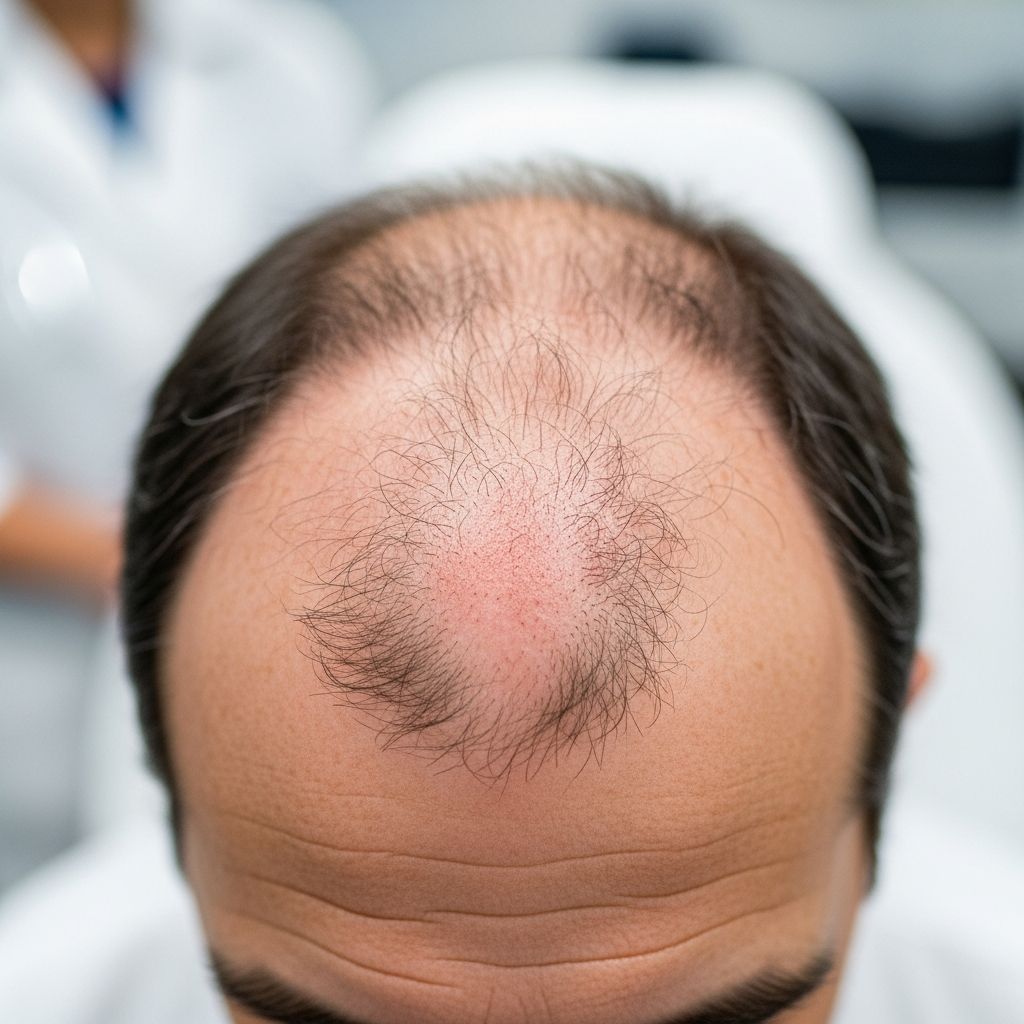
Drug-induced alopecia, or hair loss triggered by medications, is a common yet often reversible side effect encountered in dermatology and oncology practices. It manifests primarily as non-scarring diffuse hair thinning on the scalp, though patterns vary by drug type and mechanism. Understanding the pathophysiology, implicated agents, and management is crucial for clinicians advising patients on risks and recovery expectations.
What is alopecia from drugs?
Alopecia from drugs refers to hair loss resulting from pharmaceutical agents disrupting the hair growth cycle. Normally, hair cycles through anagen (growth, 85-90% of follicles), catagen (transition), and telogen (resting, shedding) phases. Drugs precipitate two main non-scarring types: telogen effluvium (hairs enter telogen prematurely, shedding 2-4 months post-exposure) and anagen effluvium (abrupt halt in anagen, rapid loss within days-weeks). Less commonly, drugs induce alopecia areata-like patchy loss or scarring alopecias like lichen planopilaris.
Prevalence varies: up to 65% of chemotherapy patients experience significant alopecia, while telogen effluvium affects 30-70% more hairs daily than normal (100-150). Risk factors include drug dose, combination therapy, age, genetics (e.g., ABCB1 variants), and comorbidities like androgenetic alopecia.
Who gets alopecia from drugs?
Any patient on culprit medications is at risk, but certain groups predominate:
- Cancer patients: Highest incidence from cytotoxic chemotherapy (e.g., taxanes, alkylators).
- Chronic illness patients: Those on antihypertensives, antidepressants, anticonvulsants, or retinoids for acne, epilepsy, depression, or hypertension.
- Children: Primarily chemotherapy-induced anagen effluvium.
- Women: Hormonal therapies (e.g., tamoxifen, birth control) and weight-loss drugs like GLP-1 agonists (indirect via rapid weight loss).
- Elderly: Polypharmacy increases cumulative risk; prior scalp irradiation or graft-versus-host disease exacerbates.
Incidence depends on drug: nearly universal with high-dose IV chemotherapy, occasional with beta-blockers or NSAIDs.
Related conditions
- Telogen effluvium: Diffuse shedding from metabolic stress, including drugs.
- Anagen effluvium: Rapid, dense loss from cytotoxic agents.
- Alopecia areata: Patchy autoimmune loss, rarely drug-triggered (e.g., TNF inhibitors).
- Androgenetic alopecia: Pattern baldness unmasked or worsened by drugs.
- Scarring alopecias: Lichen planopilaris, folliculitis decalvans from kinase inhibitors.
Types of drug-induced alopecia
Non-scarring alopecia
Telogen effluvium dominates non-cytotoxic drug effects. Follicles synchronize into telogen, peaking shedding at 2-4 months. Common triggers: retinoids, beta-blockers, anticoagulants, lithium, anticonvulsants, NSAIDs, antidepressants, statins, and interferons. Hair density reduces diffusely; regrowth begins 3-6 months post-discontinuation.
Anagen effluvium from cytotoxics (e.g., doxorubicin, paclitaxel, cyclophosphamide) damages proliferating matrix cells, causing >50% loss within 1-4 weeks. High-risk classes: alkylators, antimicrotubule agents, topoisomerase inhibitors. IV high-dose regimens > oral/low-dose; combinations worsen.
Scarring alopecia
Rare but permanent: drug-induced lichen planopilaris (PD-1, EGFR, TKIs), folliculitis decalvans, erosive pustular dermatosis. Fibrosis destroys follicles irreversibly.
Alopecia areata-like
Patchy loss from TNF-α inhibitors, dupilumab, checkpoint inhibitors.
Other patterns
- Localized: Deoxycholic acid injections (submental).
- Permanent: Taxanes (docetaxel), busulfan, thiotepa; stem cell damage via ABCB1 genetics. Texture/color changes common.
Drugs causing alopecia
| Category | Examples | Type | Timeline |
|---|---|---|---|
| Chemotherapy (cytotoxic) | Docetaxel, doxorubicin, cyclophosphamide, busulfan | Anagen effluvium | Days-weeks |
| Endocrine therapies | Tamoxifen, aromatase inhibitors, CDK4/6 inhibitors | Telogen/Anagen | 2-4 months |
| Antihypertensives | Beta-blockers (propranolol), ACE inhibitors, diuretics | Telogen | 2-4 months |
| Antidepressants/Mood stabilizers | SSRIs, lithium | Telogen | 2-4 months |
| Retinoids | Isotretinoin, acitretin | Telogen | 2-4 months |
| Anticonvulsants | Valproate, carbamazepine | Telogen | 2-4 months |
| Immunosuppressants | Methotrexate, azathioprine, TNF inhibitors | Telogen/Alopecia areata | Variable |
| Others | Anticoagulants (heparin), NSAIDs, levodopa, allopurinol, GLP-1s (indirect) | Telogen | 2-4 months |
Related Stories



Comprehensive lists exceed 100 agents; prevalence varies (e.g., 100% docetaxel vs. <5% beta-blockers).
Pathophysiology
Telogen effluvium: Drugs disrupt follicular signaling, pushing anagen hairs to telogen prematurely. Metabolic/toxic stress shortens anagen.
Anagen effluvium: Mitotic arrest in matrix keratinocytes; apoptosis via DNA damage. Follicle stem cells may survive for regrowth.
Permanent cases: Irreversible bulge stem cell loss (taxanes). Targeted therapies (EGFR inhibitors) trigger inflammation.
Diagnosis of alopecia from drugs
- History: Temporal link to new/changed meds (2-4 months telogen; acute anagen). Quantify shedding, exclude triggers (stress, diet).
- Examination: Diffuse thinning (telogen), >50% acute loss (anagen). No scarring/inflammation usually.
- Investigations: Pull test (+ in telogen), trichogram (increased telogen >20%), biopsy (anagen arrest, catagen/telogen increase). Labs: thyroid, iron, zinc if chronic.
- Differential: Androgenetic alopecia, syphilis, thyroid disease.
Management of alopecia from drugs
Primary: Identify/discontinue culprit if feasible; regrowth in 3-6 months for reversible cases. Supportive:
- Cooling scalp: Reduces chemotherapy alopecia (20-50% prevention via vasoconstriction).
- Topicals: Minoxidil 5% accelerates regrowth; finasteride/dutasteride for androgenic overlap.
- Wigs/cosmetics: Camouflage during peak loss.
- Supplements: Biotin, vitamin D (anecdotal; evidence limited).
- Permanent cases: Hair transplant post-stabilization.
Consult dermatology for scarring/suspected cases. Patient education on timeline prevents anxiety.
Prevention of chemotherapy-induced alopecia
- Scalp hypothermia: Cold caps (FDA-approved devices) limit follicle perfusion; 50-80% efficacy for taxanes/anthracyclines, less for cyclophosphamide. Contraindications: cold sensitivity, hematologic malignancies.
- Dose/schedule adjustment: Weekly low-dose over bolus.
- Topical minoxidil/aspirin: Emerging; inconsistent data.
Patient selection key; counseling on cosmetic options essential.
Regrowth after drug-induced alopecia
Telogen: Full regrowth 6-12 months post-stop. Anagen: 3-6 months, but 10-20% partial/permanent (taxanes). Changes: curly, finer, gray hair common. Monitor 6 months; biopsy if absent.
Frequently Asked Questions
Is drug-induced hair loss always reversible?
No, most telogen cases regrow fully, but anagen from taxanes/busulfan/thiotepa may be permanent due to stem cell damage.
How long after starting a drug does hair loss occur?
Telogen: 2-4 months; anagen: 1-4 weeks.
Can I prevent chemotherapy hair loss?
Scalp cooling reduces risk by 50%+ in many regimens.
Does minoxidil help drug-induced alopecia?
Yes, topical minoxidil stimulates regrowth, especially if combined with discontinuation.
Which chemotherapy drug causes most alopecia?
Docetaxel (taxane); nearly 100% high-grade.
References
- Drug-induced alopecia — VisualDx. Accessed 2026. https://iphone.visualdx.com/visualdx/diagnosis/?diagnosisId=52613&moduleId=46
- Medications & Drugs That Cause Hair Loss — WebMD. Accessed 2026. https://www.webmd.com/skin-problems-and-treatments/hair-loss/drug-induced-hair-loss-2
- Drug-induced hair loss and hair growth. Incidence, management — PubMed (Skin Pharmacol. 1994). 1994-06-01. https://pubmed.ncbi.nlm.nih.gov/8018303/
- 14 Medications That Cause Hair Loss — GoodRx. Accessed 2026. https://www.goodrx.com/drugs/side-effects/is-your-medication-causing-hair-loss-these-drugs-are-common-culprits
- Alopecia Areata: Symptoms, Causes, Treatment & Regrowth — Cleveland Clinic. Accessed 2026. https://my.clevelandclinic.org/health/diseases/12423-alopecia-areata
Similar Articles








Read full bio of medha deb