Alpha Glucosidase Inhibitor: 5 Key Facts For Type 2 Diabetes
Learn how alpha-glucosidase inhibitors help manage type 2 diabetes by slowing carbohydrate digestion and reducing blood sugar spikes after meals.
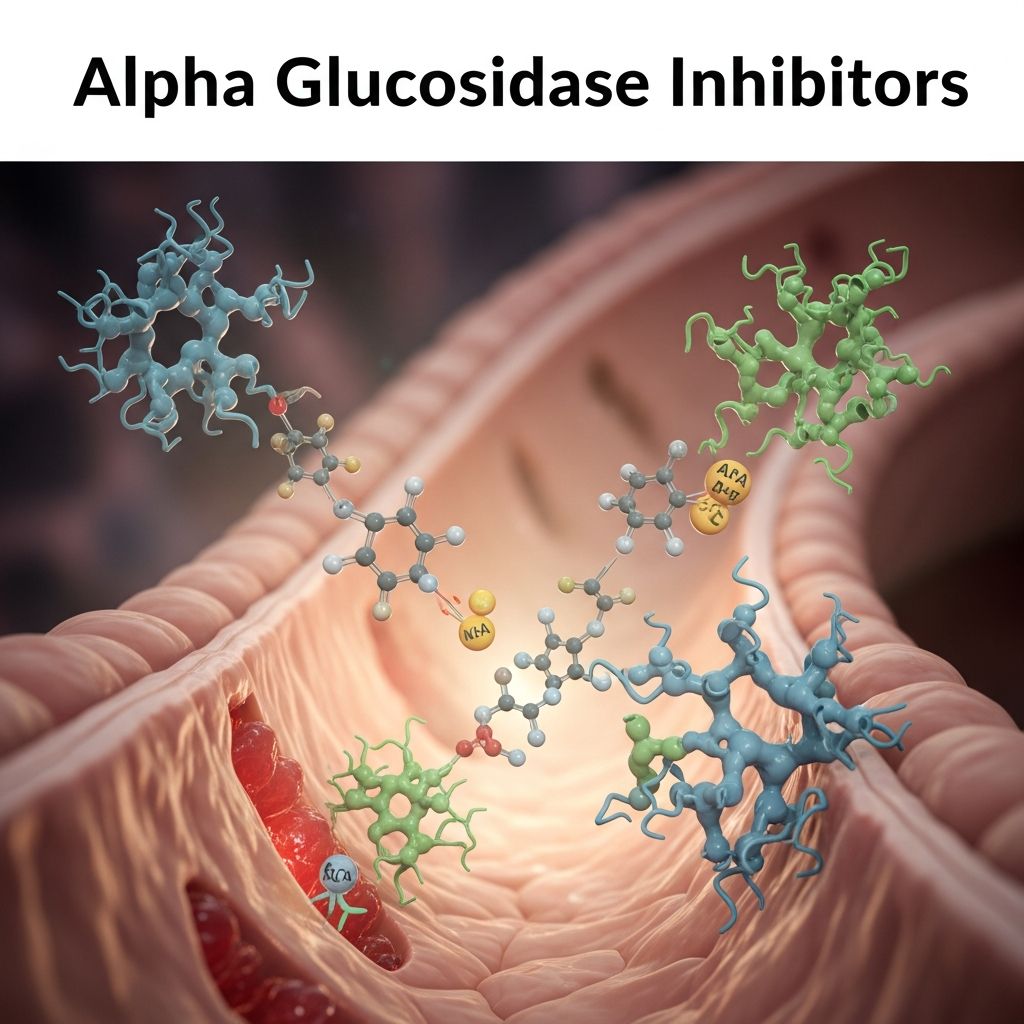
Alpha-glucosidase inhibitors are oral medications used to treat type 2 diabetes. They work by slowing down the digestion of carbohydrates, which helps to control blood sugar levels after meals.
What are alpha glucosidase inhibitors?
Alpha-glucosidase inhibitors (AGIs) are a class of oral anti-diabetic drugs specifically designed for managing type 2 diabetes mellitus. Unlike other diabetes medications that primarily target insulin production or sensitivity, AGIs act locally in the gastrointestinal tract. They competitively inhibit enzymes known as alpha-glucosidases, which are located on the brush border of small intestinal cells. These enzymes are essential for breaking down complex carbohydrates—such as starches and disaccharides like sucrose—into absorbable monosaccharides, primarily glucose.
By blocking this enzymatic action, AGIs delay the conversion of carbohydrates into glucose, resulting in a slower and more gradual absorption of sugars into the bloodstream. This mechanism primarily addresses postprandial hyperglycemia, the sharp rise in blood glucose levels that occurs after eating carbohydrate-rich meals. Clinical studies demonstrate that AGIs effectively blunt these glucose spikes, leading to improved overall glycemic control without significantly affecting fasting blood glucose levels.
The two primary medications in this class available in many markets are acarbose (brand name Precose or Glucobay) and miglitol (brand name Glyset). Acarbose also inhibits pancreatic alpha-amylase, an enzyme that begins starch breakdown in the intestinal lumen, providing a broader effect on carbohydrate digestion. Miglitol, being a synthetic analog of glucose, is more selectively absorbed and acts primarily on intestinal enzymes. Both are approved by regulatory bodies like the FDA as adjuncts to diet and exercise for adults with type 2 diabetes.
Naturally occurring AGIs exist in plants like cinnamon and white mulberry, but pharmaceutical formulations offer standardized dosing for therapeutic reliability. These drugs are particularly valuable for patients who struggle with mealtime glucose excursions despite lifestyle modifications or other therapies.
How do they work?
The digestive process of carbohydrates begins in the mouth and stomach but primarily occurs in the small intestine. Complex polysaccharides from foods like bread, pasta, and potatoes are first partially hydrolyzed by salivary and pancreatic amylase into oligosaccharides and maltose. Upon reaching the intestinal brush border, alpha-glucosidase enzymes—such as maltase, sucrase, and isomaltase—further cleave these into glucose, fructose, and other monosaccharides for absorption.
AGIs bind to these enzymes, preventing substrate access and thus delaying carbohydrate breakdown. Undigested or partially digested carbs pass to the large intestine, where gut bacteria ferment them, producing gases and short-chain fatty acids. This results in:
- A flattened postprandial glucose curve, reducing peak levels by 2-3 mmol/L (36-54 mg/dL) typically.
- Lower glycosylated hemoglobin (HbA1c) by 0.5-1.0% over 3-6 months of use.
- No stimulation of insulin secretion, minimizing hypoglycemia risk when used alone.
Pharmacokinetically, acarbose is minimally absorbed (<2%), exerting its effect intraluminally before excretion in feces. Miglitol is almost completely absorbed but not metabolized, with renal excretion. Both require dosing at the start of each main meal containing carbohydrates to align with nutrient influx.
Related Stories



Long-term, this delayed absorption contributes to modest weight neutrality or loss, as fewer calories from carbs are fully utilized, contrasting with weight-gaining agents like sulfonylureas.
Types
The main alpha-glucosidase inhibitors approved for type 2 diabetes are:
- Acarbose: A nitrogen-containing tetrasaccharide derived from Actinoplanes bacteria. It inhibits both intestinal alpha-glucosidases and pancreatic alpha-amylase. Available in 25 mg, 50 mg, and 100 mg tablets; generic versions widely accessible.
- Miglitol: A desamino-desoxy analog of glucose. More selective for intestinal enzymes, lacking amylase inhibition. Dosed similarly in 25 mg, 50 mg, and 100 mg strengths.
- Voglibose: Commonly used in Asia (e.g., Japan, India). A valiolamine derivative with potent sucrase inhibition; not FDA-approved in the US but effective in similar doses.
Table comparing key features:
| Drug | Amylase Inhibition | Absorption | Primary Availability |
|---|---|---|---|
| Acarbose | Yes | Minimal (<2%) | Global (generic) |
| Miglitol | No | Nearly complete | US, select markets |
| Voglibose | Minimal | Low | Asia |
Selection depends on regional availability, tolerability, and combination needs.
Dose
AGIs are initiated at low doses to minimize gastrointestinal intolerance, titrated based on tolerance and efficacy. Dosing occurs with the first bite of each carbohydrate-containing meal (up to three times daily). Maximum doses lower postprandial glucose without excess side effects.
- Acarbose: Start 25 mg three times daily; titrate to 50 mg TID after 2 weeks, max 100 mg TID (body weight <60 kg: max 50 mg TID).
- Miglitol: Identical: 25 mg TID start, up to 100 mg TID.
- Voglibose: 0.2-0.3 mg TID.
Miss a dose? Skip it; do not double. For monotherapy or combinations (e.g., with metformin), maintain timing. Renal impairment (CrCl <25 mL/min) contraindicates miglitol due to accumulation; acarbose is safer. Regular HbA1c monitoring guides adjustments.
Possible side effects
The most common side effects are gastrointestinal, stemming from unabsorbed carbs reaching the colon: flatulence (up to 78% initially), diarrhea (abdominal pain, bloating). These affect 30-50% of users but diminish over 4-8 weeks as gut microbiota adapts or with dose titration/diet tweaks (low-gas foods, smaller meals).
- Rare serious effects: Elevated liver enzymes (acarbose; monitor ALT/AST monthly first year), intestinal obstruction, hypersensitivity.
- Hypoglycemia: Only with insulin/sulfonylureas; treat with glucose (not sucrose, as it’s undigested).
- Weight-neutral; no lactic acidosis risk unlike metformin.
Side effects table:
| Side Effect | Frequency | Management |
|---|---|---|
| Flatulence | Common (50-78%) | Titrate slowly, avoid trigger foods |
| Diarrhea | Common (30%) | Hydrate, fiber adjustment |
| Abdominal pain | Moderate | Slow titration |
| Liver enzyme rise | Rare (<1%) | Monitor labs |
Who might be prescribed it?
AGIs suit type 2 diabetes patients with prominent postprandial hyperglycemia, especially early disease or alongside metformin/sulfonylureas. Ideal for those at hypoglycemia risk, seeking weight neutrality, or intolerant to other agents. Not first-line per ADA/EASD but valuable adjuncts.
- Impaired glucose tolerance prevention (acarbose reduces DM2 incidence per Cochrane).
- Combination therapy for suboptimal control.
- Avoid in IBD, cirrhosis, or pregnancy (Category B).
Key facts
- Taken with first bite of meals.
- Blunts postprandial spikes by 50-70 mg/dL.
- HbA1c reduction: 0.7-1.0%.
- No weight gain; low hypo risk monotherapy.
- Generic acarbose cost-effective.
Diabetes UK helpline
For support, contact the Diabetes UK Helpline at 0345 123 2399 (Mon-Fri 9am-6pm, Sat 11am-5pm) or visit diabetes.org.uk/helpline.
Frequently asked questions
What if I forget a dose?
Skip the missed dose; resume next meal. Never double up.
Can they cause low blood sugar?
No alone; with insulin/sulfonylureas, use glucose tablets for treatment.
Do they cause weight gain?
Typically weight-neutral or slight loss.
Are they safe for kidneys?
Acarbose yes; miglitol caution if CrCl <25 mL/min.
How quickly do they work?
Immediate post-meal effect; HbA1c benefits in 4-12 weeks.
References
- Alpha-glucosidase inhibitor – Wikipedia — Wikipedia. 2024. https://en.wikipedia.org/wiki/Alpha-glucosidase_inhibitor
- Alpha-Glucosidase Inhibitors: A Unique Approach to Managing Diabetes — African Journal of Diabetes Medicine. 2024. https://www.africanjournalofdiabetesmedicine.com/articles/alphaglucosidase-inhibitors-a-unique-approach-to-managing-diabetes-113398.html
- Therapeutic Class Overview α-glucosidase Inhibitors — Nevada Medicaid. 2013-05-10. https://www.medicaid.nv.gov/Downloads/provider/Alpha-Glucosidase_Inhibitors_2013-0510.pdf
- Alpha Glucosidase Inhibitors – StatPearls — NCBI Bookshelf. 2023. https://www.ncbi.nlm.nih.gov/books/NBK557848/
Similar Articles








Read full bio of Sneha Tete