ALS vs MS: Key Differences and Similarities
Understanding ALS and MS: Explore the key differences, symptoms, and prognosis of these neurological conditions.
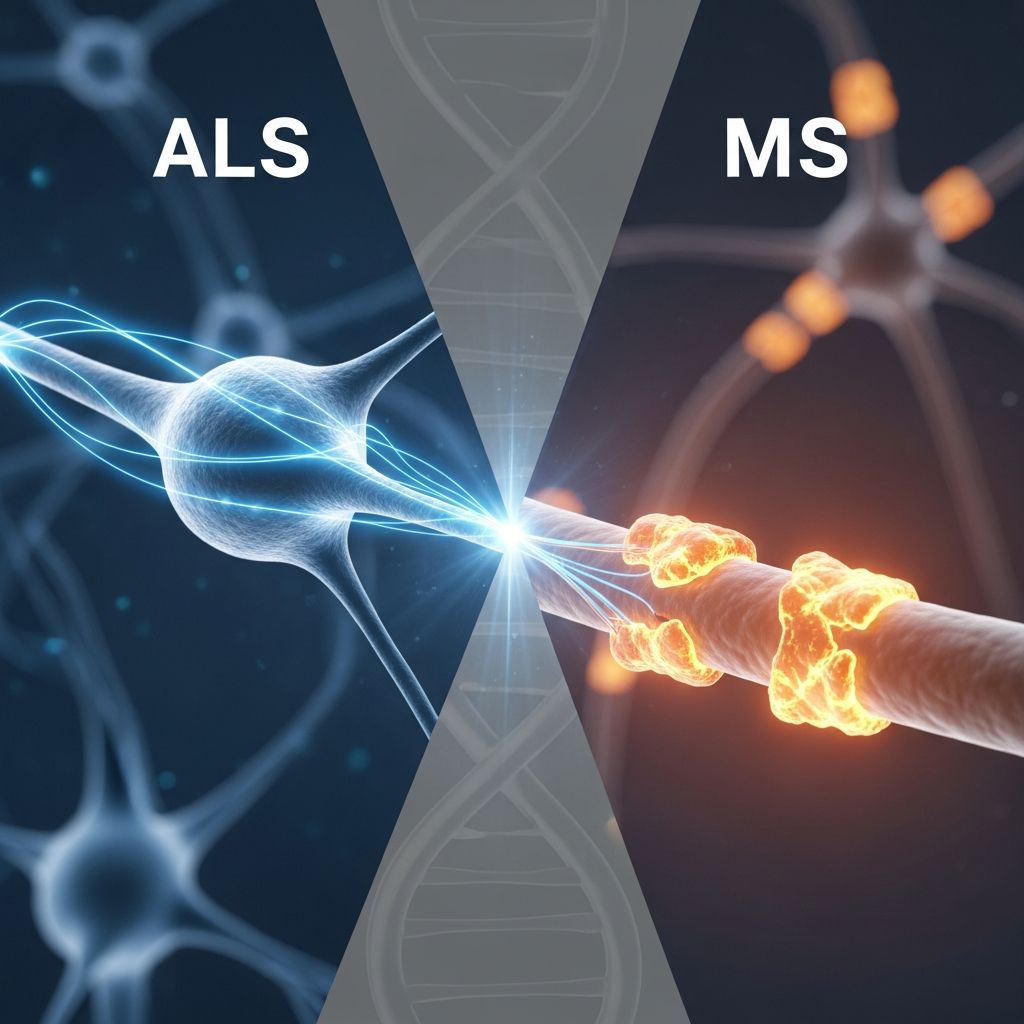
Amyotrophic lateral sclerosis (ALS) and multiple sclerosis (MS) are both serious neurodegenerative conditions affecting the central nervous system, yet they differ significantly in their causes, symptoms, progression, and long-term outlook. While both diseases can cause muscle weakness and mobility challenges, understanding their distinctions is crucial for proper diagnosis and treatment. This comprehensive guide explores the major differences and surprising similarities between these two neurological conditions.
What Are ALS and MS?
Multiple sclerosis (MS) is an autoimmune condition in which the body’s immune system mistakenly attacks the myelin sheath—the protective coating around nerve fibers in the brain and spinal cord. This damage disrupts communication between the brain and the rest of the body, leading to a wide range of neurological symptoms. MS primarily affects people between ages 20 and 40, with women being diagnosed more frequently than men.
Amyotrophic lateral sclerosis (ALS), also known as Lou Gehrig’s disease, is a progressive neurodegenerative disorder that specifically damages motor neurons in the brain and spinal cord. Unlike MS, ALS is not an autoimmune condition. Instead, motor neurons gradually degenerate, leading to progressive muscle weakness and eventual paralysis. ALS typically develops in people between ages 40 and 70, affecting men more often than women.
Major Differences Between ALS and MS
Disease Mechanism
The fundamental difference between ALS and MS lies in what the disease targets. MS attacks the protective tissue around nerves known as myelin, causing demyelination—the loss of this protective coating. This disrupts nerve signal transmission throughout the central nervous system. ALS, conversely, attacks the motor neurons themselves, leading to their progressive degeneration and death. Motor neurons are the nerve cells responsible for controlling voluntary muscles throughout the body.
Affected Areas and Symptoms
While both conditions can affect muscle function, they impact different body systems:
- ALS symptoms: Progressive muscle weakness, muscle atrophy, fasciculations (involuntary muscle twitches), stiffness, cramps, difficulty swallowing (dysphagia), speech problems (dysarthria), and eventual paralysis. In later stages, respiratory muscles weaken, potentially leading to respiratory failure.
- MS symptoms: Vision problems, numbness, tingling, muscle spasms, balance and coordination issues, fatigue, cognitive changes, mood alterations, and bladder control problems. MS can also affect sensory nerves, which is rare in ALS.
A critical distinction: ALS often causes severe paralysis, which is rare in MS. Additionally, ALS primarily affects physical functions, while MS can significantly impact cognitive abilities such as memory and executive function.
Cognitive Impact
MS typically affects cognitive function more prominently than ALS. People with MS commonly experience memory loss, attention deficits, difficulty with processing speed, and executive function problems. However, recent research indicates that approximately half of individuals with ALS also experience cognitive issues, with about 20 percent developing frontotemporal dementia. In contrast, cognitive decline in ALS remains relatively uncommon compared to MS.
Disease Progression
The progression patterns of these two conditions differ significantly. ALS progresses steadily and relentlessly, typically leading to paralysis within a consistent timeline. Most individuals experience severe symptoms within 2 to 5 years of diagnosis. MS, however, follows a more unpredictable course. Many people with MS experience a relapsing-remitting pattern, where symptoms appear, improve or disappear entirely, and then reappear later. Remissions can last weeks, months, or even years, making MS progression difficult to predict.
Related Stories



Comparison Table: ALS vs MS
| Characteristic | ALS | MS |
|---|---|---|
| Autoimmune Condition | No | Yes |
| Primarily Affected Sex | Males | Females |
| Typical Age of Onset | 40–70 years | 20–50 years |
| Physical Symptoms | Yes | Yes |
| Cognitive Symptoms | Rare (20% develop dementia) | Common |
| Can Be Fatal | Yes | No |
| Cure Available | No | No |
| Disease Pattern | Steadily Progressive | Often Relapsing-Remitting |
| Paralysis Risk | High | Rare |
| Sensory Symptoms | Rare | Common |
Similarities Between ALS and MS
Despite their differences, ALS and MS share several important characteristics and symptoms, which can sometimes lead to initial diagnostic confusion:
- Muscle weakness: Both conditions cause progressive muscle weakness, considered the hallmark symptom of ALS and a significant issue in MS.
- Breathing problems: Both can affect respiratory function, though more commonly and severely in ALS during later disease stages.
- Cognitive decline: While less common in ALS, cognitive changes can occur in both conditions.
- Fatigue: Persistent fatigue affects individuals with both ALS and MS.
- Mood changes: Emotional instability and mood alterations can develop in both diseases.
- Muscle spasms: Both conditions can cause involuntary muscle contractions.
- Swallowing difficulties: Dysphagia occurs in both conditions, though it typically is more severe in ALS.
- Speech problems: Both can impair speech clarity, with ALS generally causing more severe difficulties.
- Central nervous system involvement: Both conditions primarily affect the central nervous system, disrupting normal neurological function.
Life Expectancy and Prognosis
One of the most significant differences between ALS and MS is their impact on life expectancy. This distinction fundamentally affects how individuals and their families plan for the future.
ALS Life Expectancy
ALS carries a more serious prognosis. Most individuals diagnosed with ALS have a life expectancy of 2 to 5 years after diagnosis, though some may live longer. The disease’s fatal nature primarily results from respiratory failure as the muscles controlling breathing gradually weaken. ALS progresses rapidly and steadily, making it generally more aggressive and life-threatening than MS.
MS Life Expectancy
In contrast, MS typically does not significantly reduce life expectancy. Most people with MS can expect to live close to a normal lifespan, with studies showing a reduction of approximately 5 to 10 years compared to the general population. With appropriate treatment and management, MS symptoms can be controlled, allowing for a more manageable disease course. MS is rarely fatal, though complications can occasionally arise.
Diagnosis and Detection
Distinguishing between ALS and MS is important for proper treatment planning. Doctors utilize various diagnostic tools to differentiate between these conditions:
- MRI imaging: MS produces visible changes on brain and spine MRIs, as the demyelination creates characteristic lesions or plaques. ALS motor neuron degeneration, however, typically cannot be visualized on standard MRI scans, making MRI useful for ruling out MS in suspected ALS cases.
- Electromyography (EMG): This test measures electrical activity in muscles and can reveal the distinctive patterns of motor neuron degeneration seen in ALS.
- Lumbar puncture: Cerebrospinal fluid analysis may show specific markers associated with MS but not ALS.
- Clinical presentation: The pattern of symptom onset, disease progression, and specific symptoms help clinicians differentiate between the two conditions.
Treatment Approaches
While neither condition has a cure, treatment strategies differ based on each disease’s mechanisms. ALS treatment focuses on slowing disease progression and managing symptoms. Medications like riluzole and edaravone have shown modest benefits in extending survival. Supportive care, including physical therapy, speech therapy, and respiratory support, becomes increasingly important as the disease progresses.
MS treatment aims to reduce immune system activity and manage symptoms. Disease-modifying therapies (DMTs) can slow disease progression and reduce relapse frequency. These may include interferon beta, glatiramer acetate, monoclonal antibodies, and other immunosuppressive medications. Symptomatic treatments address specific issues like muscle spasticity, fatigue, and cognitive problems.
Frequently Asked Questions
Q: Can ALS be mistaken for MS?
A: Yes, especially in early stages. Both conditions share symptoms like muscle weakness and fatigue. However, specific diagnostic tests like MRI, EMG, and clinical presentation patterns help doctors distinguish between them accurately.
Q: Is ALS more serious than MS?
A: In terms of life expectancy and rapid progression, ALS is generally more serious. ALS typically leads to death within 2-5 years, while MS rarely shortens life expectancy significantly. However, both are serious conditions requiring comprehensive medical management.
Q: Can someone recover from MS or ALS?
A: Neither condition currently has a cure. MS symptoms may improve during remission periods, but the disease itself cannot be cured. ALS is progressive without remission, though treatments can slow progression slightly.
Q: What causes ALS and MS?
A: MS results from a faulty immune reaction attacking myelin. ALS causes remain largely unknown, though genetics and environmental factors likely play roles. ALS is not autoimmune.
Q: Are there clinical trials for ALS and MS?
A: Yes, both conditions have ongoing clinical trials testing new treatments. Participating in trials may provide access to experimental therapies and contribute to advancing medical knowledge.
Q: How do I know which condition I have?
A: Only a neurologist can definitively diagnose these conditions through clinical evaluation, medical history, and diagnostic tests. Never self-diagnose; seek professional medical evaluation if you experience concerning symptoms.
References
- MS vs. ALS: Differences, causes, and treatment — Medical News Today. 2024. https://www.medicalnewstoday.com/articles/317525
- ALS vs. MS: Differences and Similarities — MedicineNet. 2024. https://www.medicinenet.com/als_vs_ms_differences_and_similarities/article.htm
- ALS vs MS: What’s the Difference? Symptoms & Home Care — Alliance HomesCare. 2024. https://www.alliancehomecare.com/blog/als-vs-ms-symptoms/
- MS vs ALS: What Are the Similarities and Differences? — Health Central. 2024. https://www.healthcentral.com/article/ms-vs-als
- ALS vs. Multiple Sclerosis: Similarities and Differences — Healthline. 2024. https://www.healthline.com/health/multiple-sclerosis/ms-vs-als
Similar Articles








Read full bio of medha deb