Aluminum Hydroxide in Kidney Disease Management
Exploring the role, benefits, risks, and modern alternatives of aluminum hydroxide as a phosphate binder in chronic kidney disease patients.
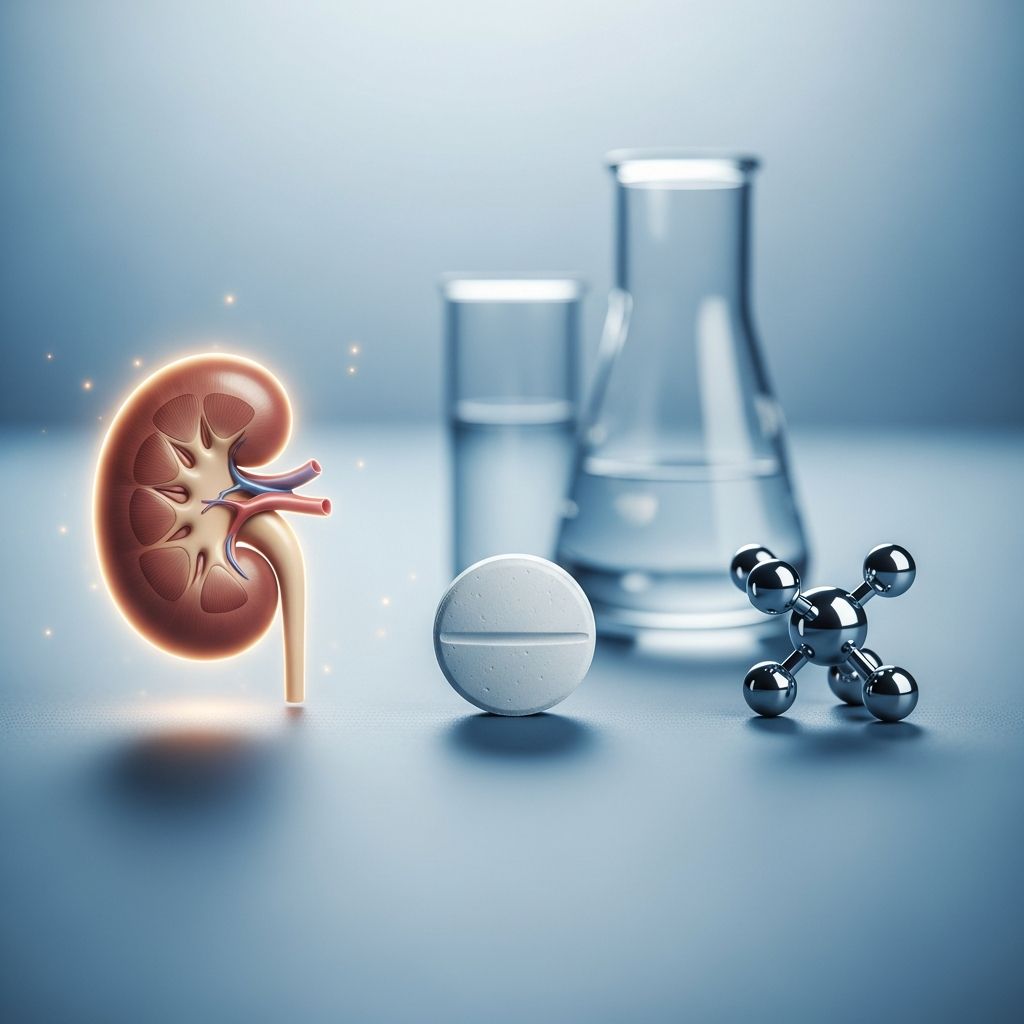
Aluminum hydroxide serves as a phosphate binder primarily for individuals with advanced kidney disease, where elevated phosphate levels pose serious health threats. By binding dietary phosphate in the gastrointestinal tract, it prevents absorption and promotes excretion via stool, helping to mitigate complications like bone weakening and cardiovascular risks.
The Role of Phosphate Control in Renal Health
In chronic kidney disease (CKD), impaired kidney function leads to phosphate retention, resulting in hyperphosphatemia. This condition disrupts calcium-phosphate balance, contributing to secondary hyperparathyroidism, vascular calcification, bone disease, and heightened risks of heart attacks and strokes. Phosphate binders like aluminum hydroxide address this by forming insoluble complexes with phosphate in the gut, reducing its bioavailability.
Historically, aluminum hydroxide was a cornerstone therapy due to its potent binding capacity. However, its use has declined with evidence of aluminum accumulation in patients with reduced renal clearance. Early studies demonstrated benefits in slowing renal deterioration when initiated promptly in models of glomerular sclerosis.
Mechanism of Action and Pharmacological Profile
Upon ingestion, aluminum hydroxide reacts with dietary phosphates in the stomach to produce aluminum phosphate, an insoluble compound excreted in feces. This process lowers serum phosphate without significantly altering overall mineral metabolism in short-term use. It also exhibits antacid properties by neutralizing gastric acid, though this is secondary in renal applications.
The drug is available in tablet form, typically 600mg doses branded as Alu-Tab or similar generics. Its onset is rapid when taken with meals, optimizing binding efficacy. Unlike calcium-based binders, it does not raise calcium levels, avoiding hypercalcemia risks.
Dosing Guidelines and Administration Best Practices
Standard dosing for adults with kidney disease involves 1-2 tablets (600-1200mg) three times daily, timed 10-15 minutes before or at the start of meals to coincide with phosphate intake. Doses are individualized based on serum phosphate monitoring, with adjustments to maintain levels within 1.0-1.5 mmol/L targets.
- Take whole tablets with water; do not crush or chew to preserve binding surface area.
- Omit doses if a meal is skipped to prevent unnecessary exposure.
- Avoid double-dosing; resume at the next meal.
For pediatric or younger dialysis patients, lower doses are used, but evidence suggests inferior efficacy compared to calcium carbonate. Timing is critical: concurrent use with other medications can impair their absorption due to pH changes or chelation, so space by at least 1-2 hours.
Potential Benefits Backed by Research
Research from the early 1990s showed early administration of aluminum hydroxide improved survival rates and reduced proteinuria, glomerular sclerosis, and hypertrophy in experimental renal models. It effectively lowered serum phosphate and calcium-phosphate products in treated groups versus controls.
In clinical settings, it rapidly controls hyperphosphatemia unresponsive to dietary restrictions alone. Its non-calcium nature makes it suitable for hypercalcemic patients or those on vitamin D analogs.
Related Stories



Risks and Adverse Effects
Prolonged use poses significant risks, particularly aluminum toxicity in CKD stages 4-5 or dialysis patients. Kidneys normally excrete 95% of absorbed aluminum; impairment leads to accumulation in bones, brain, and blood, causing osteomalacia, encephalopathy, and microcytic anemia.
| Common Side Effects | Serious Risks |
|---|---|
| Constipation | Aluminum bone disease |
| Hypophosphatemia (overuse) | Neurotoxicity |
| Nausea | Anemia |
| Appetite loss | Hyperaluminemia |
Studies confirm higher plasma aluminum and deferoxamine challenges post-treatment, alongside poorer bone histology versus calcium alternatives. Dialysis patients face amplified risks from dialysate contamination historically.
Monitoring Protocols for Safe Use
Regular lab assessments are essential: serum phosphate, calcium, aluminum, parathyroid hormone (PTH), and kidney function (eGFR/creatinine) every 1-3 months. Bone-specific alkaline phosphatase and deferoxamine tests detect early toxicity.
- Baseline aluminum levels before initiation.
- Monthly checks during first 3 months.
- Discontinue if aluminum >2 micromol/L or symptoms emerge.
Kidney function monitoring prevents escalation in non-dialysis CKD.
Drug Interactions and Contraindications
Aluminum hydroxide binds or alters pH for drugs like tetracyclines, fluoroquinolones, thyroid hormones, and iron supplements, reducing efficacy. Acid-dependent drugs (e.g., ketoconazole) face impaired absorption.
Contraindicated in severe constipation, bowel obstruction, or known aluminum hypersensitivity. Use cautiously in elderly or low-phosphate diets.
Modern Alternatives to Aluminum Hydroxide
Due to toxicity profiles, guidelines favor non-aluminum binders:
- Calcium acetate/carbonate: Effective, affordable, but hypercalcemia risk.
- Sevelamer: Non-metal, reduces LDL cholesterol, no hypercalcemia.
- Lanthanum carbonate: Potent, minimal absorption.
- Sucroferric oxyhydroxide: Iron-based, iron-replete patients.
Comparative trials show calcium carbonate superior for hyperphosphatemia control and bone health in dialysis youth, with less aluminum retention.
Patient Education and Lifestyle Integration
Empower patients with low-phosphate diets (<800mg/day): limit dairy, nuts, cola. Combine binders with adequate fluid intake to combat constipation. Adherence improves with meal-time reminders and apps.
Report symptoms like bone pain, confusion, or fatigue promptly. Dialysis patients should verify dialysate purity.
Special Considerations in Dialysis and Pediatrics
In hemodialysis, aluminum hydroxide is short-term for refractory hyperphosphatemia. Pediatrics require vigilant dosing; trials indicate higher failure rates and toxicity. Pregnant patients avoid due to fetal risks.
Future Directions in Phosphate Management
Ongoing research explores novel binders and tenapanor (phosphate excretion enhancer). Genetic factors in phosphate handling may personalize therapy. Until then, multimodal approaches—diet, binders, dialysis optimization—remain key.
Frequently Asked Questions (FAQs)
What happens if I miss a dose of aluminum hydroxide?
Skip the missed dose and take the next one with your upcoming meal. Never double up.
Can aluminum hydroxide be used long-term?
Not recommended due to toxicity risks; use as bridge to alternatives with monitoring.
Does it interact with my other kidney medications?
Yes, space apart from antibiotics, iron, or phosphate supplements by 2 hours.
Is it safe for dialysis patients?
Short-term yes, but prefer non-aluminum options; monitor aluminum levels closely.
What diet changes help alongside this binder?
Reduce high-phosphate foods like processed meats, dairy, and beans.
References
- Advantage of Early Initiation of Aluminium Hydroxide Administration … — Nephrology Dialysis Transplantation. 1991-05-01. https://academic.oup.com/ndt/article-abstract/6/5/330/1852703
- Aluminum Hydroxide – StatPearls – NCBI Bookshelf — National Center for Biotechnology Information. 2023-07-17. https://www.ncbi.nlm.nih.gov/books/NBK546669/
- Aluminium hydroxide for kidney disease – Healthify — Healthify NZ. Accessed 2026. https://healthify.nz/medicines-a-z/a/aluminium-hydroxide-for-kidney-disease
- Does Maalox (aluminum hydroxide) affect renal function? — Dr. Oracle AI. Recent. https://www.droracle.ai/articles/152520/does-maalox-aluminum-hydroxide-affect-renal-function
- Aluminum accumulation during treatment with aluminum hydroxide … — PubMed. 1991-11-01. https://pubmed.ncbi.nlm.nih.gov/1992306/
- Antiperspirants | National Kidney Foundation — National Kidney Foundation. Recent. https://www.kidney.org/kidney-topics/antiperspirants
Similar Articles








Read full bio of Sneha Tete