Alzheimer’s Disease: A Complete Guide To Symptoms & Treatment
Comprehensive guide to Alzheimer's disease: symptoms, causes, diagnosis, treatments, and prevention strategies for patients and caregivers.
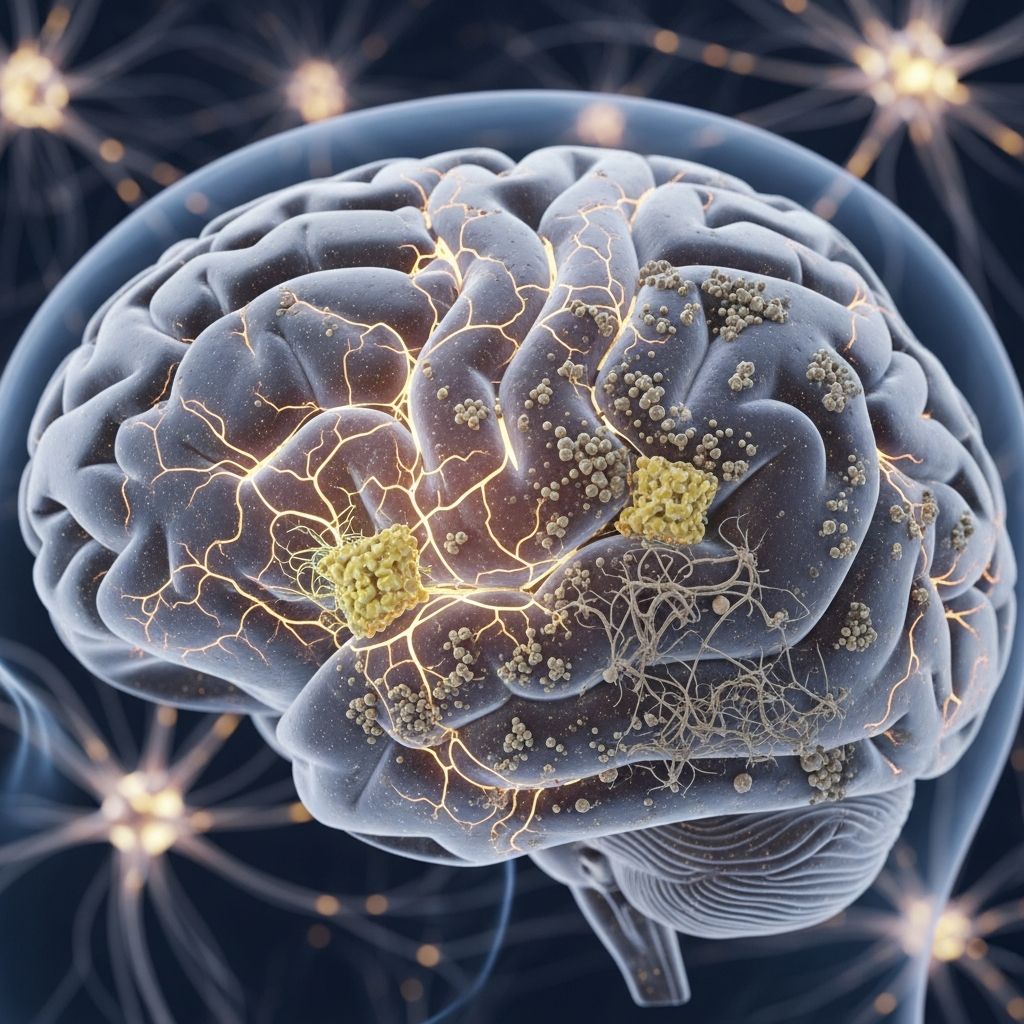
Alzheimer’s disease is the most common form of dementia, affecting millions worldwide. This progressive neurodegenerative disorder primarily impacts memory, thinking, and behavior. As populations age, understanding Alzheimer’s becomes crucial for patients, families, and healthcare providers. This comprehensive overview covers symptoms, causes, risk factors, diagnosis, treatment options, stages, and prevention strategies based on the latest medical research.
What Is Alzheimer’s Disease?
Alzheimer’s disease (AD) is a brain disorder that slowly destroys memory and thinking skills. Eventually, it impairs a person’s ability to perform even the simplest tasks. The disease begins in the part of the brain that controls memory and spreads to other areas, affecting language, judgment, and behavior.
According to the Alzheimer’s Association, approximately 6.9 million Americans aged 65 and older are living with Alzheimer’s dementia in 2024. Globally, the World Health Organization estimates nearly 55 million people have dementia, with Alzheimer’s accounting for 60-70% of cases.1
The hallmark pathological changes include amyloid-beta plaques and tau protein tangles that disrupt neuron communication, leading to cell death and brain shrinkage.
Early Signs and Symptoms of Alzheimer’s
Alzheimer’s symptoms typically develop gradually and worsen over time. Early detection can significantly improve quality of life and care planning.
Common Early Symptoms
- Memory loss: Forgetting recently learned information, important dates, or events; repeatedly asking the same questions.
- Difficulty planning or solving problems: Trouble following a familiar recipe or managing bills.
- Confusion with time or place: Losing track of dates, seasons, or forgetting where they are and how they got there.
- Trouble with visual images or spatial relationships: Difficulty reading, judging distance, or determining color/contrast.
- New problems with words in speaking or writing: Struggling with vocabulary or using the wrong words.
These symptoms often start subtly. Many people in their 60s and 70s experience mild forgetfulness, but Alzheimer’s-related memory loss disrupts daily life and accelerates.
Stages of Alzheimer’s Disease
Alzheimer’s progresses through distinct stages, each with characteristic symptoms and care needs.
| Stage | Duration | Key Symptoms | Care Needs |
|---|---|---|---|
| Preclinical | Years | No symptoms; brain changes detectable via imaging | None |
| Mild (Early) | 2-4 years | Memory lapses, mild confusion, personality changes | Minimal assistance |
| Moderate (Middle) | 2-10 years | Increased memory loss, confusion, behavioral issues, wandering | Moderate supervision |
| Severe (Late) | 1-3 years | Loss of speech, recognition, bodily functions | Full-time care |
Middle-Stage Challenges
The moderate stage presents the greatest challenges for caregivers. Patients may experience significant personality changes, delusions, hallucinations, and sleep disturbances. Wandering becomes a safety risk, requiring constant supervision.
Causes and Risk Factors
Related Stories



The exact cause of Alzheimer’s remains unknown, but several factors contribute to its development.
Primary Causes
- Amyloid plaques: Buildup of beta-amyloid protein fragments between neurons.
- Tau tangles: Twisted fibers of tau protein inside neurons that block nutrient transport.
- Brain atrophy: Progressive loss of neurons and connections, particularly in the hippocampus and cortex.
Key Risk Factors
- Age: Risk doubles every five years after age 65.
- Family history: Genetic mutations in APP, PSEN1, PSEN2 genes cause early-onset Alzheimer’s.
- APOE ε4 gene: Increases risk but doesn’t guarantee development.
- Cardiovascular factors: High blood pressure, obesity, diabetes, smoking.
- Head trauma: Repeated injuries increase risk.
- Lifestyle: Poor diet, inactivity, social isolation.
The National Institute on Aging emphasizes that while genetics play a role, lifestyle modifications can significantly influence risk.2
Diagnosis of Alzheimer’s Disease
Diagnosing Alzheimer’s involves ruling out other conditions and confirming cognitive decline through comprehensive evaluation.
Diagnostic Process
- Medical history: Detailed cognitive, behavioral, and functional changes.
- Physical exam and lab tests: Rule out vitamin deficiencies, thyroid issues, infections.
- Cognitive testing: Mini-Mental State Examination (MMSE), Montreal Cognitive Assessment (MoCA).
- Neuroimaging: MRI/CT scans detect brain shrinkage; PET scans identify amyloid plaques.
- Biomarkers: Cerebrospinal fluid analysis for amyloid/tau proteins; blood tests under development.
Definitive diagnosis requires post-mortem brain examination, but clinical diagnosis reaches 90% accuracy in specialized centers.
Treatment Options for Alzheimer’s
No cure exists, but treatments can slow progression, manage symptoms, and improve quality of life.
Medications
| Drug Class | Examples | Purpose |
|---|---|---|
| Cholinesterase inhibitors | Donepezil (Aricept®), Rivastigmine (Exelon®), Galantamine | Improve memory, thinking, daily function |
| NMDA receptor antagonist | Memantine (Namenda®) | Regulates glutamate; moderate-severe stages |
| Anti-amyloid therapies | Lecanemab (Leqembi®), Donanemab (Kisunla®) | Remove amyloid plaques; early-stage only |
Non-Drug Therapies
- Cognitive stimulation therapy
- Physical exercise programs
- Music and art therapy
- Occupational therapy
- Cognitive behavioral therapy for depression/anxiety
Recent FDA approvals of lecanemab and donanemab represent the first disease-modifying treatments targeting amyloid plaques, slowing cognitive decline by 25-35% in early stages.3
Living with Alzheimer’s: Caregiver Support
Caring for someone with Alzheimer’s presents emotional, physical, and financial challenges. Over 11 million family members provide 18 billion hours of unpaid care annually in the U.S.
Caregiver Strategies
- Safety modifications: Remove hazards, install locks, GPS tracking.
- Communication techniques: Use simple sentences, maintain eye contact.
- Behavioral management: Identify triggers, redirect attention.
- Self-care: Join support groups, respite care, counseling.
Resources like the Alzheimer’s Association 24/7 Helpline (800-272-3900) provide round-the-clock support.
Prevention and Risk Reduction
While aging and genetics can’t be changed, up to 40% of dementia cases may be preventable through lifestyle interventions, per the Lancet Commission.
Evidence-Based Strategies
- Physical activity: 150 minutes moderate exercise weekly reduces risk by 30%.
- Healthy diet: Mediterranean or MIND diet rich in vegetables, berries, fish, nuts.
- Cognitive engagement: Learning new skills, social activities.
- Cardiovascular health: Control blood pressure, cholesterol, diabetes.
- Sleep hygiene: 7-8 hours quality sleep nightly.
- Social connection: Strong relationships protect against cognitive decline.
The FINGER study demonstrated that multidomain interventions (diet, exercise, cognitive training, vascular risk management) can slow cognitive decline by 25% over two years.4
Recent Research and Future Directions
Research momentum has accelerated with significant breakthroughs:
- Blood-based biomarkers for early detection (80-90% accuracy).
- Tau-targeting therapies entering phase 3 trials.
- Neuroinflammation modulators.
- Gene therapies targeting APOE4.
- AI-powered diagnostic tools improving accuracy by 15-20%.
The NIH’s Alzheimer’s Disease Neuroimaging Initiative continues identifying biomarkers for clinical trials.5
Frequently Asked Questions (FAQs)
Can Alzheimer’s be prevented?
No guaranteed prevention exists, but lifestyle changes like regular exercise, healthy diet, cognitive stimulation, and vascular risk management can reduce risk by up to 40%.
Is Alzheimer’s hereditary?
Less than 1% of cases are early-onset familial Alzheimer’s caused by specific gene mutations. Most cases involve complex genetic and environmental factors.
How long do people live with Alzheimer’s?
Average survival is 4-8 years after diagnosis, ranging from 3-20 years depending on age at onset, overall health, and care quality.
Can Alzheimer’s be cured?
Currently no cure exists, but new treatments slow progression and manage symptoms effectively, especially when started early.
What should I do if I suspect Alzheimer’s?
Consult a neurologist or geriatrician immediately. Early diagnosis enables access to treatments, planning, and clinical trials.
References
- 2024 Alzheimer’s Disease Facts and Figures — Alzheimer’s Association. 2024-03-12. https://www.alz.org/alzheimers-dementia/facts-figures
- What Causes Alzheimer’s Disease? — National Institute on Aging. 2023-11-15. https://www.nia.nih.gov/health/alzheimers-and-dementia/what-causes-alzheimers-disease
- Lecanemab in Early Alzheimer’s Disease — New England Journal of Medicine. 2023-01-05. https://www.nejm.org/doi/full/10.1056/NEJMoa2212948
- FINGER: A Multidomain Intervention Trial — The Lancet. 2020-09-01. https://www.thelancet.com/journals/lancet/article/PIIS0140-6736(20)30467-2/fulltext
- Alzheimer’s Disease Neuroimaging Initiative — NIH/NIA. 2024-02-28. https://adni.loni.usc.edu/
Similar Articles








Read full bio of Sneha Tete