Alzheimer’s Vs Dementia: Key Differences And Care Tips
Understand the key differences between Alzheimer's disease and dementia, including symptoms, causes, diagnosis, and treatment options for better awareness.
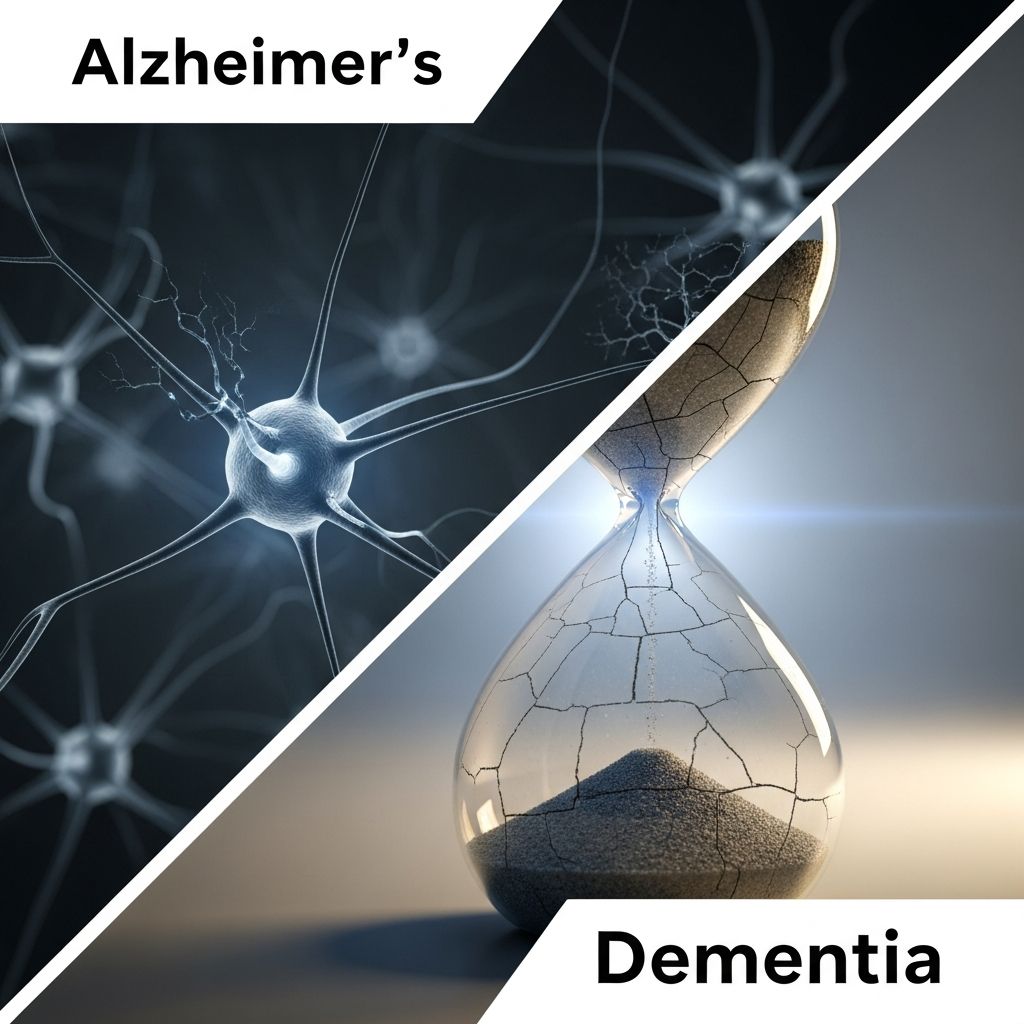
Dementia is an umbrella term for a collection of symptoms involving cognitive decline severe enough to interfere with daily life, while Alzheimer’s disease is the most common specific cause, accounting for 60-80% of cases. Understanding this distinction empowers individuals, families, and caregivers to seek appropriate diagnosis and management.
What Is Dementia?
Dementia describes a group of symptoms associated with a decline in memory, reasoning, or other thinking skills severe enough to impact daily activities. It is not a single disease but a syndrome caused by various underlying conditions that damage brain cells, impairing communication between them and affecting thinking, behavior, and feelings.
Dementia is not a normal part of aging. It arises from progressive neurodegenerative diseases or other brain injuries. Mixed dementia, where changes from more than one type occur simultaneously, is also common. Alzheimer’s disease causes 60-80% of cases, but other forms include vascular dementia, Lewy body dementia, and frontotemporal dementia.
- Key cognitive areas affected: Memory/learning, language/communication, perceptual motor awareness, complex attention, social cognition, and executive function.
- Not all dementias primarily affect memory; some impact behavior or language more prominently.
What Is Alzheimer’s Disease?
Alzheimer’s disease is a specific progressive brain disorder and the leading cause of dementia. It involves complex brain changes, including the buildup of beta-amyloid plaques outside nerve cells and tau protein tangles inside them, leading to brain cell death and disrupted communication.
The earliest symptom is often difficulty remembering new information, as the disease first affects brain areas involved in learning. As it advances, symptoms worsen to include disorientation, confusion, behavior changes, and eventual difficulties with speaking, swallowing, and walking. Approximately 200,000 Americans under 65 have younger-onset Alzheimer’s, though age 65+ is the greatest risk factor.
Types of Dementia
Besides Alzheimer’s, several other conditions cause dementia symptoms. Recognizing these helps in accurate diagnosis and tailored treatment.
- Vascular dementia: Results from reduced blood flow to the brain due to blockages or strokes, depriving it of oxygen and nutrients. Risk factors mirror those for heart disease and stroke.
- Lewy body dementia (LBD): Involves protein deposits (Lewy bodies) in brain regions controlling thinking, memory, and movement. It encompasses Parkinson’s disease dementia and dementia with Lewy bodies.
- Frontotemporal dementia (FTD): Affects frontal and temporal lobes, impacting personality, behavior, and language. It is rarer and often strikes younger individuals.
- Mixed dementia: Combination of two or more types, such as Alzheimer’s with vascular changes.
Related Stories



Symptoms of Dementia and Alzheimer’s
Early symptoms overlap but can differ by type. Dementia symptoms vary widely, while Alzheimer’s follows a more predictable progression.
| Symptom Category | Dementia (General) | Alzheimer’s Specific |
|---|---|---|
| Memory | Decline in memory, reasoning, judgment | Trouble with new information first, then remote memories |
| Daily Function | Difficulty with complex tasks, misplacing items | Disorientation, confusion worsen over time |
| Behavior | Personality changes, poor judgment, apathy | Behavior/mood changes, eventual speech/swallow issues |
| Other | Language issues, time/place disorientation | Progressive: walking difficulties, total dependency |
Warning signs include difficulty finding words, trouble with multi-step tasks, misplacing objects, false beliefs, and loss of interest in responsibilities. Not everyone shows all symptoms; individual variation is common.
Causes and Risk Factors
Dementia stems from brain cell damage from diverse causes. Alzheimer’s specifically involves plaques and tangles killing neurons.
- Shared risks: Age (greatest for Alzheimer’s over 65), family history, cardiovascular issues.
- Alzheimer’s unique: Genetic factors like APOE-e4 gene, amyloid/tau pathology.
- Other dementias: Vascular from strokes/hypertension; LBD from protein deposits; FTD from lobe degeneration.
Reversible causes mimicking dementia include vitamin deficiencies, thyroid issues, infections, depression, medication side effects, and substance abuse.
Diagnosis: Dementia vs. Alzheimer’s
Diagnosis requires ruling out reversible causes via thorough assessment by a physician or neurologist. No single test confirms Alzheimer’s; it involves:
- Medical history, cognitive/behavioral tests.
- Brain imaging (MRI/CT for strokes/atrophy), blood tests.
- Advanced: PET scans for amyloid/tau.
Distinguishing types guides treatment. Early diagnosis enables planning and access to interventions. Normal aging changes (e.g., forgetting names but recalling later) differ from dementia.
Treatment and Management
No cure exists, but treatments slow progression and manage symptoms.
- Medications: Cholinesterase inhibitors (donepezil) for memory/behavior; memantine for moderate-severe Alzheimer’s.
- Lifestyle: Manage blood pressure/cholesterol, exercise, Mediterranean diet, cognitive stimulation.
- Support: Chronic Disease Self-Management workshops for early-stage patients/caregivers.
Treat reversible mimics promptly. For progressive cases, focus on quality of life.
Prevention Tips
While not fully preventable, risks can be reduced:
- Control chronic conditions (hypertension, diabetes, cholesterol).
- Avoid smoking/alcohol excess.
- Stay mentally active: puzzles, hobbies, new skills.
- Physical activity, social engagement, healthy diet.
Frequently Asked Questions (FAQs)
Is dementia a normal part of aging?
No, dementia results from brain diseases, not normal aging. Age increases risk, but it’s not inevitable.
Can Alzheimer’s be cured?
No cure exists, but medications and lifestyle slow progression. Research continues.
How is dementia diagnosed?
Through history, exams, imaging, and tests to exclude other causes. Specialist referral often needed.
What’s the difference between mild cognitive impairment and dementia?
MCI is milder decline not interfering with daily life; dementia does.
Are there reversible causes of dementia symptoms?
Yes, like deficiencies, infections, depression—prompt treatment can reverse them.
Why Knowing the Difference Matters
Distinguishing dementia from Alzheimer’s ensures targeted care. Reversible conditions can be treated, progressive ones managed early for better outcomes. Consult professionals promptly for cognitive changes. Families benefit from education like the Alzheimer’s Association’s free courses on symptoms and stages.
Emerging research focuses on biomarkers and therapies to halt progression. Stay informed via reputable sources.
References
- Dementia vs. Alzheimer’s Disease: What Is the Difference? — Alzheimer’s Association. 2023. https://www.alz.org/alzheimers-dementia/difference-between-dementia-and-alzheimer-s
- Dementia and Alzheimer’s: The Differences & Preventative Tips — National Council on Aging. 2024. https://www.ncoa.org/article/dementia-and-alzheimers-disease-difference-why-matters/
- Alzheimer’s Disease and Dementia — Encompass Health. 2023. https://www.encompasshealth.com/health-resources/articles/alzheimers-disease-and-dementia
Similar Articles








Read full bio of medha deb