AMD Genetics: Key Insights On Inherited Risks And Screening
Unravel the genetic blueprint of age-related macular degeneration and how family history shapes your eye health destiny.
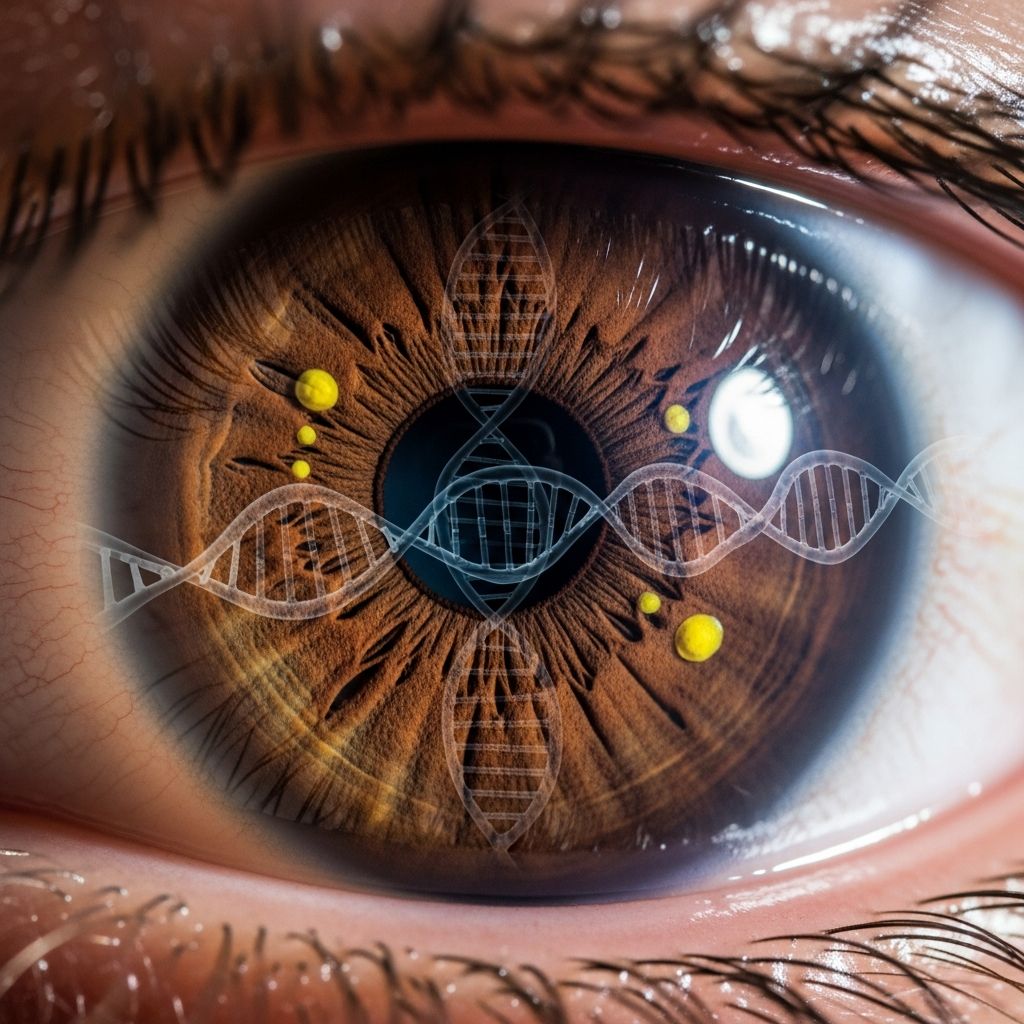
Age-related macular degeneration (AMD) stands as a primary cause of vision loss among older adults, with genetic factors contributing up to 70% of its variability. This condition arises from a complex interplay of hereditary elements and environmental influences, affecting the macula—the central retina responsible for sharp vision. Understanding the genetic underpinnings not only clarifies why some families face higher risks but also guides emerging personalized prevention and treatment approaches.
The Genetic Architecture of AMD
AMD develops through progressive retinal changes, including drusen accumulation—lipoprotein deposits beneath the retina—and alterations in retinal pigment epithelium (RPE) cells. These pathophysiological shifts lead to vision impairment when drusen enlarge or pigment abnormalities intensify. Genome-wide association studies (GWAS) have pinpointed over 52 genetic variants across 34 loci, explaining more than half of AMD’s heritability, marking it as one of the most genetically characterized complex diseases.
Two dominant loci on chromosomes 1q (CFH) and 10q (ARMS2/HTRA1) account for a substantial portion of risk. The CFH gene regulates the complement system, an immune pathway implicated in retinal inflammation. Variants like Y402H disrupt this regulation, promoting drusen formation and RPE damage. Similarly, ARMS2/HTRA1 influences extracellular matrix remodeling and mitochondrial function, with the A69S variant strongly linked to advanced AMD.
Key Genetic Loci and Their Mechanisms
- CFH (Complement Factor H): Encodes a protein that inhibits complement activation. Risk alleles heighten inflammation, leading to drusen buildup and RPE atrophy.
- ARMS2/HTRA1: ARMS2 may protect photoreceptors, while HTRA1 aids protein processing. Deletions or mutations correlate with neovascular AMD.
- Lipid Pathway Genes (e.g., CETP): Variants affect cholesterol transport; higher HDL via CETP inhibition paradoxically raises AMD risk.
- Extracellular Matrix Genes: Ten variants in genes like COL8A1, MMP9, and ITGA7 link specifically to advanced AMD stages, suggesting late-stage retinal remodeling.
A landmark International AMD Genomics Consortium (IAMDGC) study of 43,566 individuals identified these 52 variants, with 34 loci reaching genome-wide significance (P < 5.0×10⁻⁸). Mostly European ancestry participants highlighted the need for diverse studies.
Family History: A Potent Predictor
Genetic predisposition manifests clearly in family patterns. Monozygotic twins show 37% concordance for AMD versus 19% in dizygotic twins, underscoring heritability. Individuals with an affected sibling or parent face 12-27 times higher risk than the general population. In Australia, genetic factors influence up to 70% of cases, with those having a first-degree relative carrying a 50% lifetime risk.
This clustering demands proactive screening. Regular retinal exams, including macular checks, are essential for at-risk family members. Informing relatives about hereditary risks can prompt early detection, potentially slowing progression through lifestyle interventions.
Ancestry Influences Genetic Risks
AMD genetics vary significantly by ancestry, challenging one-size-fits-all models. While prevalent in Europeans, AMD is milder and less common in African and Asian populations. A Million Veteran Program study of over 420,000 participants revealed distinct risk profiles: CFH variants dominate in Europeans but show minimal impact in African ancestry groups.
| Ancestry Group | Key AMD Genes | Prevalence Notes |
|---|---|---|
| European | CFH, ARMS2/HTRA1 | Highest risk; strong complement pathway links |
| African | Non-CFH loci | Lower prevalence; different genetic drivers |
| East Asian | CETP variants, novel lipid genes | Unique associations beyond European loci |
| Timor-Leste | No CFH/ARMS2 risk alleles | AMD frequency <1% |
These findings emphasize ancestry in research and care. Multi-ancestry GWAS are closing gaps, revealing overlooked factors.
Related Stories



Gene-Environment Interactions
AMD’s multifactorial nature blends genetics with modifiable risks like age, smoking, BMI, and lipids. Age remains paramount: one in seven over 50 shows signs, rising to 15% blindness in those over 80. Smoking amplifies genetic risks, while family history synergizes with these.
Overlaps with Alzheimer’s and cardiovascular diseases suggest shared pathways like inflammation and lipid dysregulation, informing holistic risk assessment.
Implications for Treatment Response
Pharmacogenetics explores how genes predict therapy outcomes. Anti-VEGF injections for neovascular AMD show variable responses tied to CFH, ARMS2, and VEGF variants. AREDS supplements (antioxidants/zinc) benefit intermediate AMD, with genetics potentially refining candidates. Photodynamic therapy responses also vary genetically.
However, genetic testing lacks routine clinical utility for individual counseling, better suiting trial stratification. Future therapies targeting complement or lipids must account for ancestry-specific risks. CETP modulation, for instance, warrants caution due to AMD links.
Screening and Prevention Strategies
Genetic risk scores from polygenic models aid research but prompt family vigilance. Key actions include:
- Annual dilated eye exams post-50, especially with family history.
- Quit smoking to mitigate gene-environment synergy.
- Maintain healthy BMI, lipids, and blood pressure.
- Consider AREDS2 formula for intermediate AMD.
Emerging biomarkers may enhance prediction by integrating genetics with modifiable factors.
FAQs on AMD Genetics
Can I inherit AMD from my parents?
Yes, genetic factors contribute up to 70%, with first-degree relatives at 50% risk. Screening is crucial.
Do all AMD risk genes affect everyone equally?
No; CFH strongly impacts Europeans but not Africans. Ancestry matters.
Should I get genetic testing for AMD?
Not routinely for individuals; useful for research. Focus on family history and exams.
How does smoking interact with AMD genes?
It amplifies genetic risks, making cessation vital.
Are there new treatments based on genetics?
Pharmacogenetics guides anti-VEGF and supplements; ancestry-tailored therapies are developing.
Future Directions in AMD Genomics
Advancing multi-ancestry studies and functional genomics will uncover mechanisms, enabling precision medicine. Integrating polygenic scores with AI-driven imaging could revolutionize risk prediction and therapy. For now, awareness of genetic risks empowers informed eye health management.
References
- Genetics of age-related macular degeneration (AMD) — Seddon JM, et al. National Center for Biotechnology Information (NCBI). 2018-03-15. https://pmc.ncbi.nlm.nih.gov/articles/PMC5886461/
- Risk factors for AMD — Macular Disease Foundation Australia. 2023-01-01. https://www.mdfoundation.com.au/about-macular-disease/age-related-macular-degeneration/risk-factors-for-amd/
- Genetics and Age-Related Macular Degeneration — IMR Press. 2024-01-15. https://www.imrpress.com/journal/FBS/16/1/10.31083/j.fbs1601003
- Study Is First to Reveal That Genes Causing AMD Vary by Ancestry — Cleveland Clinic. 2023-11-20. https://consultqd.clevelandclinic.org/study-is-first-to-reveal-that-genes-causing-amd-vary-by-ancestry
- Macular Degeneration – StatPearls — National Center for Biotechnology Information (NCBI). 2023-05-01. https://www.ncbi.nlm.nih.gov/books/NBK560778/
Similar Articles








Read full bio of Sneha Tete