Amelanotic Melanoma Dermoscopy: Expert Guide To Early Detection
Essential guide to identifying amelanotic melanoma through dermoscopic examination and clinical features for early detection.
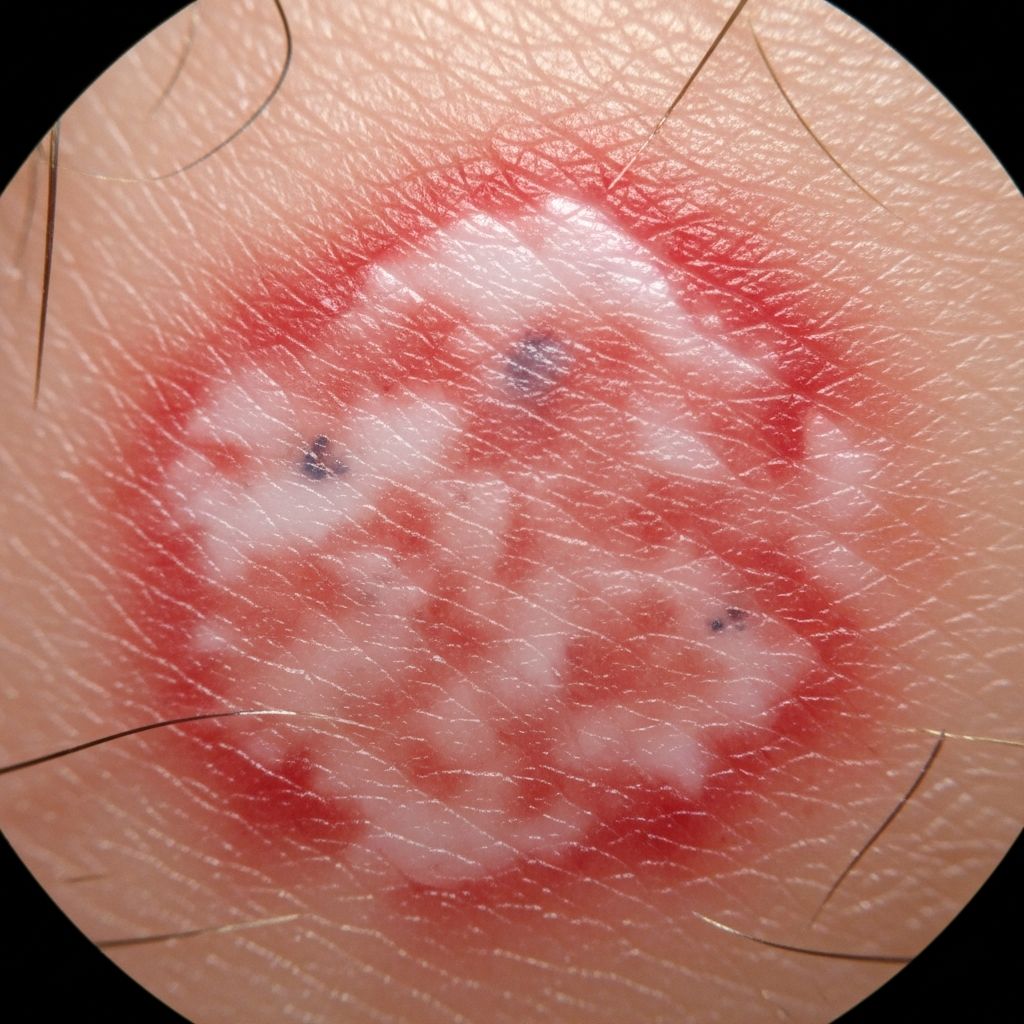
Amelanotic melanoma is a subtype of melanoma characterised by malignant cells that produce little to no melanin pigment, making it particularly challenging to diagnose clinically. These lesions often appear skin-coloured, pink, or red, evading traditional pigmented melanoma screening criteria. Dermoscopy plays a crucial role in enhancing detection by revealing vascular patterns and subtle structural clues invisible to the naked eye. Early identification is vital, as amelanotic melanomas can be aggressive and are frequently diagnosed at later stages due to their innocuous appearance.
Introduction
Amelanotic melanoma represents approximately 2-5% of all melanomas but carries a higher risk of misdiagnosis owing to the absence of typical pigmentation. Unlike conventional melanomas, which display dark hues from melanin, amelanotic variants rely on non-pigmentary features for identification. The term ‘amelanotic’ broadly describes lesions with minimal pigment, though truly pigment-free cases are rarer. Any melanoma subtype—superficial spreading, nodular, lentigo maligna, or acral—can present in amelanotic form. This lack of pigment correlates with increased invasiveness in some studies, potentially due to higher mitotic rates or dedifferentiation. Dermoscopy bridges the diagnostic gap by magnifying subsurface structures up to 10-20 times, highlighting abnormal vascularity as a hallmark. Globally, rising UV exposure contributes to melanoma incidence, with amelanotic forms posing unique challenges in fair-skinned populations. Awareness of these lesions is essential for dermatologists, general practitioners, and patients performing self-examinations.
Clinical features
Clinically, amelanotic melanomas manifest as asymmetrical macules or plaques, often uniformly pink, red, or skin-toned, sometimes with faint peripheral tan, brown, or grey hues. Lesions are typically small at presentation (<6 mm) but grow rapidly, exhibiting the ‘3 R’s’ mnemonic: Red colour, Raised surface, and Recent change in size or shape. Borders may be ill-defined, blending into surrounding skin, which delays suspicion. Common sites include sun-exposed areas like the trunk, legs, and head/neck, though they can arise anywhere. Patients may report itching, tenderness, bleeding, crusting, or oozing, mimicking benign conditions. Unlike pigmented melanomas, they seldom follow ABCDE criteria (Asymmetry, Border irregularity, Colour variation, Diameter >6 mm, Evolving), leading to under-recognition. Full skin examination is critical, as actinic damage or other nevi may signal risk. In nodular variants, rapid vertical growth produces dome-shaped, vascular papules. Children and young adults rarely develop Spitz naevi mimics, necessitating biopsy. Prognosis hinges on early detection; thicker lesions at diagnosis (>1 mm Breslow depth) worsen outcomes.
- Typical presentation: Pink/red asymmetrical macule or nodule, 2-10 mm diameter.
- Symptoms: Itch, bleed, grow quickly (weeks to months).
- Locations: Sun-exposed skin (legs in females, trunk in males).
- Warning signs: 3 R’s + ABCDE adaptations.
Dermoscopic features
Dermoscopy of amelanotic melanoma reveals prominent vascular structures due to tumour angiogenesis, often lacking pigment network or globules seen in melanotic lesions. Key patterns include polymorphous vessels—a mix of dotted, comma-shaped, linear irregular, hairpin, and polymorphous types—arranged irregularly. Main polymorphous vessel (MPV) pattern, with >3 vessel types, raises high suspicion. Point-like vessels (tiny red dots) or loop-like vessels without surrounding white halos are alarming, especially with focal melanin traces. Structureless red or pink areas dominate, sometimes with white zones indicating fibrosis. Other clues: irregular blue-grey dots/granules (pagetoid spread), atypical pigment network peripherally, and rainbow pattern (multiple colours). A diagnostic algorithm starts with assessing milky-red areas or polymorphous vessels; if present, check for white halos (absent in melanoma) and melanin remnants. Lesions with point/loop vessels sans halos warrant excision. Comparative studies show amelanotic melanomas average 90% specificity for polymorphous vessels vs. 70% for benign mimics. Image descriptions: One dermoscopic view shows non-specific vessels, structureless zones, subtle colours, occasional brown dots; another reveals irregular vessels and white apex nodule. Serial dermoscopy tracks evolution, critical for flat lesions.
| Feature | Melanoma Clue | Benign Mimic |
|---|---|---|
| Vessels | Polymorphous, irregular hairpin/loop, no white halo | Regular dots/comma, white halo present |
| Background | Structureless red/pink, melanin traces | Homogeneous white, keratin cysts |
| Pigment | Faint peripheral brown/grey | None or uniform |
Differential diagnoses
Amelanotic melanoma mimics numerous benign and malignant entities, complicating diagnosis. Primary differentials include:
- Benign: Pyogenic granuloma (collar of scaled skin, bleeding history), dermatofibroma (central white network), sebaceous hyperplasia (crown vessels), clear cell acanthoma (string-of-pearls vessels), inflamed seborrhoeic keratosis (keratin whorls), Spitz naevus (symmetrical dotted vessels, pseudopigment network).
- Malignant: Basal cell carcinoma (arborising vessels, ulceration), squamous cell carcinoma (keratin mass, glomerular vessels), adnexal tumours.
Spitz naevus is notoriously difficult, sharing point/loop vessels but often haloed and symmetrical. History (recent change) and full exam aid discrimination. Dermoscopy sensitivity reaches 93% vs. 71% naked eye for amelanotic lesions. Biopsy resolves ambiguities, especially in children.
Related Stories



Histological explanation
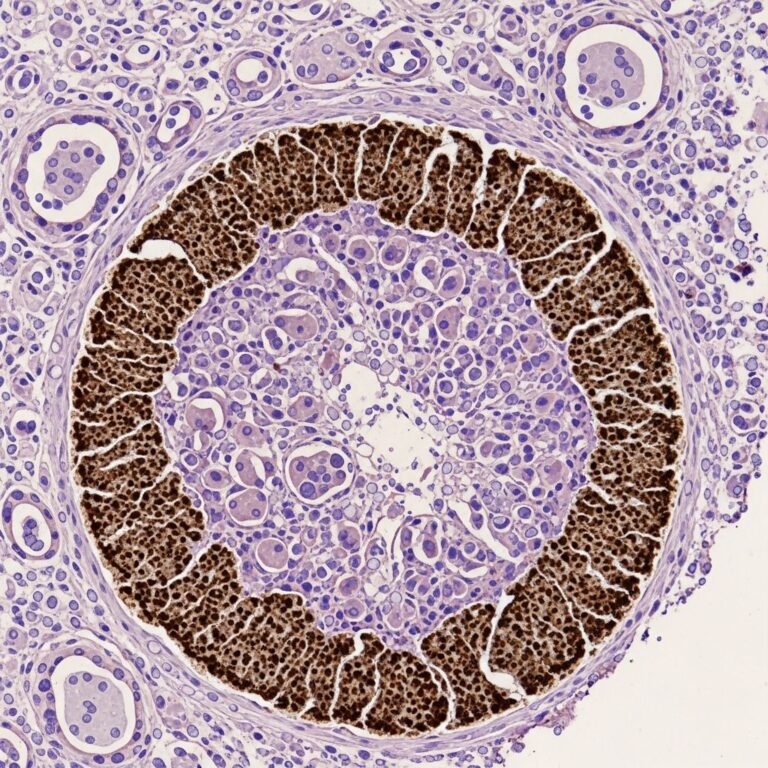
Histologically, amelanotic melanoma shows nests or sheets of atypical epithelioid/spindle melanocytes in dermis/epidermis, lacking melanin but with pagetoid spread. Tumour thickness (Breslow) dictates staging; >0.8 mm prompts sentinel node biopsy. Immunohistochemistry confirms: S100 (sensitive), Melan-A, HMB-45, SOX10 positive; Ki-67 assesses proliferation. Electron microscopy rarely needed for melanosome detection. Margins post-excision require thorough inking to detect subclinical spread. Vascular proliferation correlates with dermoscopic vessels.
Frequently Asked Questions (FAQs)
What is amelanotic melanoma?
A pigment-deficient melanoma subtype appearing pink/red, often misdiagnosed as benign.
How does dermoscopy help diagnose it?
Reveals polymorphous vessels and structureless areas missed clinically.
What are the 3 R’s for screening?
Red, Raised, Recent change—key for amelanotic lesions.
Is biopsy always needed?
Yes for suspicious dermoscopy; excision with 2-3 mm margin.
What is the prognosis?
Good if thin (<1 mm); worse if advanced due to late detection.
Can it occur in children?
Rare; differentiate from Spitz naevus via dermoscopy/biopsy.
References
- Amelanotic melanoma dermoscopy — DermNet NZ. 2023-05-15. https://dermnetnz.org/topics/amelanotic-melanoma-dermoscopy
- Amelanotic melanoma — DermNet NZ. 2023-08-20. https://dermnetnz.org/topics/amelanotic-melanoma
- Amelanotic Melanoma: Definition, Symptoms, Pictures, Treatments — Healthgrades. 2024-02-10. https://resources.healthgrades.com/right-care/melanoma/amelanotic-melanoma
- Amelanotic nodular melanoma misdiagnosed as a benign skin lesion — PMC (NCBI). 2022-02-01. https://pmc.ncbi.nlm.nih.gov/articles/PMC8818517/
Similar Articles








Read full bio of Sneha Tete