Amelanotic Melanoma: Diagnosis, Treatment & Prognosis
Understanding amelanotic melanoma: Recognition, diagnosis, and evidence-based treatment strategies.
Amelanotic Melanoma: Appearances, Symptoms and Treatment
Introduction
Amelanotic melanoma is a form of melanoma in which the malignant cells have little to no pigment. The term ‘amelanotic’ is often used to indicate lesions that are only partially devoid of pigment, while truly amelanotic melanoma where lesions lack all pigment is rare. This variant represents a diagnostic challenge because it does not display the typical dark appearance associated with conventional melanoma, making early detection difficult for both patients and clinicians.
What Causes Amelanotic Melanoma?
Amelanotic melanoma is caused by malignant melanocytes, the pigment-producing cells in the skin. The development of malignancy in melanocytes is due to genetic changes in DNA, but how and why this occurs is largely unknown. The melanoma cells in amelanotic melanoma cannot produce mature melanin granules, which results in lesions that lack pigment.
Research has identified specific genetic factors contributing to melanoma development. A literature review on melanoma genetics found that alteration in cyclin-dependent kinase inhibitor 2A (CDKN2A) gene is the main responsible factor in the development of malignant melanoma. Additionally, studies have demonstrated the possible role of human growth hormone in the pathogenesis of malignant melanoma.
Clinical Features and Appearance
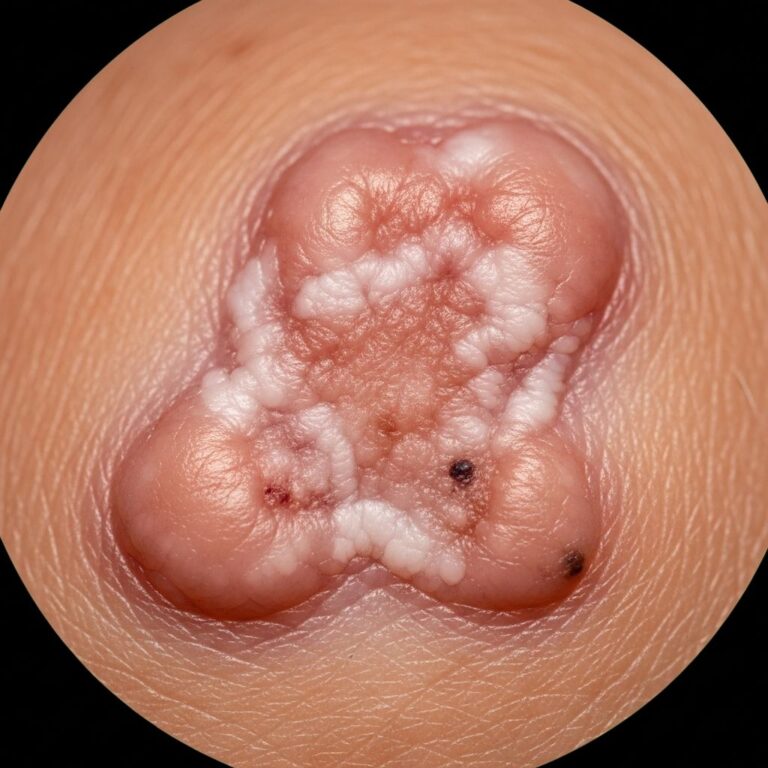
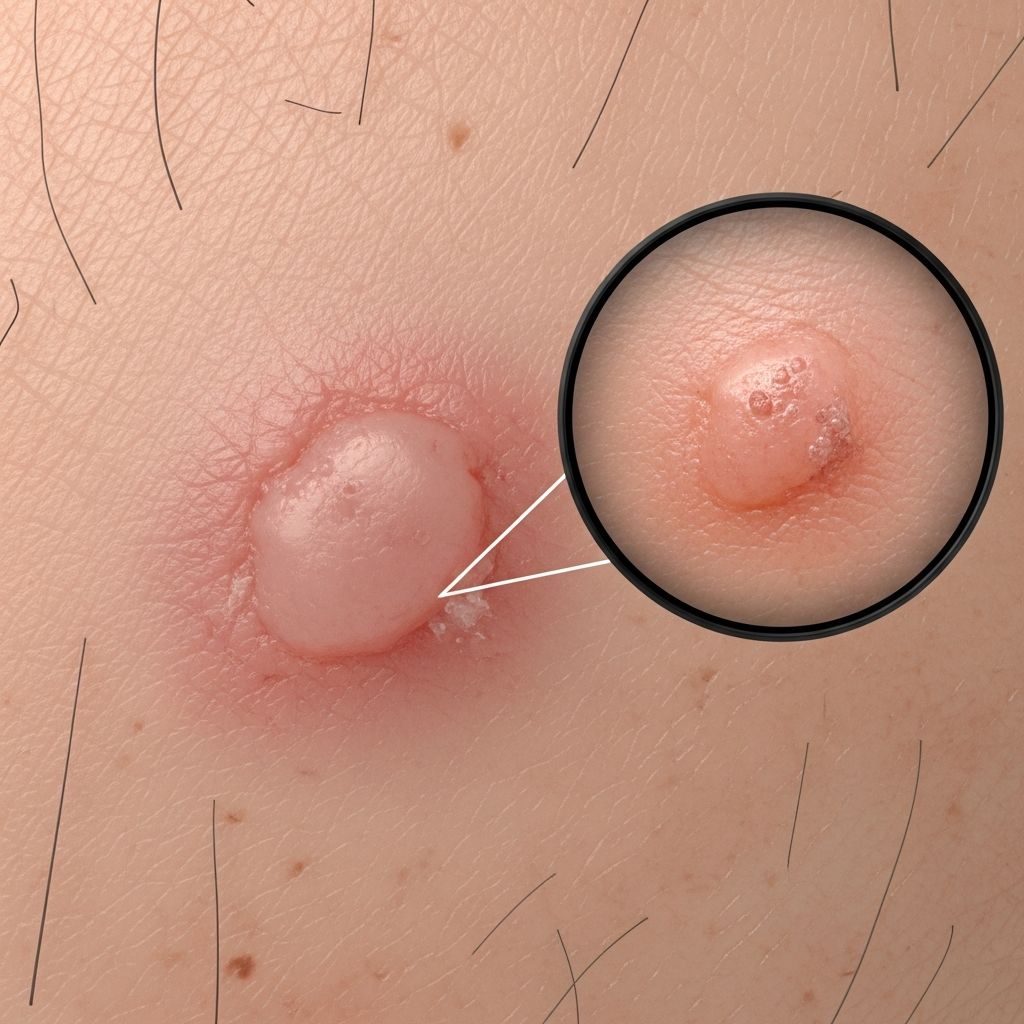
Amelanotic melanomas are classically described as ‘skin coloured,’ though a significant proportion is red, pink, or erythematous. Typical early lesions present as asymmetrical macular lesions that may be uniformly pink or red and may have a faint light tan, brown, or grey pigmentation at the periphery. The borders may be well- or ill-defined.
Early clinical presentations typically include:
- Uniformly pink or red macules
- Faint light tan, brown, or grey pigmentation at the periphery
- Irregular borders that may be well-defined or ill-defined
- Asymmetrical appearance
- Erythematous scaly plaques or nodules
Any subtype of melanoma can be amelanotic. Amelanotic melanomas often present as the nodular subtype, which is known for its aggressive vertical growth, a feature that makes nodular melanomas particularly challenging to treat. Additionally, amelanotic melanomas may present as superficial spreading melanoma in situ or acral lentiginous melanoma, particularly in darker-skinned populations.
Diagnostic Challenges
Amelanotic melanomas may not display the clinical ABCDE criteria (Asymmetry, Border irregularity, Colour variation, Diameter) that are classically used as melanoma warning signs. Patients and clinicians may not be alert to suspect non-pigmented lesions as melanoma, and so amelanotic melanomas are often misdiagnosed. To improve recognition, expanding the ABCD warning signs to include the 3 R’s (Red, Raised, Recent change) may help screen for amelanotic melanoma.
Because of their atypical clinical features, amelanotic melanomas may have a delay in their diagnosis and, consequently, are often more advanced than pigmented melanomas when diagnosed. A patient’s history of observing a change in a lesion is an important diagnostic factor with amelanotic lesions, and amelanotic melanoma should be considered in the differential diagnosis.
Diagnostic Methods
Examination of the entire skin surface is important, as sun damage (such as actinic keratoses) and other pigmented lesions may provide clinical clues that a non-pigmented or hypopigmented lesion may be an amelanotic melanoma.
Dermoscopy has proven to be a valuable diagnostic tool. Research demonstrated that diagnostic sensitivity and specificity of amelanotic melanomas increased to 89% with use of dermoscopy as compared to 65% without it. The dermoscopic features of amelanotic melanomas include serpentine and dotted vessels throughout the lesion with central milky-red areas. Additional dermoscopic findings may include:
Related Stories



- Non-specific blood vessels
- Structureless areas
- Multiple colours
- Polymorphous vessels
- Pink-grey structureless areas
- Grey-brown clods
- White lines and linear irregular vessels
Differential Diagnoses
Clinically, amelanotic melanoma may present as an erythematous scaly macule, plaque, or nodule with irregular borders, mimicking numerous other skin lesions such as:
- Basal cell carcinoma
- Squamous cell carcinoma
- Benign vascular lesions
- Dermatofibroma
- Pyogenic granuloma
- Hemangioma
- Angioma
- Inflammatory skin conditions
Prognostic Factors and Staging
Breslow Thickness is the single most important local prognostic factor in primary melanoma. It is reported for invasive melanomas and is the vertical measurement in millimetres from the top of the granular layer (or base of superficial ulceration) to the deepest point of tumour involvement. Thicker melanomas are more likely to metastasise (spread).
The Clark level indicates the anatomic plane of invasion and is useful for predicting outcome in thin tumours and less useful for thicker ones in comparison to the value of the Breslow thickness.
The prognosis of amelanotic melanoma is similar to that of pigmented melanomas. Prognostic factors include:
- Breslow thickness at the time of excision (considered the most important factor)
- Location of the lesion
- Patient age
- Patient sex
The risk of metastasis is directly related to the Breslow thickness, with thicker melanomas being more likely to metastasise. Clinical practice guidelines report that metastases are rare for thin melanomas (less than 0.75 mm), with the risk increasing to 5% for melanomas 0.75–1.00 mm thick. Melanomas thicker than 4.0 mm have a significantly higher risk of metastasis of 40%.
Treatment Approach
Amelanotic melanoma is treated in the same way that a pigmented melanoma is treated. Surgery is the mainstay treatment of primary cutaneous malignant melanoma, with the margin of excision determined by the Breslow thickness.
Wide Local Excision: After diagnostic excision, the next step is wide local excision of the wound with a 10–20 mm margin of normal tissue. The extent of surgery depends on the Breslow thickness of the melanoma and its site. Recommended margins based on Breslow thickness are:
- Melanomas measuring 2.01 to 4.0 mm require 2–3 cm margin for excision
- Thinner lesions may require smaller margins
- Thicker lesions may require larger margins
Amelanotic melanomas may be incompletely excised despite the recommended margins as the margins are often difficult to define. A comprehensive histological examination including immunohistochemical staining helps determine the edge of a tumour. Further re-excision may be necessary.
Sentinel Lymph Node Biopsy: This procedure may be discussed with patients with melanomas thicker than 0.8 mm. This can provide staging and prognostic information.
Advanced Disease Management: Amelanotic melanoma can metastasise (spread to distant sites such as lymph nodes or elsewhere in the body). These cases require individualised treatment that may include surgery, radiotherapy, chemotherapy, or targeted therapy. The role of adjuvant treatment, chemotherapy, and melanoma vaccines is controversial, with current evidence showing no clear benefit for overall survival improvement in primary cutaneous malignant melanoma.
Follow-up Care
Local recurrence of melanoma is approximately 5% by 2 years. Regular follow-up is essential, particularly given the aggressive nature of some amelanotic melanoma subtypes and the potential for delayed diagnosis. Patients should be monitored for signs of recurrence and metastasis, with surveillance intervals determined by the stage of disease and individual risk factors.
Outcome and Prognosis
The prognosis of amelanotic melanoma depends significantly on the stage of disease at the time of diagnosis, with earlier detection providing better outcomes. Importantly, because of their atypical clinical features, amelanotic melanomas may have a delay in their diagnosis and, consequently, are often more advanced than pigmented melanomas when diagnosed.
Special consideration should be given to acral lentiginous amelanotic malignant melanoma, a rare melanoma subtype which is mostly prevalent in dark skin populations. The overall 5 and 10 year survival rate of acral malignant melanomas is worse than other cutaneous malignant melanomas.
Frequently Asked Questions
Q: How is amelanotic melanoma different from regular melanoma?
A: Amelanotic melanoma lacks pigment, appearing pink, red, or flesh-coloured rather than dark brown or black. This makes it much harder to recognize, and it is often diagnosed at a more advanced stage than pigmented melanomas.
Q: Why is amelanotic melanoma often diagnosed late?
A: Because amelanotic melanomas do not display the typical dark appearance and may not show classic ABCDE warning signs, both patients and clinicians may fail to suspect melanoma. This leads to delayed diagnosis and more advanced disease at the time of treatment.
Q: What is Breslow thickness and why is it important?
A: Breslow thickness is the vertical measurement in millimetres of the melanoma from the top of the granular layer to the deepest point of tumour involvement. It is the single most important local prognostic factor in primary melanoma, as thicker melanomas are more likely to spread.
Q: Can dermoscopy help diagnose amelanotic melanoma?
A: Yes, dermoscopy significantly improves diagnostic accuracy, increasing sensitivity and specificity to 89% compared to 65% without it. Dermoscopic features include serpentine and dotted vessels with central milky-red areas.
Q: What is the primary treatment for amelanotic melanoma?
A: Surgery is the mainstay treatment, involving wide local excision with margins determined by Breslow thickness. For melanomas 2.01 to 4.0 mm thick, a 2–3 cm margin is typically recommended.
Q: What is the prognosis for amelanotic melanoma?
A: The prognosis is similar to that of pigmented melanomas and depends on Breslow thickness, location, age, and sex. Thin melanomas (less than 0.75 mm) have rare metastasis, while those thicker than 4.0 mm have approximately 40% risk of metastasis.
References
- Amelanotic melanoma: Appearances, Symptoms and Treatment — DermNet NZ. 2024. https://dermnetnz.org/topics/amelanotic-melanoma
- Images of Amelanotic Melanoma — DermNet NZ. 2024. https://dermnetnz.org/images/amelanotic-melanoma-images
- A Case of primary Amelanotic Malignant Melanoma — Middle East Journal of Family Medicine. April 2023. http://www.mejfm.com/April%202023/Amelanotic%20Malignant%20Melanoma.pdf
- Melanoma Skin Cancer: Images, Diagnosis, and Treatment — DermNet NZ. 2024. https://dermnetnz.org/topics/melanoma
- How to recognise amelanotic melanoma — Pulse Today. 2024. https://www.pulsetoday.co.uk/clinical-feature/clinical-areas/dermatology-and-wound-care/how-to-recognise-amelanotic-melanoma/
Similar Articles








Read full bio of Sneha Tete