Amoebiasis: Symptoms, Diagnosis, Treatment, And Prevention Guide
Comprehensive guide to amoebiasis: causes, symptoms, diagnosis, and treatment of this protozoan infection affecting gut and skin.
Amoebiasis is an infectious disease caused by the protozoan parasite Entamoeba histolytica, which is prevalent worldwide with humans serving as the primary reservoir. Transmission primarily occurs through the faecal-oral route, including contaminated water, food, hands, or oral-anal sexual contact, leading to an estimated 50 million invasive cases and 100,000 deaths annually.
What is amoebiasis?
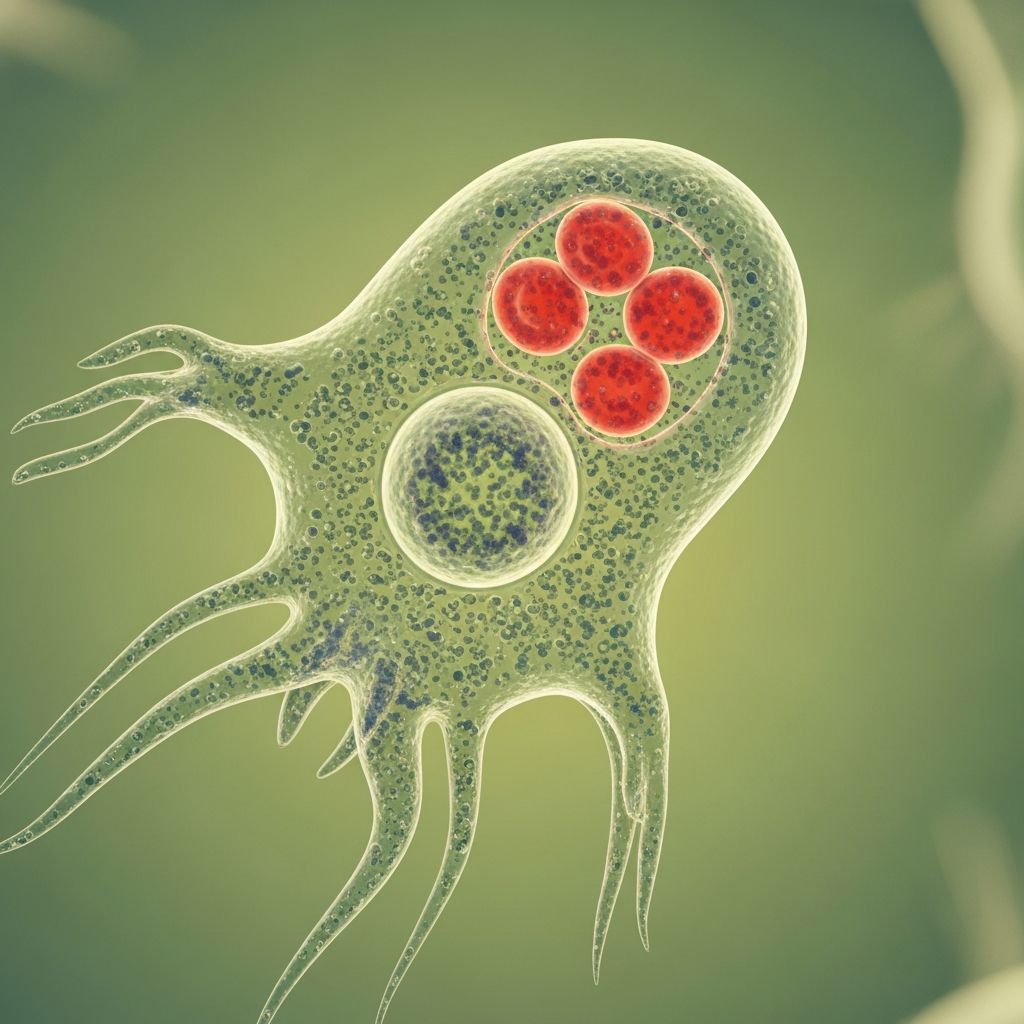
Amoebiasis arises from infection with Entamoeba histolytica, a microscopic amoeba capable of existing in two forms: cysts (infective stage) and trophozoites (active stage). Cysts are hardy, surviving days to weeks in the environment, facilitating transmission via contaminated sources. Once ingested, cysts excyst in the intestine to release trophozoites, which colonize the gut lumen. In many cases (up to 90%), infections remain asymptomatic, with parasites confined to the intestinal wall. However, in invasive disease, trophozoites penetrate the mucosa, causing ulceration, bloody diarrhoea, and potentially disseminating to distant sites like the liver, lungs, or skin.
The global burden is highest in developing regions with poor sanitation, where faecal contamination of water and food is common. In developed countries, risk groups include travellers to endemic areas, men who have sex with men (MSM), immunocompromised individuals, and institutionalized populations. Annually, invasive amoebiasis affects millions, underscoring its public health significance despite available treatments.
Who gets amoebiasis?
Anyone can contract amoebiasis, but incidence is markedly higher in tropical and subtropical regions with inadequate water treatment and sanitation. Children, malnourished individuals, and those with weakened immunity are particularly vulnerable to severe forms. In high-income settings, outbreaks link to travel history or high-risk sexual behaviours. Institutional settings, like nursing homes, facilitate spread due to close contact and shared facilities.
- Endemic areas: South Asia, sub-Saharan Africa, Latin America.
- Risk factors: Poor hygiene, contaminated drinking water, raw vegetables irrigated with sewage, anal intercourse.
- Vulnerable groups: HIV-positive individuals, travellers, MSM.
What causes amoebiasis?
Entamoeba histolytica is transmitted exclusively via the faecal-oral route. Infective cysts pass in faeces of carriers and contaminate food, water, or surfaces. Unlike non-pathogenic Entamoeba species (e.g., E. dispar), E. histolytica possesses virulence factors enabling tissue invasion. Trophozoites adhere to mucin via lectins, secrete enzymes like cysteine proteases, and induce apoptosis in host cells, leading to flask-shaped ulcers in the colon.
The life cycle completes when trophozoites encyst in the colon, releasing cysts into stool. Direct person-to-person spread occurs via unwashed hands post-defecation, while waterborne outbreaks stem from sewage pollution. Sexual transmission is notable in MSM due to oral-anal contact.
What are the clinical features of amoebiasis?
Clinical manifestations vary from asymptomatic carriage to life-threatening complications. Most infections (80-90%) are luminal, without symptoms. Invasive disease presents as:
- Intestinal amoebiasis (amoebic dysentery): Gradual onset of bloody diarrhoea, abdominal pain, tenesmus, and fever. Stools show blood, mucus, and leucocytes. Untreated, it progresses to fulminant colitis with toxic megacolon (5-10% mortality).
- Extraintestinal amoebiasis: Trophozoites spread haematogenously, most commonly forming amoebic liver abscesses (10% of invasive cases). Patients experience right upper quadrant pain, fever, hepatomegaly, and elevated alkaline phosphatase. Abscesses contain ‘anchovy sauce’ pus (degenerate hepatocytes and trophozoites). Rare sites include lungs (pleuropulmonary amoebiasis), brain, heart, and skin.
Related Stories



| Clinical Form | Key Features |
|---|---|
| Amoebic colitis | Bloody diarrhoea, cramps, fever; colon ulcers on sigmoidoscopy. |
| Amoebic liver abscess | RUQ pain, fever, sweats; imaging shows solitary hypoechoic lesion. |
| Cutaneous amoebiasis | Rare; painful ulcers with yellow exudate, often perianal or at abscess drainage sites. |
Cutaneous amoebiasis
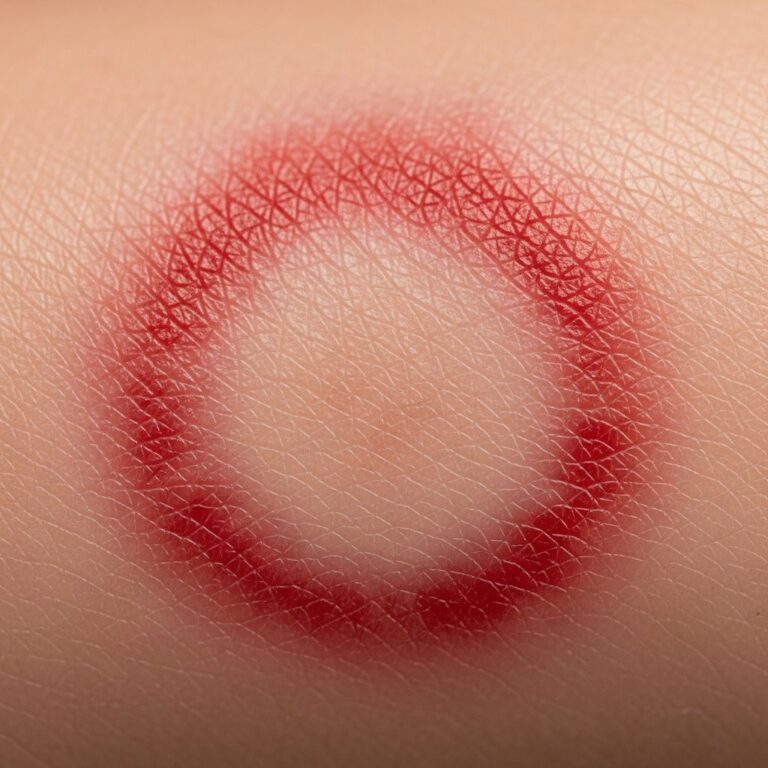
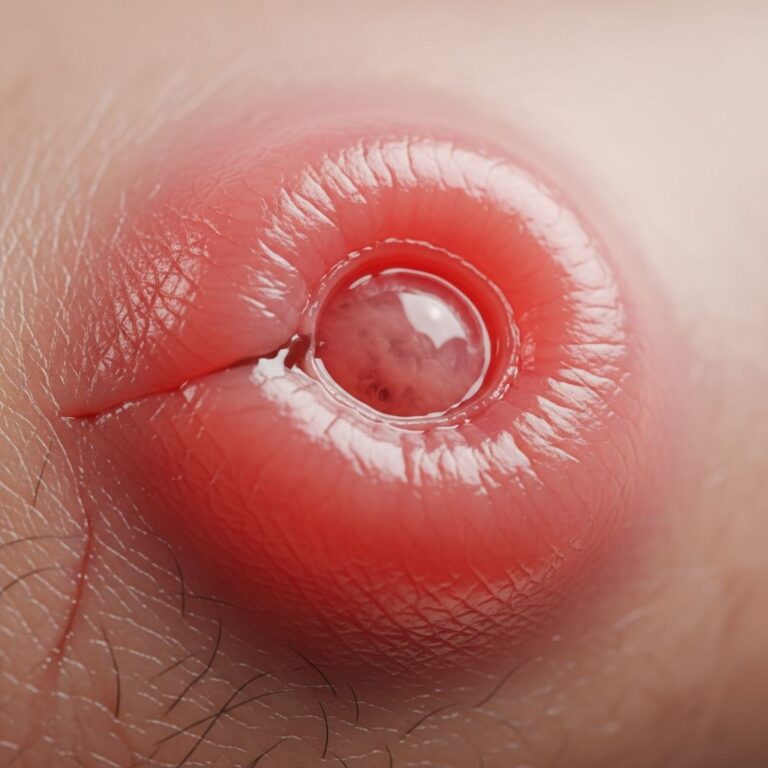
Skin involvement is exceedingly rare (<1% of cases) but pathognomonic when present. It occurs via direct extension from intestinal/perianal lesions, haematogenous spread, or primary inoculation (e.g., via catheters or surgery). Perianal skin is most affected due to faecal leakage causing excoriation and trophozoite invasion. Lesions start as tender nodules or plaques, progressing to deep ulcers with ragged edges, necrotic base, and profuse yellow pus mimicking pyoderma gangrenosum. Surrounding erythema and induration are common; pain is intense. Disseminated cases show multiple lesions on trunk/extremities, as in a reported case of catheter-related primary cutaneous amoebiasis in a renal patient, with nodules spreading to thorax and abdomen despite negative stool exams.
Diagnosis hinges on microscopy revealing mobile trophozoites with ingested erythrocytes. Histology shows dermal abscesses with histiocytic reaction and characteristic amoebae (4-60μm, eccentric nucleus). Without treatment, lesions enlarge, invade deeply, and carry high morbidity.
How is amoebiasis diagnosed?
Diagnosis combines clinical suspicion, microscopy, serology, imaging, and molecular tests. Stool microscopy detects cysts/trophozoites in 60% of cases but requires multiple fresh samples. Concentration techniques (e.g., formalin-ether) improve yield. For extraintestinal disease, serology (ELISA for anti-amoebic antibodies) is highly sensitive (>90%). PCR assays distinguish pathogenic E. histolytica from non-pathogenic mimics with superior specificity.
- Microscopy: Gold standard for intestinal disease; trophozoites show directional motility and erythrophagocytosis.
- Imaging: Ultrasound/CT for liver abscesses (solitary, right lobe); chest X-ray for pleuropulmonary involvement.
- Skin biopsy: Essential for cutaneous cases; reveals trophozoites in abscesses.
- Antigen detection/PCR: Emerging for rapid, accurate diagnosis.
Differential diagnoses include bacterial dysentery (Shigella), IBD, malignancy for colitis; pyogenic abscess, echinococcosis for liver lesions; and malignancy, syphilis, or deep fungal infections for skin ulcers.
What is the treatment for amoebiasis?
Treatment targets both tissue-invasive trophozoites and luminal cysts to prevent relapse/transmission. All symptomatic patients receive tissue amebicide + luminal agent; asymptomatics may need luminal therapy alone.
| Drug Class | Examples | Indications |
|---|---|---|
| Tissue amebicides (nitroimidazoles) | Metronidazole 750mg TID x 5-10d; Tinidazole 2g daily x 3-5d | Invasive disease (colitis, abscess, skin) |
| Luminal cysticidals | Paromomycin 500mg TID x 10d; Diloxanide furoate 500mg TID x 10d | Asymptomatic carriage, post-tissue therapy |
Metronidazole (or tinidazole) eradicates invasive forms but poorly clears cysts, necessitating follow-up luminal agents. For cutaneous lesions, metronidazole 250-500mg TID x 10-20 days yields rapid response, with lesion regression in weeks. Adjuncts like ivermectin or catheter removal aid in specific cases. Aspiration of large liver abscesses prevents rupture. Prognosis is excellent with early therapy; fulminant colitis/abscess rupture carries 20-30% mortality. Resistance to nitroimidazoles is emerging, prompting research into new agents.
Supportive care includes hydration, electrolyte correction, and nutrition. Avoid anti-motility agents in dysentery. Pregnant patients require cautious dosing.
What is the outcome for amoebiasis?
Invasive amoebiasis responds well to prompt treatment, with >95% cure rates. Relapse occurs in 10-20% without luminal therapy. Chronic carriers risk dissemination if immunosuppressed. Cutaneous cases heal completely post-metronidazole, leaving hyperpigmented scars. Rare fatalities stem from delayed diagnosis, rupture, or perforation. Global control hinges on sanitation, safe water, and hygiene education.
How can amoebiasis be prevented?
Prevention focuses on interrupting faecal-oral transmission:
- Sanitation: Improved water treatment, sewage disposal in endemic areas.
- Hygiene: Handwashing with soap post-toilet/use, before food prep.
- Food safety: Boil water, peel fruits/vegetables, avoid street food in high-risk zones.
- Safe sex: Condoms, avoid oral-anal contact.
- Travel advice: Prophylaxis not routine; screen high-risk groups.
No vaccine exists, but sanitation investments yield high returns in burden reduction.
Frequently Asked Questions
Is cutaneous amoebiasis common?
No, it is very rare, typically secondary to gut disease or inoculation, presenting as painful ulcers with diagnostic trophozoites on microscopy.
Can amoebiasis be asymptomatic?
Yes, most infections (90%) cause no symptoms but enable transmission as carriers shed cysts.
How effective is metronidazole for skin lesions?
Highly effective; 250mg every 8 hours for 20 days leads to significant improvement in weeks, as shown in catheter-related cases.
Does amoebiasis resolve without treatment?
Asymptomatic cases often self-limit, but invasive forms progress without therapy, risking abscesses or death.
Is amoebiasis increasing globally?
Burden persists in low-sanitation areas; new diagnostics like PCR aid control efforts.
References
- Cutaneous amoebiasis: a dermatological rarity — PMC – NIH. 2024. https://pmc.ncbi.nlm.nih.gov/articles/PMC11745282/
- Amoebiasis – DermNet — DermNet NZ. 2009 (reviewed). https://dermnetnz.org/topics/amoebiasis
- A Review of the Global Burden, New Diagnostics, and Current Therapy Options for Amebiasis — PMC – NIH. 2018. https://pmc.ncbi.nlm.nih.gov/articles/PMC6055529/
Similar Articles








Read full bio of medha deb