Amorolfine For Fungal Nail Treatment: 4-Step Application Guide
Discover how amorolfine nail lacquer effectively combats onychomycosis with targeted antifungal action and practical application tips.
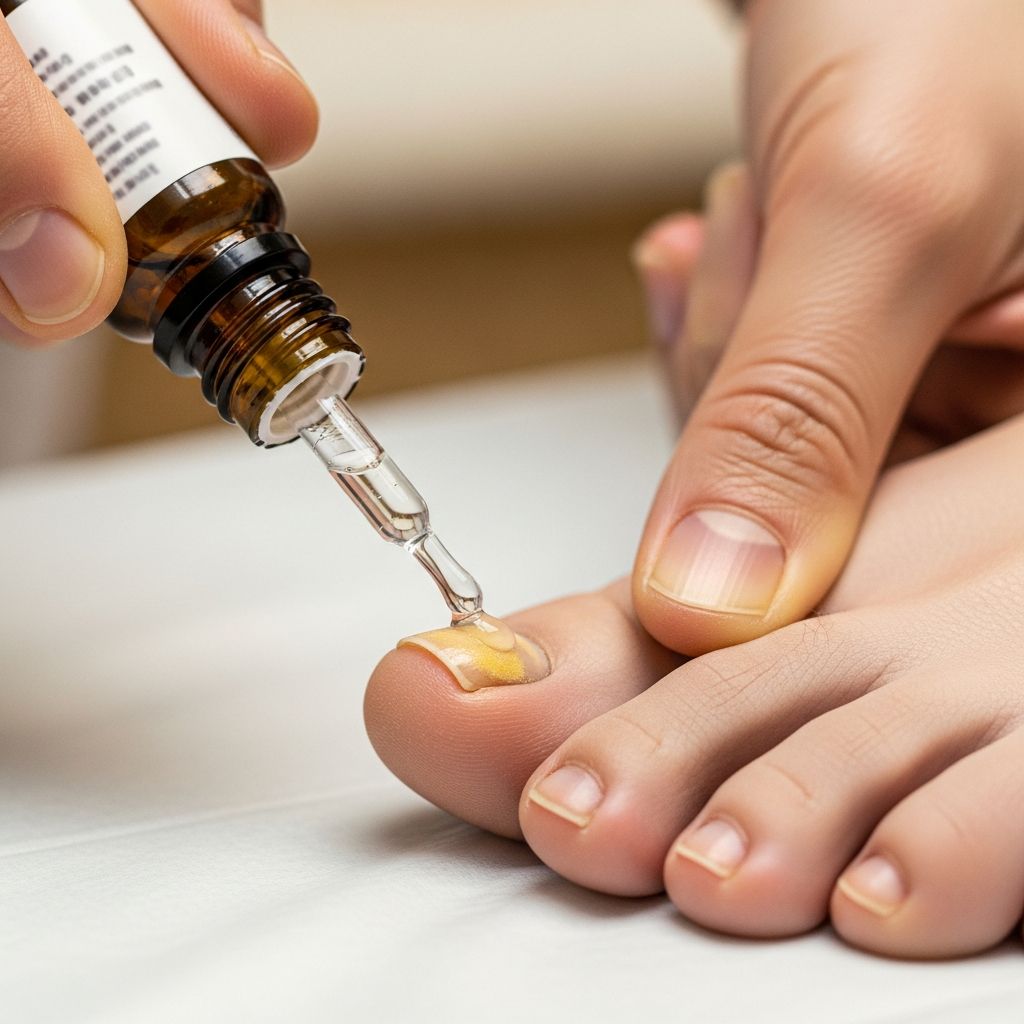
Amorolfine is a topical antifungal medication primarily formulated as a 5% nail lacquer to treat onychomycosis, the medical term for fungal infections of the fingernails and toenails. This treatment disrupts fungal cell membranes by inhibiting ergosterol production, leading to fungal death and healthy nail regrowth over time.
Understanding Fungal Nail Infections
Fungal nail infections, or onychomycosis, affect millions worldwide, causing nails to become thickened, discolored, brittle, and sometimes painful. Common culprits include dermatophytes like Trichophyton rubrum, yeasts, and molds. These infections thrive in warm, moist environments such as shoes or public showers, often starting at the nail’s edge and spreading inward.
Symptoms progress from mild yellowing or white spots to severe deformity, making daily activities like walking or wearing shoes uncomfortable. Early intervention with treatments like amorolfine prevents complications such as secondary bacterial infections or permanent nail damage.
How Amorolfine Works Against Fungi
Amorolfine belongs to the morpholine class of antifungals. It targets two key enzymes in fungal sterol biosynthesis: 14α-demethylase (D14 reductase) and Δ7-Δ8 isomerase. By blocking these, it depletes ergosterol—a vital component of fungal cell membranes—while accumulating toxic sterols like ignosterol. This weakens the membrane, causing leakage and fungal cell death.
In laboratory studies, amorolfine 5% nail lacquer demonstrated superior penetration and antifungal activity compared to acid-based alternatives, creating large zones of inhibition against T. rubrum (mean 59.2 mm diameter). Clinical efficacy shows 60-71% improvement in toenail onychomycosis with once- or twice-weekly applications, with complete cure rates of 38-46% after six months of treatment followed by three months observation.
Indications and Who Can Use It
Amorolfine nail lacquer is indicated for mild to moderate onychomycosis in adults affecting up to two nails, where less than half the nail plate is involved and no nail matrix (half-moon area) is affected. It is effective against dermatophytes, yeasts, and molds.
- Suitable for fingernails and toenails with superficial white or yellow discoloration.
- Ideal for early-stage infections without pain, swelling, or pus.
- Not recommended for children under 18, diabetics, immunocompromised individuals, or those with severe infections.
Consult a healthcare provider if you have diabetes, circulatory issues, or a history of recurrent infections, as these increase risks.
Step-by-Step Application Guide
Proper application maximizes efficacy. Use once weekly for fingernails and twice weekly for toenails until the nail regrows fully—typically 6 months for fingernails and 9-12 months for toenails.
- Prepare nails: Remove any polish. File down thickened or infected areas with a disposable nail file. Clean with alcohol and dry thoroughly.
- Apply lacquer: Use the applicator to coat the entire affected nail surface, including the proximal area near the cuticle. Let dry (3 minutes).
- Clean tools: Wipe applicator with a pad; discard used files, swabs, and pads separately to avoid contamination.
- Avoid: Water exposure, nail polish, or artificial nails for 6-8 hours post-application. No occlusive dressings unless advised.
Related Stories



For best results, maintain foot hygiene: keep nails trimmed, wear breathable shoes, and change socks daily.
Expected Results and Timeline
|Treatment Duration|Expected Outcomes|||——————|—————-||Fingernails (6 months)|60-70% mycological cure; visible improvement in 3-6 months||Toenails (9-12 months)|38-46% complete cure after 3-month follow-up; gradual healthy regrowth||Maintenance|Continue until unaffected nail fully replaces infected portion|
Improvement may take months due to slow nail growth (1-1.5 mm/month for toenails). If no change after 3 months or worsening, discontinue and seek professional advice.
Potential Side Effects and Management
Amorolfine is well-tolerated topically with minimal systemic absorption. Most effects are mild and localized to the nail or surrounding skin.
- Common (up to 1 in 10): Nail discoloration, brittleness, fragility.
- Uncommon (up to 1 in 100): Itching, redness, burning sensation on skin around nails.
- Rare (up to 1 in 1,000): Skin burning.
- Very rare (up to 1 in 10,000): Serious allergic reactions (swelling of face/lips/tongue, breathing difficulty)—stop use immediately.
These often resolve without intervention. Differentiate treatment effects from infection symptoms; persistent irritation warrants medical review.
Precautions and Contraindications
Avoid if allergic to amorolfine or excipients. Do not use on infected nail folds, open wounds, or near eyes/mouth. Rinse accidentally exposed areas with water.
- Women: Not during pregnancy/breastfeeding without advice.
- Children: Under 18 contraindicated.
- High-risk groups: Diabetes, immunosuppression, >2 nails affected, matrix involvement—oral antifungals may be needed.
Store at room temperature, away from heat/flame (flammable solvent). Keep out of children’s reach.
Drug Interactions and Lifestyle Considerations
Minimal interactions due to topical use, but inform your doctor of:
- Corticosteroids, HIV meds (ritonavir), respiratory drugs (budesonide)—potential enhanced effects.
- No known food interactions.
Lifestyle tips: Apply sunscreen (SPF 30+) outdoors; prolonged use risks skin thinning in sensitive areas like groin (limit to 2 weeks). No intravaginal/oral use.
When to See a Doctor
Seek immediate care for:
- No improvement after 6-12 months or recurrence.
- Pain, swelling, pus, fever, or lymph node swelling.
- >50% nail involvement, dark stripes, or half-moon infection.
- Allergic symptoms or worsening despite treatment.
Podiatrists or dermatologists may confirm diagnosis via microscopy/culture and recommend combinations like laser therapy for stubborn cases.
Frequently Asked Questions (FAQs)
Is amorolfine safe for diabetics?
No, consult a doctor first due to poor healing risks and circulation issues.
How long until I see results?
3-6 months for fingernails, 9-12 for toenails; full cure post-treatment observation.
Can I paint my nails over amorolfine?
Avoid polish for 6-8 hours after application; remove before reapplying lacquer.
Does it work on athlete’s foot?
Primarily for nails; skin versions exist for tinea pedis, but nail lacquer is nail-specific.
What if I miss an application?
Apply as soon as remembered; resume schedule. Do not double dose.
Alternatives to Amorolfine
For non-responders: Oral terbinafine/itraconazole (systemic, liver monitoring needed), ciclopirox lacquer, or laser/UV devices. Acid-based removers lack antifungal potency per studies.
Prevention: Dry feet thoroughly, use antifungal powders in shoes, avoid barefoot walking in public areas.
References
- Amorolfine: Uses, Side Effects and Medicines — Apollo Pharmacy. 2023. https://www.apollopharmacy.in/salt/Amorolfine
- Care Antifungal 5%w/v Medicated Nail Lacquer — Medicines.org.uk. 2023. https://www.medicines.org.uk/emc/files/pil.7411.pdf
- About Amorolfine Antifungal Nail Lacquer — The Independent Pharmacy. 2023. https://www.theindependentpharmacy.co.uk/fungal-nail-infections/guides/about-amorolfine
- Amorolfine 5% Nail Lacquer Exhibits Potent Antifungal Activity — PMC (NCBI). 2016-03-10. https://pmc.ncbi.nlm.nih.gov/articles/PMC4799031/
- Amorolfine Nail Lacquer — SingHealth. 2023. https://www.singhealth.com.sg/medicine/amorolfine-nail-lacquer
- Amorolfine: Uses, Interactions, Mechanism of Action — DrugBank. 2023. https://go.drugbank.com/drugs/DB09056
- Loceryl Nail Lacquer — Medsafe (NZ). 2023. https://www.medsafe.govt.nz/consumers/cmi/l/Loceryl%20Nail%20Lacquer.pdf
Similar Articles








Read full bio of medha deb