Ampullary Cancer: Causes, Symptoms, and Treatment
Understanding ampullary cancer: comprehensive guide to symptoms, diagnosis, and treatment options.
Understanding Ampullary Cancer
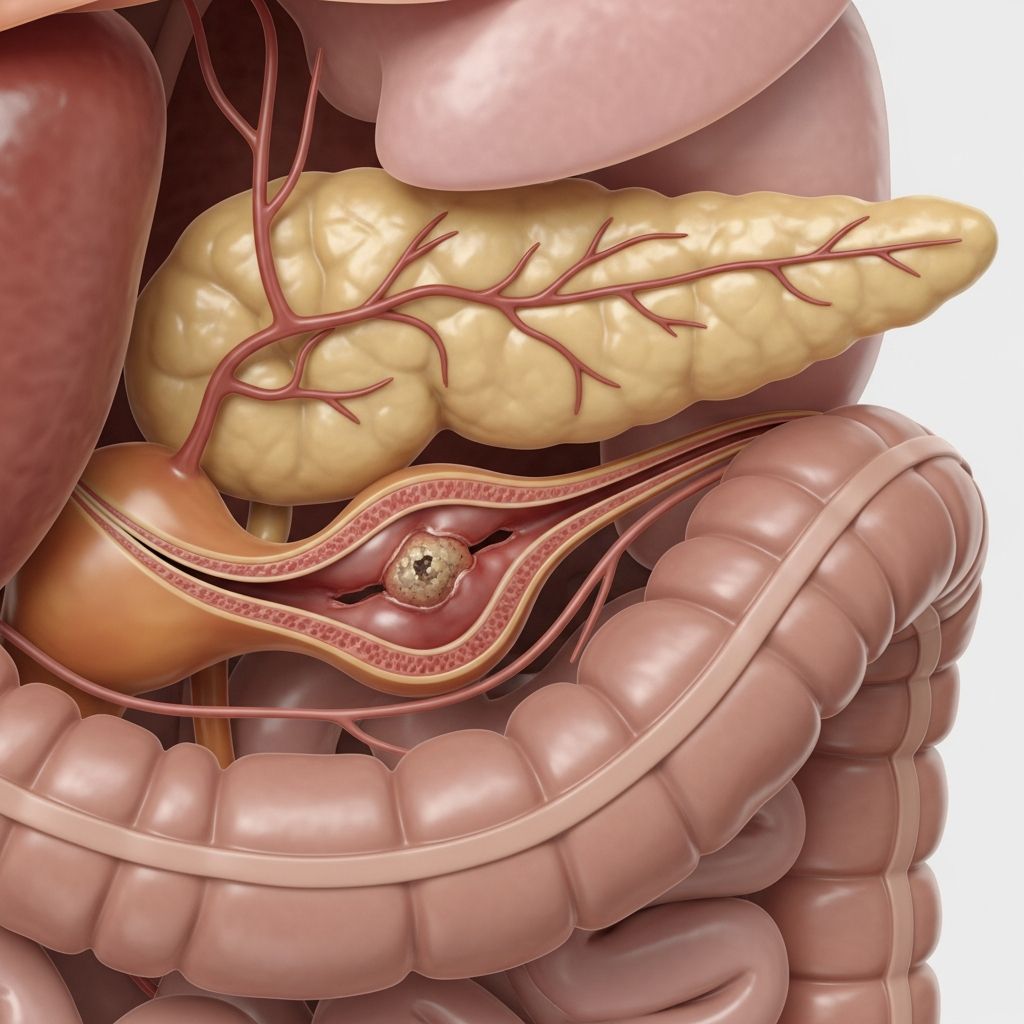
Ampullary cancer, also known as adenocarcinoma of the ampulla of Vater, is a rare malignant tumor that develops in the ampulla of Vater, a small opening where the pancreatic duct and common bile duct enter the duodenum (the first part of the small intestine). This condition represents the second most common periampullary malignancy and accounts for a small percentage of gastrointestinal cancers. The ampulla of Vater is a critical anatomical structure that serves as a gateway for digestive enzymes from the pancreas and bile from the liver to enter the small intestine.
Despite its rarity, ampullary cancer requires specialized medical attention and comprehensive treatment planning. Unlike some other gastrointestinal malignancies, ampullary cancer has demonstrated a comparatively better prognosis when diagnosed early and treated aggressively with surgery. Understanding this condition, its symptoms, and available treatment options is essential for patients and their families facing this diagnosis.
Causes and Risk Factors
The exact causes of ampullary cancer remain largely unknown, though several risk factors have been identified through clinical observation and research. Hereditary conditions, particularly familial adenomatous polyposis (FAP) syndrome, increase the risk of developing ampullary cancer. Patients with a family history of pancreatic cancer or other gastrointestinal malignancies may have elevated risk levels.
Additional risk factors include chronic pancreatitis, bile duct disorders, and certain genetic mutations. The development of ampullary cancer typically involves molecular alterations in genes that control cell growth and division. While most cases occur sporadically without clear hereditary links, certain genetic predispositions can substantially increase vulnerability to this malignancy.
Symptoms and Signs
Ampullary cancer often develops silently in its early stages, making early detection challenging. When symptoms do appear, they typically reflect the tumor’s effect on bile and pancreatic secretions. The most common symptoms include:
- Jaundice (yellowing of the skin and eyes) caused by bile duct obstruction
- Abdominal pain or discomfort, particularly in the upper abdomen
- Pale or clay-colored stools resulting from reduced bile flow
- Dark urine caused by increased bilirubin levels
- Unexplained weight loss and loss of appetite
- Nausea and vomiting
- Itching of the skin due to bile salt accumulation
- Digestive problems and fatty stools
These symptoms often prompt patients to seek medical evaluation. Early diagnosis is significantly more favorable than late-stage detection, as the disease may progress silently until obstruction of the bile or pancreatic ducts occurs. Any persistent gastrointestinal symptoms warrant consultation with a physician for proper evaluation.
Diagnosis and Imaging
Diagnosing ampullary cancer involves multiple imaging and laboratory tests. Initial evaluation typically includes blood tests to assess liver function, including bilirubin and alkaline phosphatase levels, which often show elevation in ampullary cancer patients.
Imaging studies play a crucial role in diagnosis and staging:
- Computed Tomography (CT) Scan: A three-dimensional imaging technique that provides detailed views of the pancreas, bile ducts, and surrounding structures
- Magnetic Resonance Imaging (MRI): Offers excellent soft tissue visualization and can help identify small tumors and ductal involvement
- Endoscopic Ultrasound (EUS): Allows direct visualization of the ampulla and tissue sampling through endoscopy
- Endoscopic Retrograde Cholangiopancreatography (ERCP): Both diagnostic and therapeutic, enabling visualization and biopsy of the ampulla
Related Stories



Tissue diagnosis through endoscopic biopsy is often obtained during ERCP or EUS procedures. A pathologist examines the tissue sample microscopically to confirm the diagnosis and determine the tumor’s grade and histological subtype. This histological classification is important for treatment planning and prognosis assessment.
Staging
Staging determines the extent of cancer spread and guides treatment decisions. The TNM staging system classifies ampullary cancers based on tumor size (T), lymph node involvement (N), and distant metastasis (M). Stage I tumors are confined to the ampulla with no lymph node involvement. Stage II tumors may be larger or involve regional lymph nodes. Stage III cancers show more extensive lymph node involvement or direct invasion of adjacent structures. Stage IV indicates distant metastatic spread.
Early-stage detection significantly improves treatment options and long-term survival. Tumors discovered before lymph node involvement are generally associated with better outcomes, emphasizing the importance of prompt diagnosis when symptoms appear.
Surgical Treatment
Surgery represents the primary curative treatment for ampullary cancer. The gold standard surgical approach is pylorus-preserving pancreatoduodenal resection (PPPD), also known as the Whipple procedure in some variations. This complex operation involves removing the head of the pancreas, the duodenum, part of the jejunum, the gallbladder, and the common bile duct as an en bloc (single) resection.
The surgical team also performs systematic lymphadenectomy, removing regional lymph nodes along the hepatoduodenal ligament, superior pancreatic margin, and around the celiac artery. This comprehensive approach ensures complete tumor removal and accurate staging through pathological examination of removed tissues.
Success of the operation depends on careful surgical technique and patient selection. Resectability rates for ampullary cancer are higher than for pancreatic ductal adenocarcinoma, ranging from 80-96% in recent series. Operative mortality rates have decreased significantly with advances in surgical technique and perioperative care, dropping to approximately 3-4% in experienced centers.
Postoperative outcomes are influenced by several factors:
- Avoiding intraoperative blood transfusions improves long-term survival
- Negative lymph node status is associated with better prognosis
- Well to moderately differentiated tumors have more favorable outcomes
- Early-stage disease at diagnosis improves survival rates
Chemotherapy and Systemic Therapy
Adjuvant chemotherapy following surgical resection is often recommended for advanced-stage ampullary cancer, though definitive evidence-based recommendations remain limited due to the rarity of this condition. Treatment regimens may be adapted from strategies used for pancreatic cancer, cholangiocarcinoma (bile duct cancer), or colorectal cancer, depending on tumor characteristics and histological subtype.
For patients with unresectable or metastatic disease, palliative chemotherapy can help control disease progression and improve quality of life. Molecular testing through next-generation sequencing (NGS) may identify specific mutations that could potentially respond to targeted therapies, though such opportunities remain limited in ampullary cancer.
Radiation Therapy
Radiation therapy may be considered as part of multimodal treatment for locally advanced ampullary cancers or those with positive surgical margins. Three-dimensional conformal radiation therapy and intensity-modulated radiation therapy (IMRT) allow precise delivery of radiation to tumor beds while sparing surrounding normal tissues. Some centers employ stereotactic pancreatic radiation therapy for highly focused treatment delivery.
Prognosis and Survival Rates
Ampullary cancer demonstrates a relatively better prognosis compared to pancreatic ductal adenocarcinoma. Five-year overall survival rates for resected patients range from approximately 38% in experienced centers, with some series reporting rates up to 75% for early-stage disease. However, survival outcomes vary significantly based on tumor stage at diagnosis.
Key prognostic factors include:
- Tumor stage at presentation
- Lymph node status (negative lymph nodes indicate better prognosis)
- Tumor grade (well-differentiated tumors have better outcomes)
- Completeness of surgical resection
- Perioperative factors such as avoiding blood transfusions
Approximately 80% of patients present with locally advanced or node-positive disease, which requires aggressive surgical and adjuvant treatment strategies. Early diagnosis through prompt recognition of symptoms significantly improves treatment options and survival potential.
Histological Subtypes
Ampullary cancers display histological heterogeneity, with different subtypes showing varying biological behaviors and treatment responses. The intestinal subtype generally carries a more favorable prognosis, while the pancreatobiliary subtype behaves more aggressively and resembles pancreatic cancer. Understanding histological classification helps guide treatment decisions and prognostic counseling.
Living with Ampullary Cancer
Patients undergoing pancreatoduodenal resection may experience nutritional challenges due to altered anatomy and reduced digestive capacity. Working with nutritionists to optimize dietary intake and manage digestive symptoms is important for recovery and long-term quality of life. Regular follow-up imaging and laboratory monitoring help detect recurrence early.
Multidisciplinary team care involving surgeons, medical oncologists, gastroenterologists, and other specialists optimizes outcomes. Clinical trials investigating new treatment approaches may offer additional options for eligible patients.
Frequently Asked Questions
Q: How common is ampullary cancer?
A: Ampullary cancer is rare, representing a small percentage of gastrointestinal malignancies. It is the second most common periampullary malignancy after pancreatic cancer.
Q: What is the ampulla of Vater?
A: The ampulla of Vater is a small opening in the duodenum where the pancreatic duct and common bile duct join to deliver digestive enzymes and bile into the small intestine.
Q: Is ampullary cancer hereditary?
A: Most ampullary cancers are sporadic, but hereditary conditions like familial adenomatous polyposis (FAP) increase risk. Genetic counseling is recommended for patients with family history of gastrointestinal cancers.
Q: What is the Whipple procedure?
A: The Whipple procedure, or pylorus-preserving pancreatoduodenal resection, is the primary surgical treatment for ampullary cancer. It involves removing the head of the pancreas, duodenum, part of the jejunum, gallbladder, and common bile duct.
Q: What are survival rates for ampullary cancer?
A: Five-year survival rates for resected ampullary cancer patients range from 38% to 75%, depending on tumor stage, lymph node involvement, and grade. Early-stage disease has significantly better outcomes.
Q: Are there targeted therapies for ampullary cancer?
A: Currently, targeted therapies are not standard for most ampullary cancers. However, molecular testing may identify patients with specific mutations who could benefit from targeted approaches in palliative settings.
References
- The Diagnosis and Treatment of Ampullary Carcinoma — National Center for Biotechnology Information (NCBI), U.S. National Library of Medicine. 2024. https://pmc.ncbi.nlm.nih.gov/articles/PMC10714289/
- Adenocarcinoma of the Ampulla of Vater: A 28-Year Experience — Johns Hopkins Hospital, NCBI. 2005. https://pmc.ncbi.nlm.nih.gov/articles/PMC1190801/
- Pancreas Multidisciplinary Cancer Clinic — Johns Hopkins Pathology. 2025. https://pathology.jhu.edu/pancreas/cancer-clinic
- Adenocarcinoma of the Ampulla of Vater: A Case Report on a Rare Condition — Cureus Medical Journal. 2023. https://www.cureus.com/articles/113862-adenocarcinoma-of-the-ampulla-of-vater-a-case-report-on-a-rare-condition
Similar Articles








Read full bio of medha deb