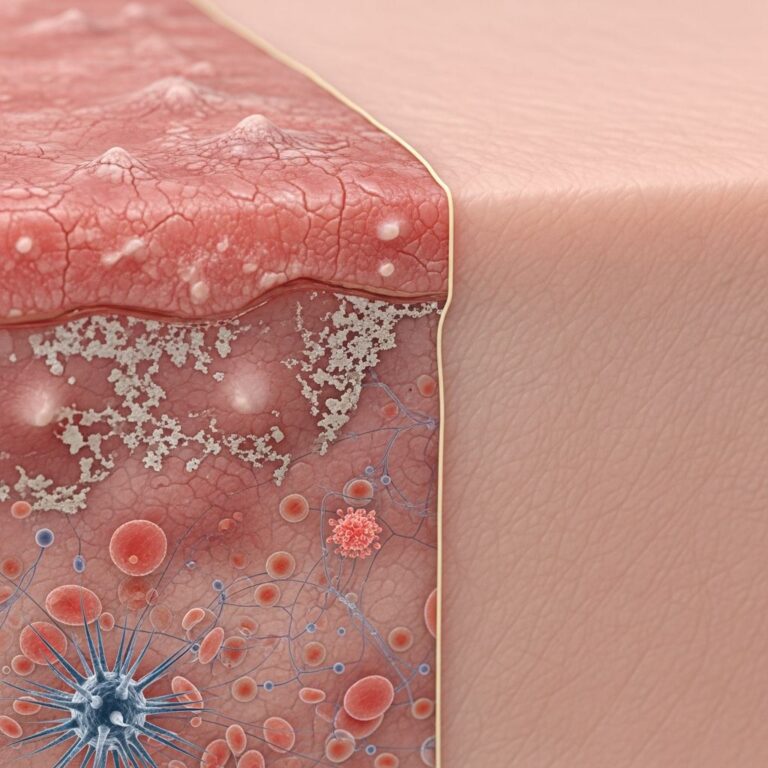
Amyloidosis Cutis Dyschromica: What You Need To Know
Rare primary cutaneous amyloidosis with mottled hyper- and hypopigmentation starting in childhood, confirmed by skin biopsy.
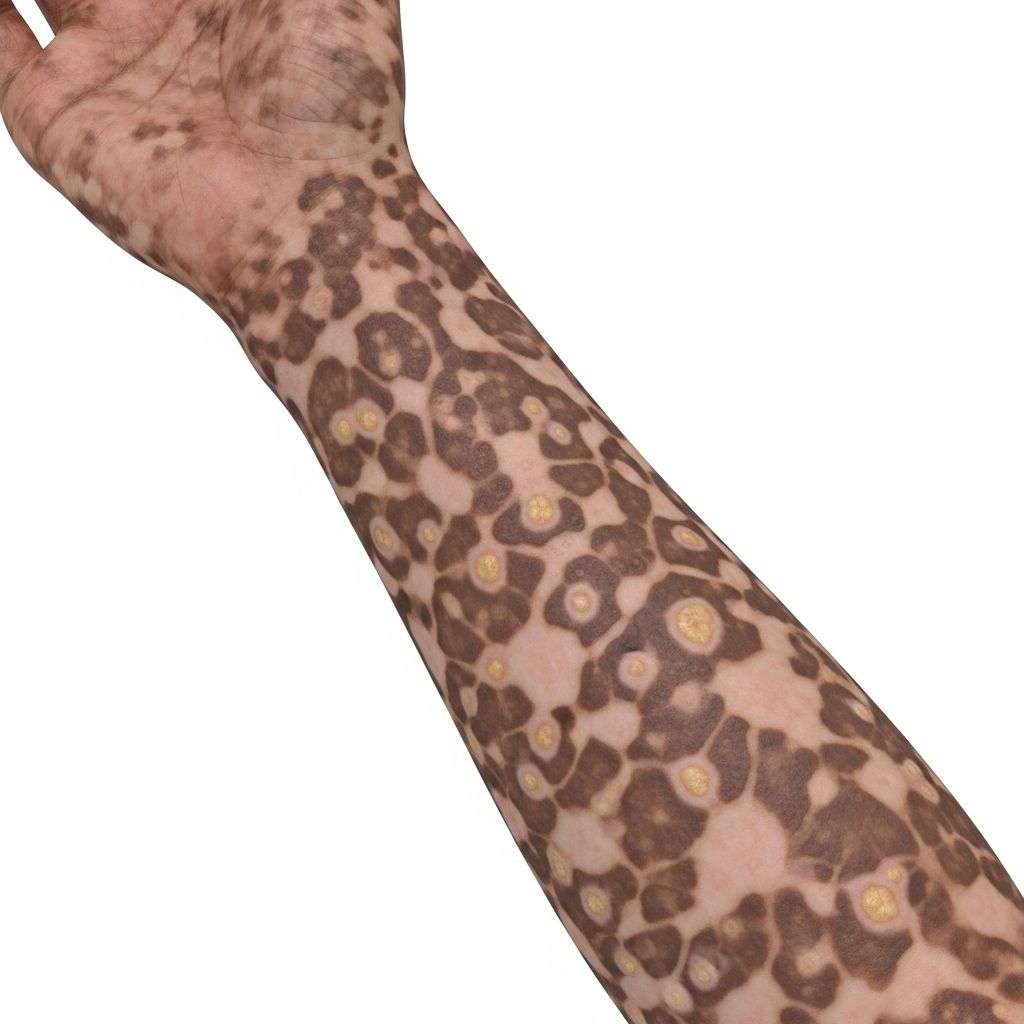
Amyloidosis cutis dyschromica (ACD) is an exceptionally rare variant of primary cutaneous amyloidosis (PCA), distinguished by the early onset of diffuse hyperpigmentation intermingled with hypopigmented macules across the body, primarily affecting the trunk and extremities while sparing the face, palms, and soles. First described by Morishima in 1970, this condition involves amyloid deposition confined to the papillary dermis without systemic amyloidosis, typically manifesting asymptomatically or with minimal pruritus before puberty.
What is Amyloidosis Cutis Dyschromica?
ACD represents a unique pigmentary disorder within the spectrum of primary localized cutaneous amyloidosis (PLCA), characterized by progressive, mottled skin discoloration without significant atrophy, telangiectasia, or inflammatory changes in most cases. Unlike other amyloidoses, ACD lacks visceral involvement, focusing solely on cutaneous manifestations that evolve gradually from childhood, often starting as hyperpigmented patches on the back or trunk before spreading to limbs and other areas. The hallmark is the asymptomatic nature, though rare reports note mild itching, papules, or blisters. Genetic predisposition is evident, with familial clustering suggesting autosomal recessive or semidominant inheritance, particularly in Asian populations.
The amyloid in ACD derives from degenerate keratinocytes, as confirmed by immunohistochemical staining for cytokeratins such as CK10, CK5/6, and others, rather than immunoglobulin light chains typical of systemic forms. This keratin-derived amyloid accumulates extracellularly in the superficial dermis, leading to the dyschromic pattern through mechanisms possibly involving impaired DNA repair post-UV exposure or phagocytosis of damaged epidermal cells by fibroblasts and histiocytes. Recent genetic studies implicate mutations in the GPNMB gene, a glycoprotein involved in melanocyte-keratinocyte interactions and inflammation regulation, which may trigger keratinocyte apoptosis and subsequent amyloidogenesis.
Who Gets Amyloidosis Cutis Dyschromica and Why?
ACD predominantly affects individuals of Asian descent, with cases reported across Japan, China, India, and sporadically in other ethnicities, though underdiagnosis may skew prevalence data. Onset is invariably prepubertal, often from birth or early childhood (ages 4-8 years), progressing slowly without spontaneous resolution. Familial occurrence is common, as seen in cases with consanguineous parents or affected relatives like uncles or great-grandparents, supporting a hereditary basis.
Pathogenesis remains incompletely understood but centers on genetic susceptibility leading to chronic keratinocyte damage. UV-induced DNA repair defects in keratinocytes may cause repeated apoptosis, with debris phagocytosed by dermal cells producing amyloid from cytokeratins. The GPNMB mutation disrupts melanosome maturation and inflammation control, potentially exacerbating pigmentary instability and amyloid deposition. Environmental triggers like sun exposure are hypothesized but unproven, as patients lack photosensitivity. No sex predilection exists, and associations with morphea, parkinsonism, or malignancy are anecdotal and rare.
Clinical Features
The defining feature of ACD is generalized reticular hyperpigmentation with scattered guttate hypopigmented or depigmented macules (pinpoint to 2-3 cm), symmetrically distributed over the trunk, extremities, and occasionally palmoplantar areas, with relative sparing of the face, neck, hands, and feet. Skin texture remains normal without atrophy, telangiectasia, or scaling in classic presentations, though some cases show atrophic hypopigmented lesions or subtle papules. Progression is insidious, starting on the back or trunk and expanding over years, remaining stable post-adolescence.
- Hyperpigmentation: Mottled, reticular brown-black patches, diffuse on extremities and trunk.
- Hypopigmentation: Well-defined white or hypopigmented spots, sometimes atrophic.
- Symptoms: Usually asymptomatic; rare mild pruritus, blisters, or lichenoid papules.
- Mucosa and Adnexa: Spared; normal hair, nails, teeth, and oral cavity.
- Systemic: No involvement; normal ophthalmology, neurology, and labs.
Related Stories



Dermoscopy reveals dotted/reticular pigmentation with hypopigmented globules; reflectance confocal microscopy (RCM) shows hyperkeratosis, clumpy dermal amyloid, and widened papillae. VisualDx describes it as widespread reticular hyperpigmentation with hypopigmented macules.
Diagnosis
Diagnosis hinges on clinicopathologic correlation: characteristic dyschromia since childhood plus confirmatory skin biopsy. Histopathology from both hyper- and hypopigmented lesions shows atrophic epidermis, loss of rete ridges, and homogeneous eosinophilic papillary dermal deposits staining apple-green birefringent under Congo red with polarized light. Electron microscopy reveals nonbranching 7.5-10 nm amyloid filaments; immunohistochemistry confirms keratin origin (positive for CK5/6, CK10, CK334β).
Rule out systemic amyloidosis with serum/urine immunofixation, free light chains, and organ function tests—all normal in ACD. Dermoscopy/RCM aids noninvasive assessment, correlating with amyloid clumps and melanophages. Genetic testing for GPNMB mutations supports diagnosis in familial cases.
Differential Diagnosis
| Condition | Key Features | Differentiator from ACD |
|---|---|---|
| Dyschromatosis universalis hereditaria | Similar mottling, early onset | No amyloid on biopsy; ADAR gene mutation |
| Xeroderma pigmentosum | Photosensitivity, freckling, cancer risk | UV sensitivity, no amyloid |
| Poikiloderma-like amyloidosis | Poikiloderma, blisters, short stature | Additional systemic features, lichenoid papules |
| Generalized morphea | Sclerotic plaques | Fibrosis, no amyloid; rare ACD association |
| Macular amyloidosis | Rippled pigmentation, itch | No hypopigmentation, epidermal amyloid |
Treatment
No curative therapy exists; management is symptomatic and cosmetic. Topical corticosteroids or calcineurin inhibitors may alleviate rare pruritus, while photoprotection prevents progression. Cyclosporine, dimethyl sulfoxide, or laser therapy (e.g., Q-switched Nd:YAG) show anecdotal benefits for pigmentation but lack randomized evidence. Genetic counseling is advised for familial cases. Regular monitoring excludes rare systemic associations.
FAQs
What causes amyloidosis cutis dyschromica?
Primarily genetic, with GPNMB mutations leading to keratinocyte-derived amyloid in the dermis; UV exposure may contribute.
Is amyloidosis cutis dyschromica dangerous?
No, it’s confined to skin without systemic risk; prognosis is excellent with cosmetic concerns only.
Can amyloidosis cutis dyschromica be cured?
No cure, but it’s non-progressive post-puberty and manageable cosmetically.
Does it affect internal organs?
Rarely; systemic workup is negative in confirmed ACD.
Is it hereditary?
Often, with autosomal recessive patterns in families.
References
- Amyloidosis cutis dyschromica – PMC – NIH — PubMed Central. 2013-11-01. https://pmc.ncbi.nlm.nih.gov/articles/PMC3853907/
- Amyloidosis cutis dyschromica: a rare pigmentary disorder – PubMed — PubMed. 2011-05-01. https://pubmed.ncbi.nlm.nih.gov/21592180/
- Case Report: Amyloidosis Cutis Dyschromica: Dermoscopy and Reflectance Confocal Microscopy — Frontiers in Medicine. 2021-11-01. https://www.frontiersin.org/journals/medicine/articles/10.3389/fmed.2021.774266/full
- Amyloidosis cutis dyschromia — National Organization for Rare Disorders. 2024-01-01. https://rarediseases.org/mondo-disease/amyloidosis-cutis-dyschromia/
- Amyloidosis cutis dyschromica – VisualDx — VisualDx. 2025-01-01. https://www.visualdx.com/visualdx/diagnosis/amyloidosis+cutis+dyschromica?diagnosisId=56629&moduleId=101
Similar Articles








Read full bio of medha deb