Dermatology Overview: Complete Guide To Skin, Hair & Nail Care
Comprehensive introduction to dermatology: skin biology, examination, diseases, and management principles for healthcare professionals.
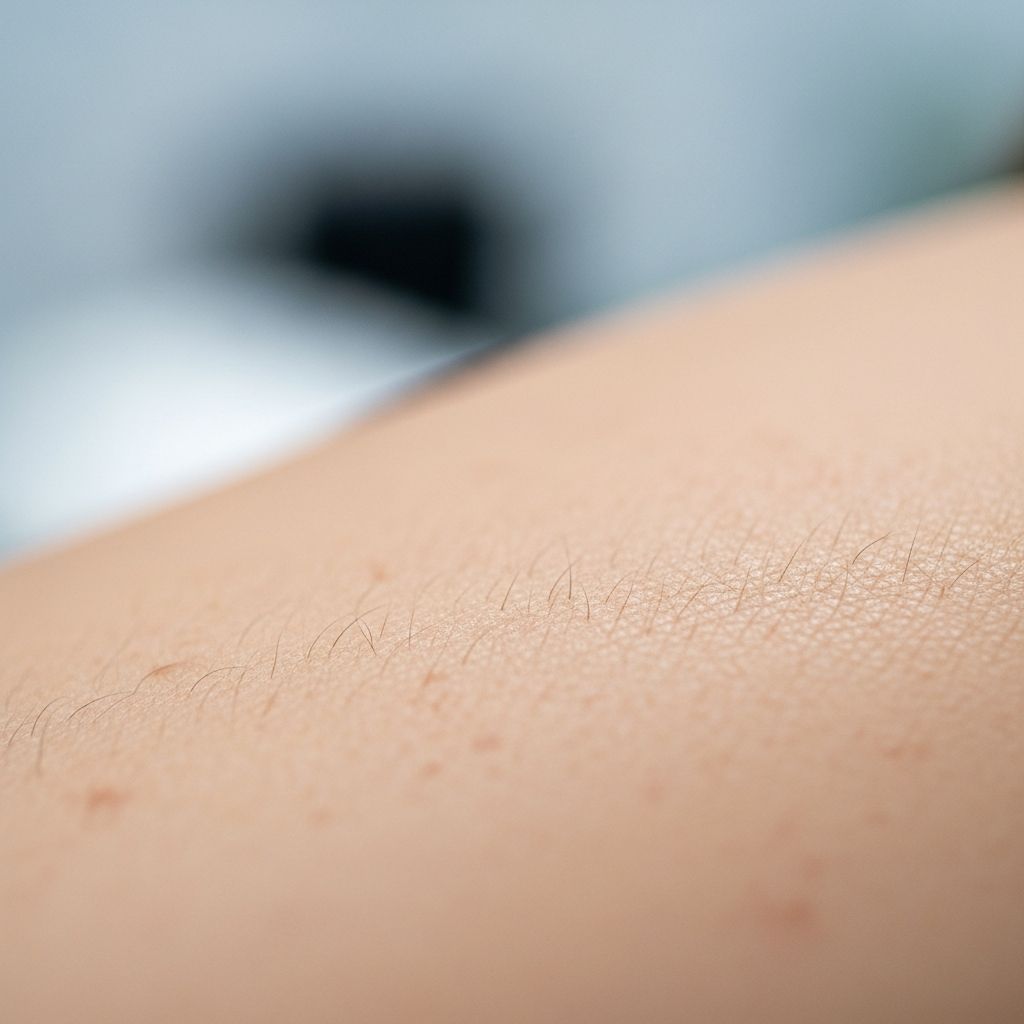
Dermatology is the medical specialty focused on the diagnosis, treatment, and prevention of diseases affecting the
skin
,hair
,nails
, andmucous membranes
. As the body’s largest organ, the skin serves critical protective and regulatory roles, yet it is susceptible to over 1500 distinct conditions, many with unclear pathogenesis despite advances in molecular medicine and genetics. This overview covers the impact of skin diseases, normal skin biology, examination techniques, treatment approaches, and key disease categories.Impact and Prevalence of Skin Diseases
Skin conditions represent a significant healthcare burden. In the UK, approximately
15% of general practice consultations
involve skin problems, with50-75% of individuals
experiencing a skin issue at any given time. While many are benign and asymptomatic—such as warts, athlete’s foot, dandruff, or insect bites—others cause substantial disability, cosmetic concerns, or even life-threatening complications like skin cancers.Symptoms commonly reported include
itching (pruritus)
,pain
,soreness
, andaltered appearance
. Signs manifest as solitary lesions or widespread rashes, characterized by distribution, configuration, colour, morphology, surface changes, and secondary features like scaling or crusting. These aid in diagnosis and management planning.Factors influencing disease impact include prevalence, clinical morbidity/mortality, and severity. Common conditions like acne, eczema, and psoriasis affect millions globally, while rarer genetic or neoplastic disorders demand specialized care. Primary care physicians play a vital role in early detection through systematic full-body skin checks, enhancing outcomes for precancerous and cancerous lesions.
Biology of Normal Skin: Functions of the Skin
The skin maintains a stable internal environment, protecting organs from external threats while enabling essential physiological processes. Its key functions are categorized as follows:
- Barrier function: Physical (stratum corneum blocks microbes/chemicals), thermal, antimicrobial, chemical, radiation protection.
- Maintain fluid balance: Controls evaporation and permeation.
- Excretion: Via sweat glands.
- Regulation of body temperature: Cooling (sweating) and warming (vasoconstriction).
- Immunological function: Defends against infection and allergy via Langerhans cells.
- Metabolic function: Synthesis (vitamin D), storage, wound healing.
- Communication: Sensory nerves convey physical, emotional states; reflects overall health.
The skin’s
acid mantle
(pH ~5.5) from sweat, sebum, and hormones supports beneficial microflora while repelling pathogens.Structure of the Skin
Skin comprises three layers:
epidermis
,dermis
, andsubcutis (hypodermis)
, adapted by body region (e.g., thick palmar epidermis, sebaceous glands on face). Each cm² contains ~15-20 hair follicles, 100+ sweat glands, 10+ sebaceous glands, 100+ sensory receptors, 5m blood vessels, 300m nerve endings, and variable fat/muscle.Structure of the Epidermis
The
epidermis
is a dynamic, semi-permeable barrier regenerating via keratinocyte division in the basal layer, maturing into anuclear stratum corneum cells. Key components:| Layer | Cells/Features |
|---|---|
| Basal cell layer | Keratinocytes, melanocytes (UV protection), Merkel cells (touch) |
| Squamous cell layer (stratum spinosum) | Keratinocytes, Langerhans cells (immune), desmosomes (adhesion), inflammatory cells |
| Stratum granulosum | Keratinocytes with keratohyalin granules |
| Stratum corneum | Dead, keratinized cells; acid mantle |
Related Stories



Melanocytes produce pigment; the basement membrane interfaces with dermis. Appearance varies by site, age, sex, ethnicity.
Structure of the Dermis and Subcutis
The
dermis
provides strength/elasticity via collagen/elastin, houses blood vessels, nerves, glands.Subcutis
cushions with fat, insulates.Examination of the Skin
A thorough skin exam covers the entire surface, hair, nails, and mucosae (conjunctivae, oral/genital if relevant), ideally with chaperone and patient consent. Use good lighting/magnification to identify primary complaints, incidental findings (e.g., skin cancers), and systemic signs like xanthomas (hyperlipidemia) or acanthosis nigricans (insulin resistance).
Key steps:
- Observe: Distribution (symmetrical? sites?), morphology (number/size/colour/shape), lesion types (primary/secondary).
- Palpate: Surface (scaly/crusty?), depth (epidermis/dermis/subcutis?).
- Examine appendages: Hair, nails (detailed in dedicated topics).
- Mucosal/genital: Symptom-related, with permission/chaperone.
- Systemic: Height/weight, vitals if indicated.
Specialized techniques: Wood’s light, dermoscopy, biopsy, scraping, diascopy. Primary care full-body checks emphasize patient education on self-exams and follow-ups.
Classification of Skin Diseases
Skin diseases defy simple classification due to overlap and evolving science emphasizing genetics/immunity. Traditional systems include:
- Morphological (e.g., vesicles, papules).
- Site-specific.
- Age/sex-related.
The British Association of Dermatologists (BAD) Index uses alphanumeric codes (A-Z) for precision. Examples:
- A: Infectious (bacterial, viral, fungal).
- B: Reactions to mechanical/thermal/radiation.
- C: Dermatitis/eczema.
- D: Psoriasis/keratinizing disorders.
- E: Papulosquamous/granulomatous.
- F: Urticaria/erythemas.
- G: Pigment disorders.
- H: Appendages (hair/nails).
- M: Connective tissue/immunobullous.
- X: Neoplasms/tumors.
Psychiatric manifestations (e.g., body dysmorphic disorder) require holistic management. DermLex provides standardized terminology.
Treatment and Management Principles
Effective dermatological practice integrates emollients, topicals (steroids, antimicrobials), systemic therapies, phototherapy, and surgery. Recognition of psychological factors is crucial. Referrals to dermatologists should detail history, exam findings, photos.
Frequently Asked Questions (FAQs)
What percentage of GP visits involve skin issues?
Around 15% in the UK, with 50-75% prevalence in populations.
How often should skin exams be performed?
Routinely in primary care; patients educated for monthly self-checks.
What are primary skin lesion types?
Macule, papule, vesicle, pustule, plaque, nodule—described by size/shape.
Why examine mucosae?
To detect related conditions like oral candidiasis or lichen planus.
Role of acid mantle?
pH 5.5 barrier against pathogens via sebum/sweat.
References
- Functions of the skin — DermNet NZ. 2008 (updated). https://dermnetnz.org/cme/principles/functions-of-the-skin
- Examination of the skin — DermNet NZ. 2008 (updated). https://dermnetnz.org/cme/principles/examination-of-the-skin
- An overview of dermatology — DermNet NZ. 2008 (updated). https://dermnetnz.org/cme/principles/an-overview-of-dermatology
- Structure of the epidermis — DermNet NZ. 2008 (updated). https://dermnetnz.org/cme/principles/structure-of-the-epidermis
- Principles of dermatological practice — DermNet NZ / University of Auckland. 2007-2008. https://dermnetnz.org/cme/principles
- Dermatological guide for primary care physicians — PMC / NCBI. 2024. https://pmc.ncbi.nlm.nih.gov/articles/PMC11188824/
Similar Articles








Read full bio of Sneha Tete