Anal Cancer: Symptoms, Causes, Stages, Treatment
Understand anal cancer: from risk factors like HPV to diagnosis, staging, treatments, and prevention strategies for early detection.
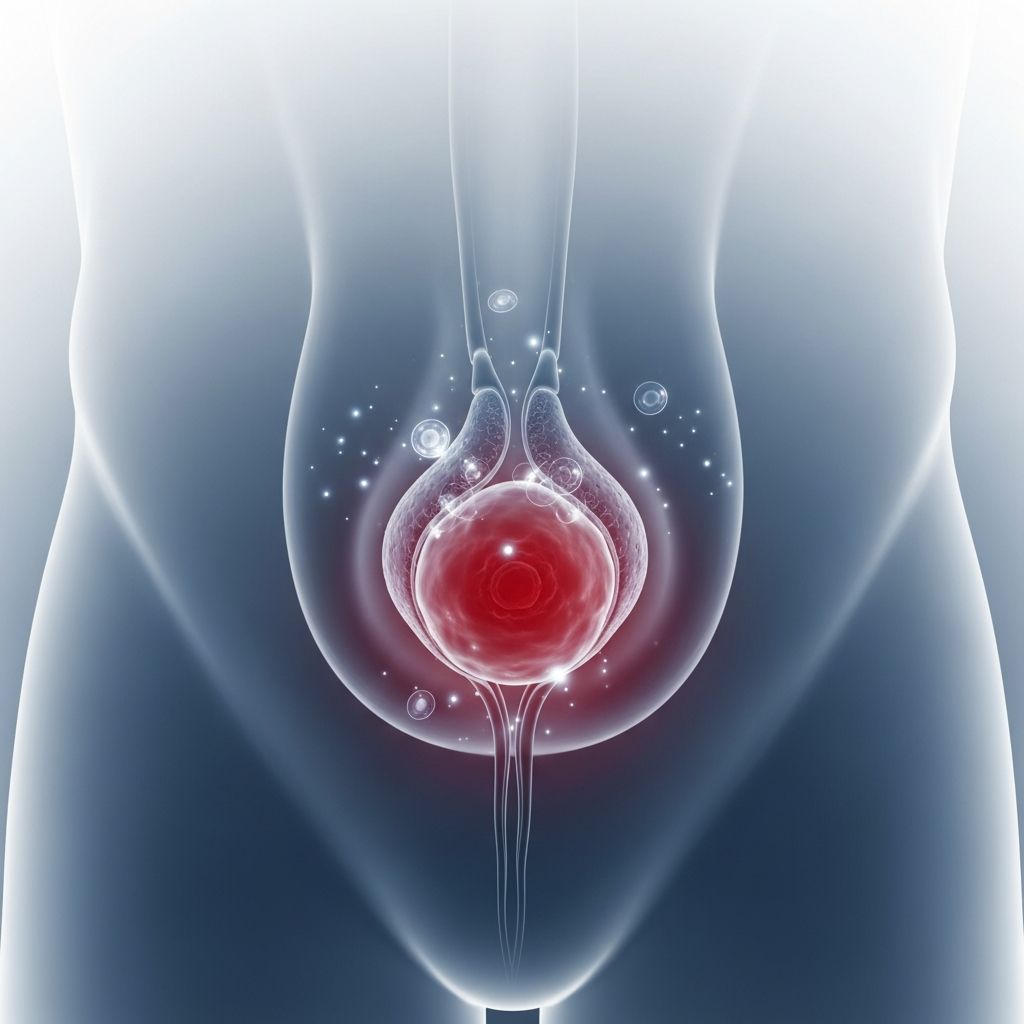
Anal cancer is a rare but increasingly common malignancy originating in the anal canal, primarily squamous cell carcinoma linked to human papillomavirus (HPV) infection. It accounts for about 2% of gastrointestinal cancers and less than 7% of anorectal cancers, with incidence rising up to 2.7% annually in the US.
What Is Anal Cancer?
Anal cancer develops in the tissues of the anus, the opening at the end of the rectum through which stool passes. Most cases (around 85%) are
squamous cell carcinomas
arising from the squamous epithelium between the anorectal junction and anal verge. Other rare types include adenocarcinomas, melanomas, and sarcomas. The disease is often HPV-related, particularly high-risk types like HPV-16, leading to chronic inflammation, dysplasia (anal intraepithelial neoplasia or AIN), and progression to invasive cancer.Unlike more common colorectal cancers, anal cancer’s pathogenesis mirrors cervical cancer due to shared HPV etiology. Globally, annual incidence is 1-2 per 100,000, but rates are climbing, especially among those over 50 in the Midwest and Southeast US, paralleling HPV prevalence.
Symptoms of Anal Cancer
Early anal cancer often lacks symptoms, mimicking benign conditions like hemorrhoids or fissures, delaying diagnosis. Common signs include:
- Rectal bleeding or blood in stool
- Anal pain, itching, or discomfort
- A palpable lump or mass near the anus
- Changes in bowel habits, such as narrowing of stool or tenesmus (feeling of incomplete evacuation)
- Fistulas, abscesses, or discharge
- In advanced stages: weight loss, fatigue, or swollen lymph nodes
Hard, fleshy lumps may appear inside or outside the anus in visible cases. High-risk individuals, like those with HIV, should seek evaluation for persistent symptoms.
Causes and Risk Factors
The primary
cause
of anal cancer is persistentHPV infection
, responsible for most squamous cell cases. HPV-16 is the dominant subtype, followed by HPV-18. While most HPV infections resolve, cofactors promote oncogenesis.Key Risk Factors
| Risk Factor | Description | Relative Risk |
|---|---|---|
| HPV Infection | High-risk types (16, 18); receptive anal intercourse increases exposure | Highest (most cases) |
| HIV/AIDS | Immunosuppression raises incidence 20-100x; common in MSM | Very High |
| Immunosuppression | Organ transplant, other immunodeficiencies | High |
| Tobacco Use | Smoking enhances HPV carcinogenicity | Moderate |
| Female Sex & Age >50 | Higher in women; rising in older adults | Moderate |
| History of Cervical Cancer | Shared HPV risk with anal sites | Elevated |
Receptive anal intercourse, multiple partners, and high smoking/HIV prevalence correlate with regional increases.
Diagnosis of Anal Cancer
Diagnosis begins with
digital rectal exam (DRE)
to detect masses. If suspicious,anoscopy
orhigh-resolution anoscopy (HRA)
visualizes lesions, with biopsy confirming squamous cell carcinoma via histopathology. Staging uses CT/MRI/PET scans for local extension and nodal/metastatic spread. Endoscopy rules out synchronous colorectal issues. For HIV patients, annual screening with DRE and HRA is recommended.Challenges: Symptoms overlap with benign diseases; low incidence limits routine screening.
Stages of Anal Cancer
Staging follows the AJCC TNM system:
- Stage 0: Carcinoma in situ (AIN III)
- Stage I: T1 N0 M0 (tumor ≤2 cm)
- Stage II: T2-3 N0 M0 or T1-2 N1 M0 (larger local or nodal)
- Stage III: Advanced local/nodal (T3-4 or N2+)
- Stage IV: Metastatic disease
Related Stories



Early stages (I-II) have >80% cure rates with treatment; metastatic prognosis is poor.
Treatment for Anal Cancer
Treatment has shifted from radical surgery to
organ-preserving chemoradiation (CRT)
as standard for localized disease (Stages I-III). Nigro regimen (5-FU + mitomycin-C + radiation) yields 80-90% complete response, 67-80% 5-year overall survival (OS), and 59% colostomy-free survival.Treatment by Stage
| Stage | Primary Treatment | Outcomes |
|---|---|---|
| I (Small) | Wide local excision or CRT | >90% cure; 20% recurrence risk |
| II-III (Localized) | CRT (5-FU/MMC + RT 45-59 Gy) | 80% complete response; 60-70% 5-yr OS |
| Recurrent/Local Failure | Salvage APR (abdominoperineal resection) | 60% local control; 30-60% 5-yr OS |
| IV (Metastatic) | Systemic chemo (platinum doublet, e.g., cisplatin/5-FU); immunotherapy (PD-1 inhibitors); metastasectomy select cases | Palliative; median survival 12-24 months |
For AIN precursors: Topical (imiquimod, 5-FU), ablation (laser, IRC), or excision. CRT reduces mortality vs. RT alone (28% vs. 39% 3-year mortality).
Prognosis and Survival Rates
Localized disease: 5-year OS 70-80%; regional 50-60%; distant 20-30%. Factors improving prognosis: Early stage, HPV-positive status, good response to CRT. Rising incidence strains outcomes without prevention.
Prevention of Anal Cancer
**HPV vaccination** (Gardasil 9) prevents HPV-16/18 infection, recommended for ages 9-45, especially high-risk groups. Smoking cessation, HIV management (ART), and safe sex reduce risks. Screening: Annual DRE/HRA for HIV+ or high-risk (e.g., MSM); ANCHOR trial shows treating HSIL halves progression to cancer.
Frequently Asked Questions (FAQs)
What causes most anal cancers?
Persistent HPV infection, especially HPV-16, causes ~90% of squamous cell anal cancers.
Who is at highest risk for anal cancer?
People with HIV/AIDS, MSM, smokers, immunosuppressed individuals, and those with cervical cancer history.
Is anal cancer screening recommended?
Yes, annually for high-risk groups like HIV+ adults using DRE and HRA; evidence supports reducing progression from HSIL.
What is the main treatment for early anal cancer?
Chemoradiation therapy (CRT) with 5-FU, mitomycin, and radiation preserves the sphincter in most cases.
Can anal cancer be cured?
Yes, early localized disease has 70-80% 5-year survival with CRT; advanced metastatic is harder to cure.
Does HPV vaccine prevent anal cancer?
Yes, it prevents key high-risk HPV types, reducing anal cancer risk long-term.
References
- Anal carcinoma – exploring the epidemiology, risk factors … — PMC/NCBI. 2024. https://pmc.ncbi.nlm.nih.gov/articles/PMC11372733/
- Trends in Anal Cancer: Leveraging Public Health Efforts to Improve … — ASCO/JCO. 2023. https://ascopubs.org/doi/10.1200/JCO.22.02584
- Anal Cancer Causes, Risk Factors, and Prevention — American Cancer Society. 2024. https://www.cancer.org/cancer/types/anal-cancer/causes-risks-prevention.html
- Anal Cancer — MedlinePlus/NIH. 2024. https://medlineplus.gov/analcancer.html
- Guidelines on anal cancer screening: a summary — HPV World. 2023. https://www.hpvworld.com/articles/guidelines-on-anal-cancer-screening-a-summary/
Similar Articles








Read full bio of Sneha Tete